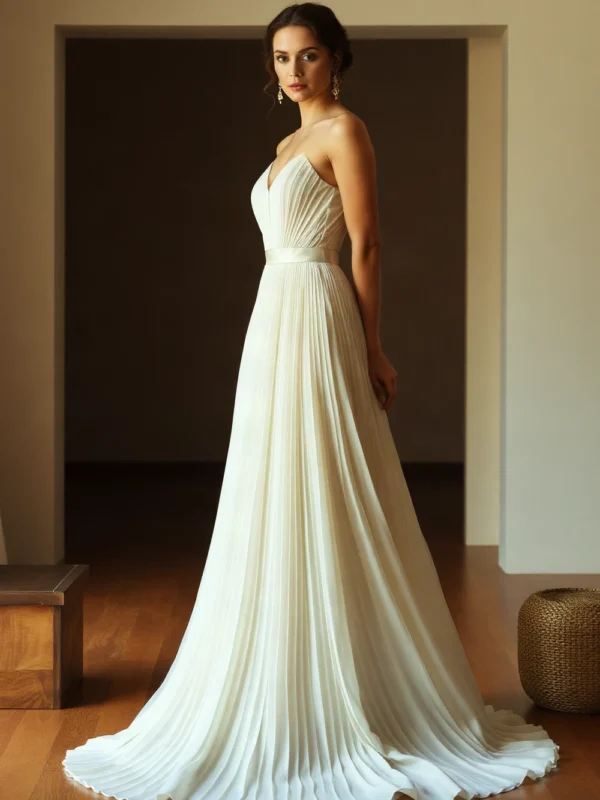
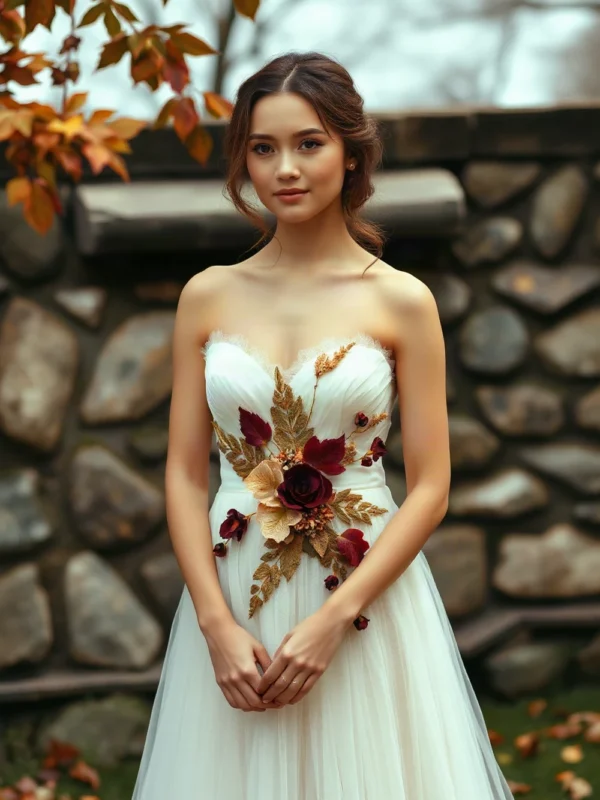
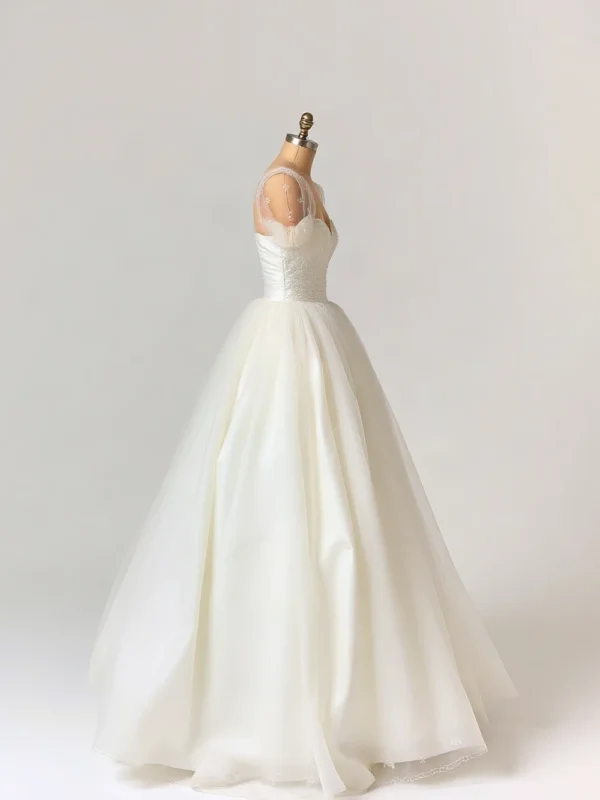
Floral embroidered wedding dresses differ not only in the shape of their blossoms but also in scale, density and position. A large raised vine can become the defining feature of a full skirt, while a few small leaves can introduce a botanical note without disturbing a clean A-line silhouette. Details concentrated at the neckline, cuffs, hips or hem also determine how the eye travels across the dress. Choosing well therefore requires more than examining embroidery in a close-up; the complete look should be considered from the front, back and in motion. These six concept visuals compare how floral surfaces work across ball-gown, A-line, ankle-length and fitted forms. Rather than presenting one approach as universally better, the guide offers a practical way to weigh motif scale against movement, setting, accessories and likely photography angles. The most balanced choice is the one in which decoration and silhouette remain legible together.
Using Large Flowers Vertically on a Full Skirt
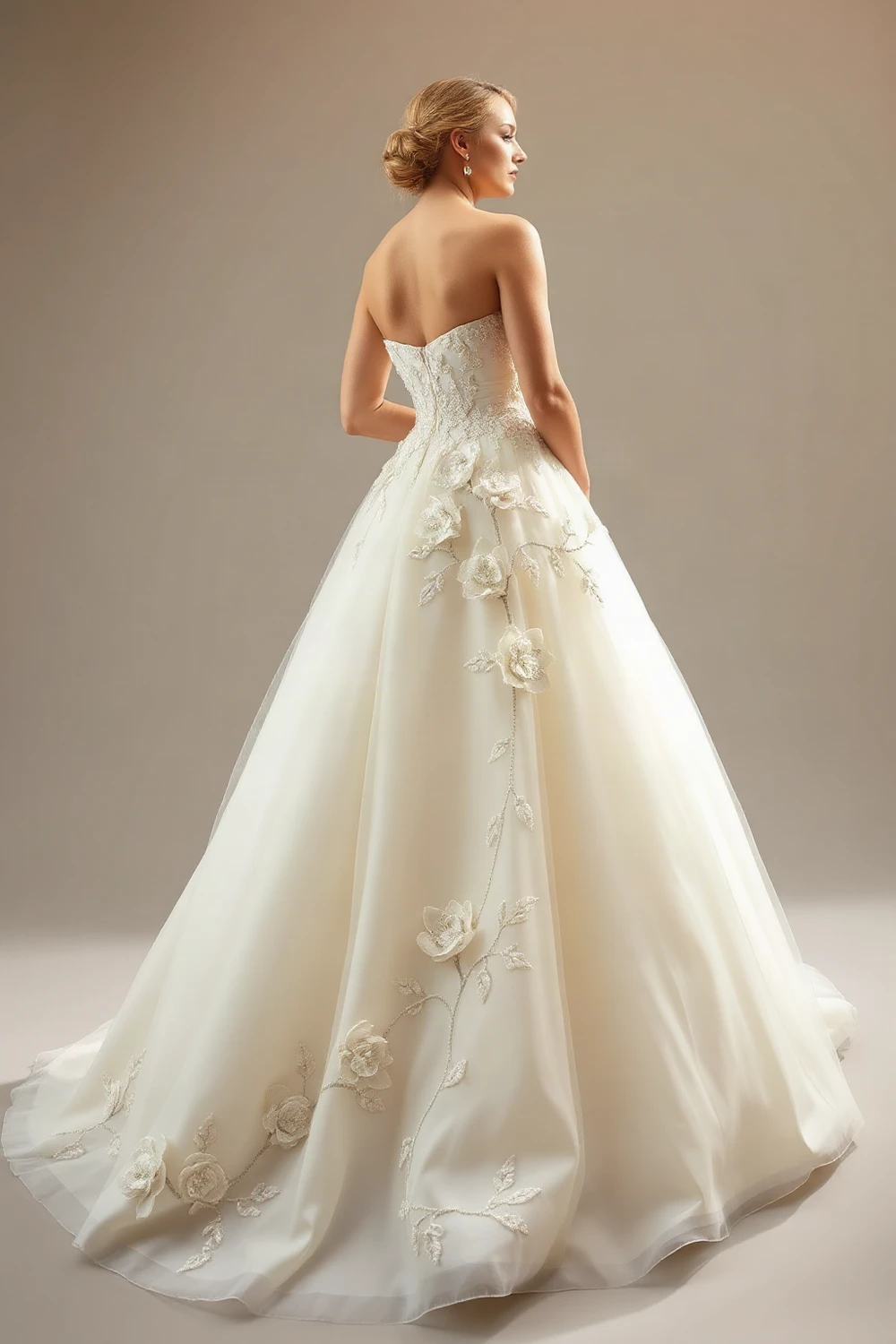
In the first look, large raised blossoms follow a long vine near the center of a broad skirt viewed from behind. The vertical direction lets the eye travel from the waist to the hem instead of cutting horizontally across the volume. Branches spreading near the bottom then answer the width of the skirt and give the trailing edge a visual finish. Because these motifs remain distinct from a distance, entrance moments and rear portraits could make particularly effective use of the arrangement. Practical testing is equally important: check where the flowers rest while seated and whether raised sections interfere when the train is gathered. Hair and veil also share this viewing area. A low style or a heavily edged veil might cover the top of the vine, whereas a simple transparent layer would preserve its downward flow. Keeping bouquet flowers smaller could allow the dress’s sculptural motif to remain the principal botanical statement.
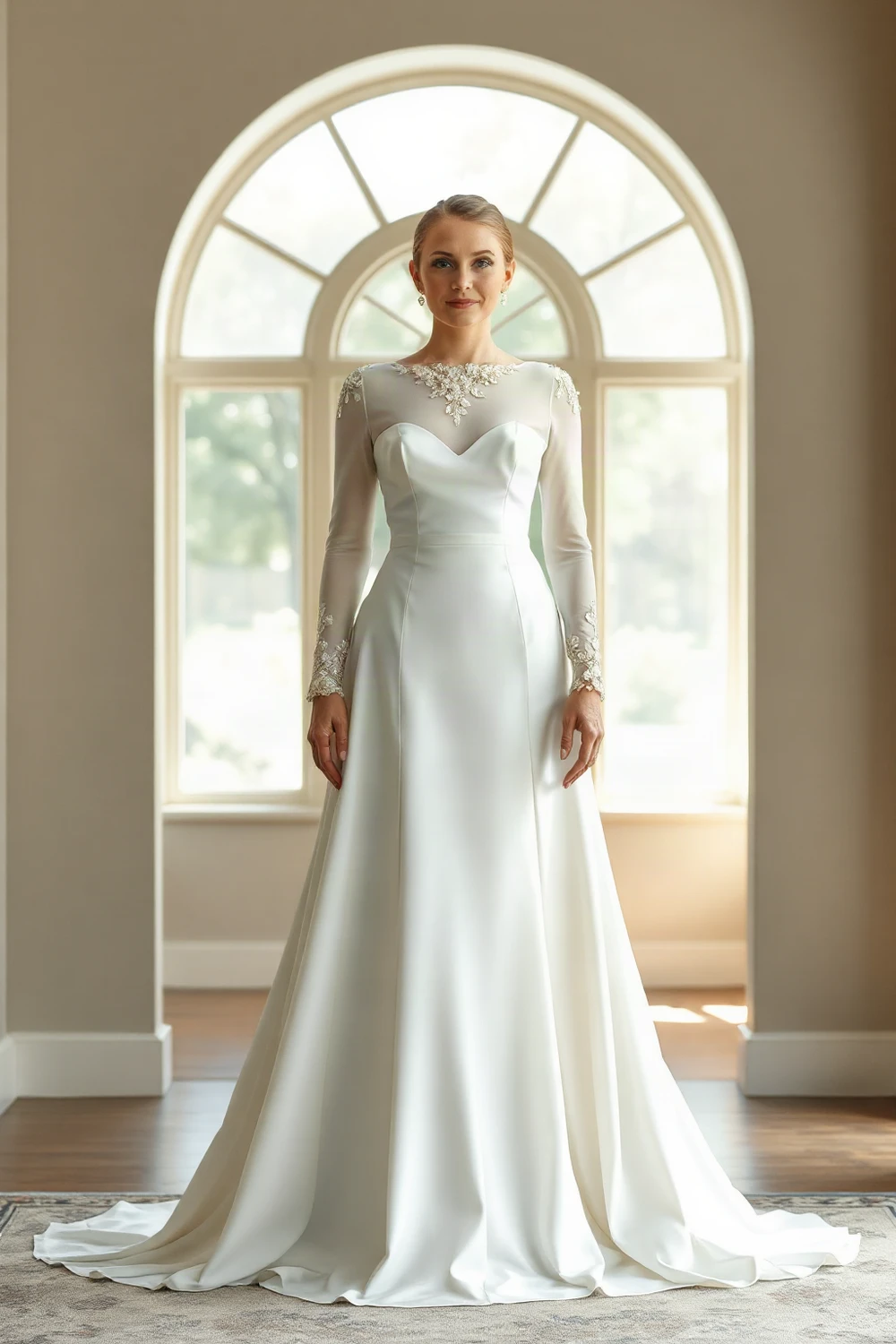
Framing a Clean Skirt with Neckline and Cuff Detail
The second design concentrates flowers around the transparent neckline and wrists rather than spreading them across the entire dress. The line between the sweetheart-shaped inner bodice and higher upper layer frames the face and collarbone, while the long plain skirt provides a continuous vertical field. This is a measured option for someone who wants botanical detail without pattern over a large surface. Since the neckline already functions much like jewelry, modest earrings may produce a clearer balance than a necklace. The cuffs appear beside the hands, so a bracelet, bouquet handle and rings will all occupy the same visual zone. A fitting should include more than standing still: raise the arms, bend the elbows, sit and make a hugging motion to test the transparent layer around the shoulders. Photographs under different lighting can also show how clearly the inner neckline contrasts with the sheer upper section.
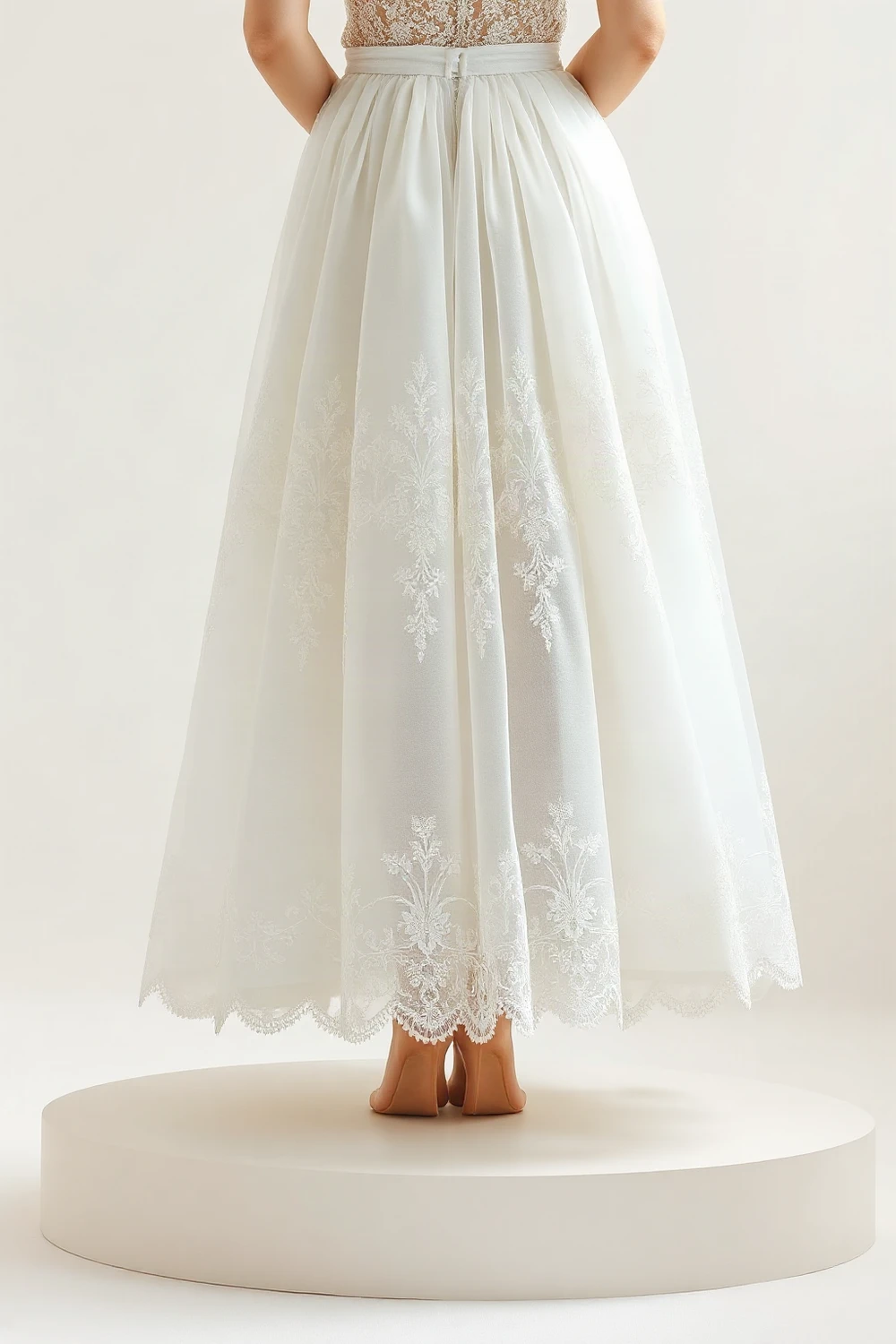
Balancing a Botanical Hem with Visible Shoes
The third visual demonstrates that floral detail does not have to begin on the bodice. On the ankle-revealing full skirt, the motifs become stronger toward the bottom and meet a scalloped edge, shifting attention from the face to movement and footwear. Because this length brings shoes into the composition, their color, toe shape and heel height become more consequential. A straight hem would create a crisp graphic ending; the scalloped outline instead feels softer and more decorative. The broad undecorated area above keeps the detailed lower border from looking excessively dense. View the final skirt length while wearing the intended shoes, as even a small height change affects how the scallops sit around the ankles. Walking, turning, using steps and trying a few dance movements will show whether the volume approaches the feet comfortably and whether the lower motifs remain visible when the skirt is in motion.
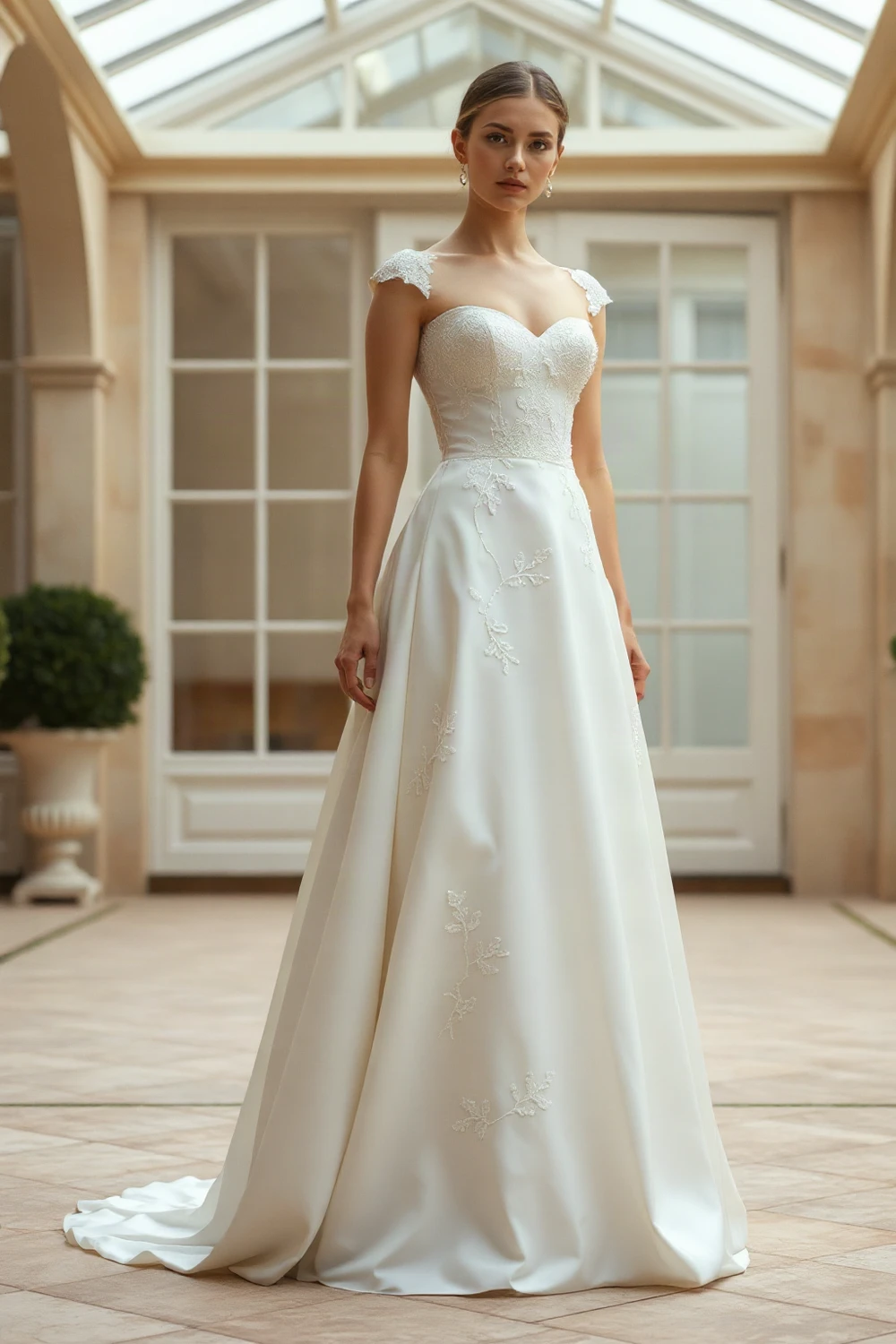
Preserving an A-Line Shape with Sparse Vines
In the fourth look, small vine motifs are separated by generous areas of undecorated surface, allowing the A-line skirt’s gradual expansion to remain clear. Short appliqué-like pieces over the shoulders echo the lower sprigs and prevent all attention from settling on the skirt. The quiet space between these points gives the dress an open, orderly appearance. Compared with large dimensional flowers, this treatment reveals more detail nearby but reads more calmly at a distance. Tonal motifs may become especially subtle in a very bright room; side light or gentle shadow can describe their texture more effectively in photographs. The sweetheart line and shoulder accents already provide a sufficient upper frame, so a necklace is not essential. If a veil is included, an unembellished surface may protect the lightness of the scattered vines better than a broad, densely decorated border.
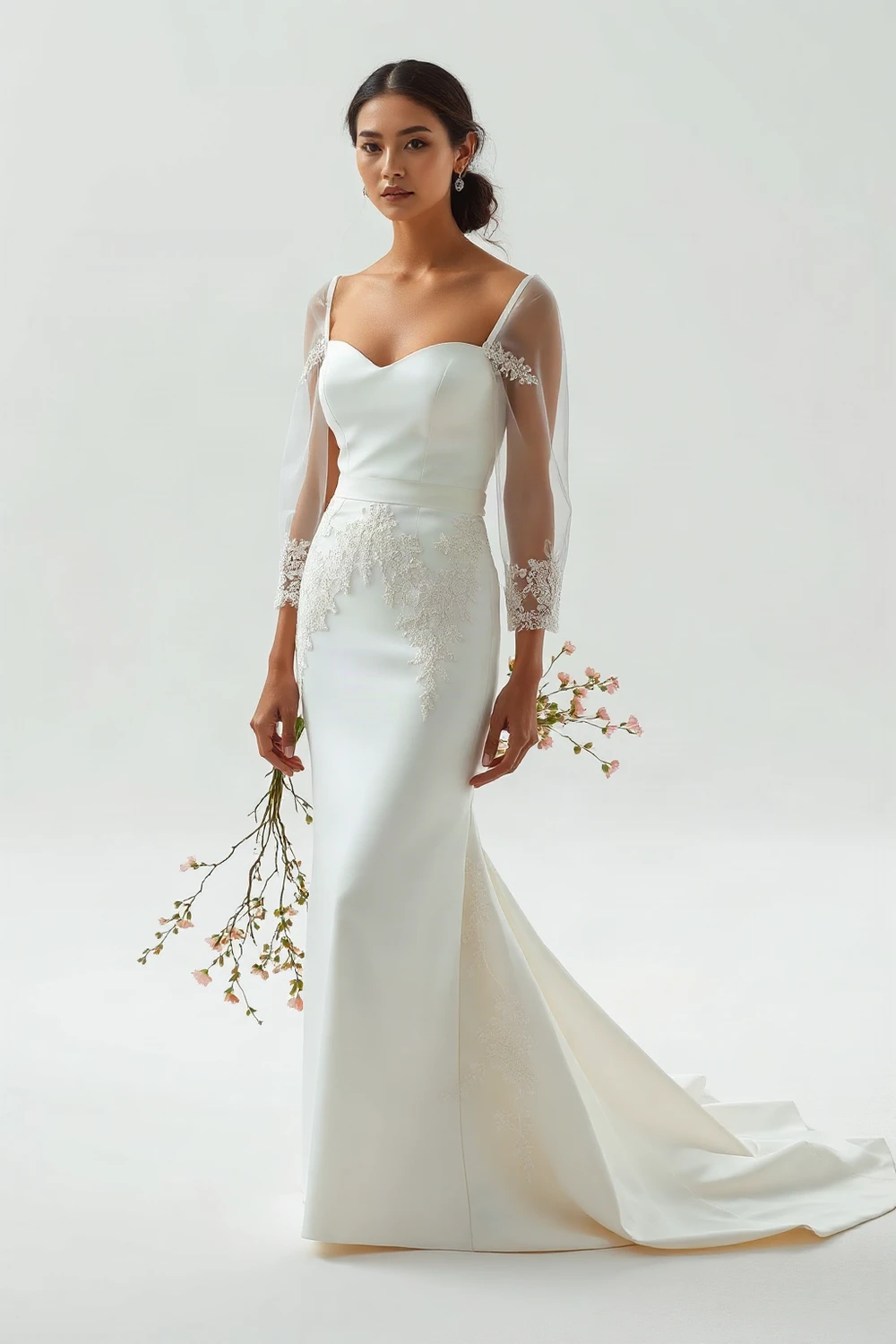
Creating Motif Zones on a Fitted Dress
The fifth design uses flowers in three distinct zones: near the tops of the transparent sleeves, around the pronounced cuffs and over part of the hip area. On a fitted silhouette, these placements hold attention at the upper and middle sections rather than scattering it evenly. A plain lower skirt and trailing extension preserve the long line below. Because a body-skimming form may offer less room for movement than an A-line dress, the comfort of the underlying cut should be assessed before the decoration. Take long steps, sit, climb stairs and try dance movements to understand the opening around the knees. Arm tests will reveal whether the sheer section gathers at the elbows or pulls beneath the shoulders. Since a large bouquet could hide the asymmetrical hip work, an open composition of slender stems can repeat the botanical theme while leaving the dress detail visible.
Scattering Small Motifs Across an Illusion Neckline and Sleeves
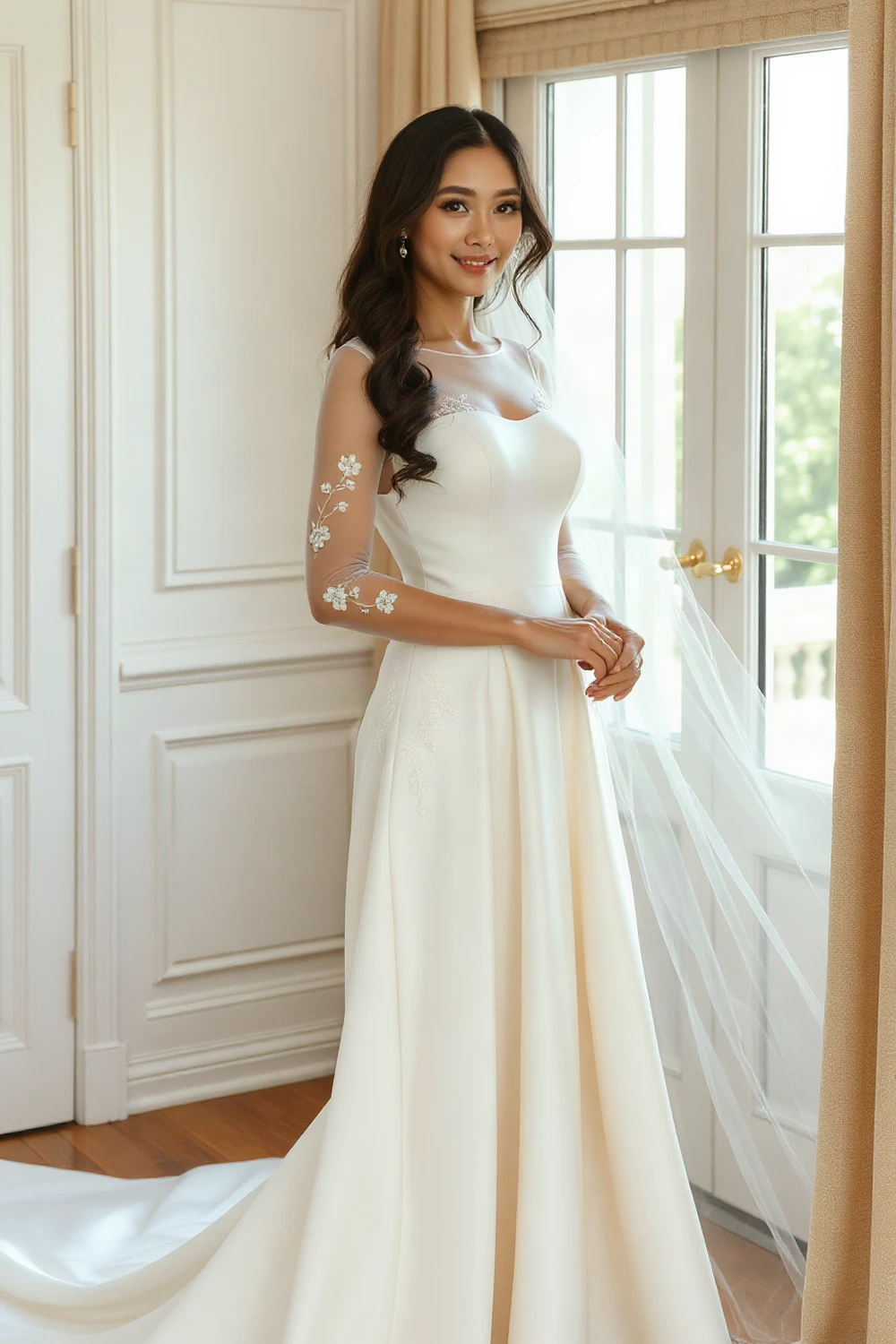
The sixth look distributes small white flowers in a loose rhythm across a transparent neckline and sleeves. The sweetheart inner bodice defines the main shape, while the rounded upper layer offers a greater sense of coverage. Motifs remain separated along the arms, giving a lighter effect than the concentrated cuffs and neckline of the second design. The smooth A-line skirt supports that restraint by keeping the ornament primarily above the waist. Hair placement matters here: waves falling across a shoulder can create a romantic frame but hide some upper-sleeve flowers, while hair arranged back will expose the full pattern. The long transparent layer behind the figure also adds movement, although its exact construction is not evident from the image. When considering a similar element, test its attachment, weight and behavior while turning. Viewing sleeve and neckline edges in several types of light will provide a more reliable sense of transparency and contrast.
Begin a floral wedding dress decision by identifying where the botanical focus should appear. Large vertical vines create a strong rear statement, floral necklines and cuffs frame the face while preserving a clean skirt, and sparse motifs offer a quieter result. Hem detail must be considered with shoes and walking length, while sheer sleeves need to work with arm movement, hair and accessories. Record each preferred approach from the front, back, seated and walking rather than relying on one close view. In the final comparison, assess not only the beauty of the flowers but also whether their scale supports the silhouette and leaves enough visual space for every other chosen element.
From sculptural blossoms to widely spaced botanical sprigs, motif scale can redirect the focus of a wedding dress. Compare six visual concepts for balancing flowers with sleeves, necklines, hemlines, silhouettes and accessories.
Frequently asked questions
Should I choose large raised flowers or small flat motifs?
Large raised flowers create a strong focal point that remains visible from a distance. Small, flatter and widely spaced motifs are better suited to preserving a clean silhouette and offering detail that becomes more apparent at close range.
Does a floral neckline need a necklace?
A densely decorated or embroidered-looking neckline already frames the face and can make a necklace feel crowded. Small earrings may provide a calmer balance. Judge the choice after seeing the actual neckline opening and motif density rather than following a fixed rule.
What should be tested when trying sheer floral sleeves?
Raise the arms, hug, sit and bend the elbows. Check that the layer does not pull at the shoulders or underarms, bunch excessively at the elbows or tighten at the cuffs. Its edges should also be viewed under different lighting.
How should shoes be chosen for a floral hem?
Shoes become especially visible with an ankle-length or scalloped skirt. Attend a fitting in the intended heel height because it affects the final hem position, and choose a color and shape that do not compete with the decorated edge.
How can a veil and bouquet be balanced with floral dress details?
A dress with large or dense motifs often benefits from a simple veil and an airy bouquet that leave those details visible. A sparsely decorated dress can accommodate a stronger accessory, but avoid concentrating the veil border, bouquet and dress motifs in the same area.