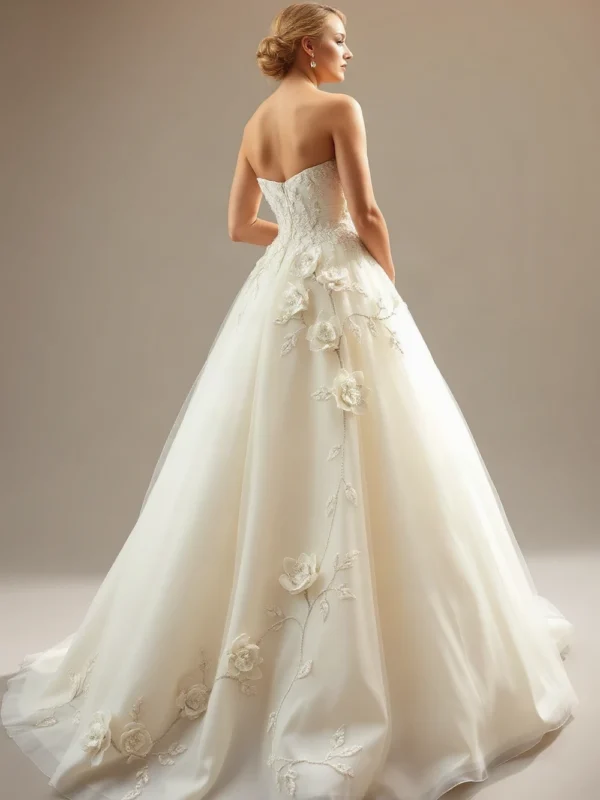
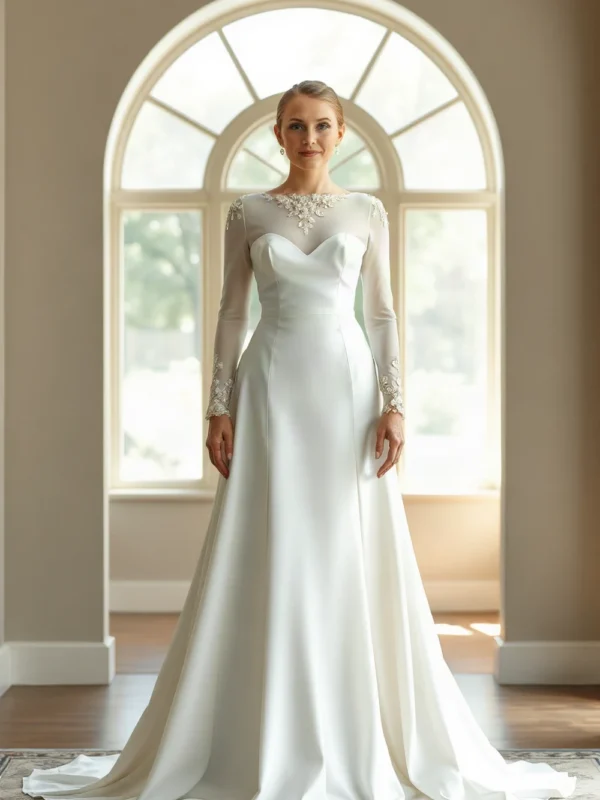
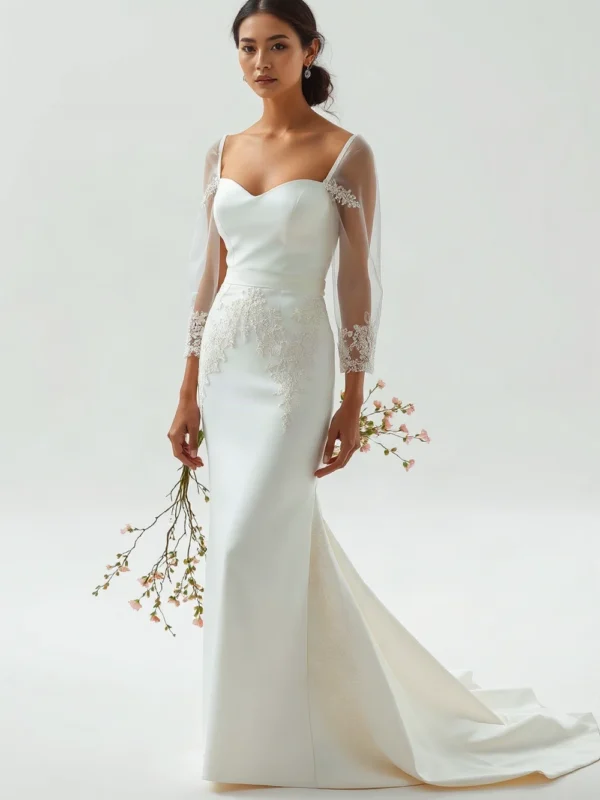
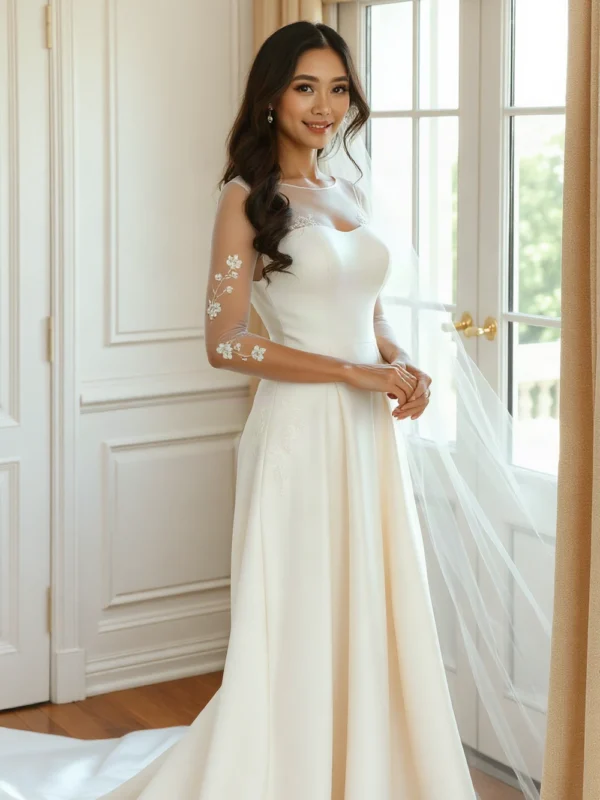
The shared language of this gallery is tonal botanical decoration on white and off-white surfaces, yet the visual weight changes significantly from one dress to another. In the first image, large raised flowers connect the back bodice to a broad skirt. The second confines its decoration to the neckline and cuffs, leaving the long skirt uninterrupted.
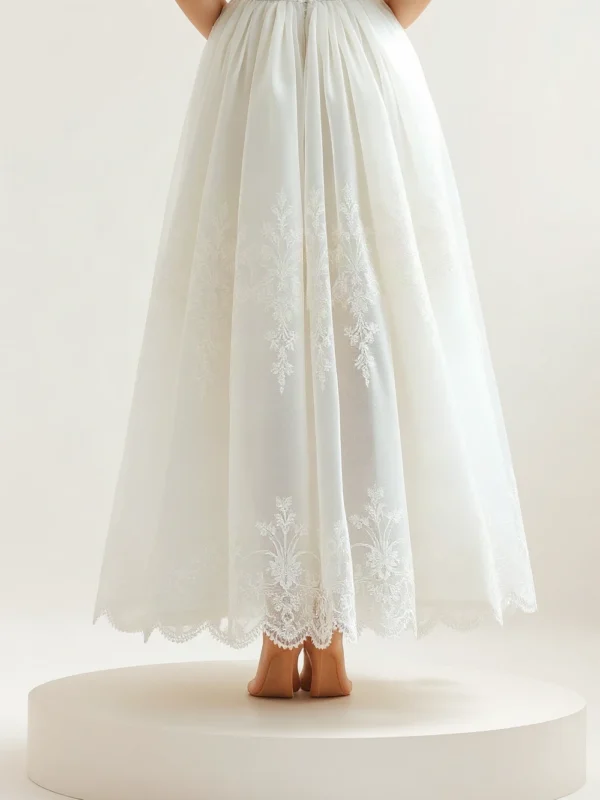
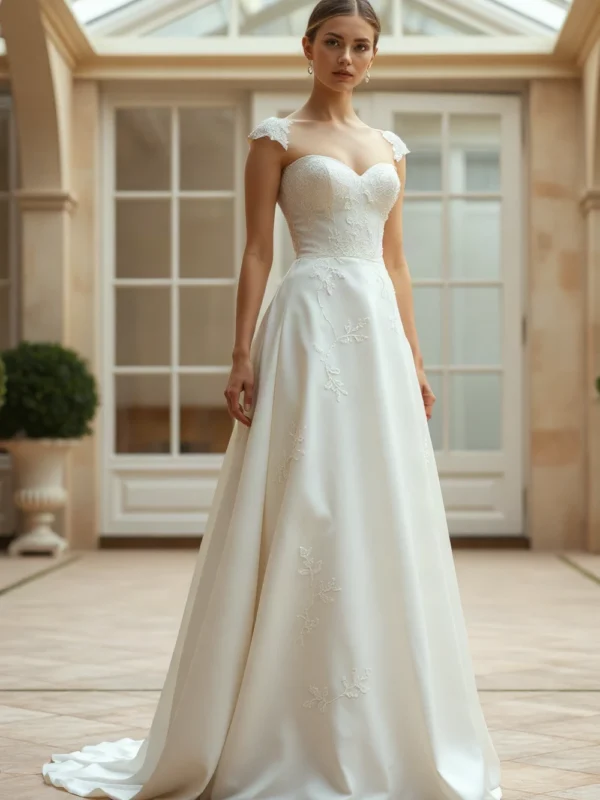
The third concept shifts attention downward. Fine botanical designs become more visible near the scalloped edge of an ankle-revealing skirt, bringing the shoes into the composition. The fourth uses a much more open arrangement: small vines are spaced across an A-line skirt, while short appliqué-like shoulder extensions return a little detail to the upper body.
The fifth and sixth images offer two interpretations of sheer sleeves. On the fitted fifth silhouette, floral cuffs and a concentrated hip motif create firm visual anchors. In the sixth, smaller blossoms are scattered along the arms above a smooth A-line skirt, producing a softer transition between the transparent upper layer and the opaque body.
Begin by deciding how clearly the flowers should read from a distance. Sculptural blossoms remain a strong feature in full-length photographs, while small tonal embroidery-like details may reveal themselves more gradually. Decoration around the neck can replace a necklace, whereas a detailed hem makes shoe height, walking length and the shape of the lower edge more important.
Accessories work best when they extend the direction of the motifs rather than compete with their scale. A simple long veil can continue the vertical flow of a vine on a full skirt, while an airy arrangement of slender flowering stems can accompany a fitted dress without concealing its hip detail. Before choosing, compare front, back, seated and moving views so the floral placement is judged as part of the complete silhouette, not only in a close-up.