Pairing a lace bodice with a simple A-line skirt balances bridal detail with visual calm. Lace can frame the face, shoulders and waist, while the clean skirt widens gradually below and keeps the silhouette easy to read. Yet the formula creates very different balances: a strapless back, restrained fine straps, an off-the-shoulder shape or a ceremonial arrangement of veil and decorated hem.
These six concepts are style references rather than a catalogue of purchasable pieces. They show how neckline depth, strap width, lace coverage, waist transition and skirt volume alter the same general shape, and why a choice should not rest on a static front view. Consider the setting, ordinary movement, accessories and personal comfort. Use the comparisons to enter a fitting with clearer questions and combine favorite details around one coherent focal point instead of collecting unrelated features.
Creating Impact from the Back with Strapless Lace
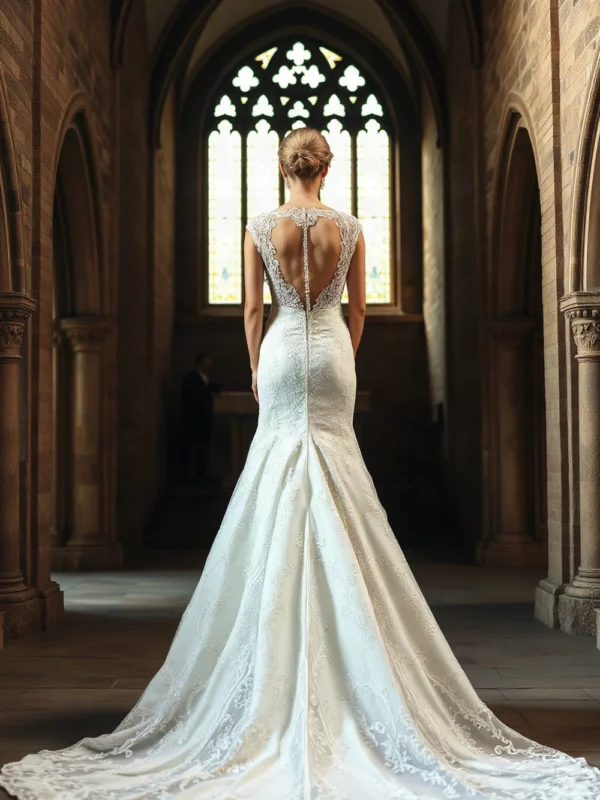
The first approach is powerful because the dress is defined from behind. A strapless upper edge leaves the shoulders and back open, while raised lace concentrates texture down to the waist. The smooth-looking skirt begins to widen after the hips, allowing the pattern to lead without competition. This suits someone who wants the entrance and procession to deliver a memorable rear silhouette.
Do not judge the shape only by its exposed shoulder line. Check whether the upper edge remains stable as the arms move, the waist transition stays level across the back, and a planned veil hides the lace completely. Compared with fine straps, it creates a more continuous shoulder line, but support and movement need closer testing. Small earrings and an updo can keep the clean structure visible.
Limiting Lace to the Neckline
The second look shows that lace need not cover the entire bodice to matter. A soft V neckline framed by fine straps gains definition from a narrow, delicate lace edge. With the remaining bodice and most of the skirt left calm and smooth, the eye travels down without interruption. The A-line keeps a romantic cue while leaning toward minimalism.
This is an effective middle ground for someone who finds extensive pattern unlike their everyday style but does not want a completely unadorned dress. Because the detail is small, a necklace, earrings or hair ornament becomes more noticeable. For a clean neckline, skipping a necklace and choosing modest earrings may work better. At a fitting, confirm that both straps sit evenly and the lace follows the same height on each side.
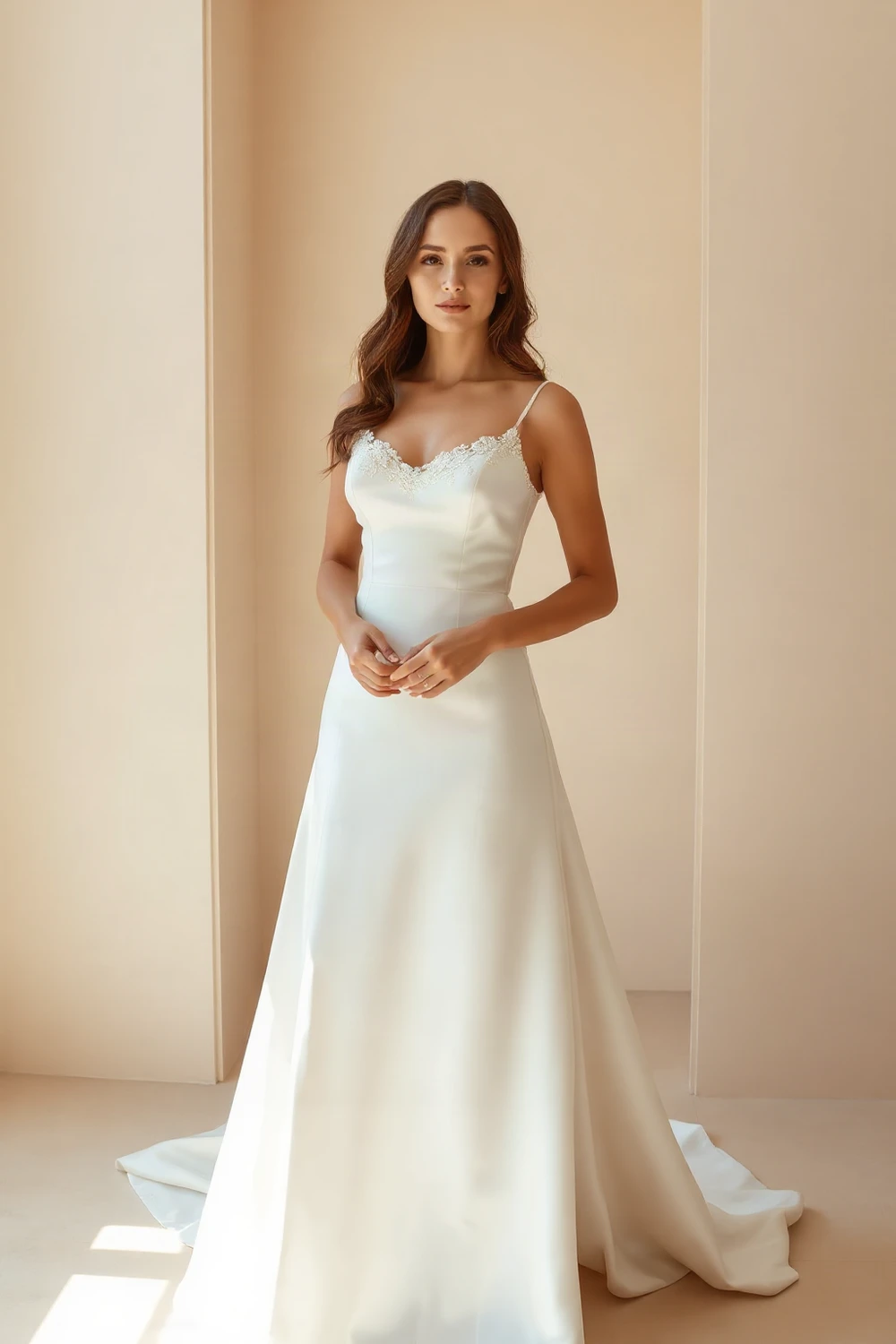
Softening Volume with an Off-the-Shoulder Line
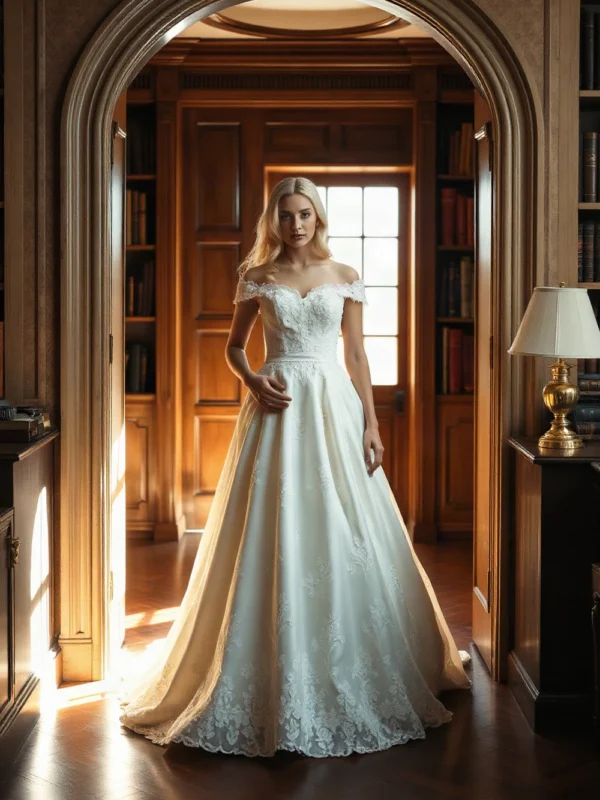
The third approach combines a densely patterned bodice, bands below the shoulders and a wider, lightly layered skirt. The horizontal neckline opens the upper body, while the central V draws attention toward the waist. Translucent-looking layers add more motion, air and romantic softness than the smooth alternatives. It remains A-line but reads as fuller and more ceremonial.
Movement is the key practical comparison. Test the shoulder bands when raising the arms, reaching forward or embracing someone. A layered skirt may look weightless, yet it needs different handling in narrow passages and while sitting than a slimmer smooth version. Flowing volume can suit an open setting; controlled width may feel easier in a compact room. Base the choice on movement habits and desired atmosphere rather than rigid rules about body shape.
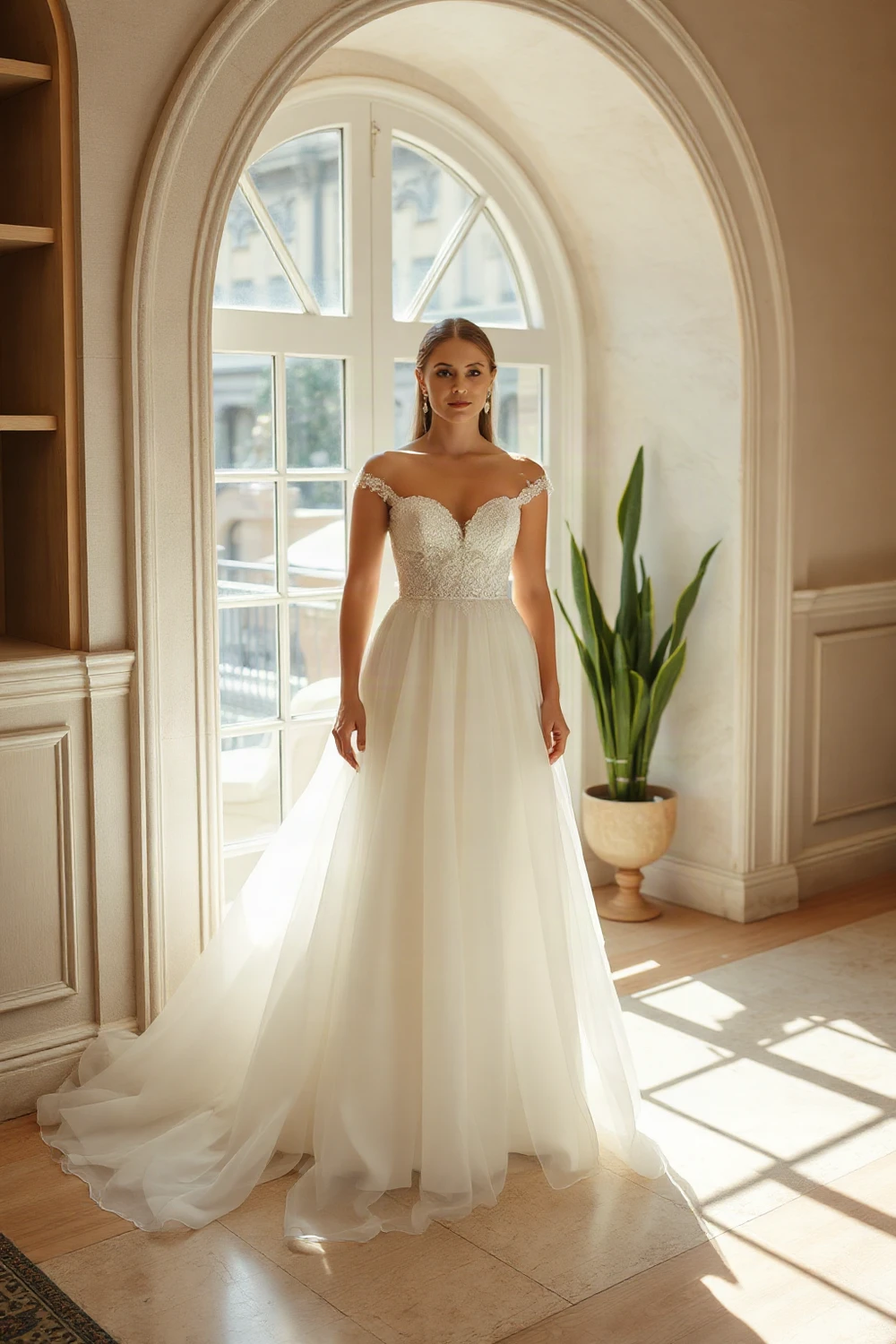
Balancing Dense Lace with Fine Straps
In the fourth image, lace covers the whole bodice rather than stopping at the neckline, yet extremely fine straps keep the composition visually light. The softly curved neckline bridges the prominent pattern and simple skirt. Window light makes the raised-looking texture more apparent, while the uninterrupted lower surface acts as a quiet field. This offers detailed coverage without heaviness around the shoulders.
Fine-strap placement directly changes the composition. Straps set close together can narrow the neck area; those placed farther out make the neckline appear wider. At a fitting, inspect their symmetry, ensure internal support does not alter the neckline, and sit to check whether the bodice folds at the waist. Because lace is already the focus, restrained jewelry preserves the contrast between the detailed top and calm skirt.
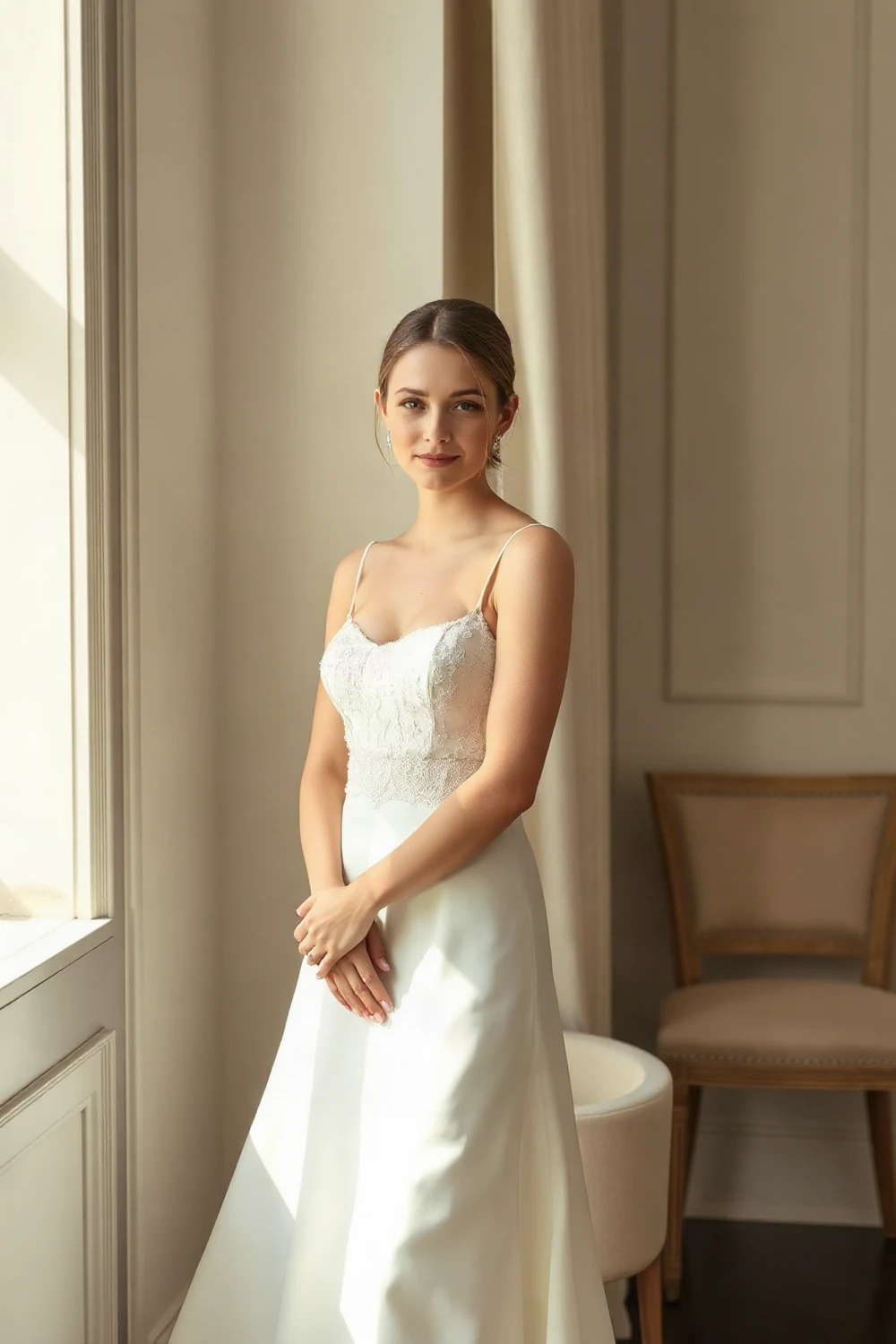
Using the Waist as a Clear Boundary
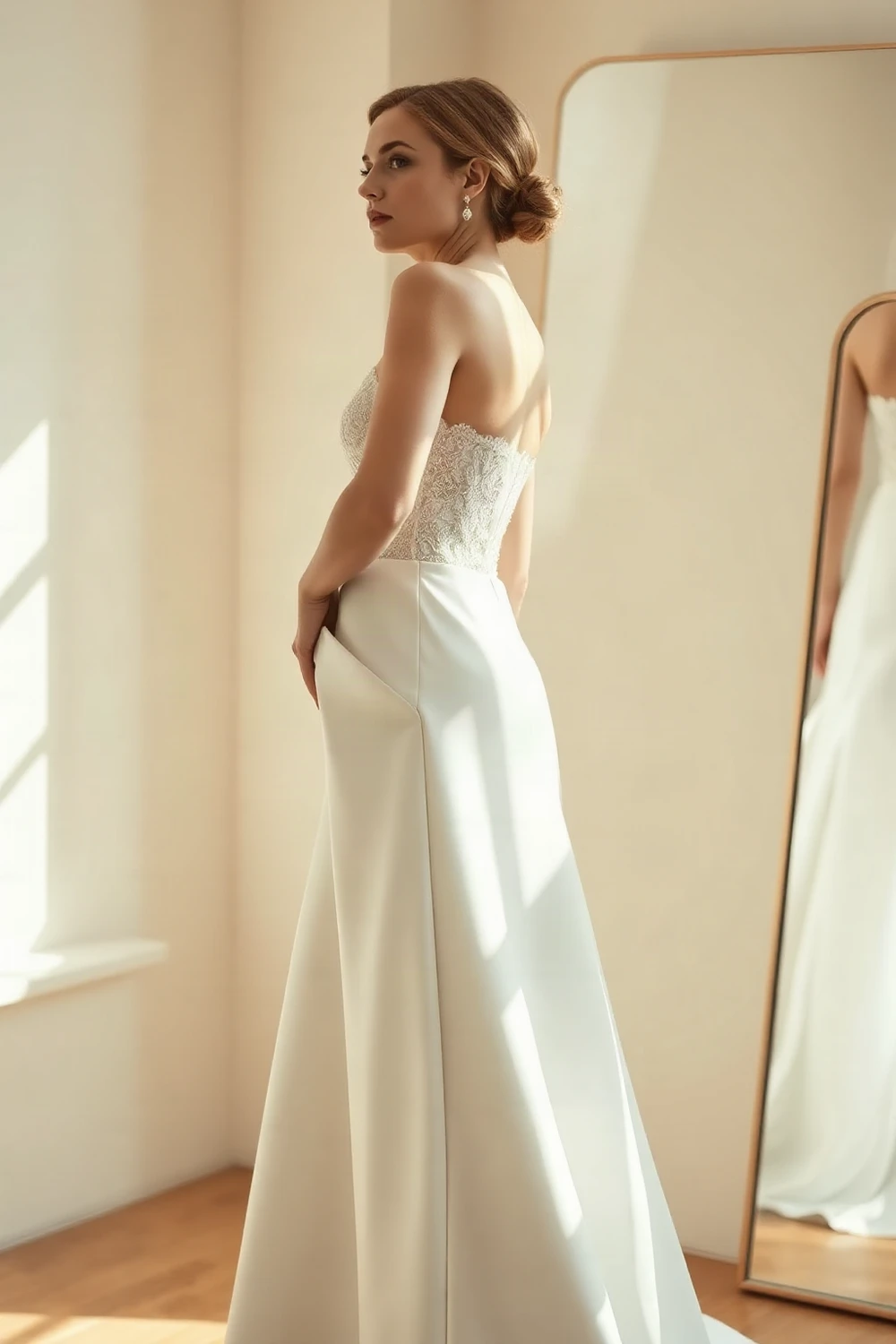
The fifth approach divides the design into clear upper and lower zones. A fine-strap lace bodice ends at a crisp horizontal line around the natural waist, and the unembellished skirt continues in a long, controlled A shape. The readable limit of the lace and symmetrical front view create an orderly, contemporary character.
Waist placement can affect perceived proportions as strongly as the neckline. A higher transition may lengthen the skirt while shortening the upper section; a lower one does the opposite. At a fitting, walk and sit instead of studying only a still reflection, then review the side view. A narrow waist band could reinforce the boundary, but should remain structural and quiet. A highly reflective or elaborate addition could disrupt the calm geometry that makes this approach successful.
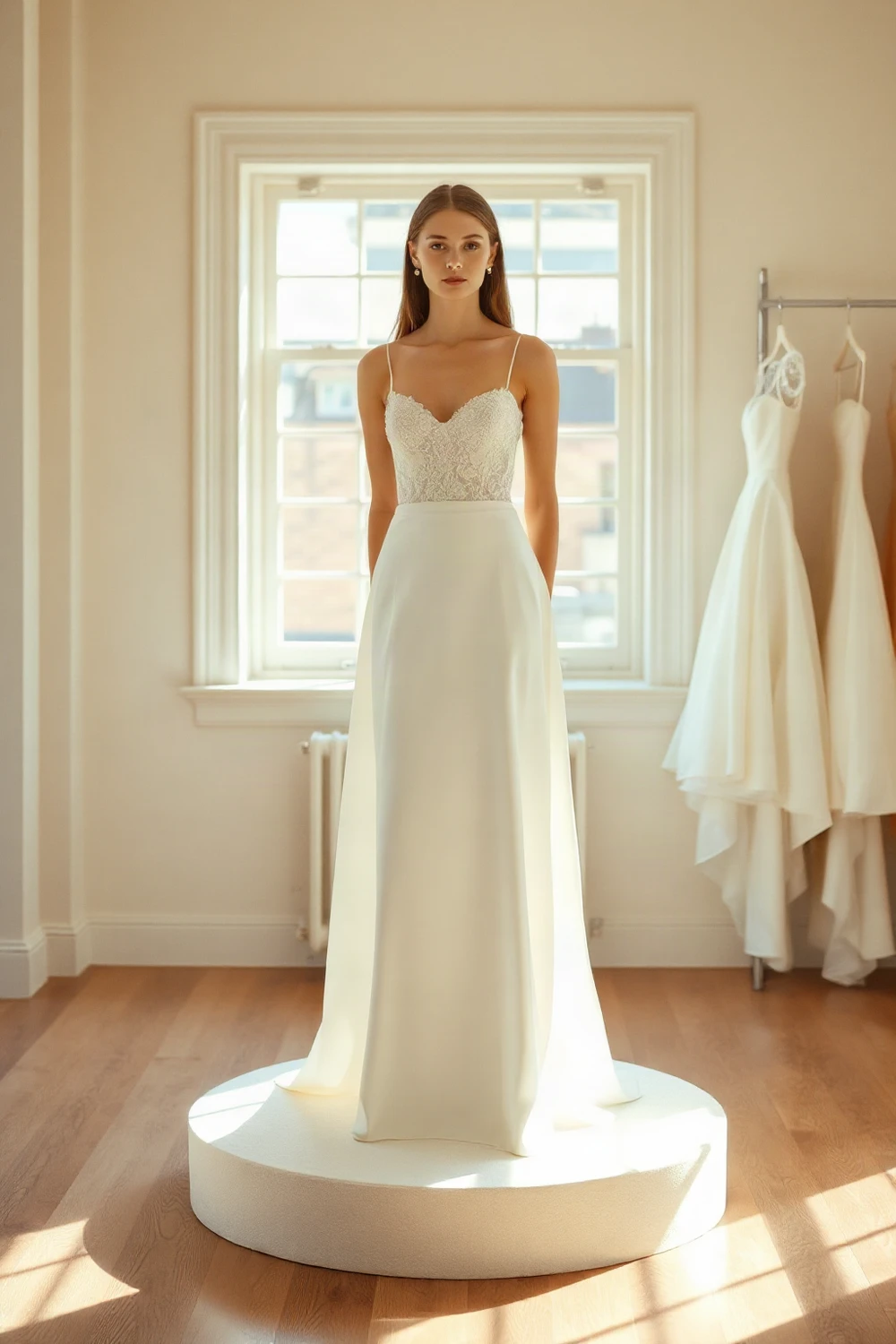
Coordinating the Veil, Bouquet and Hem
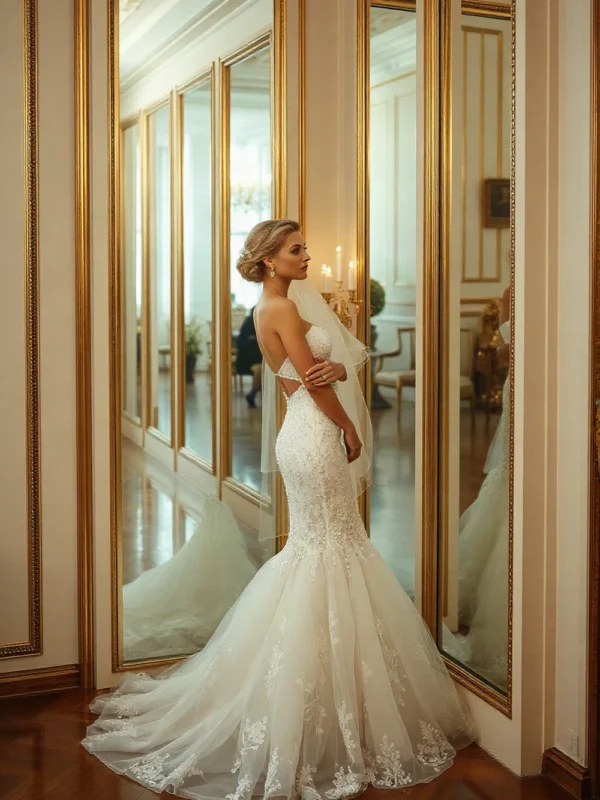
The sixth interpretation expands the lace bodice and pale A-line into a complete ceremonial composition. Floral lace around a softly squared neckline clearly frames the face. A slim waist band separates the textured bodice from the skirt, while motifs rising from the hem recall the pattern above. The veil and white-and-green bouquet join this visual rhythm.
The practical lesson is not to give every attractive detail equal strength. Lace straps, a bordered veil, a bouquet and a decorated hem can compete if all are assertive. Choose the lead feature first: perhaps the lace around the face, the long veil or the finished hem. Keep the others at a supporting scale. For a more minimal ceremony, the same neckline and waist arrangement could instead accompany a plain hem and unadorned veil.
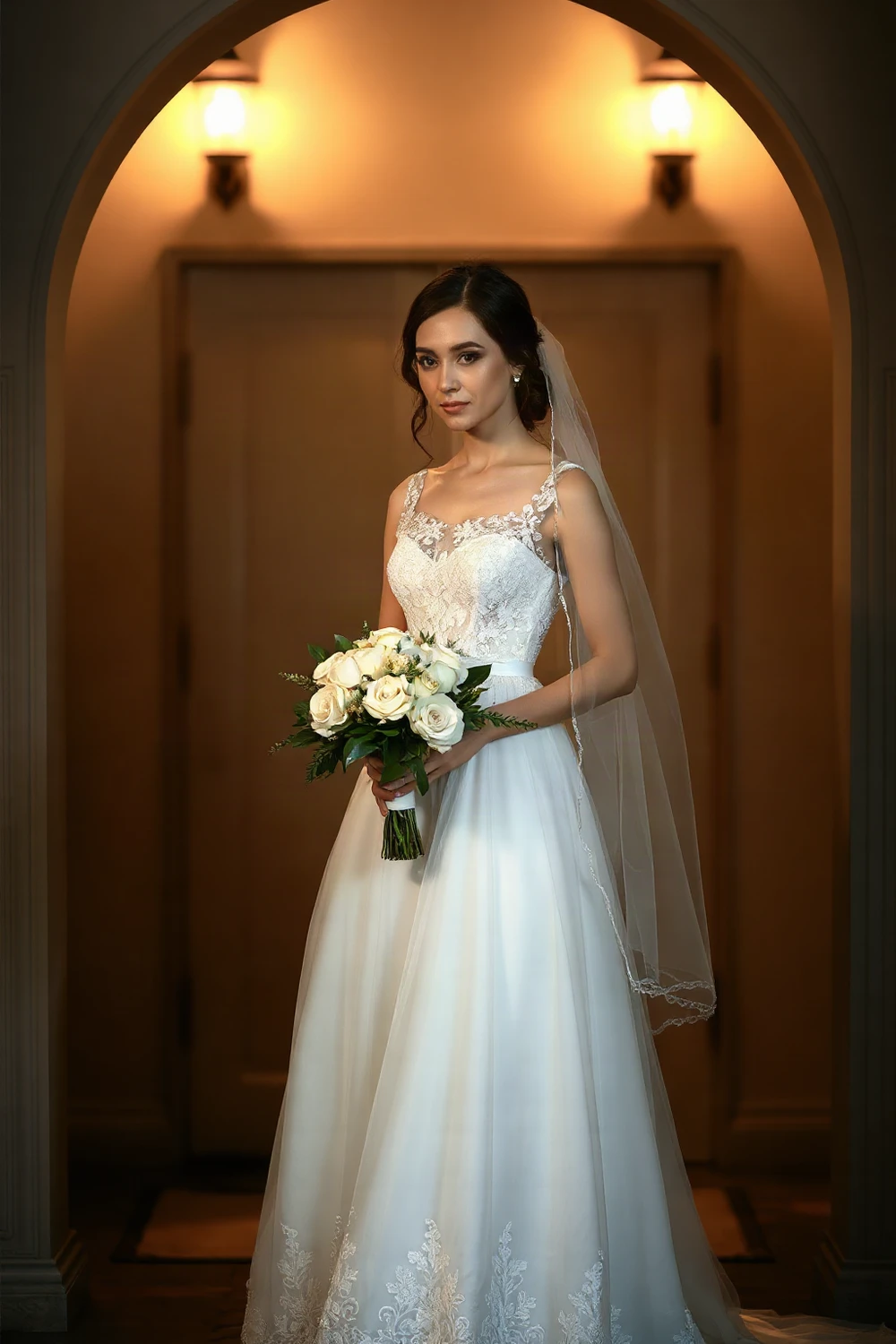
These six approaches succeed not through equal amounts of lace and simplicity, but through a clear division of labor. Lace defines the face, shoulder line or waist; the simple A-line skirt extends the silhouette and gives detail room to breathe. Straps, neckline direction, smooth or layered skirts and accessory strength create the meaningful differences.
Rather than copying one image, extract one functional idea from the examples that appeal to you. You might choose the first look's back impact, the second's limited lace or the sixth's accessory hierarchy, but organize everything around one focal point. At a fitting, view the dress from front, side and back. Walk, sit, raise your arms, and assess the veil or bouquet at the same time. The most coherent result keeps its detail clear without making you manage the dress through every movement.
Explore six visual ideas pairing lace bodices with simple A-line skirts. Compare necklines, straps, waist definition, skirt volume and veils to clarify your own bridal styling priorities.
Frequently asked questions
Should I choose full bodice lace or lace only along the neckline?
Use broader lace coverage if the bodice should be the main focal point. For a calmer contemporary effect, limit it to the neckline as in the second image. Also consider how visible you want jewelry and the veil to remain beside the pattern.
How can I decide between strapless and fine straps?
Strapless styling creates an uninterrupted shoulder line and a strong back view, while fine straps visibly frame the upper body. Test stability in both by walking, sitting and raising your arms rather than relying on a still fitting-room pose.
Is a layered skirt or a smooth simple skirt more practical?
Layering provides softer motion and romantic volume. A smooth-looking skirt emphasizes the lace bodice more sharply and may feel easier to manage in narrow passages. Base the choice on the venue layout, seating and how much volume you enjoy handling.
Does a lace bodice need a necklace?
No. Dense lace or prominent straps around the neckline may work better with small earrings and no necklace. If lace forms only a narrow edge, a simple necklace is possible, provided it does not compete with the neckline motif.
How should a veil and decorated hem be balanced?
Choose one as the primary feature. A veil with a distinct border can be paired with a quieter hem, while strong motifs at the bottom work well with a simpler veil. This keeps both details from demanding attention simultaneously.