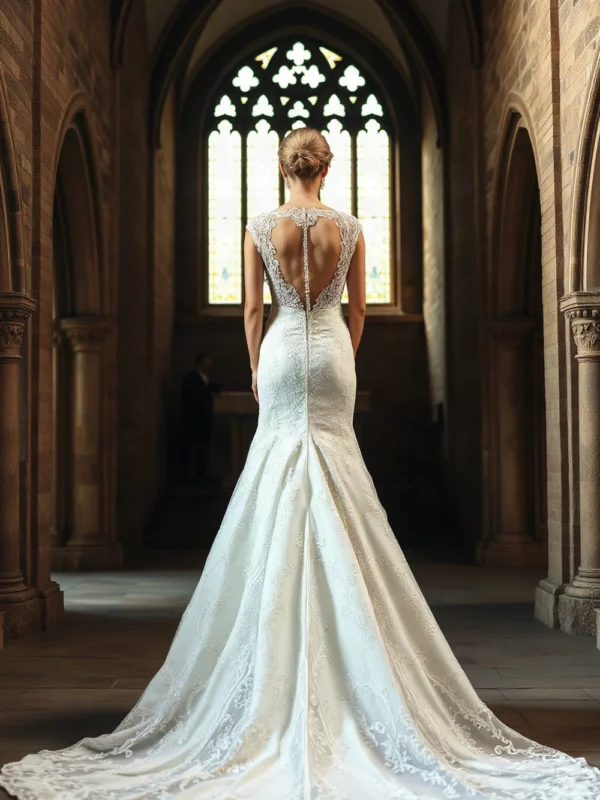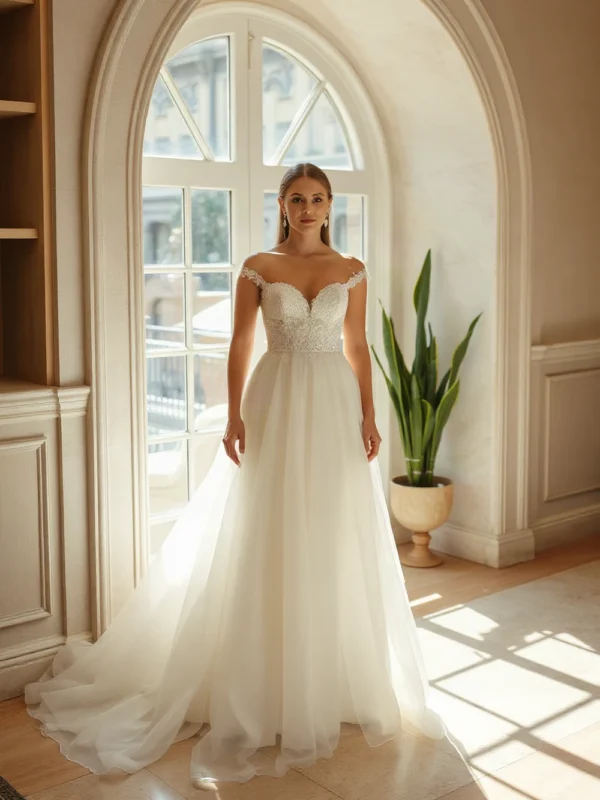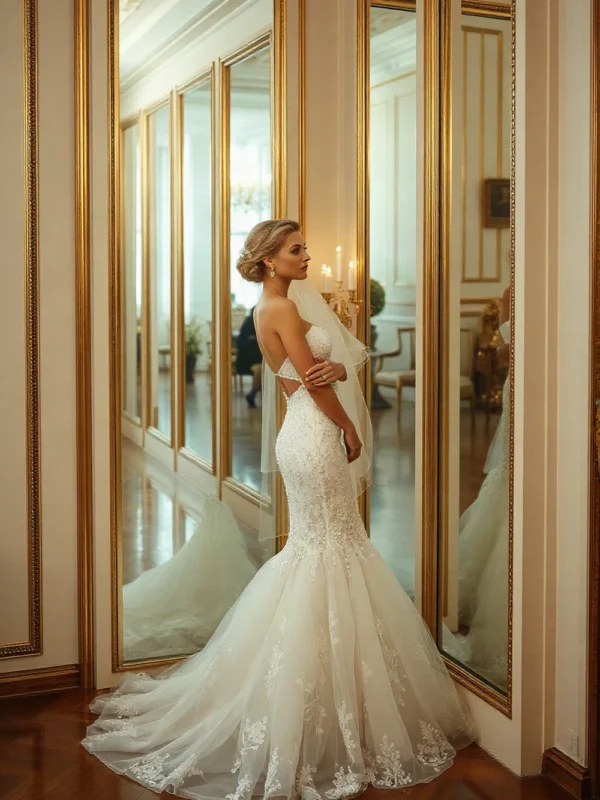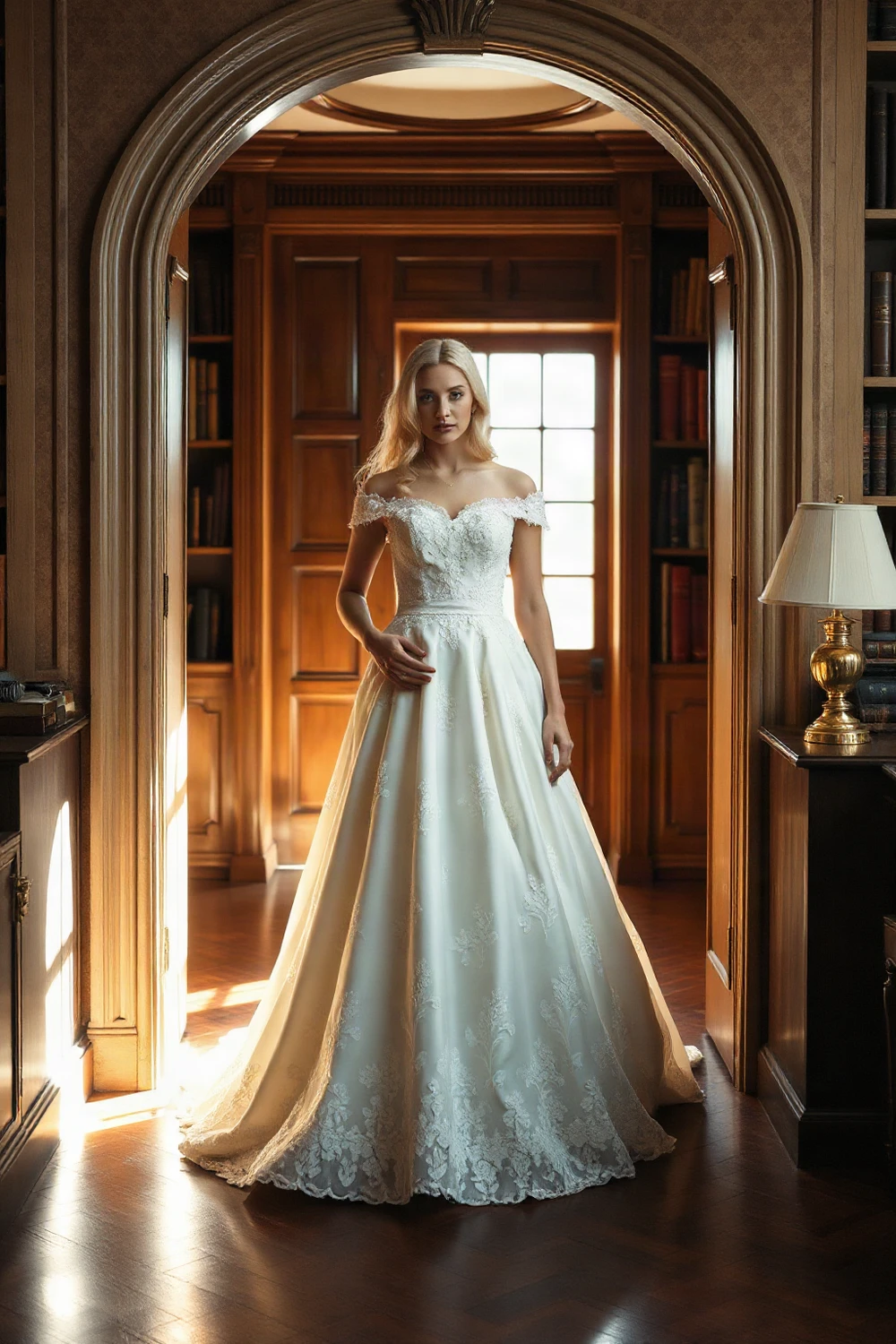
In a romantic wedding dress, an off-the-shoulder neckline creates an open horizontal focus around the neck and collarbones, while a voluminous skirt gives that delicate upper line a strong foundation. That contrast is the shared idea here: gently curved necklines, close-fitting bodices and pale skirts that expand toward the floor. The six gallery scenes show how the same formula can change through lighting, motif density, sleeve construction and train shape. These are AI-generated style concepts, not photographs of real wedding dresses available for purchase.
In the library scene, a carved wooden arch places the silhouette within a second frame. The off-the-shoulder, near-sweetheart neckline and patterned bodice define the upper body, while the broad skirt has a comparatively restrained surface. Floral-looking details become denser near the hem and draw the eye downward. This is a useful visual reference for anyone considering an ornate upper section with a measured distribution of decoration below.
The glass-roofed conservatory offers a lighter, more natural interpretation. Seen from the side, the silhouette clearly reveals the skirt flowing backward into a long train pooled on the floor. Tulle-like layers and lace-like motifs around the lower edge make a soft transition against the glass and dark architectural framework. If a long train is appealing, this concept is worth considering in relation to walking space, turning movements and the planned direction of photographs.
The same underlying silhouette appears more ceremonial in the room with the crystal chandelier. An evening sky, dark floor and warm rim light heighten the contrast of the white bodice and symmetrical skirt motifs. A clearly defined waist and broad, orderly skirt create a commanding composition in a still pose. This idea helps illustrate how dress details might read from a distance within a dramatic, illuminated interior.
The long arched corridor combines an off-the-shoulder line with long, lace-like sleeves. The shoulders remain visually open, but the upper section gains a more covered and detailed character. An airy layered skirt sweeps sideways during movement, accompanied by a small pale bouquet that does not obscure the silhouette. When movement matters, it is useful to examine not only a front-facing pose but also a full step and the way the skirt behaves around the shoes.
The profile beside the arched window highlights the transition from broad shoulder bands to a close-fitting bodice. Warm backlighting reveals floral-looking motifs descending in vertical paths from the bodice onto the full skirt. This arrangement gives the generous volume a continuous sense of direction. A side-view fitting can similarly help compare how the neckline height and the beginning of the waist appear in profile.
In the split-staircase scene, a lace-like surface covering nearly the whole dress becomes the main feature. The clean off-the-shoulder line provides visual breathing room between dense floral patterns and the rounded train spread across the floor. The symmetrical stairs reinforce the centered, balanced shape of the broad skirt. For those drawn to extensive pattern, the concept demonstrates the importance of balancing motif scale with overall volume.
These approaches should be compared on more than romantic appearance alone. The library and arched-window scenes emphasize motif placement, the conservatory shows the flow of a train, and the corridor makes movement visible. The chandelier room and staircase demonstrate how a broad skirt interacts with formal architecture. The relationship between shoulder bands and arm movement, bodice support, the perceived weight of the skirt and train management can only be assessed with an appropriate physical sample during a real fitting.
For a final direction, identify the visual elements you prefer separately: neckline openness, sleeve length, motif density, skirt layering and train shape. Then test sitting, walking, turning and raising the arms in a suitable fitting garment. Rather than copying one scene, this process allows the six concepts to become practical inspiration for a balanced look that suits both personal style and the celebration setting.
Compare six visual concepts that pair an off-the-shoulder neckline with a voluminous skirt, focusing on silhouette, motifs, trains, movement and setting.