In a fitted wedding dress, the silhouette may make the first impression, but the surface often determines its character. An uninterrupted smooth finish makes the body-skimming line easy to read. Lace, appliqué-like motifs and transparent layers direct attention toward selected areas instead. Choosing plain or patterned is therefore not simply a question of ornament. It is a balancing decision involving the neckline, sleeves, back, flare point, veil and the visual density of the ceremony setting.
These six visual ideas demonstrate how differently that shared foundation can be interpreted. From a quiet studio and mirrored corridor to warm window light, a staircase and ornate rooms, every composition reveals another aspect of surface and structure. The aim is not to copy a complete look, but to identify which elements suit personal style, movement and venue. A useful comparison goes beyond a still frontal pose: it considers the profile and back, comfort while sitting and walking, freedom through the arms, and the cumulative effect once jewelry, hair and a veil are added.
Controlled Minimalism with a Sheer Shoulder Layer
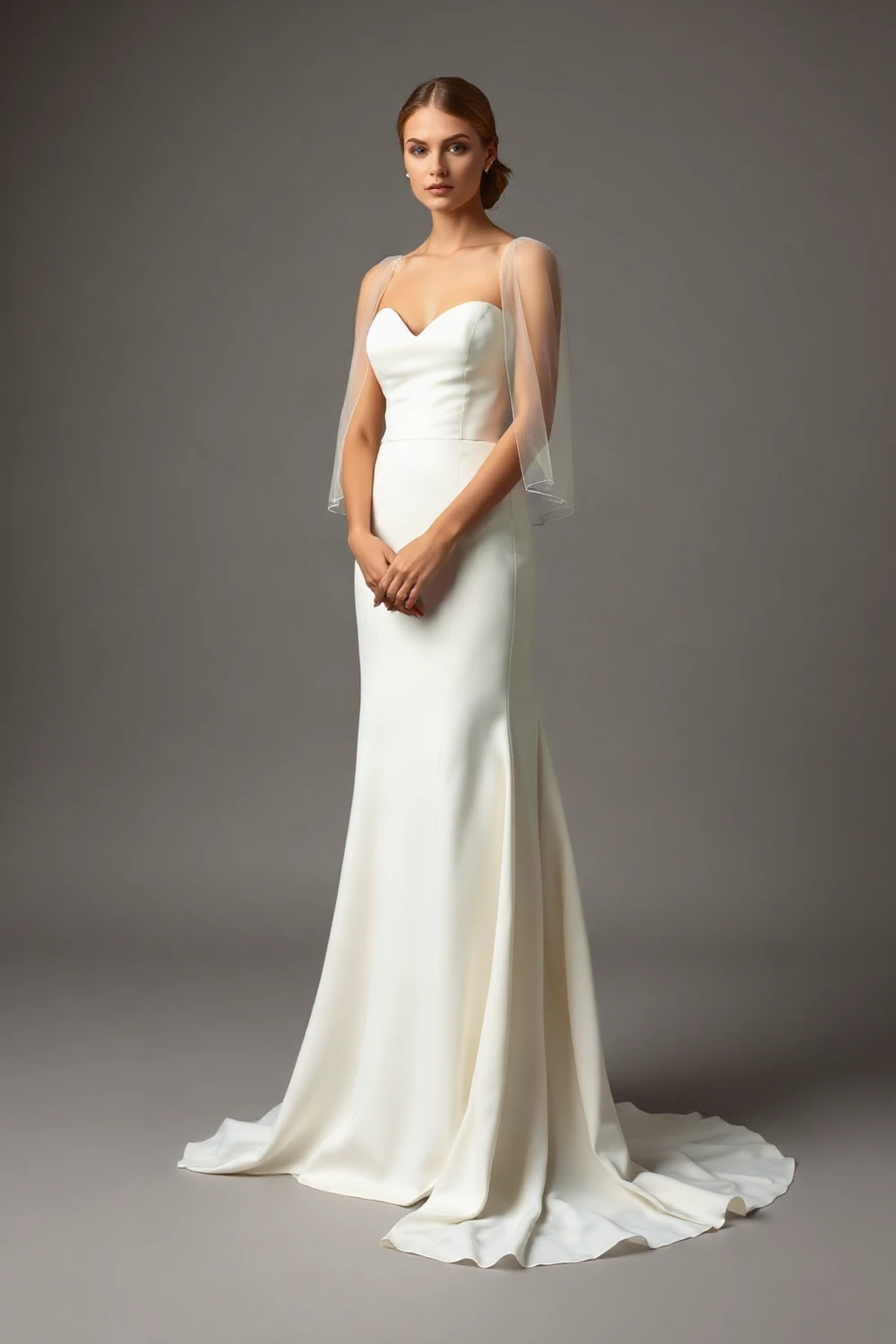
The smooth finish in the first concept makes the sweetheart neckline and vertical bodice seams immediately legible. Transparent pieces descending from shoulder to elbow soften the strapless structure without hiding it. This is a measured way to give a plain dress movement and ceremony without introducing lace. The short train also helps preserve the uninterrupted silhouette.
This direction can work comfortably in a small or visually quiet setting. Because the neckline remains open, choose just one focus among delicate earrings, a fine necklace or a noticeable hair accessory. During a fitting, raise the arms, reach forward, sit and exchange a hug while wearing the sheer layer. Even a piece that looks weightless can restrict movement if its attachment points are poorly positioned.
Balancing an Open Back and Dense Texture
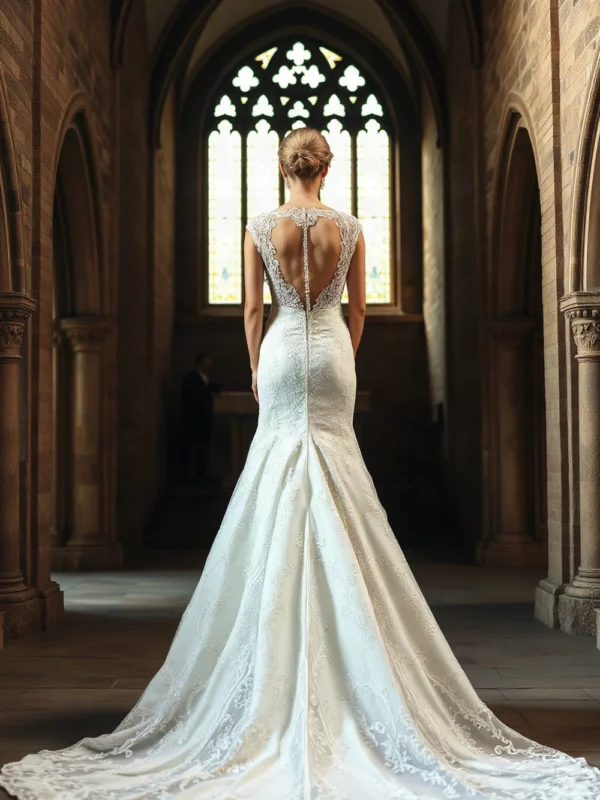
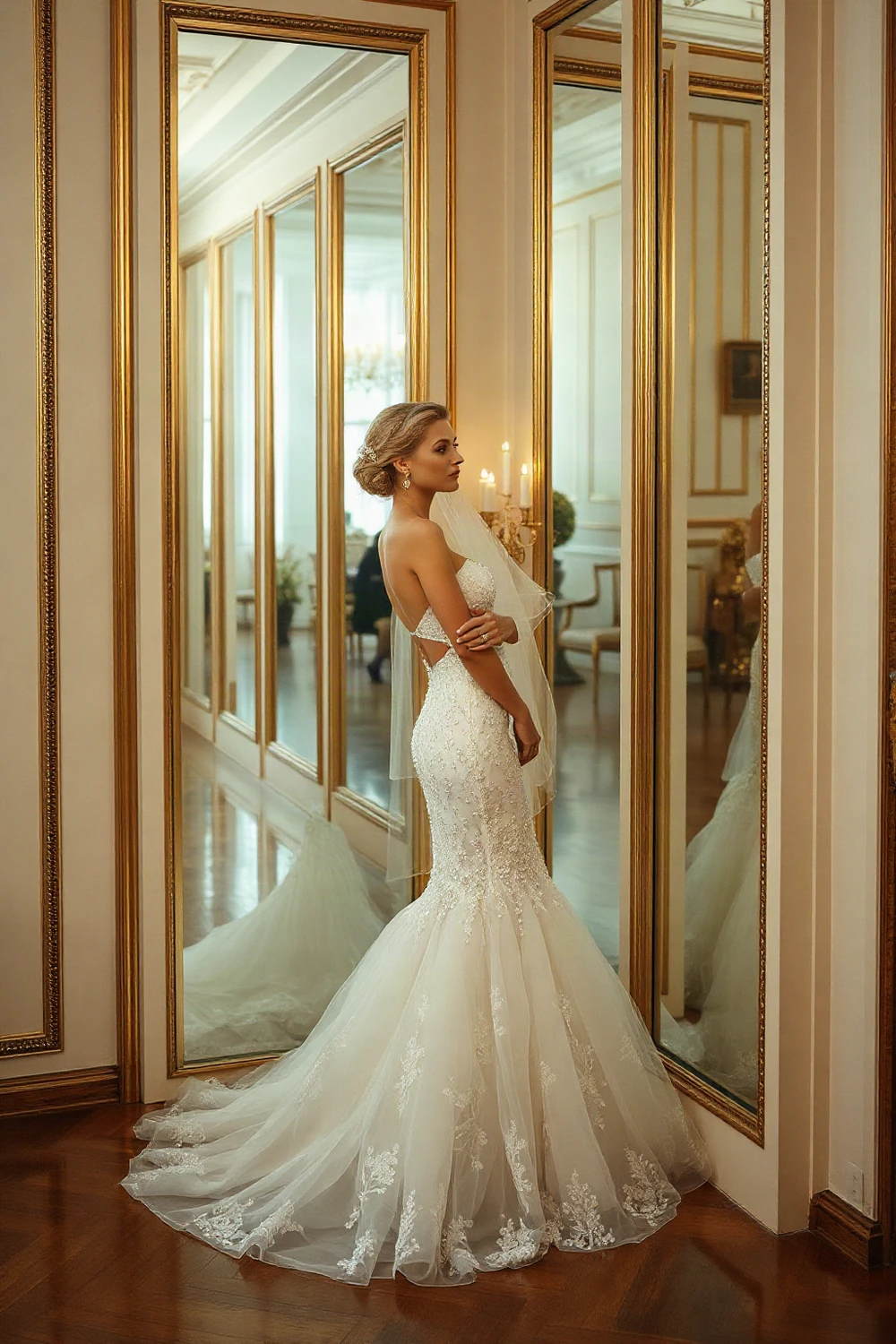
The mirrored-room concept combines a body-following line with rich floral texture and an open back. Pattern continues across the hips before transparent layers widen around the knees. As the mirrors repeat the rear view, back connections, veil and rounded train become integral rather than secondary elements of the design.
Such an active surface is often easier to balance with restrained jewelry and hair kept away from the back. It offers more close-up detail than a smooth design, but can become crowded beside ornate architecture, embroidered veiling and large accessories. When considering an open back, assess not only its appearance but also the feeling of support and the stability of the upper section while walking, turning and sitting.
A Smooth Sculptural Surface Shaped by Light
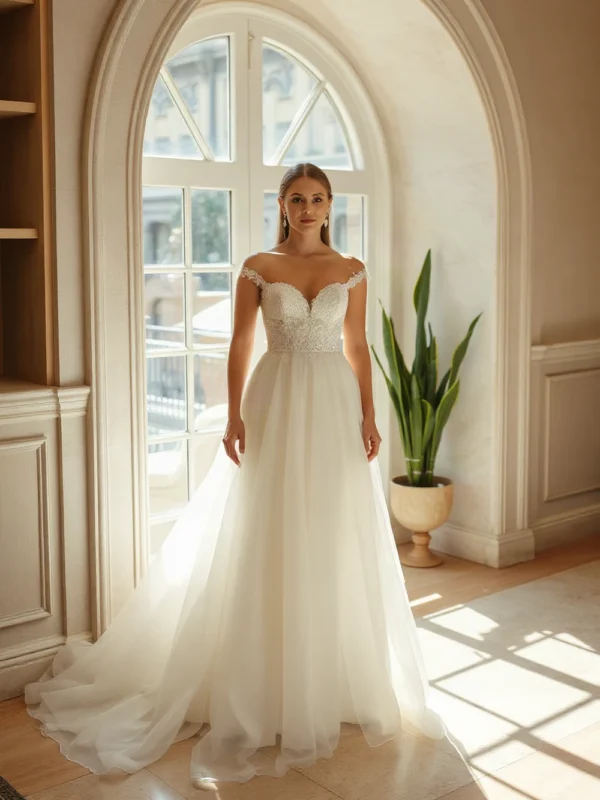
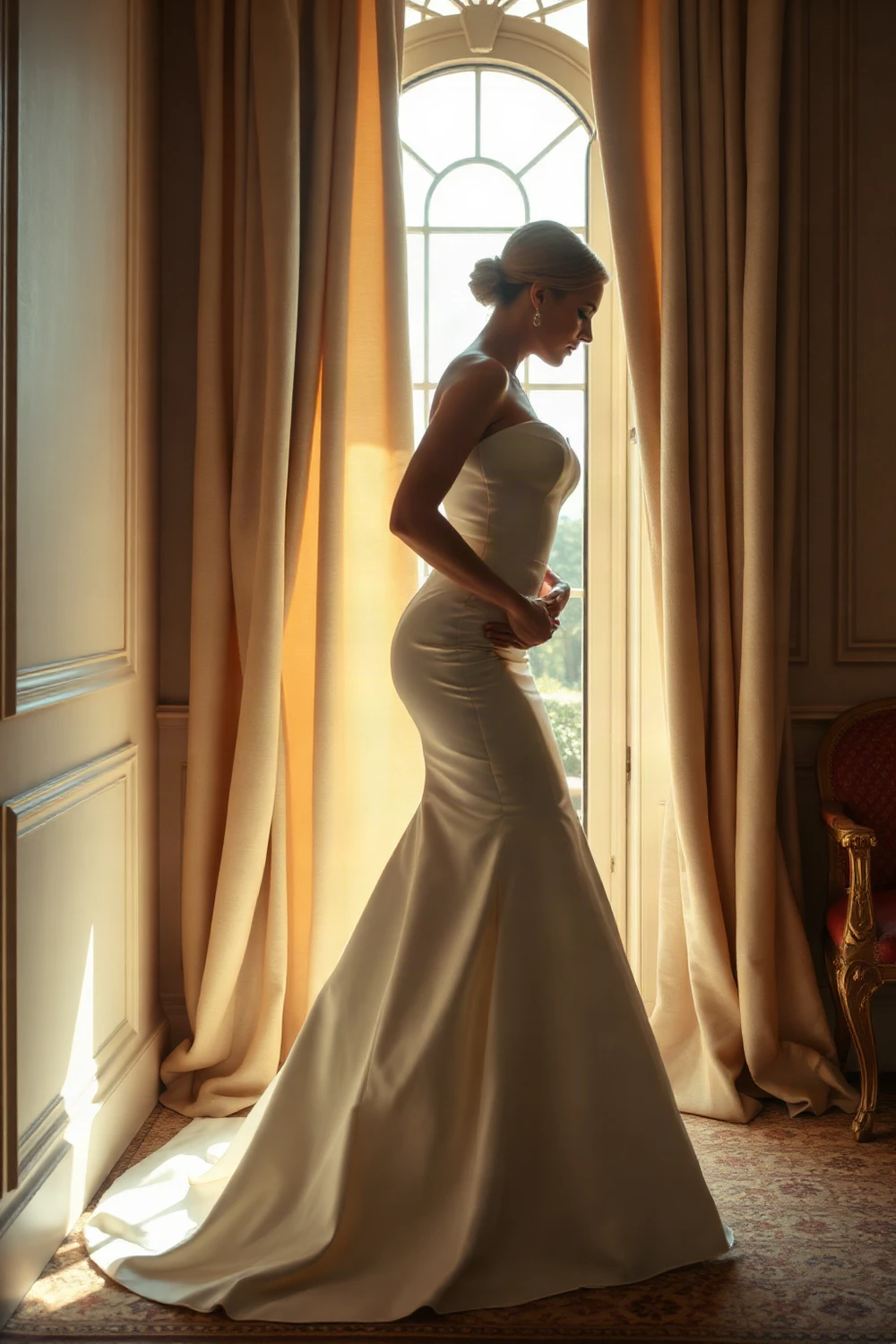
The strapless dress beside the arched window proves that a design can be visually strong without applied decoration. Warm backlight defines the transition from waist to hip, while the continuous skirt creates an unbroken path from the torso to the floor. Light and shadow, rather than lace, become the decorative element.
A plain finish reveals the cut clearly, but it can also expose creasing, tension and seam placement. View it in daylight, warm indoor light and from several angles rather than relying on one fitting-room mirror. From the side, the flare point affects both proportion and walking room. Small earrings instead of a large necklace would retain the quiet strength of the exposed shoulder and neckline.
Concentrating Lace and Volume below the Hips
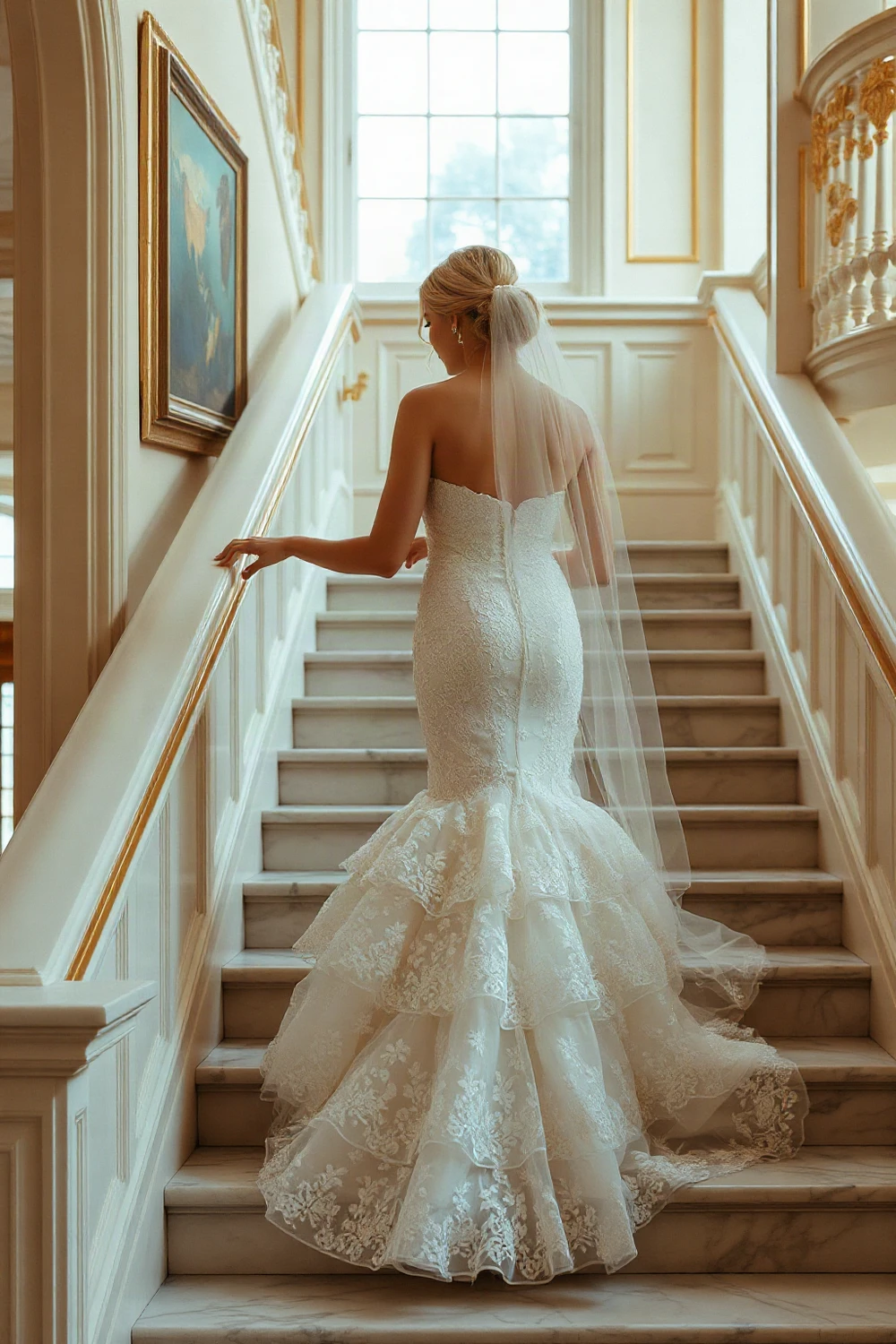
On the staircase, lace emphasizes the transition from the narrow torso to a tiered, voluminous skirt. Ruffles beginning below the hips lengthen the upper line, while floral edges make the movement of each layer visible. A long, plain veil places one calm vertical over the patterned surface and moderates its density.
This concept can inspire a dramatic rear view and a memorable entrance, but tiers require more management than a smooth train on stairs or through narrow passages. Walk at an ordinary pace, turn and climb a few steps during the fitting. Plain tulle is a useful veil choice because it leaves the lace readable and prevents unrelated motifs from competing across the back.
Creating Contrast with a Plain Dress in an Ornate Room
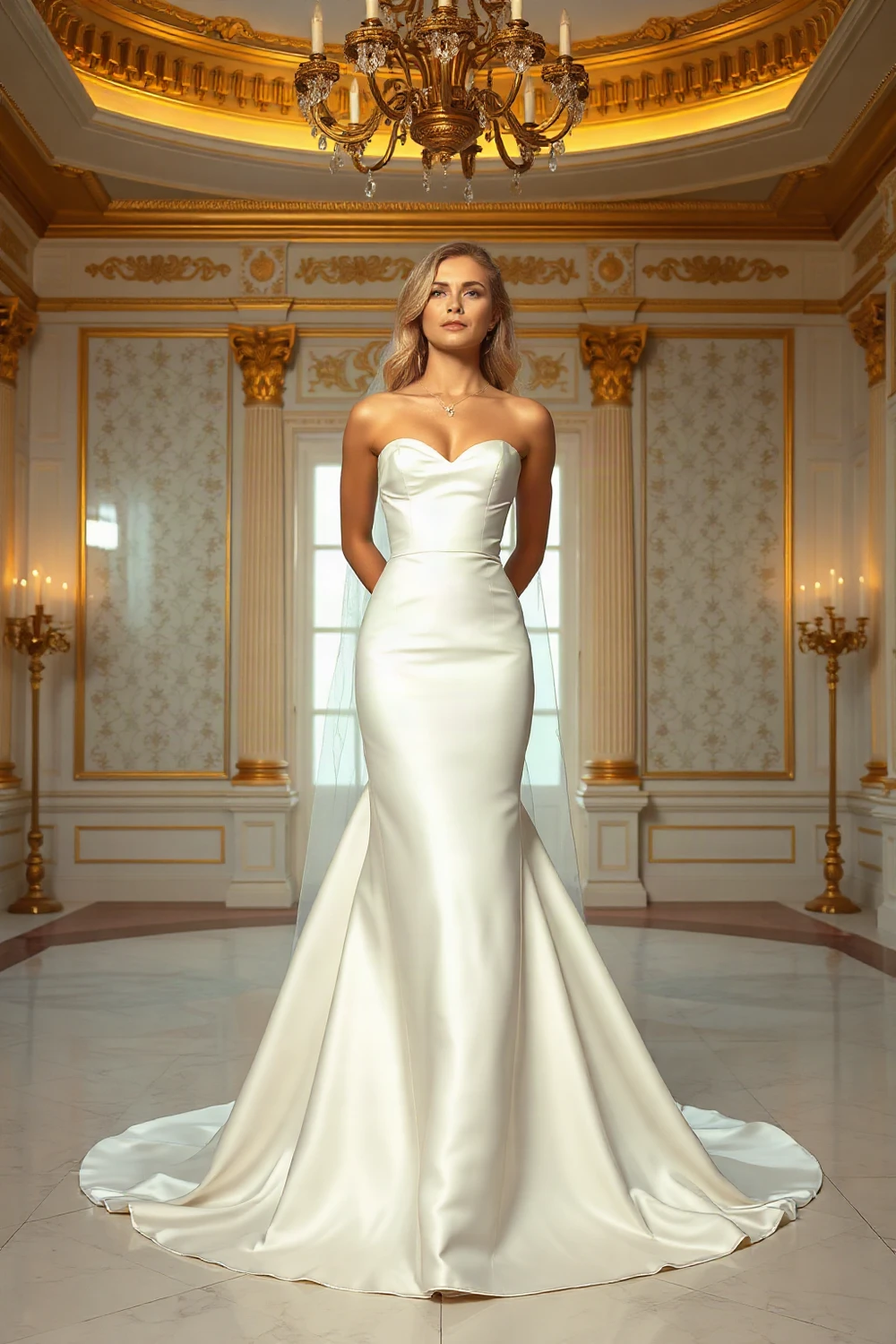
The smooth dress in the gilded ballroom shows that gown and venue need not share the same level of decoration. A sweetheart neckline and structured bodice define the figure, while the unembellished surface provides a calm center among the chandelier and architectural detail. The symmetrical framing also makes the fitted line appear especially formal and precise.
If a venue is already patterned, reflective or gold-toned, a plain dress can provide welcome contrast in photographs. In a simpler room, the same silhouette could be personalized with a floral veil or stronger earrings. Consider the dress together with bouquet, hair, jewelry and background, rather than treating each separately. A clear hierarchy prevents every element from demanding attention at once.
Carrying a Continuous Lace Language through Long Sleeves
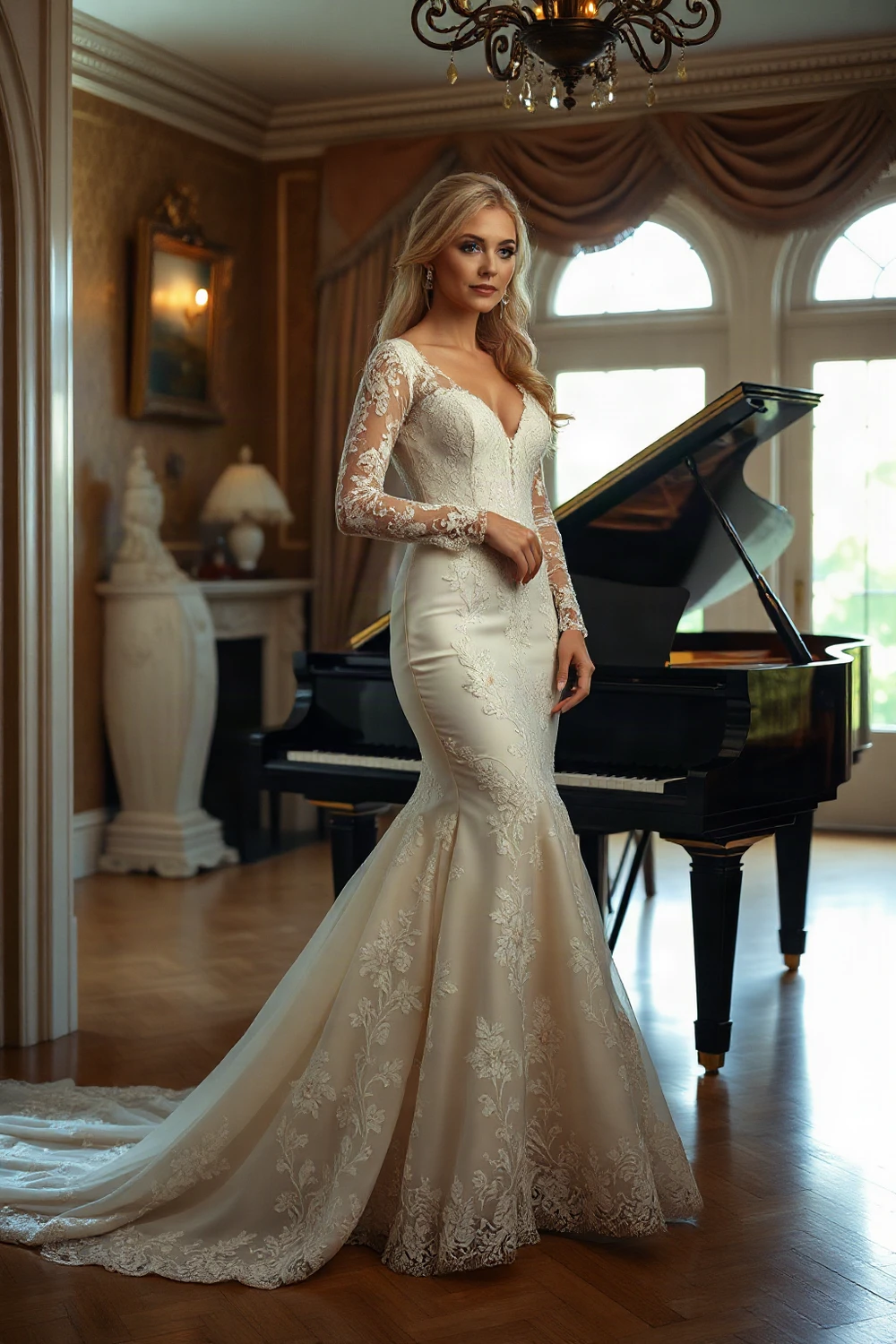
Beside the piano, floral lace continues from sheer long sleeves across the bodice and into the expanding skirt. Vertical motifs lengthen the close-fitting section, while a denser border defines the flare. The deep V neckline introduces openness beside the covered arms, keeping the upper body from appearing visually heavy.
This suits someone who wants lace to act as a complete design language rather than a small accent. With more texture around the shoulders than a strapless concept, less jewelry may be necessary. Bend the elbows, lift the arms and sit during the fitting; a transparent sleeve should move as comfortably as it looks. Also inspect how motifs meet at neckline, waist and skirt seams, since those transitions affect the continuity of the pattern.
The most useful balance among these six ideas comes from deciding where attention should rest, not from automatically choosing the plainest or most detailed option. Select a smooth surface when the clarity of the silhouette is the priority. Choose concentrated or continuous lace when texture should lead the composition. An ornate venue does not force simplicity, but it makes a clear visual hierarchy more valuable.
Before deciding, view the dress from front, side and back. Sit, walk, turn and test the full range of the arms. Add the veil and jewelry only afterward, then remove anything that competes rather than supports. That process turns visual inspiration into a choice that remains coherent, comfortable and useful beyond a single posed image.
Compare plain surfaces and lace across six fitted wedding dress concepts. Explore how necklines, sleeves, back details and skirt volume shape the overall silhouette and styling balance.
Frequently asked questions
Will a plain wedding dress look too simple in an ornate room?
Not necessarily. A smooth surface can provide a calm focal point against detailed architecture. Personalizing it with one considered element, such as a veil, bouquet or small piece of jewelry, is often more balanced than decorating everything.
Can lace be limited to just one part of a fitted dress?
Yes. It can be concentrated on sleeves, the bodice, around the back or only across the flared skirt. Choosing one area of emphasis lets the remaining body-skimming line stay visually clean.
How should I test the comfort of a mermaid silhouette?
Walk at your normal pace, sit, turn and climb a few steps. Pay particular attention to how the flare point affects the knees, whether tiers approach the heels and how the train behaves during a turn.
What kind of veil works with a densely laced dress?
Plain, fine tulle usually balances a prominent dress motif without hiding it. If an embellished veil is preferred, compare the scale and placement of both patterns together so they do not create visual competition.
What should I compare when choosing strapless or long sleeves?
A strapless design exposes the neckline and shoulders, while long lace sleeves frame the upper body more fully. Compare support, arm movement, skin contact and accessory plans rather than relying only on a seasonal assumption.
Sources and further reading
- Six Fitted Wedding-Dress Ideas from Smooth to Lace-Rich
- Minimal Sweetheart Silhouette with Sheer Shoulder Drapes
- Open-Back Lace Mermaid Dress among Gilded Mirrors
- Smooth Strapless Form in Golden Window Light
- Tiered Lace Mermaid Silhouette on a Staircase
- Plain Sweetheart Gown in an Ornate Ballroom
- Long-Sleeved Floral Lace Dress beside a Piano