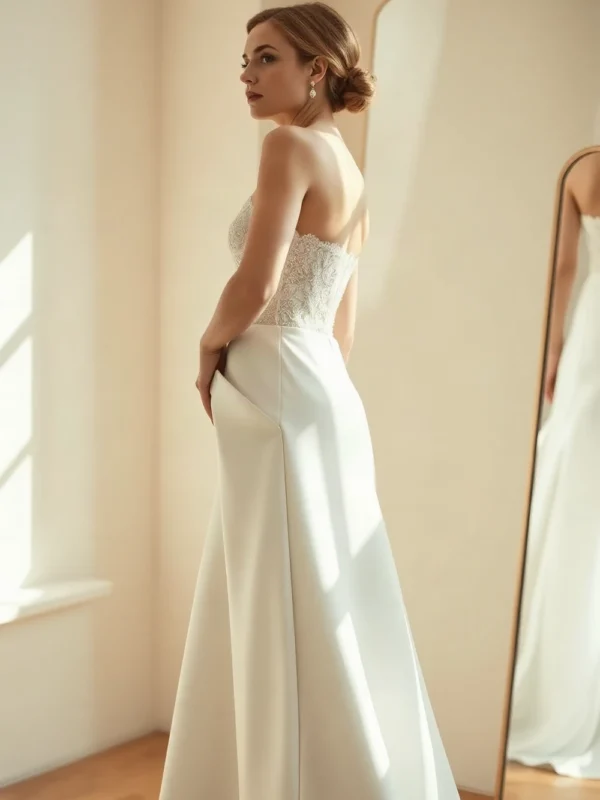
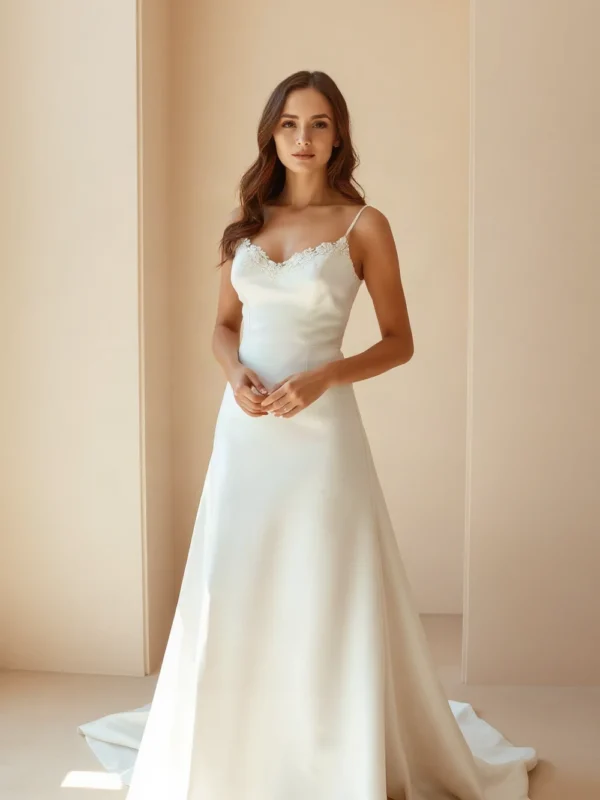
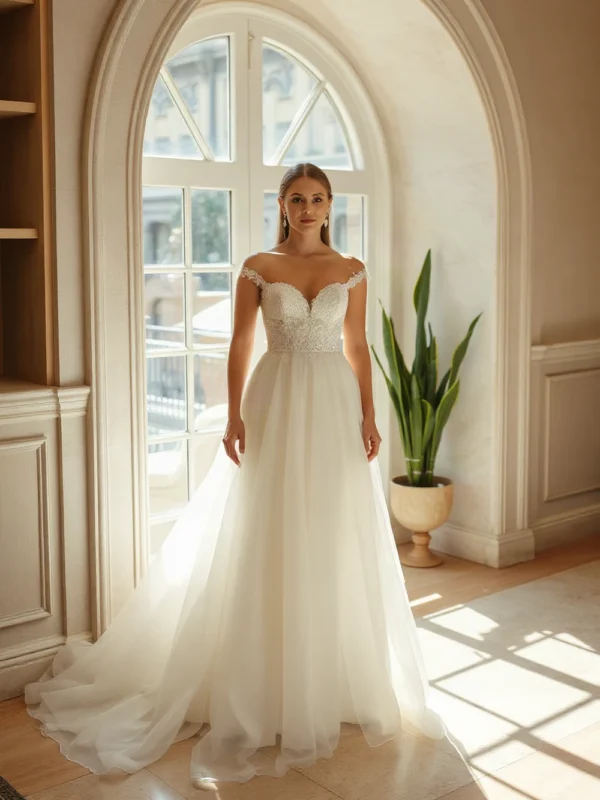
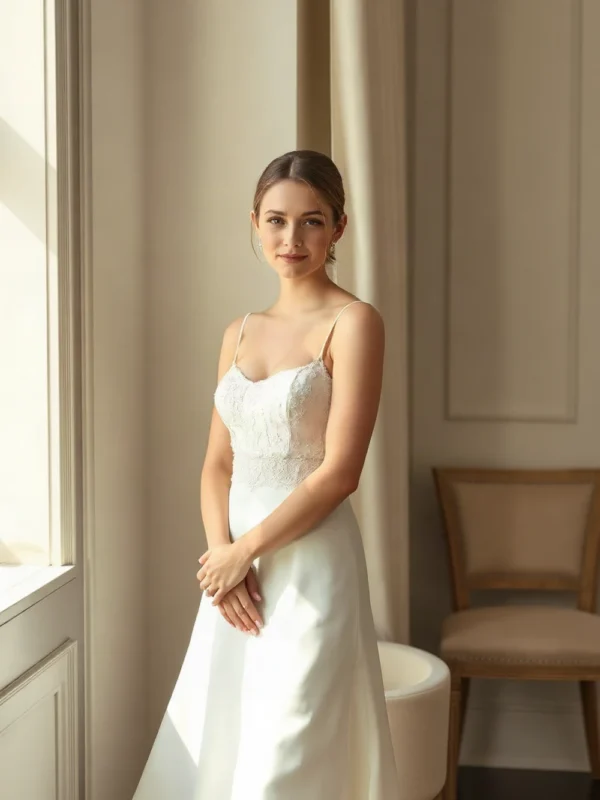
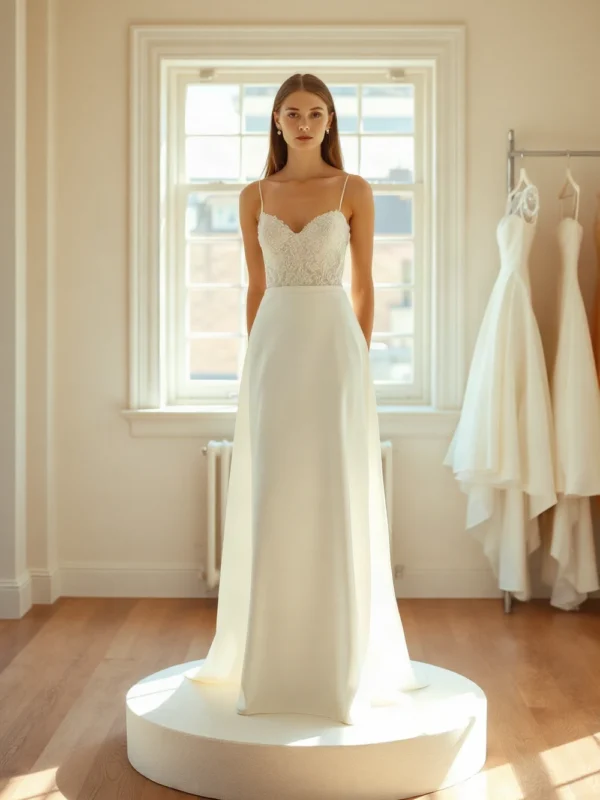
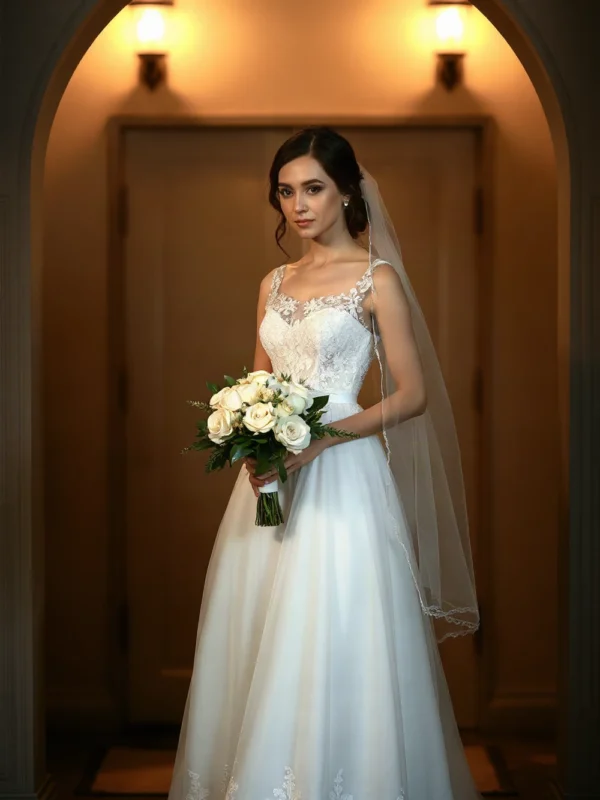
All six images share one visual strategy: detail is concentrated around the bodice while the skirt is allowed to remain comparatively quiet. That contrast draws attention toward the face and waist, and the outward sweep of the A-line restores calm below. Warm interiors and ivory tones make the difference between raised lace and smooth surfaces especially easy to read.
The first approach presents a strapless lace bodice from behind, paired with a sculptural, clean-looking skirt. The second is much quieter from the front: fine straps and a narrow lace edge define the neckline, while the bodice and skirt read almost as one continuous surface. One prioritizes a memorable back view; the other depends on restraint and symmetry.
The third image adds an off-the-shoulder neckline, a densely patterned bodice and a broad, translucent-looking layered skirt. It feels softer and more romantic than the smoother alternatives. Images four and five both use slender straps, but the fourth has an intimate, light-shaped composition, while the fifth offers a centered full-length view with a particularly crisp division at the waist.
The last concept is the most ceremonial. Floral lace straps, a softly squared neckline, a defined waist band, a veil, a bouquet and motifs at the hem work together. It carries more layers than the salon-like minimalism elsewhere, yet the broad undecorated middle of the skirt prevents the details above and below from competing directly.
Choose according to where you want the eye to settle. For a clean contemporary effect, study the limited lace of the second concept or the clear geometry of the fifth. The third emphasizes the shoulders, the first rewards a strong entrance and back view, and the sixth demonstrates accessory coordination. During a fitting, assess every option from the front, side and back, then test sitting, walking and raising your arms rather than judging the silhouette only in a still pose.