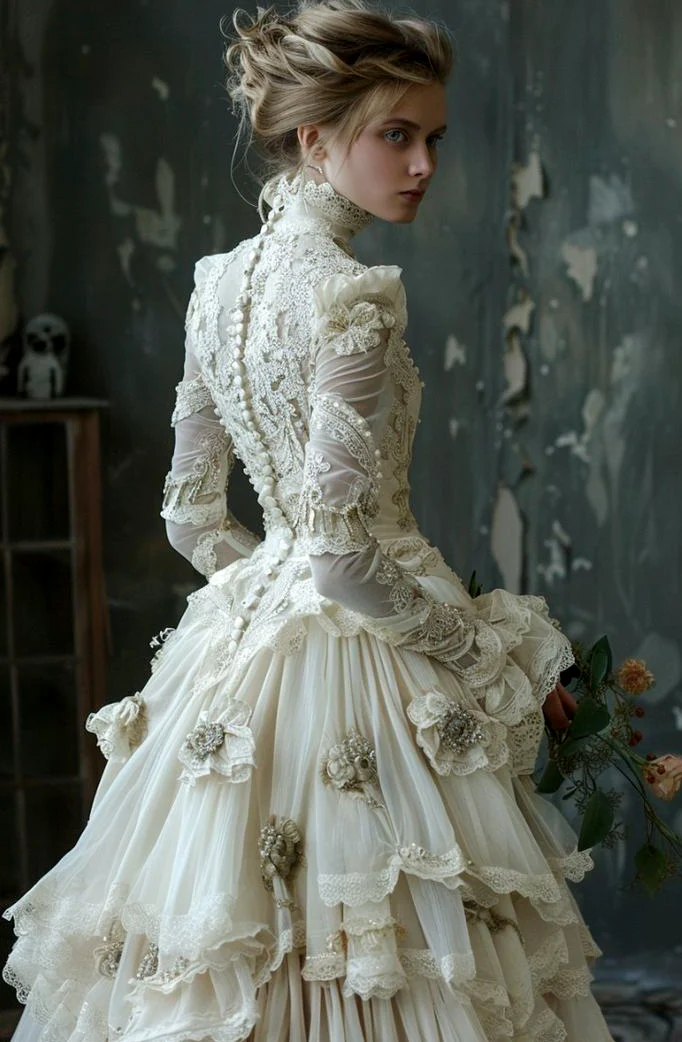
A Victorian-inspired wedding dress can be chosen through specific design preferences without assigning an unsupported age to a photograph. Do you want a high neck finish, a decorated back centre or several visible lower surfaces? Our main reference combines those impressions in a rear three-quarter view. Four independent fronts add a lower upper edge, a seated layered skirt, narrow straps and a high decorated front line. None establishes an antique original, a particular production year or shared model identity. Name the details you want and have complete execution explained on the garment actually offered. A similar pale colour cannot complete its missing views.
1. Separate a style preference from a documented historical object
The word Victorian can describe your wish for an appearance inspired by the past. It cannot establish provenance for a dress in an unknown photograph. A decorated wall, an old-looking room or little pale round details date neither the picture nor the garment. Decide which visible lines you want first. A high collar and a broad lower region are different preferences; they do not have to be ordered together. The description alone cannot establish which version is genuinely available. Breaking the overall impression into particular requests makes the real offer easier to discuss.
A documented comparison comes from the Royal Collection’s account of Queen Victoria’s wedding dress, the object RCIN 71975 dated to 1840. The collection identifies Honiton lace and Spitalfields silk for that object. Those details belong to that particular garment rather than our archive photographs. They show the kind of record a date and material statement require. Infer neither authenticity for our references nor one uniform rule for every dress chosen with a historical style preference. A different documented object cannot supply the unknown provenance of your candidate.
2. Choose neck boundary and shoulder line separately
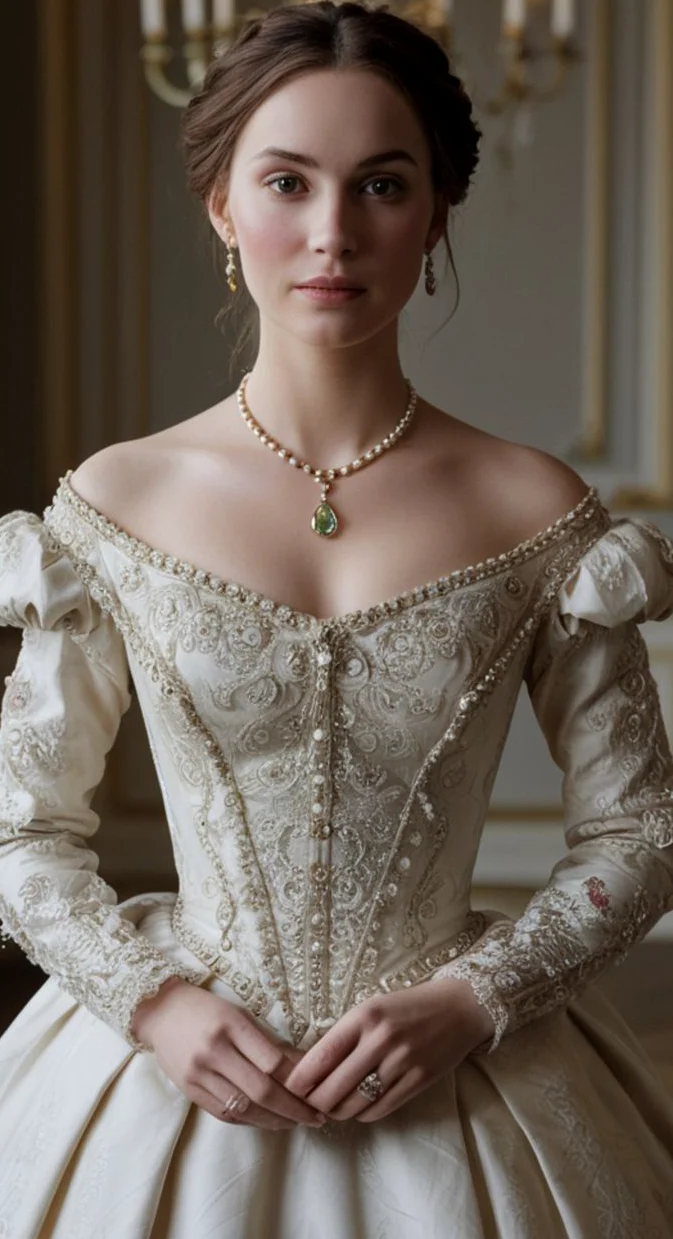
The main image shows a high closed neck region from behind beside a turned head. The low decorated front instead places a broad curved edge beneath the shoulders. Another front takes narrow straps towards a closer drawn bodice. Those are different upper boundaries. The off-shoulder wedding dress comparisons help name the upper edge’s position more precisely; they provide no missing front for the pictured rear. Start by identifying the boundary you want beside your own neck and shoulders rather than adopting every feature of an entire image.
Request your candidate’s genuinely corresponding front, sides and rear. A high back from one photograph cannot complete a second model’s low neckline. Inspect the preferred upper edge without extra neck jewellery first. Turn your head to either side, then bring an arm forward. Assess the actual surface on yourself instead of inferring comfortable or secure fit from its decorated outline. Which combination is possible must be explained through the particular offer. Return to a normal standing view after moving, so a pictured person’s turned moment does not replace your own assessment.
3. Establish the back centre through a practical demonstration
Several pale round elements follow the main reference’s rear centre. Drawn regions beside them narrow towards the closer waist. The photograph shows their route rather than the act of opening them. Ask which parts genuinely open on the offered dress and whether another fastening is involved. The wedding dress with back buttons guide develops that specific question. A decorative impression establishes neither particular handwork nor a working button row. Similar spacing cannot give every round element an identical function. Have the actual arrangement demonstrated instead of guessing it from shape.
Request the whole dressing and fastening sequence. Include the person who will help if somebody else is expected to close it. Assess the closed version with your planned inner pieces afterwards. Sit, walk and inspect that same back surface standing again. The form needs assessment on the real garment rather than through a photographed person’s tense or twisted instant. Ask which neighbouring decorated areas would be affected before discussing alterations. Keeping the explanation beside the exact model name helps you return to that same boundary later; another dress’s rear cannot complete this record.
4. Distinguish sleeve surfaces, gloves and a veil
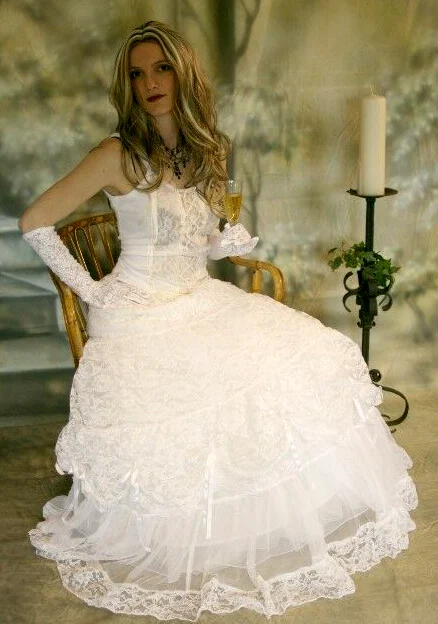
The main reference has long finer arm surfaces with stronger decorated regions and a fuller upper shoulder form. The seated front instead contains longer patterned gloves. The high decorated front combines finer arms with denser finishes; one hand is raised beside the head, with an additional broad veil surface behind it. These visible differences provide a useful starting point for questions. They establish neither shared attachments nor identical supplied contents. Similar pale drawing cannot make separate photographs into interchangeable components of one confirmed model. Name each addition rather than combining independent images into a ready-made garment.
Have every genuinely included piece identified separately. Request a quiet view with hands lowered before moving the arms or arranging an extra surface around them. If you want gloves, compare their finish with your actual sleeve end. Similar drawing cannot make glove and sleeve the same component. Plan a removable solution only after its real connection has been explained. Several pictures displayed together are insufficient evidence of interchangeable pieces. Inspect the complete outfit after each addition, checking how much of your preferred upper line remains visible on that same dress.
5. Add the complete skirt in a freely standing view
The rear main photograph shows several gathered and curved lower surfaces with larger pale accents. The complete hem and footwear are absent. The seated image also has broad finer lower areas, but cannot explain their upright length. The high decorated front ends before the complete lower finish as well. Request your own candidate’s whole shape with your shoes, from front and rear. Pictured volume establishes neither an inner hoop nor a particular supporting structure or actual weight. Assess movement yourself rather than treating cloth spread across the floor as a measurement for your body.
6. Add accessories and care to the confirmed version
The images contain different neck accents, gloves, hair pieces and a veil. None is compulsory for your style preference. Compare the actual upper surface first, then one additional piece at a time. The bridal accessories overview supports that sequence. Ask about materials and included pieces instead of calling pale round details genuine pearls or a green accent a particular gemstone. GINETEX explains care symbols; the finished dress’s label determines its care information. Your Victorian-inspired wedding dress remains a deliberate design choice with confirmed construction and your own complete fitting.
A historically inspired preference needs specific neck, back and skirt questions. Date, composition and attachments are confirmed separately.
Frequently asked questions
Do these photographs establish an original Victorian wedding dress?
No. These photographs are style references for a Victorian-inspired wedding dress. They do not establish historical provenance or a production year.
Do the details for RCIN 71975 belong to the archive images?
No. The date 1840 and identified materials belong to Queen Victoria’s catalogued wedding dress, rather than our independent archive views.
Can the pale row in the rear view actually be opened?
The rear view does not show the opening process. Any genuine function of its pale row must be explained and demonstrated on the offered dress.
Are the pictured accessories necessary for this style?
No. Gloves, a veil and neck jewellery are separate design preferences. Establish which pieces are included with the Victorian-inspired wedding dress actually offered.


