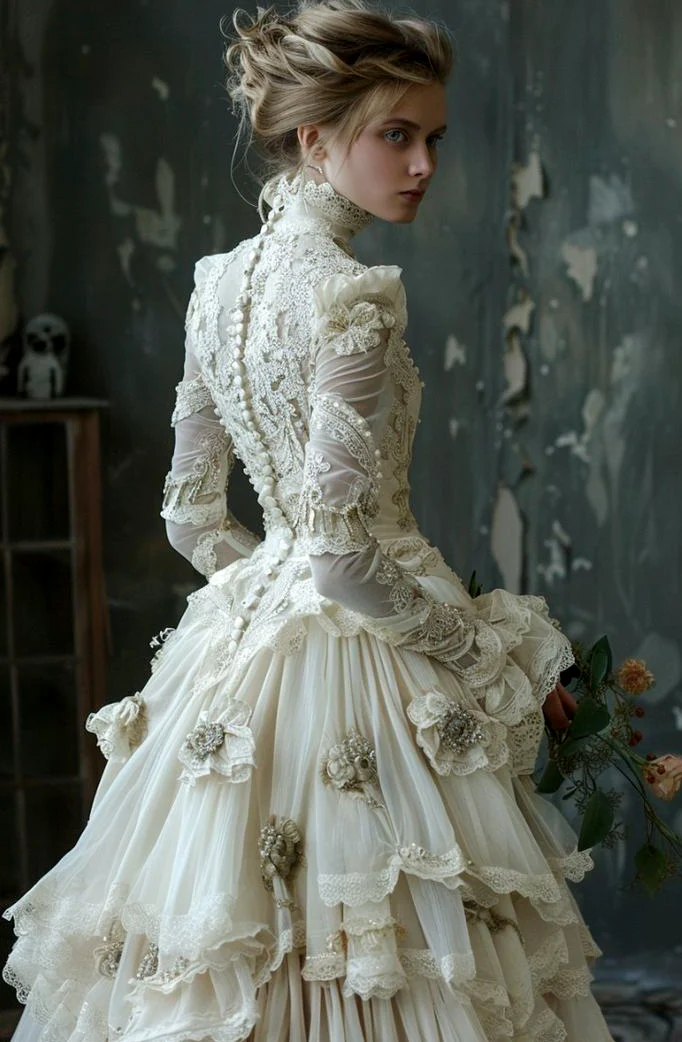
The high-neck decorated rear view is shown at a three-quarter angle from behind. A row of pale round elements follows the rear centre beside denser drawing. The upper back surface narrows towards the waist. The high neck edge has irregular pale contours. A fuller upper form sits over the shoulders, while longer finer arm surfaces carry several stronger decorated areas. Curved gathered regions with larger flower-like or round accents collect beneath the waist. Their complete lower finish is outside this photograph.
The head turns over one shoulder towards the picture edge. Face, gathered hair and loose strands are included. Plant stems and flowers appear lower beside the rear body side. Complete lower length and feet are absent. Pale round elements establish neither an opening function nor a particular jewellery substance.
Use this comparison to distinguish the straight rear row from more widely distributed lower accents. Ask for the real candidate’s corresponding front and whole skirt with shoes. A decorated, historically suggestive room cannot provide a date. Weight, supporting structure and genuine attachments also require explanation for the offered dress.