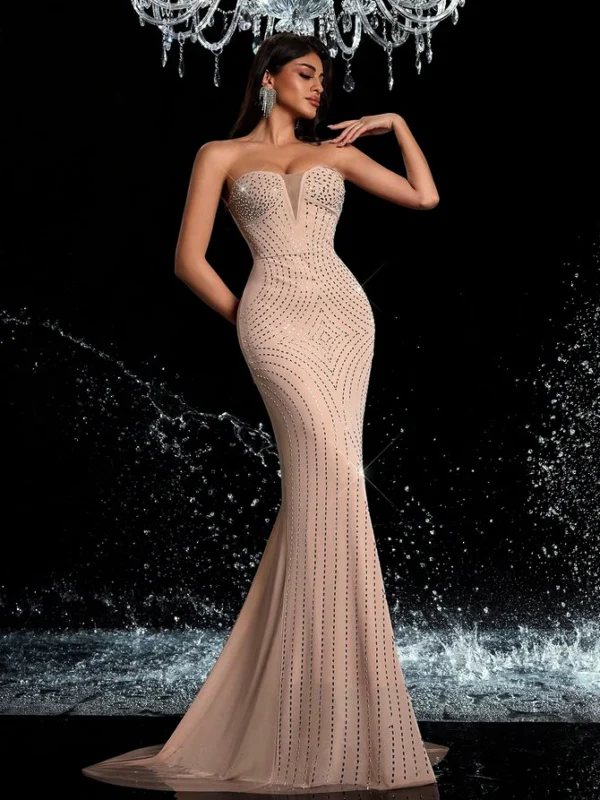
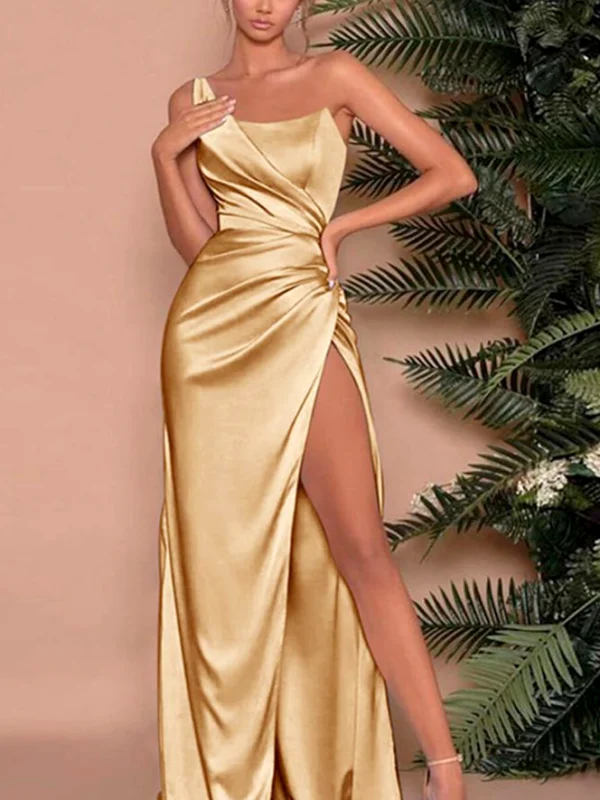
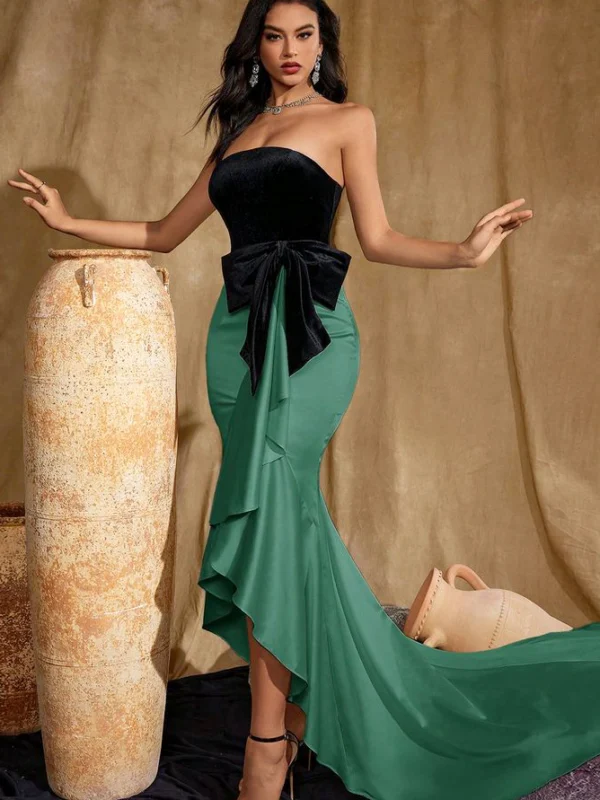
Sheer evening dresses do not reveal the same amount everywhere. A long fine outer surface may sit over a shorter denser area. Another reference shows less densely drawn regions between floral lines. The seated counter-image instead includes an actual front leg opening, which must remain separate from fine ground. These five independent photographs help name those differences without establishing identical fibres, common inner layers or one shared brand. Begin with the precise location you want to compare rather than describing an entire dress as uniformly see-through. Missing product information cannot be completed through a similar photograph.
1. Which surface should remain visible?
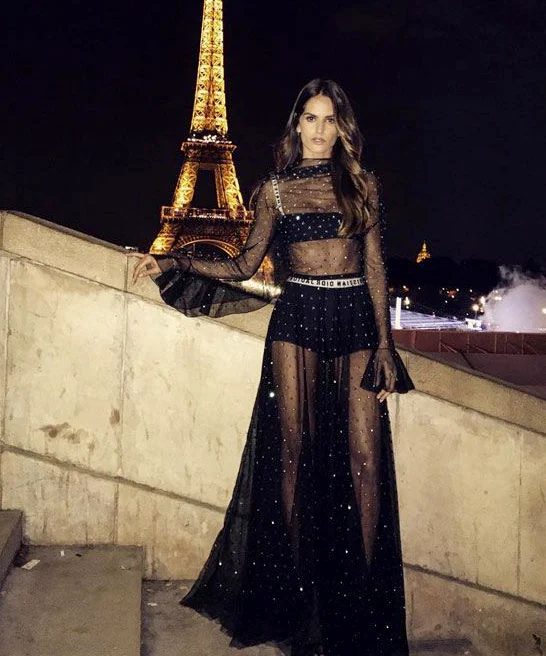
The black main reference places a closer denser upper region and shorter dense upper-thigh area beside a longer fine-looking outer skirt. Floral forms grow larger and denser farther down. Several boundaries emerge: outer length, the end of the denser area and intervals in its pattern. Trace these individually. Wanting a longer fine outer surface is a different decision from wanting a higher leg opening. The photographed position cannot measure any of those lengths for your combination. The same real product needs a whole view with the footwear you intend to use.
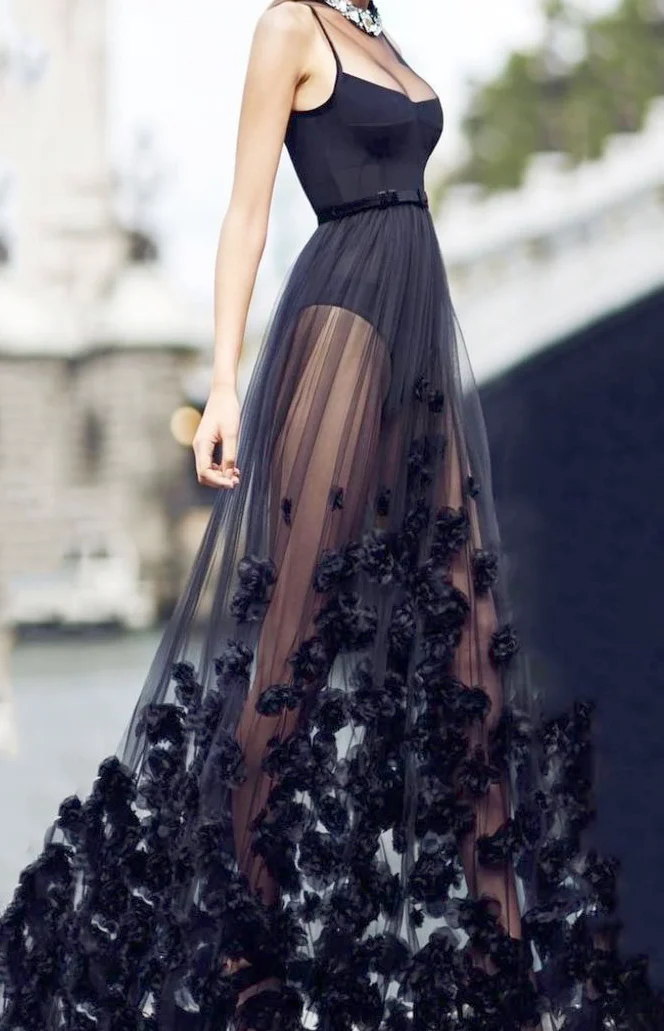
Compare the two closer black upper views next. One carries a higher fine neck-and-chest frame beside longer arms. The other combines an asymmetric upper line with a finer shoulder region and shorter dense area beneath it. Less densely drawn places may belong to existing ground rather than an open hole. Record the visible route and have actual execution explained. Liking the distribution between fine and dense surfaces does not require adopting its neckline too. Keep those preferences separate before establishing how they meet on your own candidate.
2. Which inner layer belongs to the particular version?
A product term for the outer surface cannot explain complete coverage. Self-Portrait identifies mesh lining for its Brown Rhinestone Mesh Maxi Dress and lists shell and lining separately. That information belongs only to the named different product. It identifies none of our references. The example explains why actual inner layers require their own question, rather than being borrowed from an outer-surface word or a similar picture. Connect your candidate’s description to its own view instead of transferring another model’s composition.
Request the offered candidate’s actual material list and an explanation of existing layers at chest, waist and lower region. Where several versions are available, connect the answer to the precise version pictured. Information about its front cannot automatically explain its back. Ask for corresponding own side and rear views. Have a different lining assessed on that piece if you want it. A visible seam or boundary promises neither an easy conversion nor a generally available alteration. Record which location the discussed work concerns and inspect the complete result on the same garment.
3. Where does actual coverage end?
A longer fine outer surface can continue beside a shorter dense area. Its outer hem therefore does not automatically mark the end of what is covered beneath it. The seated mauve-grey reference instead shows a leg within a front opening and one pale open-toe ankle-strap shoe. Keep those observations separate. A visible leg beside cloth led to one side cannot prove identical construction elsewhere or show that the opening remains equally wide while standing normally. Ask for that same model standing normally; a different dress cannot supply this information.
The underwear for a sheer dress guide develops coverage, colour and length questions. Try planned underwear with the actual dress and its existing inner layers. Inspect the combination from front, side and rear under intended conditions. A general colour word guarantees no invisible lines. Name the region that bothers you instead of repeatedly adding pieces speculatively. Have a possible solution explained and assess its result on that same model. Your fitting cannot be treated as identical to the pictured person’s length or posture; inspect the actual pieces you intend to use together.
4. Which position makes the boundary clear?
The references stand or sit with different arm positions. One hand rests against a wall; others sit before hips and upper legs. Sitting distributes the skirt beside a bent leg differently from a standing front. Request a normal complete view with relaxed arms and freely falling cloth for the initial comparison. Add your ordinary movements afterwards. Compare the same candidate in those positions rather than equating the spread of a seated opening with a different standing dress. Recording the posture beside your observation makes the same boundary easier to revisit later.
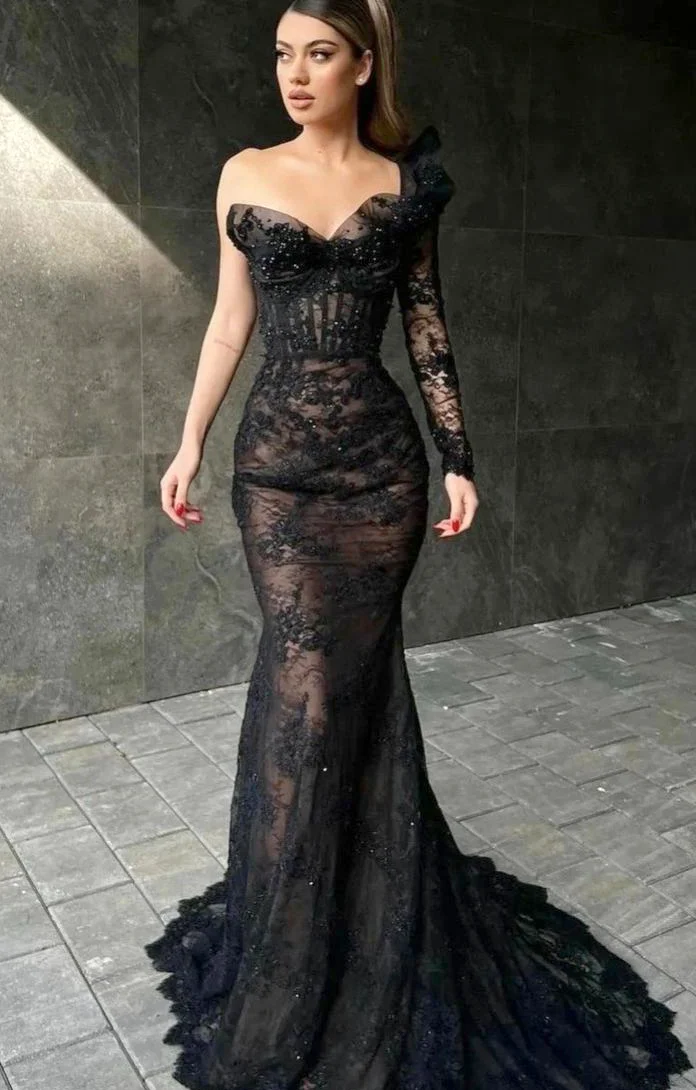
Notice upper picture boundaries too. The black main reference omits the head above the neck. Another close view contains only the lower face. The longer floral front includes the face while cropping the upper hair. A complete hairstyle or necklace cannot be reconstructed from missing image space. Request the view that answers your actual question. A second close-up of another region cannot replace the same offered garment’s full front. Specify that head and shoulder relationships need to belong to your selected model; similar black surfaces are insufficient to establish that identity.
5. What sits beside the fine surface?
The elegant party outfits comparison helps identify your leading focal area. A larger pale neck accent, a small dark bag and densely drawn long arms sit beside finer surfaces in these photographs. They are different additions rather than a required set. Begin without an extra bag on your candidate, then add yours in its actual carrying position. Check which boundary it covers and whether you still want that region visible in your complete outfit. An accessory being pictured together with the dress cannot establish that it is supplied.
Choose jewellery one piece at a time afterwards. Our accessories provide further comparison ideas without requiring a particular size or metal colour. A larger neck accent may look different beside a quiet upper surface and before dense floral drawing. Add the intended hairstyle and inspect the rear again. Ask separately about supplied contents if a photographed component matters. Bag, jewellery and dress shown together are not automatically offered together. Keeping your own additions separate from the genuine offer also helps record precisely which combination you have assessed.
6. What remains for the complete decision?
Request full length with your intended footwear. Several photographs crop the lower finish or conceal shoes. Even one visible shoe cannot determine your heel height or suitable hem length. Walk and sit in the actual candidate. Establish the real invitation’s clothing requirements and the finished piece’s care label. GINETEX explains care symbols; fine ground prescribes no treatment. Sheer evening dresses can then be chosen through named surfaces and confirmed execution instead of product guarantees inferred through photographic effects. Complete unresolved questions through that same real model’s own explanation.
Five references show different relationships between fine ground and denser surfaces. Choose the region you want and ask separately about actual inner layers.
Frequently asked questions
Are sheer evening dresses in photographs equally see-through everywhere?
Sheer evening dresses can have denser and finer regions alongside different inner layers. One area’s photograph establishes neither identical construction at the back nor fixed coverage in every light.
Is an evening dress leg opening the same as a sheer skirt surface?
An evening dress leg opening leaves an area between cloth edges exposed. A fine-looking skirt surface may instead contain existing ground and inner layers. Establish the particular region on the offered model.
Can every inner layer in sheer evening dresses be altered?
Inner-layer alterations in sheer evening dresses are not established here as a general option. Have existing execution and your requested change professionally assessed on the actual piece.
Does skin-toned underwear guarantee invisible lines beneath sheer evening dresses?
Skin-toned underwear guarantees no invisible lines beneath sheer evening dresses. Assess your actual pieces with the same dress and its inner layers from several directions.