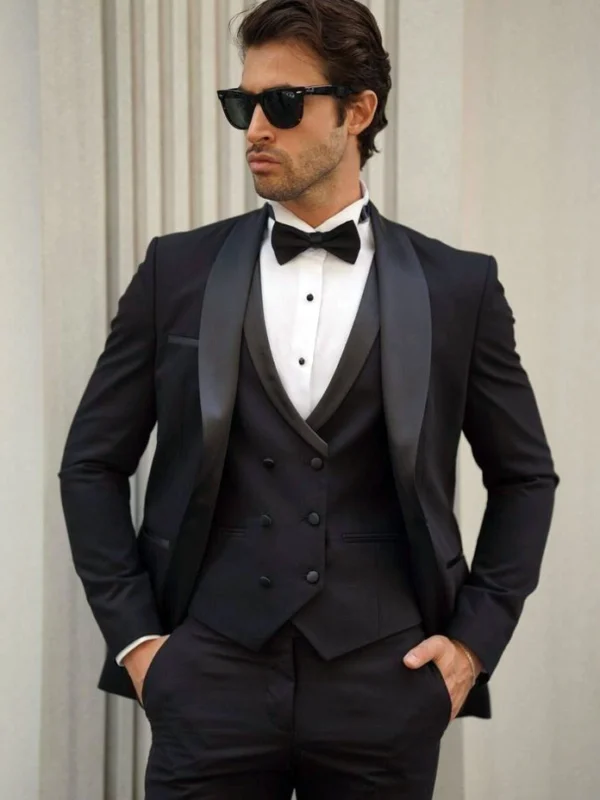
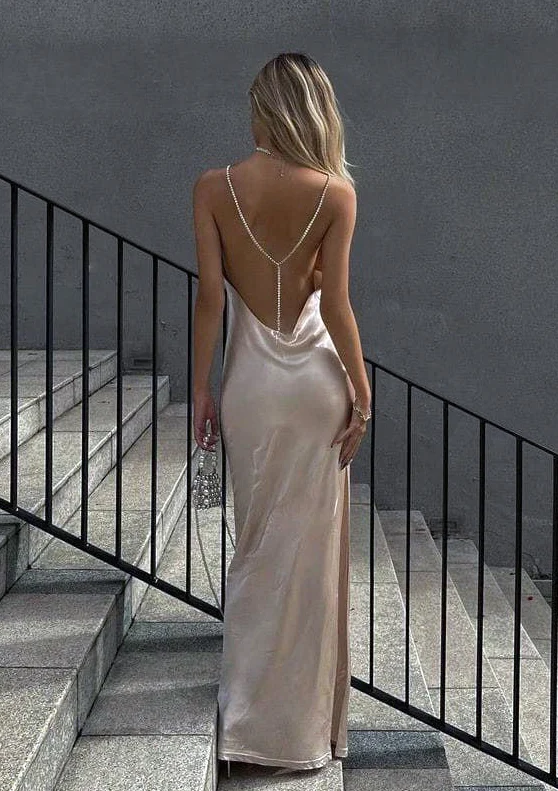
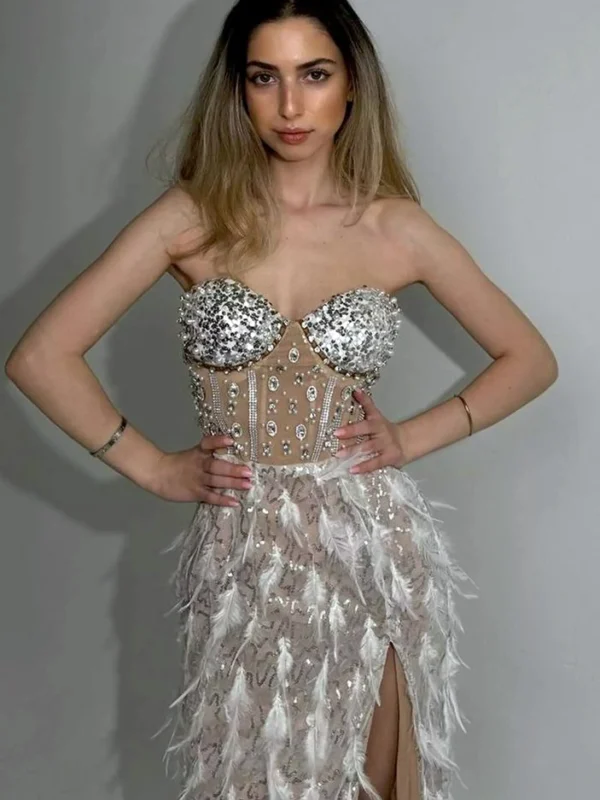
Elegant party outfits work best when the invitation, your preferences and the practical demands of the evening agree. A floor-length dress is one option, but its length does not answer every dress-code question. These references include pale, blue and strongly structured dresses, with several looks that have a distinctly ceremonial appearance. Use them to compare necklines, skirt volume and openings, then decide whether that appearance belongs at your actual event. For a wedding, ask the host about a very pale, bridal-looking choice if expectations are unclear. The aim is a complete outfit in which you can take part comfortably, rather than a look selected only for a still photograph.
Start elegant party outfits with the invitation
Read the invitation’s wording before choosing a silhouette. A birthday dinner, a business reception and a wedding can all be described as festive while asking for different clothing. Ask about the intended setting if the wording leaves you uncertain. Note the time, venue, activities and your role.
Someone welcoming guests or speaking on stage may need different movement from someone spending most of the event at a table. A grand staircase in a reference image says nothing about your host’s requirements. Separate the impression you enjoy from the question of whether that impression is welcome at this particular occasion. This gives you a useful brief before you begin comparing individual dresses.
Identify the strongest line in each dress
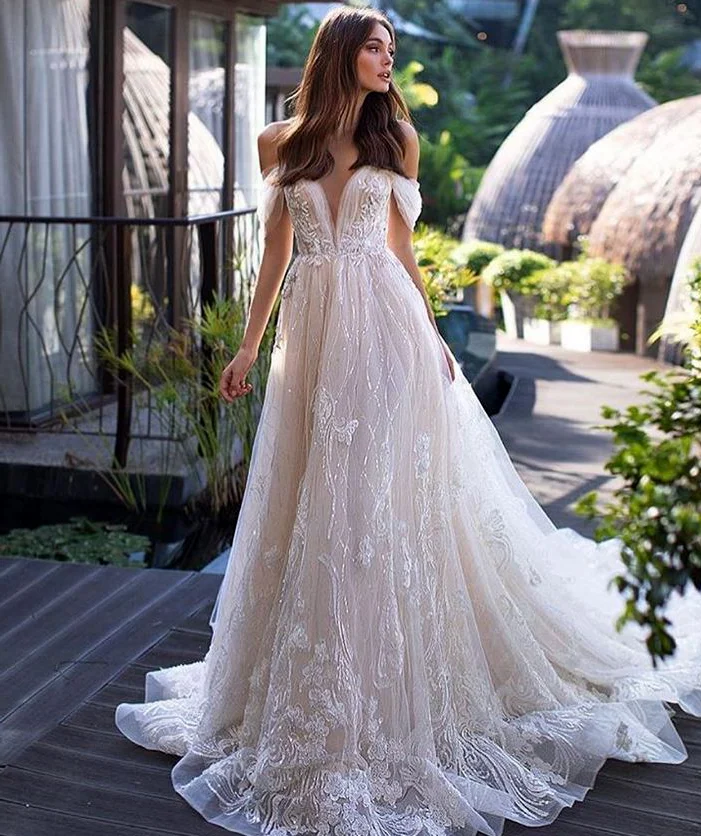
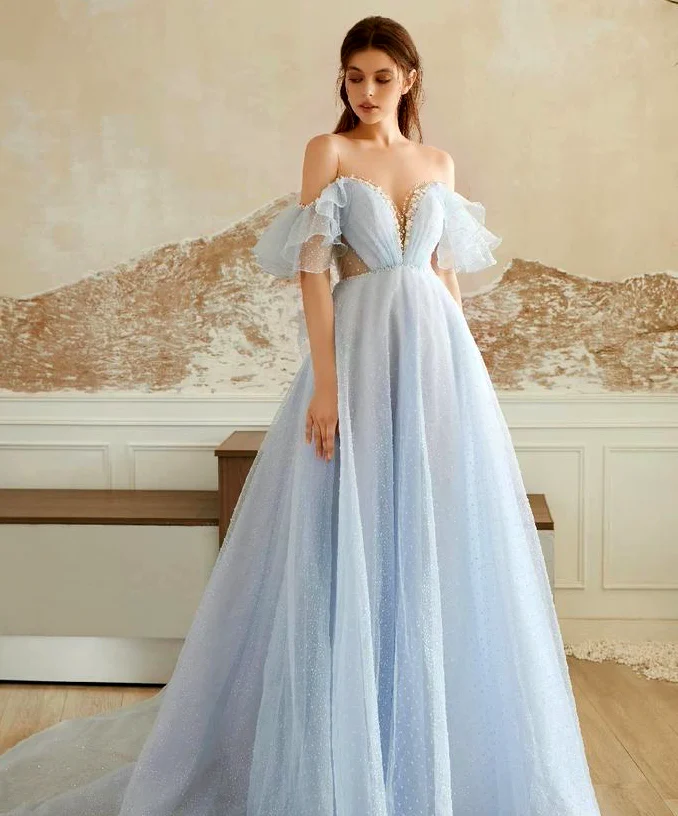
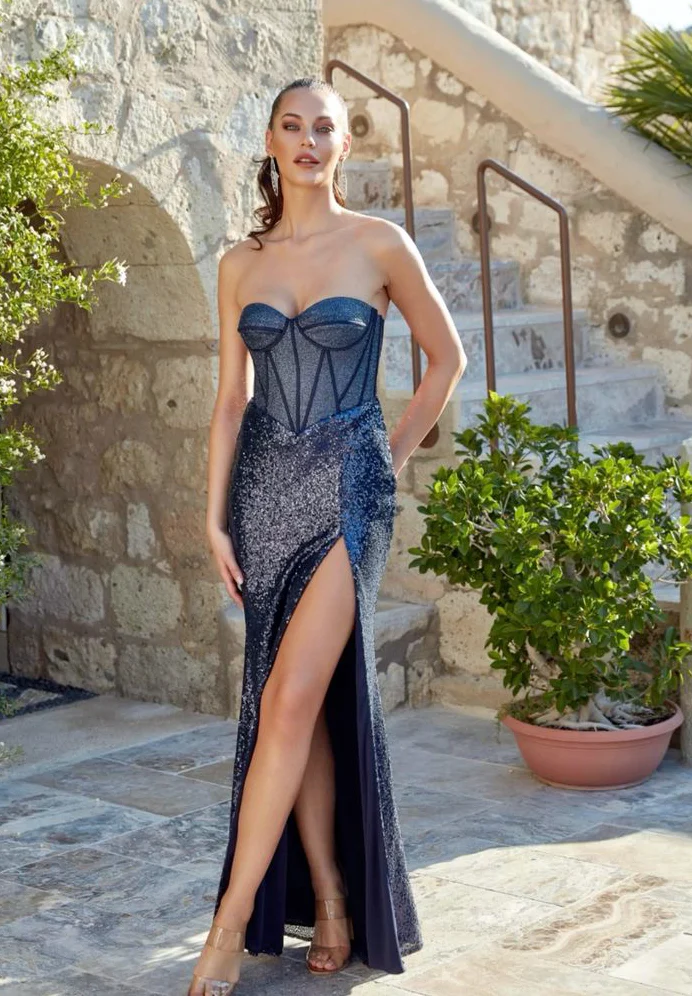
Choose the main point of interest before adding accessories. It might be an exposed shoulder, a structured-looking bodice, a broad skirt or an opening that reveals the leg. The dark blue reference draws attention to the upper construction and slit; the pale blue example emphasises shoulder details and a wider silhouette. Naming that difference helps you decide what the rest of the outfit should contribute. Begin with a relatively simple bag and a small amount of jewellery, then try one stronger addition. Look at the full outfit again. The question is whether the accessory supports your chosen line or shifts attention somewhere you did not intend.
Evaluate pale colours in their real setting
White, cream and very pale tones can read differently under different lighting and alongside different accessories. The shape matters as much as the colour: a long pale train makes a different impression from a short, straight dress. Several images in this selection contain ceremonial details, so they should not be treated as proof that every pale gown suits every party.
If a wedding outfit looks close to bridal wear, ask the host before committing. At your own celebration, that same appearance may be intentional. Compare the actual dress under even light with the shoes and outer layer you plan to use. A screen swatch alone is a poor substitute for assessing the complete appearance.
Treat the neckline and jewellery as one composition
A strapless edge, a diagonal shoulder line and long openwork-looking sleeves divide the upper body in different ways. Add jewellery after the garment itself sits correctly. A necklace crossing a one-shoulder line changes the composition; leaving the neck clear makes the diagonal easier to see. Either may suit your preference, so compare rather than assume a rule.
Large shoulder details also deserve a trial with hair up and down. Turn your head to see whether hair, earrings and fabric catch against one another. If you expect to wait outside, add the real jacket or wrap. It should be possible to put that layer on without having to rearrange the bodice repeatedly.
Test walking, sitting and dancing separately
Move beyond the upright mirror pose. Sit on an ordinary chair, stand again and walk in the shoes you intend to wear. With a slit, notice how the opening changes; with a wider skirt, practise moving through a narrow gap. For strapless or off-shoulder shapes, also try the arm movements you use when greeting people and dancing.
This short rehearsal gives you information that a still picture cannot supply. If you continually hold the neckline or gather the hem, ask about an adjustment or compare another shape. Do this while alternatives are still available. Comfort is specific to the garment and wearer, so a similar-looking reference cannot promise the same result.
Coordinate elegant party outfits with shoes, a bag and outerwear
Build two complete versions if you are undecided. A distinctive shoe may be more visible beneath a narrow skirt than under a wide hem, but the first question is whether you can manage the planned route in it. Fill the proposed bag with what you need and see how you will hold it while greeting someone.
A photograph of a small bag cannot show whether your phone fits. Choose outerwear for the actual weather and the dress’s shape, then try it closed as well as open. If you can only drape a coat over your shoulders, consider whether that will work for travel and waiting. These decisions can affect the evening more than another decorative detail.
Prepare repeatable combinations from one outfit
If you want to wear the dress again, explore combinations with pieces you already own. Different shoes, a new bag arrangement or a different hairstyle may shift the emphasis enough for another occasion. Photograph two combinations and record which event you have in mind for each. That gives you a useful starting point next time instead of repeating every decision.
Before buying more accessories, check alterations and care requirements. A smooth-looking dress in an image is not evidence of easy maintenance. Read its label: GINETEX distinguishes washing, bleaching, drying, ironing and professional textile care. Those categories do not establish one treatment for every party dress, so the actual instructions remain essential.
Finish with a full rehearsal and a short task list
Put the whole outfit on and think through arrival, dinner and dancing. Keep only practical tasks that can still be resolved before the date, such as checking a hem or trying a different bag. For another skirt comparison, see our high-low party dress guide and tiered party dress references. The GINETEX care-symbol guide helps explain the label. Then choose the version that brings together your taste, the host’s expectations and the movements you need. A clear visual idea and a workable evening matter more than the number of attention-grabbing elements you can add to an outfit.
Build elegant party outfits around the invitation and one clear feature. Test the complete look with shoes, a bag and outerwear while walking, sitting and greeting people.
Frequently asked questions
Does a very pale long dress suit every party?
No. Several references look ceremonial. At a wedding, clarify a bridal-looking overall appearance with the host if expectations are uncertain.
How should I compare necklines?
Look at neckline, hair, jewellery and outerwear together. For asymmetric shapes, check both sides and normal arm movements.
What should I test with a high slit?
Walk and sit in the intended shoes. Observe the opening in normal posture and from the side rather than copying a posed photograph.
How can I wear a dress again?
Try existing shoes, bags and hairstyles first. Record complete combinations for specific future occasions.