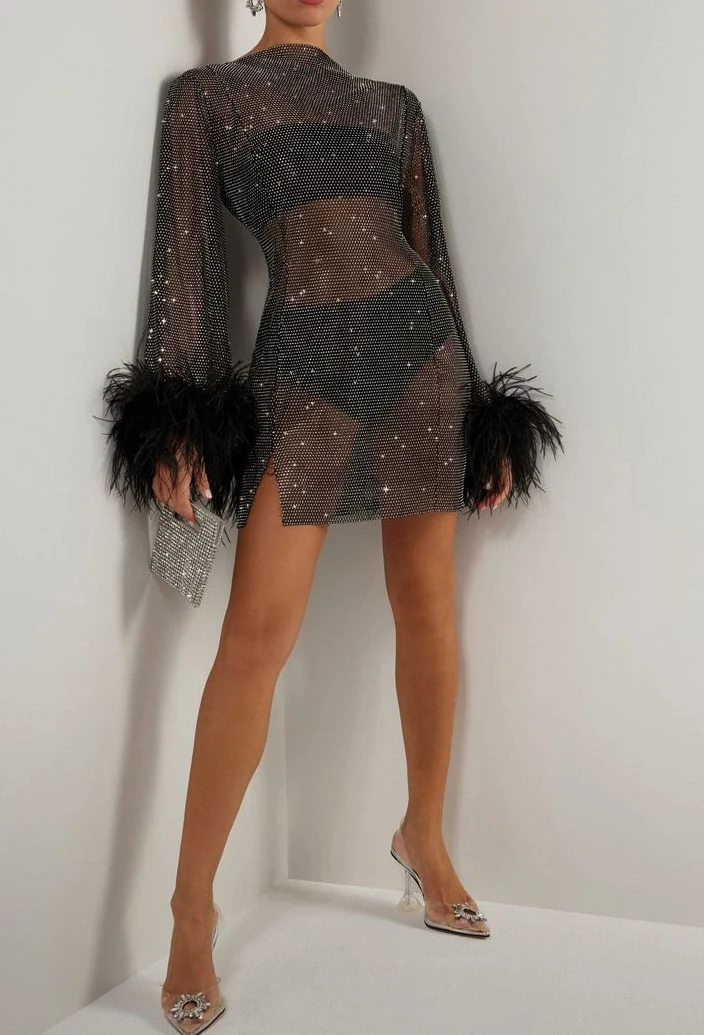
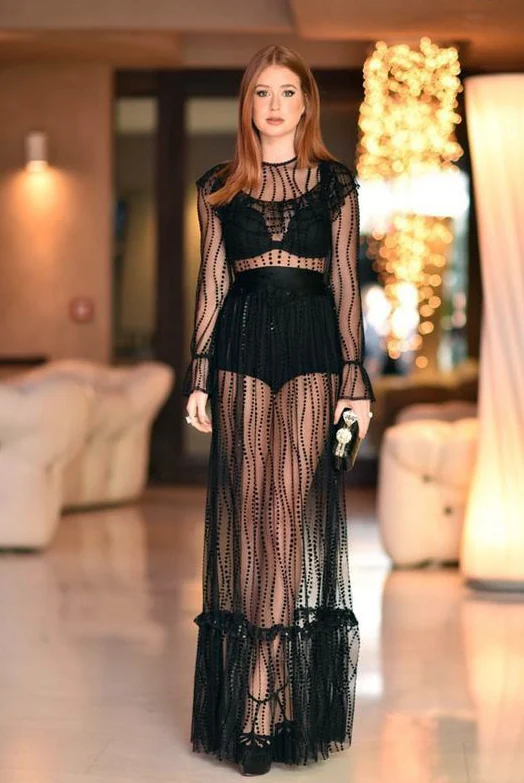
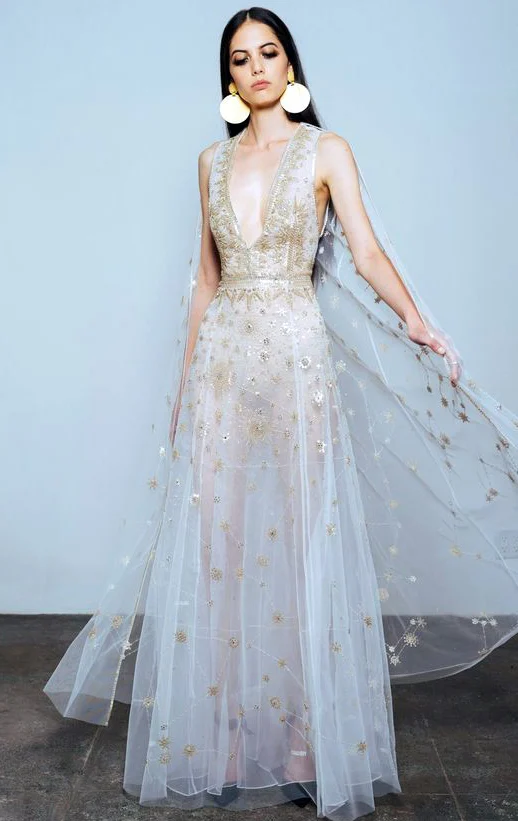
Underwear for a sheer dress belongs to its visible design when edges and colour remain recognisable through the outer layer. Four references show different choices: a black bandeau with high-waisted briefs, a black bustier with briefs, a shorter pale inner layer and shorts under a long translucent-looking skirt. Choose the areas you want covered first. Then compare the visible lines with the actual dress. A suitable combination does not develop simply because both garments have the same colour name.
A slip can be an additional coverage option even when shaping is not your aim. Read its product description: SPANX describes its Invisible Cami Slip as a shaping garment with adjustable straps. That information concerns that separate product, rather than the pictured inner layers. Choose the function you want first. If you are also deciding the outer length, the short or long party dress comparison helps keep those two length decisions separate.
Choose underwear for a sheer dress by intended coverage
The short black example leaves the centre between bandeau and high-waisted briefs visible. On the long dark dress, a bustier outlines another neckline, with sections still recognisable between inner and outer edges. The paler reference instead has a shorter continuous inner area beneath the long skirt. These are different visible arrangements. Choose separate upper and lower areas or a longer continuous layer before treating a particular dress as a complete solution to your own coverage preference.
View the coverage you want on yourself with the actual intended garments. Name bust, waist, hips and leg length separately rather than asking generally for less transparency. You can deliberately choose visible spaces or prefer more covered area. Your own preference in the worn outfit is the relevant decision. Ask for inner and outer layers of an available model to be explained separately. The reference does not establish that every visible piece is included or that the inner layer can be interchanged with another garment.
Compare colour and contrast in the complete outfit
The black examples combine dark outer areas with black inner pieces. Their outlines nevertheless remain a clear part of the look. The paler reference combines a short light area with a longer star-patterned outer skirt. Use these differences for your colour choice: should the inner shape remain distinct or do you prefer a closer colour relationship? Matching colour does not make the different fabric edges invisible. Assess the actual contrast wearing the outfit instead of placing two separate product images beside each other.
View your combination close and at conversation distance under conditions relevant to its intended use. Add front and slight side views. If choosing between two inner colours, change only that layer and keep the dress the same. You can then identify its effect on the visible pattern. Choose shoes and bag afterwards. Every accessory does not need to repeat the underwear colour; the inner shape can remain a separate deliberate part of the combination. Compare the actual options rather than automatically adding a matching bag before the layers are chosen.
Coordinate the inner neckline with the outer dress
The short black dress has a higher outer neck edge over a straighter-looking bandeau. The long dark model places a bustier’s shaped neckline beneath a translucent-looking upper area. These edges can sit different distances apart. Choose whether both should remain visible and which shape appeals. Try the real pieces in your planned posture before searching only by a particular name for the inner top. The name does not fully describe where its boundary sits under your own garment or after your arms move.
Request a rear view of the actual combination too. If you want an open back, the backless party dress guide helps describe that second neckline choice. A suitable front neckline does not determine the shape at the back. Assess side openings as well if your dress has them; the cut-out evening dress guide expands their placement. Choose which inner edges you want visible there and ask about available options rather than assuming an unseen standard solution under every open area.
Separate inner length from the outer skirt
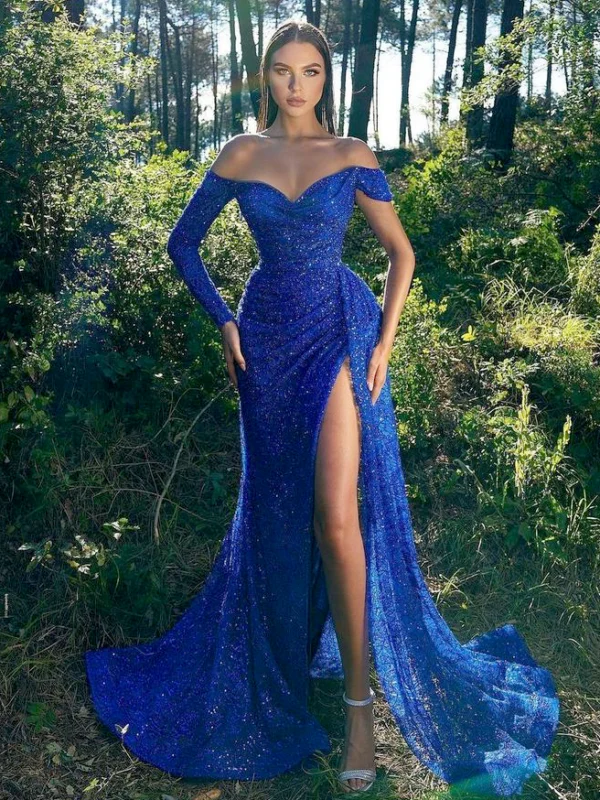
The pale long reference has a shorter inner layer while its outer area continues to the floor. The two-piece black outfit instead combines a short top and higher-waisted shorts beneath the long skirt. In both arrangements, shorter lower coverage belongs to the visible design. Choose where your own inner edge should finish. Do not select it solely through the outside length: a floor-length sheer skirt does not automatically require a particular shorts or slip length. Assess the two lengths together on the actual outfit.
Sit, stand and walk in the set. Check where both lower edges rest afterwards without rearranging them before every view. If you want another length, try a real available piece. Shorts and a continuous inner layer create different visible transitions. Choose the one you enjoy and check the combination with your shoes. The lifted side fabric in the pale photograph is a pose; add an ordinary stance with relaxed hands to understand the real overlap rather than expecting the spread area to remain unchanged during movement.
Try outer details, bag and jacket together
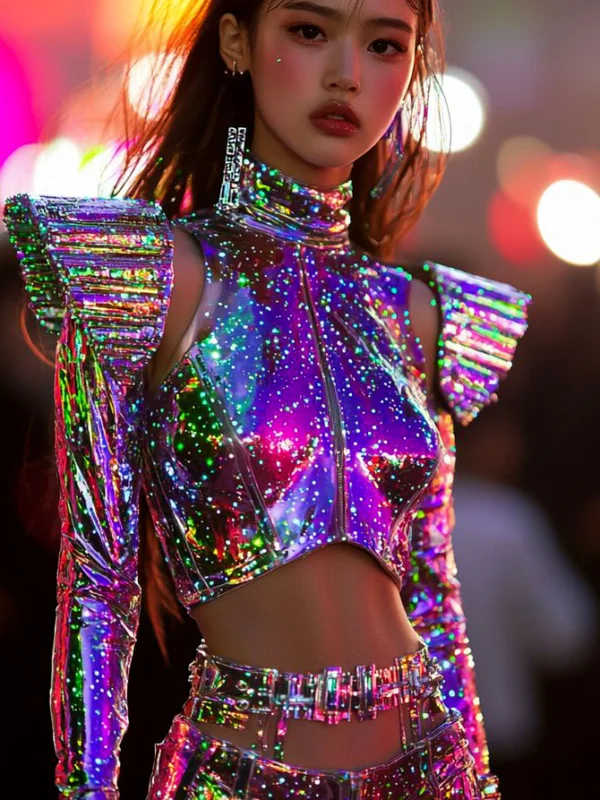
The short black dress has larger feather-like sleeve endings beside a small bright reflective bag. The long dark model carries narrow patterned lines and lower horizontal skirt sections. In the two-piece outfit, longer translucent-looking skirt areas lie over shorts, with additional fabric carried over one arm. These differences can affect what you see while holding a bag or jacket. Add your own pieces after deliberately choosing the inner coverage, rather than allowing the accessory photograph to decide the underlayer before you have tried it.
Hold your intended bag and open it. Put on and remove a real outer layer where the fitting permits, then look again at inner and outer garment edges. Decide whether you like that arrangement for those movements or prefer another available combination. A small upper crop cannot answer the whole question. For a two-piece outfit, include the visible gap between short top and skirt waistband in your selection. It does not have to provide the same coverage as a one-piece dress, but should be a deliberate choice rather than an overlooked space.
Establish included pieces, wearing arrangement and care
Ask which inner layer genuinely belongs to the dress and which needs selecting separately. Have closures and intended wearing arrangement explained. Try the actual pieces according to their provider’s instructions; visible shaped lines do not establish special support. Bring existing underwear if you want to use it in the fitting. Discuss a desired alteration on the real product. This makes the visible combination you want correspond to the pieces you can actually obtain, rather than assuming a complete set from the way they are photographed together.
Before cleaning or pressing, check the label of each affected item. GINETEX explains care symbols; similar colours do not determine the treatment. Choose underwear for a sheer dress through intended covered areas, visible neckline edges, colour and inner length. Assess those decisions moving normally and with bag and outer layer. The translucent combination can then become your deliberate outfit whose actual pieces and use you understand, rather than a set that appears complete only in a photograph.
Choose underwear for a sheer dress by covered areas and visible neckline edges first. Compare colour and inner length on the worn outfit and test walking, sitting, bag and outer layer.
Frequently asked questions
Is a slip always a shaping garment?
Choose through the actual product description. The linked SPANX slip is described as shaping; that does not establish the same property for other slips or the image references.
How should I compare two inner colours?
When comparing underwear for a sheer dress, keep the outer dress unchanged and change only the inner layer. View front and side close and at conversation distance under conditions relevant to your intended use.
Is the visible inner layer always included?
When choosing underwear for a sheer dress, ask which pieces and connections belong to the actual model. Bring existing underwear if you want to use it and establish the intended wearing arrangement.
Thoughts on this article