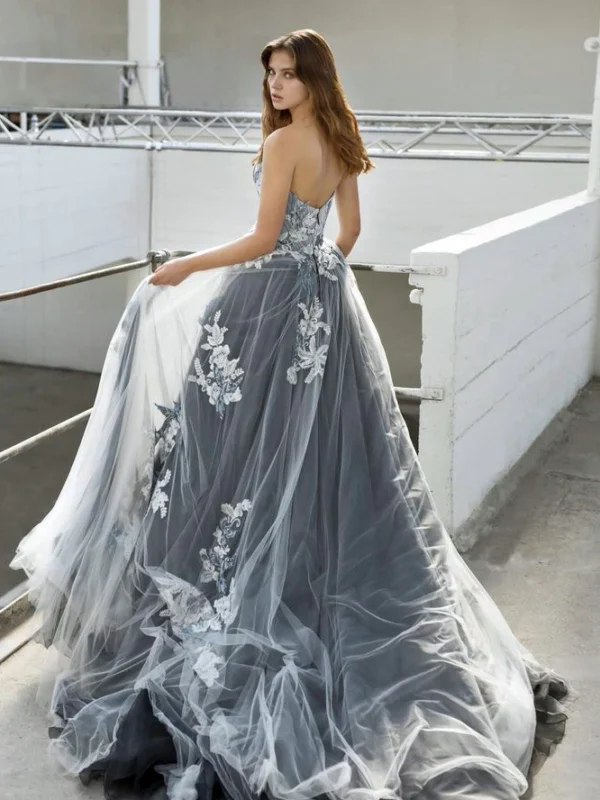
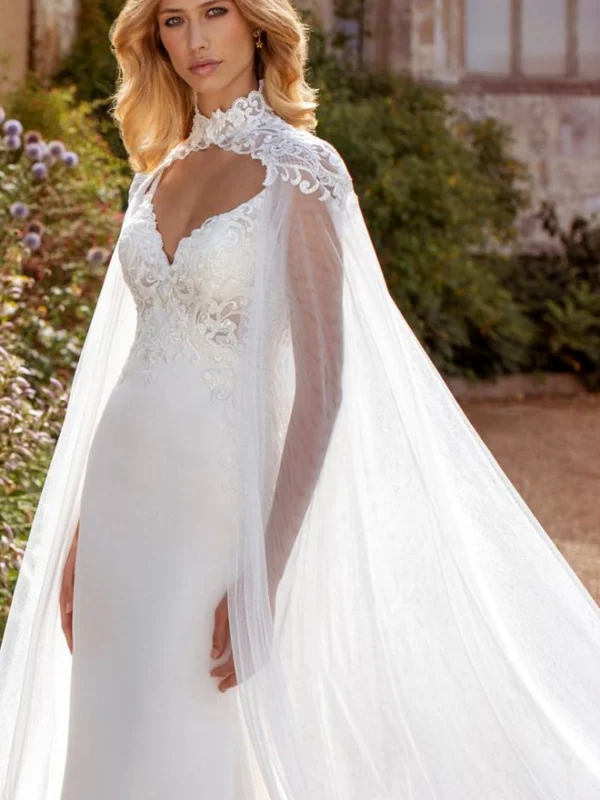
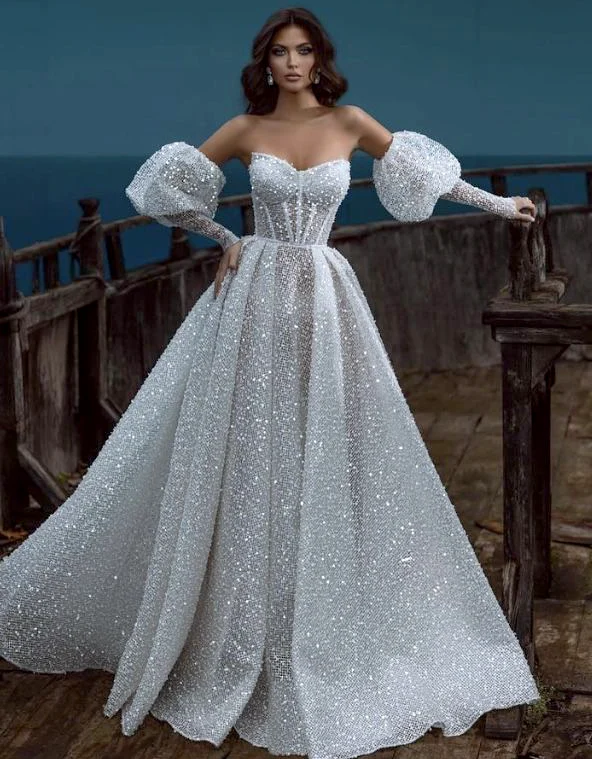
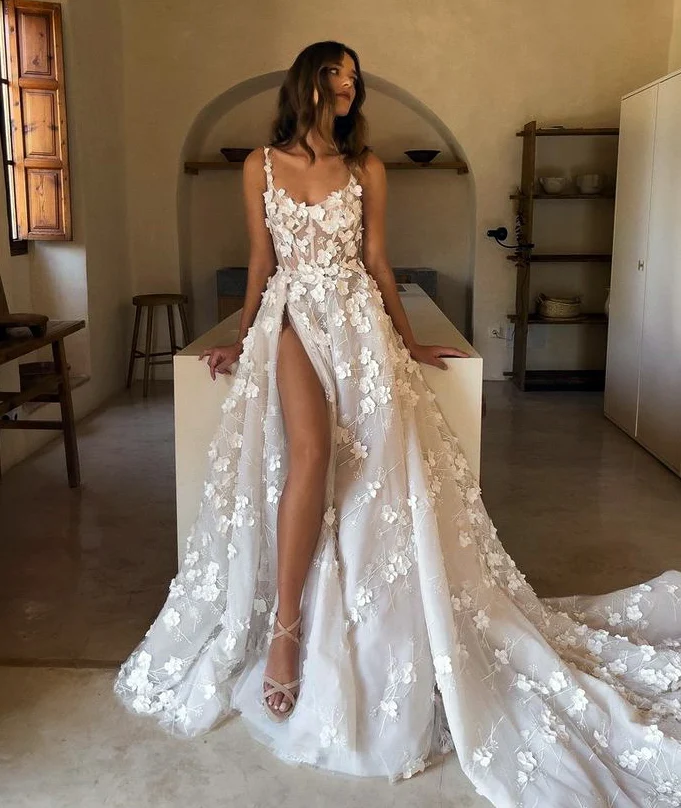
Wedding dress embroidery is easier to choose when you separate the motif you like from the actual method used to create it. Large pale flowers can remain individually readable from a distance, while fine branching lines create a more continuous patterned surface. The photographs offer that visual comparison. They do not prove a particular stitch, handwork or manufacturing method. For an order, you also need reliable information about the specific garment being offered.
Start with a simple design choice: do you want separate motifs to stand out, or mainly a closely drawn surface? Select two clearly different references. The large-flower dress and the high-neck design with fine continuous lines provide a useful contrast. Add a real sample later so that your picture preference becomes a decision about the execution of your own garment.
Wedding dress embroidery starts with motif scale
Look at the large flowers on the complete outfit first. Their outlines remain distinguishable across the bodice and outer skirt. If that appeals to you, describe their size in relation to the visible area rather than simply asking for something romantic. Request a sample or existing garment showing comparable spacing. One flower laid on a table does not explain how a complete skirt will look.
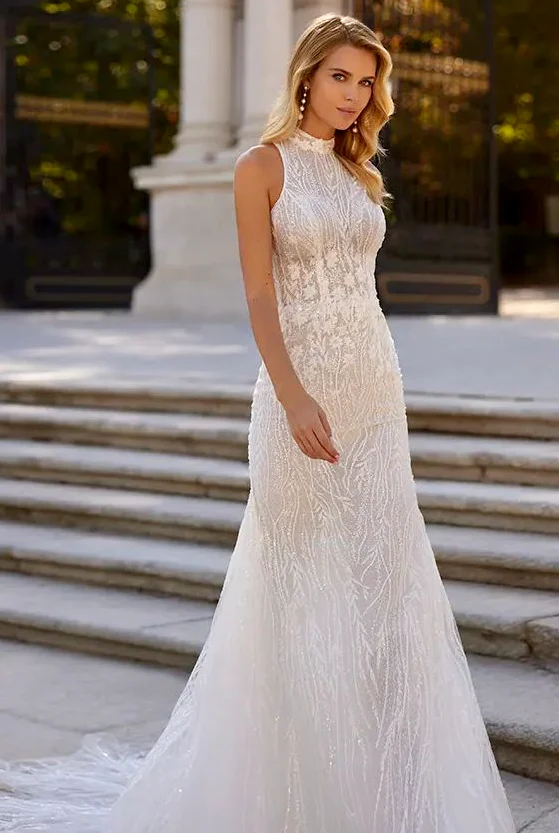
In the fine-drawn high-neck example, many small lines combine into a continuous surface. That is another direction if you do not want isolated flowers to become the principal detail. Compare both options from the same distance. A highly enlarged product detail and a distant full-length photograph are not an even basis for deciding which motif scale you actually prefer.
Separate visible relief from technical identification
Some flowers cast little shadows or appear to stand away from the ground. This describes their visible effect first. Whether an element is embroidered, separately applied or made another way needs confirmation from product information or the actual piece. The V&A guide to embroidery styles describes different stitch methods and foundation fabrics. A similar flower outline alone is not a secure identification of technique.
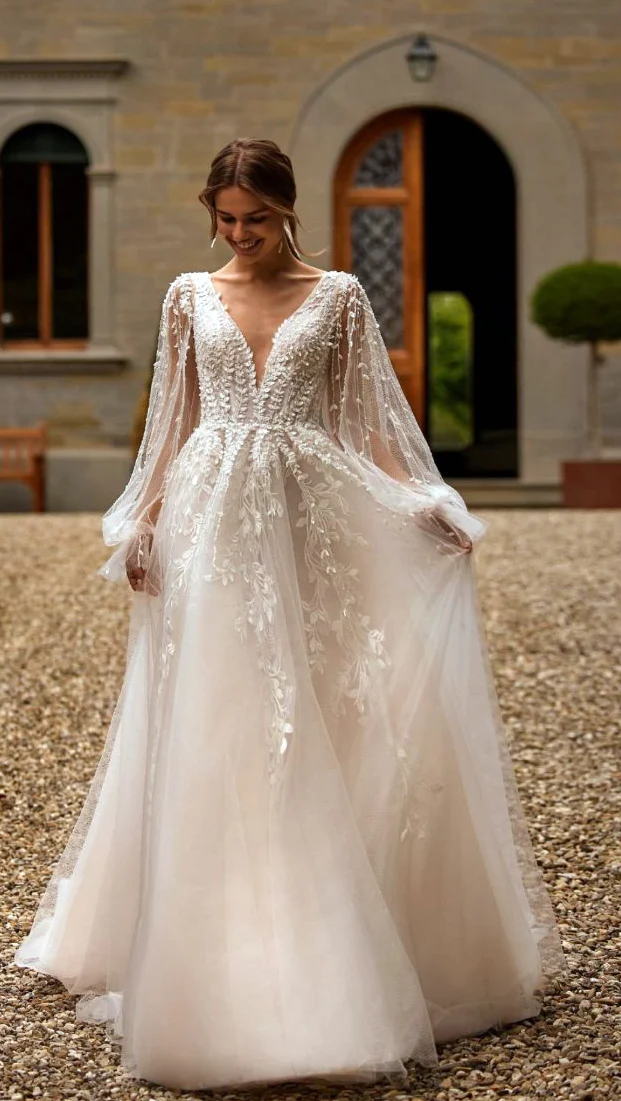
Ask to see the front and back of a sample belonging to the offered execution. Explain what you want to touch and compare: a flatter surface, more projecting leaves or small reflective details. The sample should answer your particular question rather than merely look attractive. Record what has been confirmed and what variation may remain possible across the complete dress.
Test accessory contact in the relevant place
Small or projecting decorations may sit close to jewellery. First identify where contact could occur in your outfit, such as a bracelet beside a long sleeve or a necklace over a high neckline. Try the actual pieces together carefully. Do not deliberately rub a borrowed sample. Ask how the surface should be handled if something catches, so you have instructions for the specific execution.
The long-sleeved floral example makes the hand and forearm particularly useful areas to examine. Hold a bouquet and move your hand slowly towards your waist. On the sleeveless high-neck example, the extra jewellery decision is nearer the neck. The guide to bridal accessories helps narrow the combination of necklace, earrings and headpiece without treating every open area as something that needs filling.
Give the quieter comparison a fair trial
The short pale gathered dress has no comparable large floral drawing. Its folds and curved upper edge make it a deliberate alternative. If what attracts you is actually the front contour or upper-arm draping, you may not need large flowers as well. Compare a decorated and a quieter actual garment with similar accessories to see how much of your preference belongs to the motif.
Afterwards, note only the features you want to keep. One choice might be large separate flowers and a quiet neck area. Another could be fine continuous drawing without long sleeves. The separate guide to a lace wedding dress explores pattern distribution in a lace-look surface. Here the focus remains the confirmed execution of your requested embroidery and the surface effect you want it to produce.
Discuss alterations before approving the final arrangement
If length, circumference or a fastening area will change, ask what happens to the motifs at that specific point. A large flower ending unexpectedly at a new edge presents a different design question from a small shift in fine lines. Ask for the proposed finish to be shown on the actual dress. Do not assume a reference photograph establishes that any alteration can be carried out.
An effective approval identifies the place, desired appearance and agreed work. Establish whether additional matching elements are genuinely available and suitable for the existing execution. After the work, look again with your planned accessories before final acceptance. That gives you a concrete result to judge against the features you chose, rather than returning to a general request for a floral dress.
Finish with a short sample decision
Compare your finalists with the same questions: which motif can I read from normal distance, which surface do I want to touch, and where do my accessories come close? A photograph answering only the first question can still be an excellent style reference. The real sample supplies information that the image cannot establish about execution and handling.
Keep the confirmed model description with the agreed alteration notes. At a later appointment, these let you refer to specific features instead of explaining a general flower idea again. A precise preference can be restrained or elaborate. What matters is that visible design, confirmed execution and your intended way of wearing the finished garment fit together.
Approve a sample against one specific question
For a large-flower versus fine-line comparison, ask to see two confirmed samples against the same intended ground. Request a sufficiently connected area to judge each repeat. Choose readability from a distance first, then the close surface. If you like large flowers across the outfit but dislike their more projecting appearance, the next question is whether a flatter confirmed execution of that motif preference exists. It is not automatically available. Conversely, fine drawing might appeal while you still want one larger flower near the upper edge. Have that departure shown and described separately. This keeps the approved sample distinct from additional design work that remains undecided, giving the next appointment a concrete basis for comparison.
A simple wedding dress provides a countercheck when you want to assess the outline without large motifs. Keep jewellery and viewing distance similar. Then decide which visible motif you would actually miss, rather than automatically treating the quieter surface as unfinished.
Choose the motif scale and surface effect first, then ask to see the confirmed execution on the actual dress or a sample belonging to that offer.
Frequently asked questions
Do the pictures prove hand embroidery?
No. They show motifs and visible surface effects; technique and handwork need confirmation for the actual model.
Which sample is useful before ordering?
A sample belonging to the offer, showing motif size, front and back and the surface effect you want to compare.
What needs checking before an alteration?
How motifs will continue or end at the changed edge and whether matching additional elements are actually available.