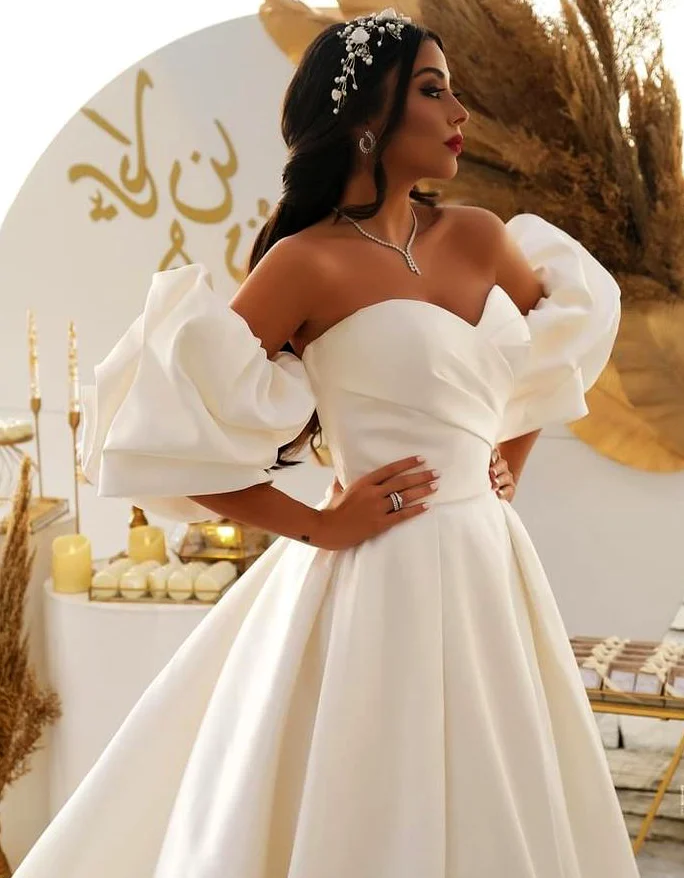
Choose a wedding dress necklace beside the actual upper edge of your garment. In the first photograph, a Y-shaped necklace occupies the clear area between the neck and a shaped bodice. Large folded sleeve areas, earrings and a hair ornament accompany it. Three other dresses leave the neck without a visible necklace. Use these differences for your own combination: which line should remain between face and neckline, and which piece do you actually want to wear there? An exposed area does not have to be filled with more jewellery.
For an initial idea of length, loosely hold string cut to the offered chain length around your neck. Tiffany’s sizing guide uses this method and considers the pendant too. The real necklace worn with your dress remains the decisive trial.
The jewellery line remains beside the fabric around the arms. If that side area is your first search priority, compare off-shoulder wedding dresses with sleeves. Return to the necklace against your actual upper frame afterwards.
Compare a wedding dress necklace as one change first
Put on the intended dress and assess its neckline without a necklace initially. The Y-shaped reference leaves a broad open area above the gently shaped fabric edge. Its jewellery places a vertical line between large folded sleeve volumes. Other references show exposed shoulders with visible earrings and no necklace. Decide which distribution you would like to see on your own bodice before selecting a pendant through a close-up alone.
Add just one necklace you actually have available. Keep hair and earrings unchanged for this comparison and view yourself from a similar distance. A detail picture shows the bottom of the jewellery; a head-to-waist view shows its position across the whole upper outfit. Do not choose solely through the apparent size of a pendant close up. The dress’s shoulder and sleeve areas still matter to the complete view even when the jewellery itself is small.
Match the bottom of the jewellery to the neckline
The Y-shaped piece leads towards the bodice with a narrower lower end. For your choice, assess the gap that actually remains between jewellery and fabric. Compare a shorter option or another available necklace without changing the dress at the same time. View both from the front and slightly to the side. A length that looks pleasing in this picture may sit differently on your own neckline; the reference supplies no measurement for your piece.
Turn your head both ways and move your hands from the waist to your sides. Check where the jewellery finishes afterwards. If you want a different length, ask about the real options of that particular piece. A fine line in a photograph cannot establish an adjustable fastening or its position. Have putting it on and any existing adjustment demonstrated rather than assuming an unseen mechanism will produce the effect you want.
Add earrings and hair jewellery separately
The first picture combines the necklace with longer earrings and a floral hair ornament. Another dress leaves longer earrings visible beside a bare neckline. Compare these distributions with your planned hairstyle. Try the earrings without a necklace first, then with it. If you want to wear both, use the whole view to judge whether attention travels between face and bodice in the way you prefer. There is no required number of pieces for this personal choice.
Introduce the hair ornament separately. Its position can read differently from the front and side. Request both views and leave the other jewellery unchanged. The broader bridal accessories guide also considers bringing a bouquet or bag into the complete outfit. Keep this decision narrower: should the necklace carry the main focus, or would you rather leave clear space between earrings and neckline? Compare those two versions on the actual garment.
Keep shoulder volume visible beside the necklace
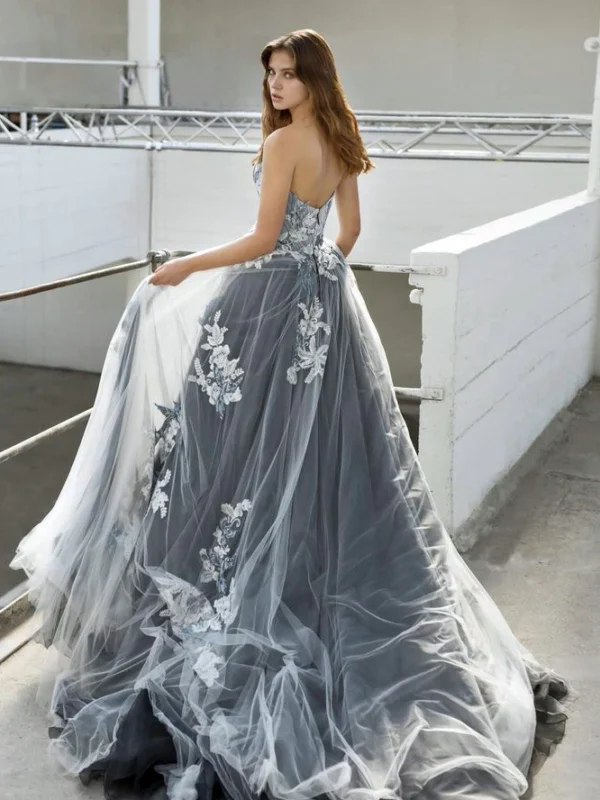
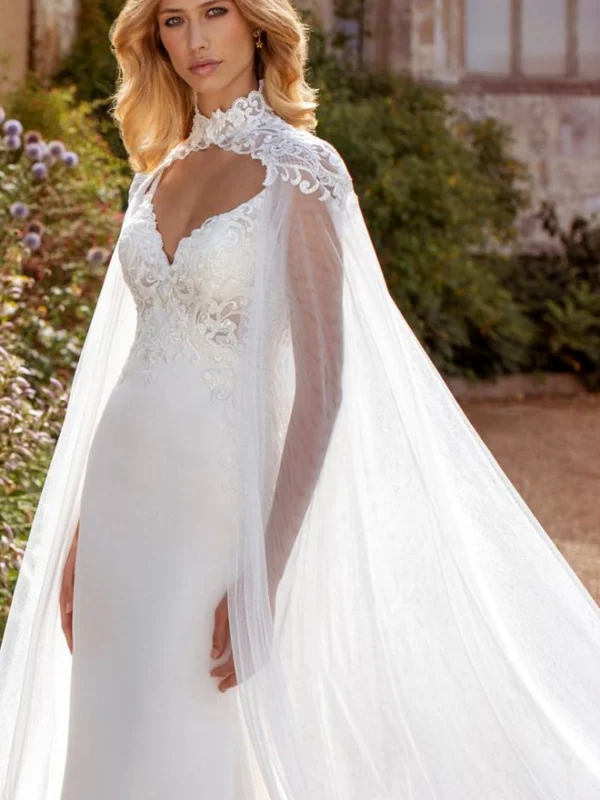
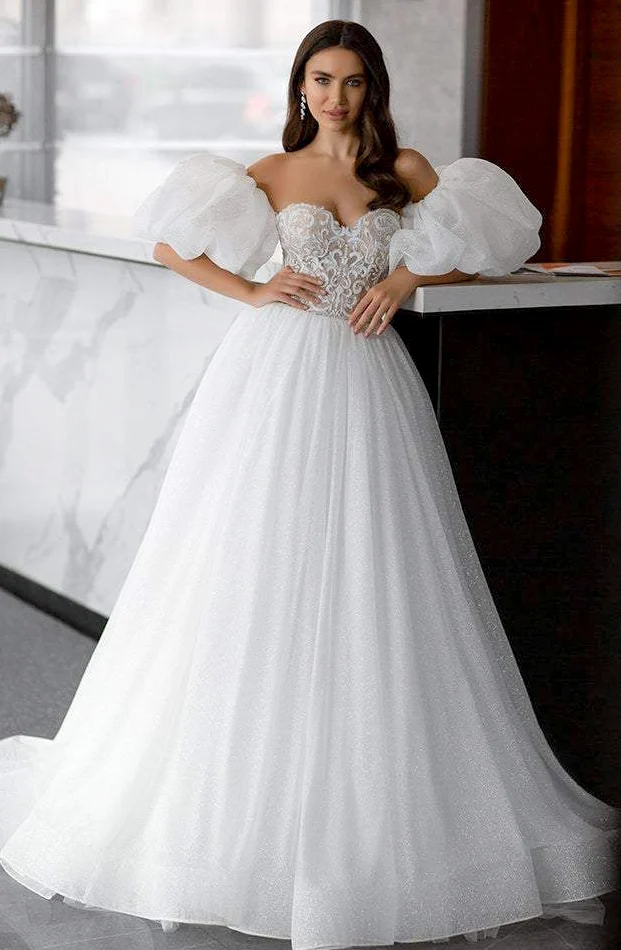
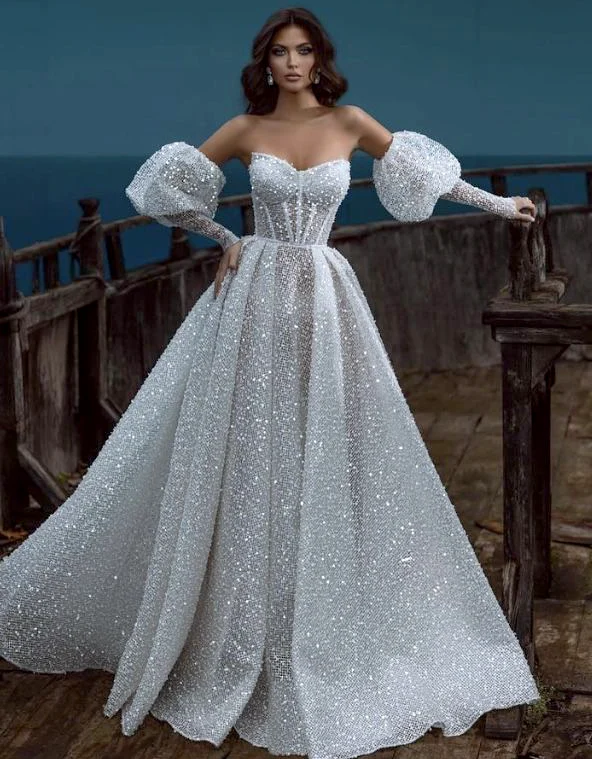
The sleeve areas differ substantially. The first photograph has large folded forms beside exposed shoulders. A second dress shows short rounded volumes that look fine and partly translucent. Another combines rounder upper-arm areas with narrower decorated forearm sections. The final example has smaller flutter sleeves. A wedding dress necklace therefore belongs beside a particular amount of fabric around the upper body, rather than being chosen only from an isolated jewellery photograph.
If one combination appeals to you, borrow the jewellery idea first. Keep your own dress unchanged and compare pieces on it. You do not need to adopt the large sleeve area from the reference as well. If you are choosing a dress with more shoulder volume first, reassess the jewellery afterwards. Garment and jewellery remain separate decisions that can work together without every visible element coming from the same inspiration picture.
Try bouquet position, neckline and arm stance together
The reference with smaller flutter sleeves has a pale bouquet with green areas held low at the wearer’s left side beside the skirt, below the hip, with the arm down. It takes up a different position from the hands at the waist in the first photograph. Add your intended bouquet or a useful size substitute and hold it at the planned height. Check how much necklace, bodice and waist remain visible. Lift it briefly and lower it before settling on a jewellery length.
A deeper V can place the necklace differently against the edge from a more horizontal neckline. The V-neck wedding dress guide develops the choice of front line. Use your real garment and preferred coverage for the comparison. A long pendant is not a general requirement for a V, and exposed shoulders do not automatically require a necklace. Select the visible relationship you want to wear instead of following a supposed universal pairing.
Prepare the final jewellery combination practically
Choose one complete wedding dress necklace combination and photograph it from the front and side with your planned hair. Note the piece and actual setting used. Practise putting it on in the order you intend to follow while getting ready. Arrange any needed help beforehand. The photographs establish no metal, stones, fastenings or particular maker; obtain product information for the actual pieces you will use.
Store jewellery and dress according to their respective information. GINETEX care symbols concern textile care for the garment and do not replace jewellery care instructions. Ask separately if treatment of a particular piece is unclear. Two clear views and a practised dressing sequence provide a useful basis for the styling decision: you know the necklace’s bottom, its relationship to earrings and hair, and the neckline that remains visible in your completed outfit.
Try the wedding dress necklace with earrings and hair unchanged first. Check its bottom against the neckline, then add the bouquet at the planned height.
Frequently asked questions
Does an open neckline always need a necklace?
No. Try an earrings-only version too. Decide on the real dress whether clear space should remain between face and neckline or carry your own jewellery line.
How can I find a suitable necklace length?
Compare available pieces on the actual dress from the front and side. Move your head and arms, then check the bottom again. Have the real adjustment options of the selected piece explained.
Should I choose necklace and hair jewellery together?
Compare the necklace with hairstyle and earrings unchanged first. Add the hair ornament afterwards and assess the whole upper view from the front and side.
When should I introduce the bouquet to the jewellery comparison?
Add it after the first necklace comparison and hold it at the planned height. Check how much necklace, neckline and waist remain visible, briefly comparing with the bouquet lowered too.