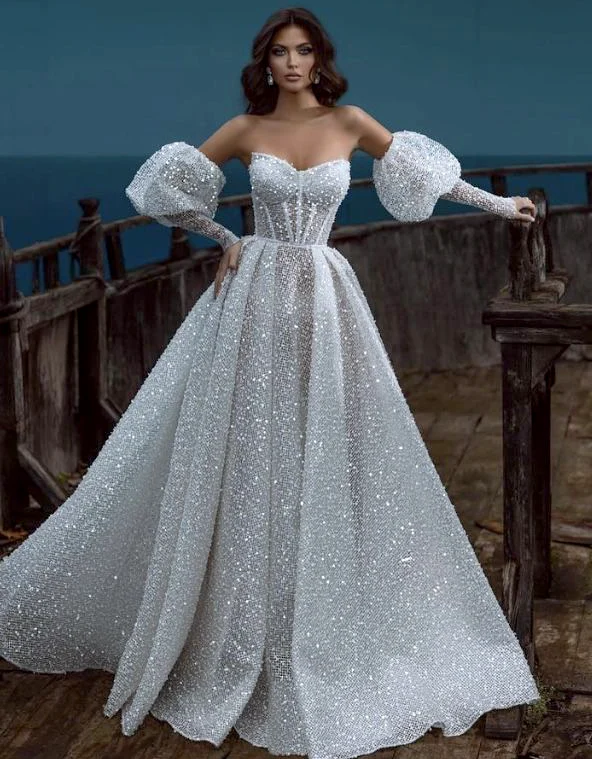
A decorated wedding dress without a necklace combines rounded upper-arm volumes with narrower decorated forearm sections. The shoulders remain visible above the shaped bodice. Vertical lines divide its front. Broader side skirt areas sit beside a narrower long front section. One arm rests on a railing and the other hand is at the hip. No necklace is visible. The picture does not show enough connection detail to identify separate arm or skirt areas as removable pieces.
The distribution of decoration is useful for your jewellery comparison. Try a view without a new necklace first and let your arms relax. Decide whether you want another accent at the neck or would prefer clear space above the richer fabric areas. If adding a necklace, keep other jewellery unchanged during the trial. Assess head, shoulders and waist together. A tight jewellery crop would exclude the existing forearm detail and side fabric volume. Ask about the real components of the available garment if they affect your dressing plan.