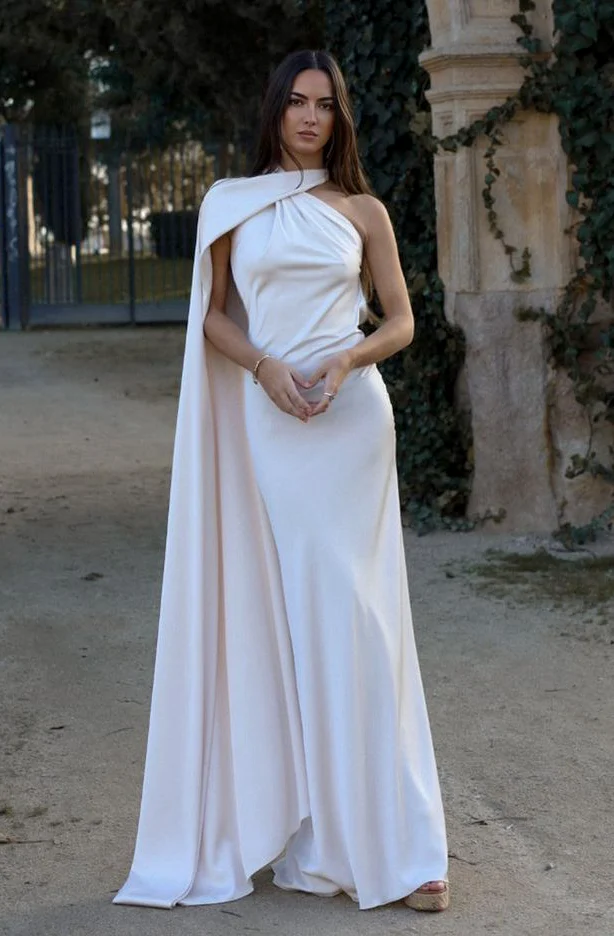
An asymmetric bridal cape can be chosen through its one-sided shoulder line and the placement of its long panel. The leading example puts a broad pale section over one shoulder, brings it towards the neck and leaves the other shoulder bare. Three bilateral comparisons have floral upper edges or long side panels. Decide whether you want this contrast between sides first. Then select neckline, jewellery and handling on the actual dress instead of simply searching for the longest possible outer layer.
A cape can be offered as a separate garment: Jenny Yoo describes bridal capes and toppers as separates. That illustrates an available product arrangement without identifying any of our photographs as that brand’s products. Ask explicitly how cape and dress relate on your preferred model. If you plan to change the outfit later, the guide to changing your bridal look helps prepare the sequence with veil, jewellery and outer layer.
Asymmetric bridal cape: cover one shoulder or both sides?
In the leading image, the longer area runs from one shoulder to the floor while the opposite shoulder remains bare. Fabric also sits higher beside the neck and diagonally across the upper dress. The floral front comparison instead distributes a translucent-looking outer layer across both sides. This difference concerns visible shoulder arrangement, rather than fabric quantity alone. Assess whether you prefer a distinct change between sides or a more even frame. Show the intended view during a consultation and identify the shoulder you actually want bare.
Try the available model facing forward and slightly sideways. Relax both arms before bringing the hands together in front as pictured. Assess how much of the bodice remains visible on each side. The hands’ position may make the photographed upper arrangement look more settled than during your ordinary movements. Another view of the same candidate is therefore more useful than comparing only carefully arranged front images. If you want the panel on the other side, ask about the real version rather than presuming a reversible construction.
Choose the neck edge with the dress
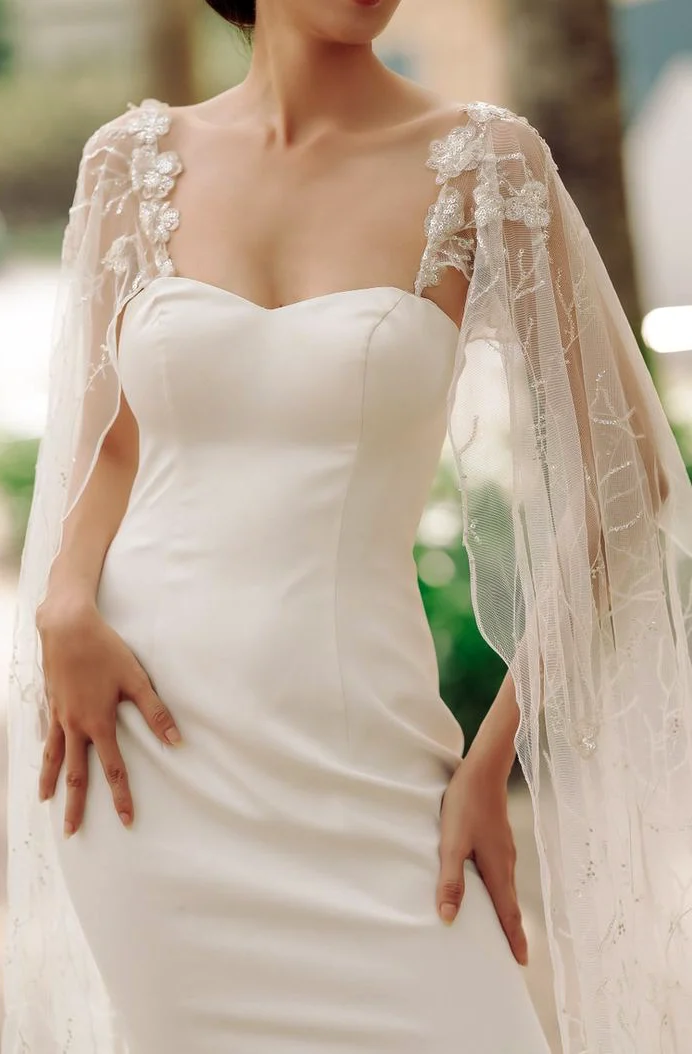
The one-sided example combines fabric higher near the neck with diagonal lines and an otherwise quieter dress area. The floral reference instead has a clearly defined upper border above a lower V bodice. In the closer bodice comparison, floral shoulder edges sit beside a slightly curved front dress edge. Decide whether the cape should form the main upper outline or the dress neckline should remain clearly visible. A shared pale colour does not automatically make these different edges the same design choice.
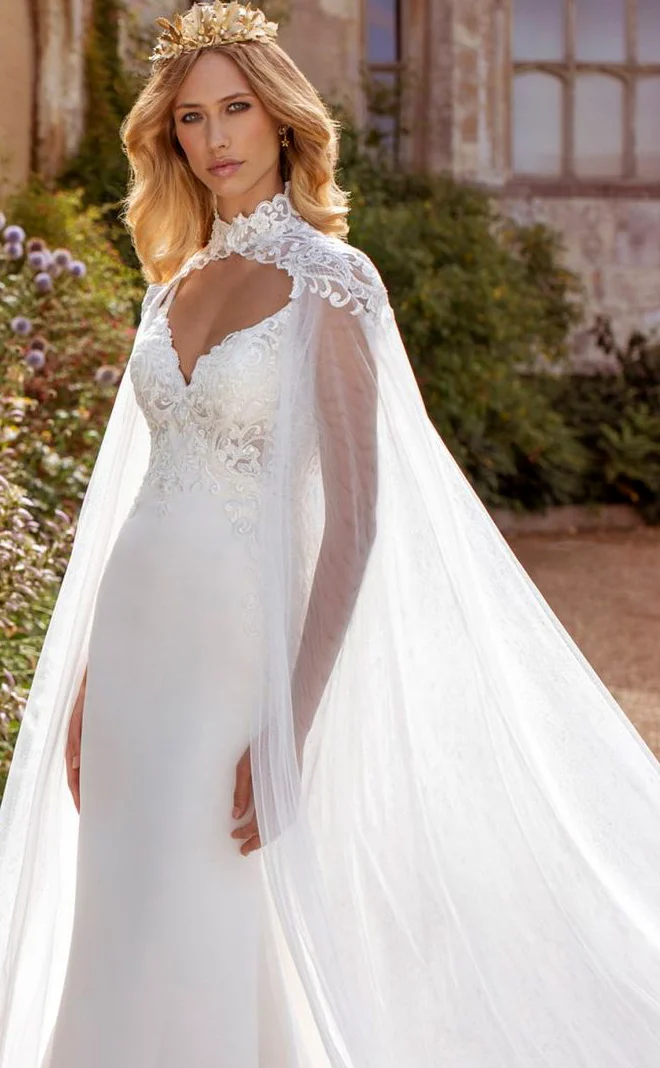
Try a genuinely available separate cape only over the dress you intend to wear. If the outer area belongs to the model, have that connection explained and try it as the existing unit. Ask specifically where an alteration would be possible. If bilateral floral edges appeal, use them as a countercomparison to the quieter one-sided area. Assess the upper outfit without an additional necklace first so you can see the fabric lines. Choose jewellery afterwards instead of using it to compensate for an unclear neckline preference.
Test earrings, hair and head movement together
Dark hair falls over part of the upper area in the leading photograph. Try your intended hairstyle with the real cape even if its longer side line initially attracts you most. Draw hair back on one side and compare the visible shoulder edge without changing the entire outfit. Then turn your head both ways. Decide whether you want the one-sided line clearly shown beside your face or enjoy it partially covered. A slight side view also explains the relationship between hair and the shoulder more clearly than a front photograph alone.
Try earrings with that hairstyle and no additional necklace first. A longer pair can look different from small studs beside the higher fabric border. Compare your actual pieces at conversation distance. The bridal accessories guide expands choices between hair, ears and neck. The leaf-shaped gold-coloured head ornament in a floral counterexample is another possible arrangement, rather than a required addition or identification of its material. You can keep attention on the cape instead of adding another strong accessory.
Hold flowers and bag beside the long panel
The hands are together at the front in the leading image. Your selection should also include holding the objects you actually plan to use. Take flowers or a bag in the intended hand and assess the visible bodice. Then deliberately change hands and compare whether the long panel sits differently or covers an edge you want shown. Decide through those real movements rather than a general recommendation that one particular side must always remain free. The asymmetry and the way you use your hands belong in the same trial.
Walk several steps, turn and sit with the objects. If you expect a chair with arms, try a comparable sitting arrangement. Ask how the actual panel should be managed there. Plan any help with arranging it specifically. The bilateral rear reference shows longer areas beside the arms, but does not establish identical movement or attachments for the one-sided design. Each question should be answered on the selected garment. Bring both flowers and bag if you plan them together so their positions are tested as one complete arrangement.
Separate cape edging from skirt length
Follow the leading example’s one-sided panel from shoulder to floor and then identify the dress’s own front hem. A pale shoe with a visibly thick sole is visible in front. These lengths should be tried together but described separately. Liking a side floor finish does not automatically mean wanting more fabric behind the entire skirt. Compare ordinary placement with a deliberately arranged image and choose the area you want visible standing and in photographs. That allows the side panel to remain a deliberate shape choice instead of a general request for more length everywhere.
The bilateral rear comparison adds long sections descending from the shoulders beside a trailing skirt. Have each layer’s starting point shown on the real model and ask whether it moves separately. For selecting translucent areas, the sheer wedding dress guide helps describe coverage. Here the one-sided shoulder and cape line remain the focus. Try your own shoes before requesting a length change and discuss the intended new finish specifically on the affected piece rather than treating every lower edge as one hem.
Establish removal and care before deciding
If you want to remove the cape later, request a confirmed detachable version and have its use demonstrated. A visible boundary at neck or shoulder does not prove it. Lifting, removing and changing length are different preferences. Try the offered solution yourself and assess the dress edge remaining afterwards. If the panel belongs permanently to the garment, plan its actual handling while sitting and changing position rather than quietly assuming you have two separate outfits available for different parts of the day.
Establish composition and product care before cleaning or pressing. GINETEX explains care symbols; the specific piece’s label is decisive. Choose the asymmetric bridal cape through three decisions tested together: a deliberately one-sided shoulder arrangement, the visible neckline you want and real handling of the long panel. Hair, jewellery, shoes and intended objects let you assess that selection as a worn outfit. Your preferred arrangement and actual use can then guide the choice together instead of leaving everything to a single carefully arranged photograph.
Choose an asymmetric bridal cape by bare shoulder and visible neckline first. Try jewellery and hair, then flowers or a bag, plus sitting and turning with the actual long panel.
Frequently asked questions
Can I simply switch the cape’s long side?
The photographs do not establish a reversible construction. Ask whether the desired side is available on the model or whether an alteration is actually possible.
Can I carry a bag beside the long cape?
Try your intended bag on both sides and assess which fabric edge stays visible. Walk, turn and sit with that real combination.
What should I establish if I want to remove the cape later?
Request a confirmed detachable version and have its use demonstrated. Try it yourself and assess the dress edge remaining afterwards.


