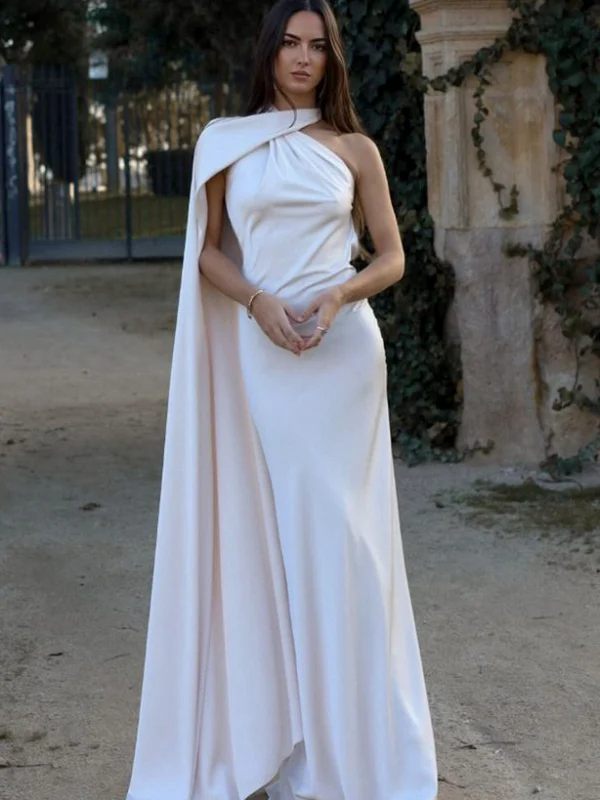
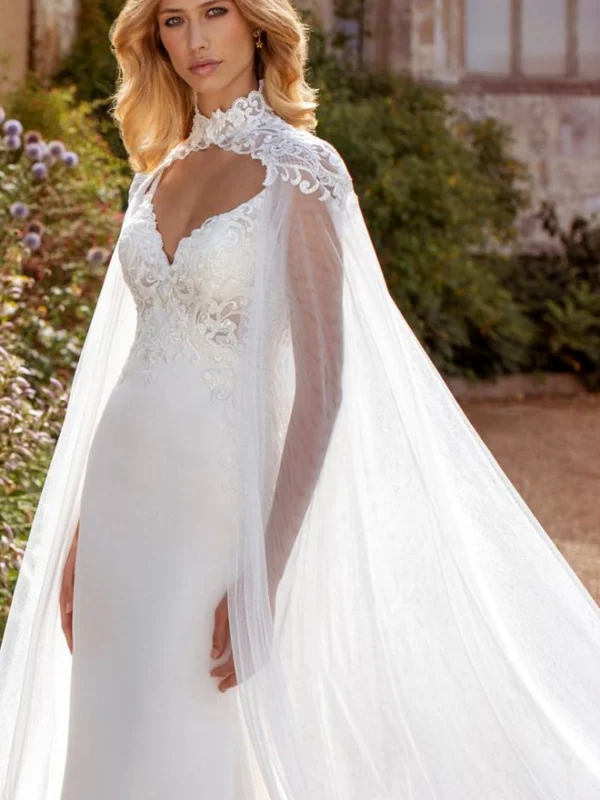
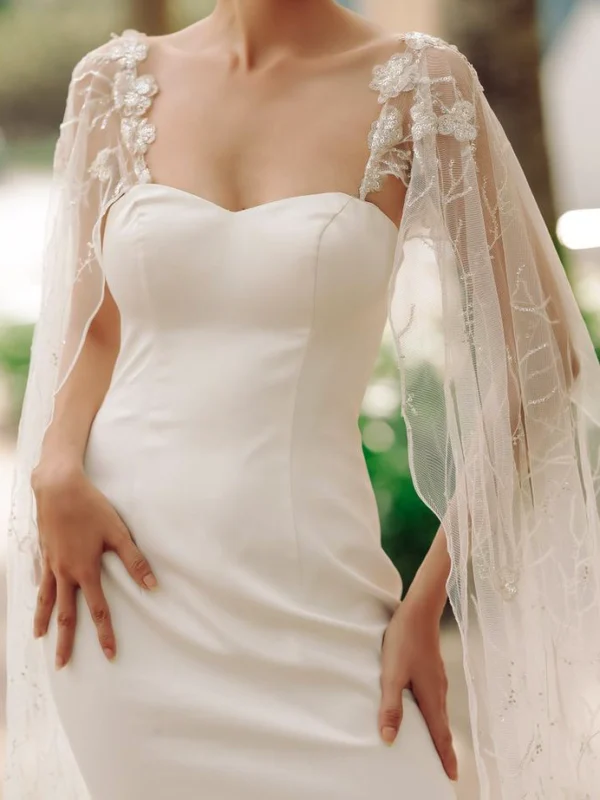
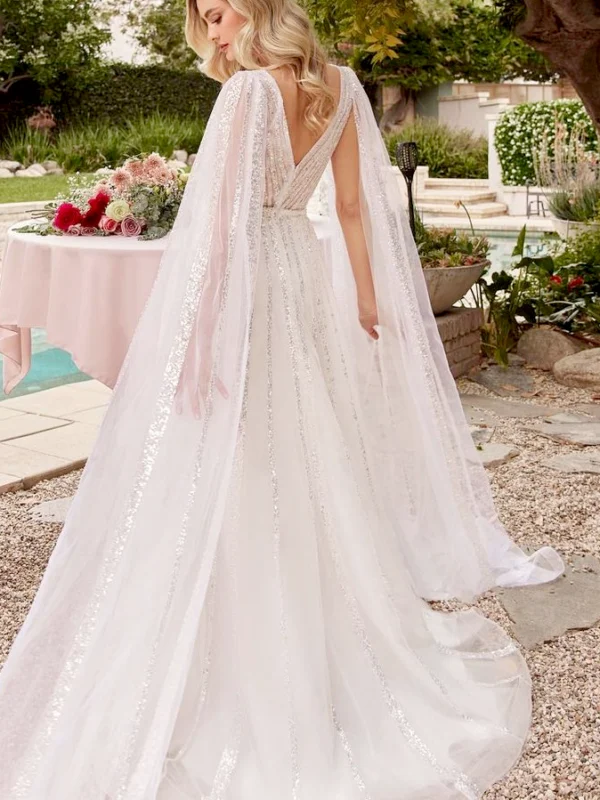
Bridal capes are compared here through one longer side and three bilateral arrangements. In the leading image, fabric sits higher near the neck and over one shoulder while the opposite shoulder stays bare. The floral front view frames both sides with translucent-looking fabric. The closer photograph shows floral shoulder edges beside a quieter dress area; the rear view adds long patterned side panels. Start with the shoulder distribution you want rather than the longest area on the ground. Then choose a more clearly defined patterned border or a quieter fabric line beside the neckline.
Guide to comparing these images
Identify a one-sided panel and a two-sided frame
Try the real combination with relaxed arms, then with flowers or a bag. The leading image’s hands together do not answer every later action. Compare both sides from a little distance and turn for the rear view too. Have each layer’s starting point and inclusion with the dress explained. A visible edge does not prove detachability. For the final choice, assess your real front length, long cape edge and intended removal or handling separately.
The plainer pale dress is the starting point for the asymmetric comparison. Its long panel sits on one side and leads diagonally towards the neck above, leaving one shoulder visible. The three floral counterexamples distribute an outer area across both sides. That does not mean every side is equally long or equally densely decorated throughout. For this comparison, identify the arrangement over the shoulders first. Look at the side borders and the amount of dress visible between them afterwards, keeping shoulder coverage distinct from the decoration.
The close-up and rear view show different models. The closer photograph explains floral shoulder edges above a quieter front bodice; the rear photograph shows long patterned areas beside a deep V. They are not matching views of one product. When shortlisting your own references, note whether you want a one-sided main line, a high floral neck frame or two longer shoulder panels. Then request the missing angles of the actual candidate. The series helps describe your preferred shape while connections and complete length are established on the right model.