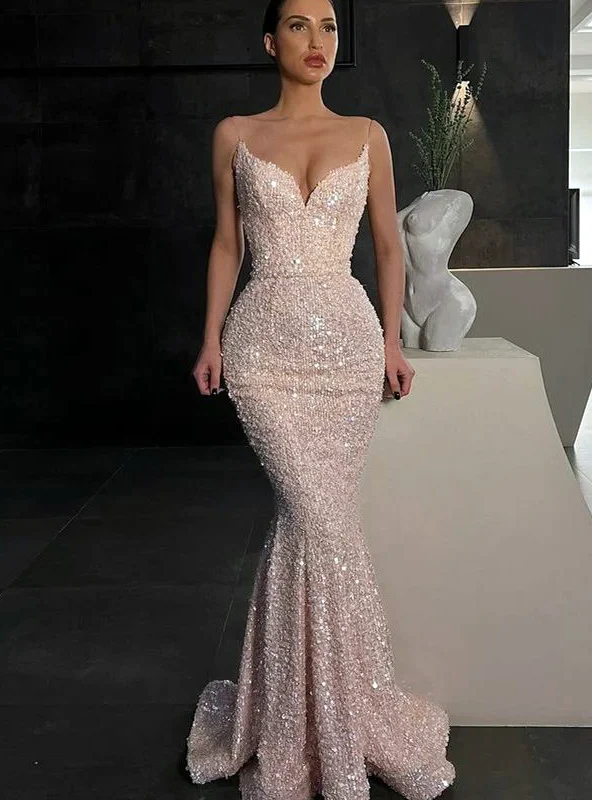
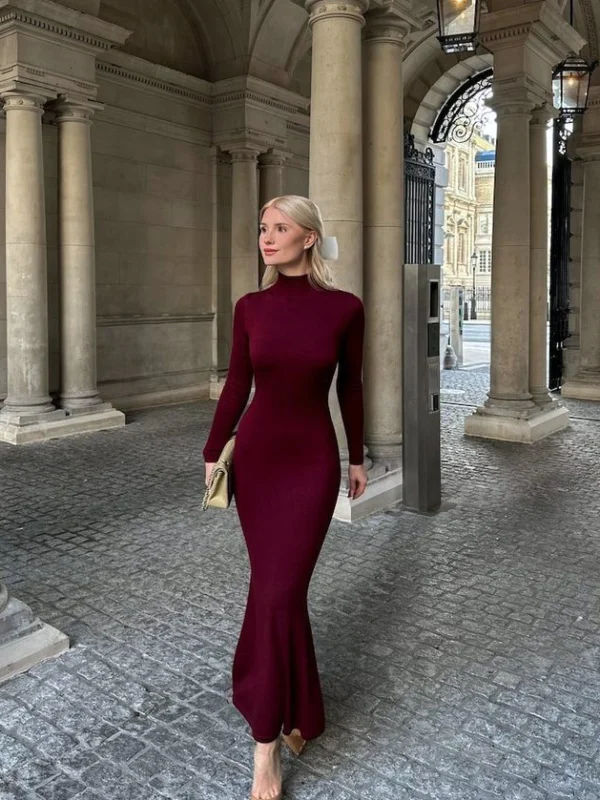
A civil wedding dress should suit the day you actually intend to have. Two looks help separate knee length from a longer midi shape: a pale, densely decorated dress with long sleeves and a shorter pink version with small sleeve caps. Both have a closer body line, but they distribute pattern and exposed space differently. Begin with length and upper edge. Decide afterwards which shoes, bag and outerwear should accompany that line. Trying your own complete combination gives more concrete information than adopting every part of another person’s photograph.
Choose a civil wedding dress through the intended length
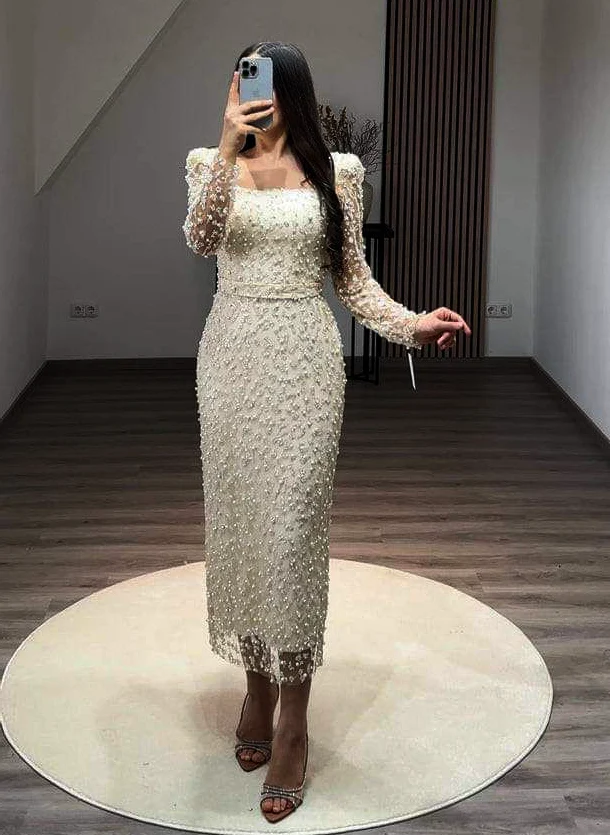
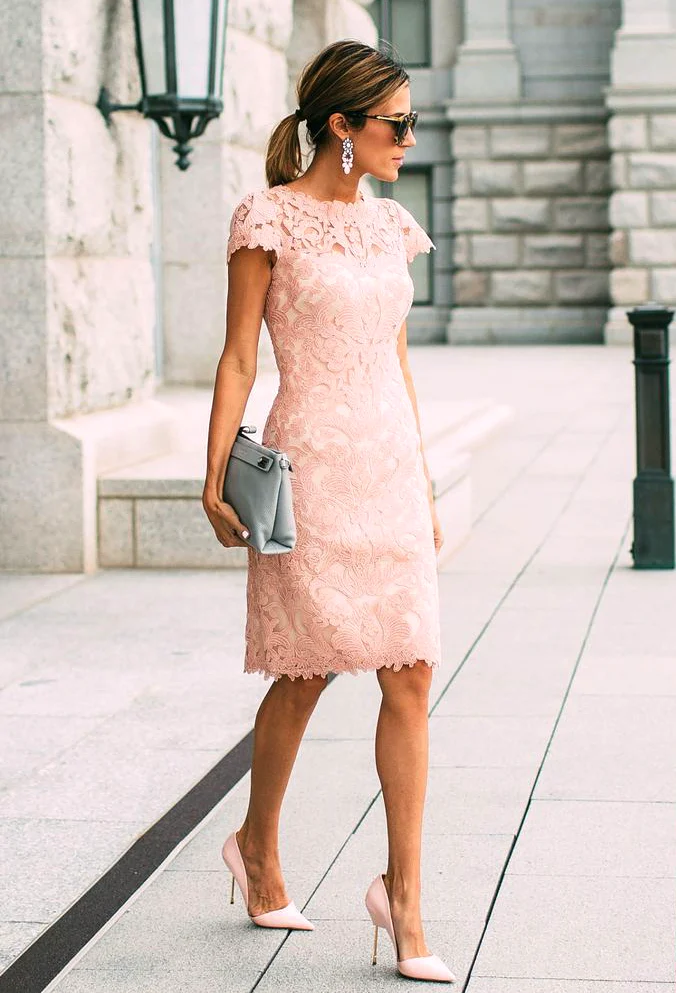
The pale shape reaches clearly below the knee. Its patterned lower edge leaves a smaller visible interval above the open shoes than the pink example. The pink skirt finishes around the knee, exposing a longer stretch towards the shoe. Neither proportion is inherently better. Decide whether you want the dress edge itself or the relationship between hem and footwear to attract more attention. That preference can be considered before colour or extra jewellery enters the comparison.
Try the proposed length with both pairs if you are choosing between shoes. Look from a similar distance at the front and side. A small hem change can noticeably alter the visible interval. Have a proposed shortening marked on the actual garment before it is carried out. The evening dress comparison helps separate this length decision from other shape preferences. Liking an upper design does not require accepting every available lower proportion with it.
Choose the neckline and sleeves of a civil wedding dress
The pale dress connects a squarer front neckline with prominent shoulders and long translucent-looking sleeves. In the pink version, the patterned upper area reaches closer to the neck, while small side caps provide another shoulder frame. A shorter skirt therefore does not automatically call for more exposed shoulder. Choose those elements separately. You might prefer a longer shape with quieter shoulders or a knee-length dress with a more covered upper section.
At the fitting, arrange your hair as planned, then move it away from the neck. See which patterned areas remain visible. Decide whether you actually want a necklace next. A densely designed upper surface may already provide your preferred emphasis. Add earrings, a necklace and hair decoration one at a time. Changing all three together makes it harder to understand which addition improves the arrangement and which simply introduces another competing detail.
Compare pattern and waist details on a civil wedding dress
A narrow band draws a clear line around the middle of the pale example, with pattern continuing both above and below it. The pink shape has no equally prominent horizontal division; its pattern extends over the closer bodice and skirt. Look at this distribution before buying an extra belt. A new band can interrupt a previously continuous surface, so it need not repeat the effect achieved by a belt on a different garment.
Begin with relaxed arms, then hold your bag as you would during the day. Part of the middle may become hidden or newly framed. Check seated positions too. If pattern and waist emphasis together feel too prominent, the simple wedding dress guide offers quieter surfaces to consider. The aim is to keep the distribution you like in the real outfit rather than loading every possible detail onto one dress.
Choose shoes to wear with a civil wedding dress all day
Pointed shoes appear in the pink photograph. The pale dress shows open toes and several narrow straps instead. These differences change the visual ending of the look, but they do not tell you which pair suits your feet or route. Consider arrival, any stairs, a short walk and time at a table. Use your own trial rather than a universal heel-height prescription. Appearance and the way you handle the shoes are separate parts of the same decision.
Walk a short distance, turn and sit. Observe the hem without constantly arranging it for a photograph. If another pair is intended for later, compare that combination too. When discussing alterations, ask which shoes the final length will be matched to. This keeps the decision specific and shows whether you expect different results from the same lower edge. You can then recognise the complete outfit you actually tried when returning for a final check.
Add the bag and outer layer in use
The grey bag beside the pink dress creates a separate colour block. Its position also changes how much of the side and waist remain visible. Test your bag open, closed and in the intended hand. Think about the moments when you want both hands free. A photograph with a loosely held accessory does not fully describe that practical question. Place your own belongings inside so the comparison includes the way you intend to use it.
Put outerwear over the complete outfit afterwards. Notice which upper edge remains visible and how you remove the layer again. Avoid changing the bag, necklace and jacket simultaneously. Assess one addition first and identify the line you want to retain. This helps prevent a combination you already like from becoming crowded with unrelated ideas. Removing an accessory is a legitimate styling choice when it makes the arrangement clearer to you.
Confirm the actual decorated surface
Inspect sleeve ends, the band, hem and the places where your bag or jacket meet the offered garment. Ask about its actual construction and available alterations. The pictures cannot establish fibre composition or how the visible decoration is attached. Detailed product information is more useful here than assigning a plausible fabric name. Request the rear view as well, since a front photograph does not describe every closure or line around the garment.
Read the actual label before choosing a care method. GINETEX explains care markings for washing, drying and other treatments. Do not select a process from pale colour or pattern alone. Keep confirmed care and alteration information with your choice. The result is an occasion outfit with a deliberate length, tried handling and understandable product details. Those notes also provide a useful comparison if a different version is presented at the final appointment.
Choose the visible leg interval and upper edge first. Compare shoes, a bag and outerwear individually on the actual dress rather than copying an entire photograph.
Frequently asked questions
Does a civil wedding dress have to be white?
This guide compares styling possibilities rather than imposing a binding colour rule. Choose a colour that fits your own celebration and preferences.
Is midi length automatically more formal?
Length alone does not determine the complete look. The upper area, sleeves, shoes and accessories also change the arrangement.
Must the bag match the dress exactly?
Matching is one option. The grey bag beside the pink dress offers a different colour relationship to compare deliberately.