A spaghetti strap evening dress leaves a fine line between the shoulder and the bodice. On a heavily decorated dress, that small line deserves a deliberate choice: should it almost disappear, continue the dress colour or remain a visible frame? The two fine-strap examples offer different answers. The orange dress connects narrow straps to a strongly outlined, ornamented bodice; the pale, densely shimmering dress lets the straps retreat beside its busy surface. A dark green dress with a broad single shoulder provides a useful comparison. The decision here concerns visible lines and their meeting points, rather than support inferred from photographs.
Spaghetti strap evening dress: choose how visible the line should be
Follow the area from the shoulder to the first clearly visible bodice edge. A fine strap can appear straight or slanted depending on where it joins the top. Then look at the space between the strap and the neck. Two dresses with similarly narrow straps can create quite different upper frames. For your shortlist, record more than thin straps. Decide whether you want a quiet, open shoulder area or a pair of clearly drawn connections to the bodice. That distinction makes the next comparison much easier to explain.
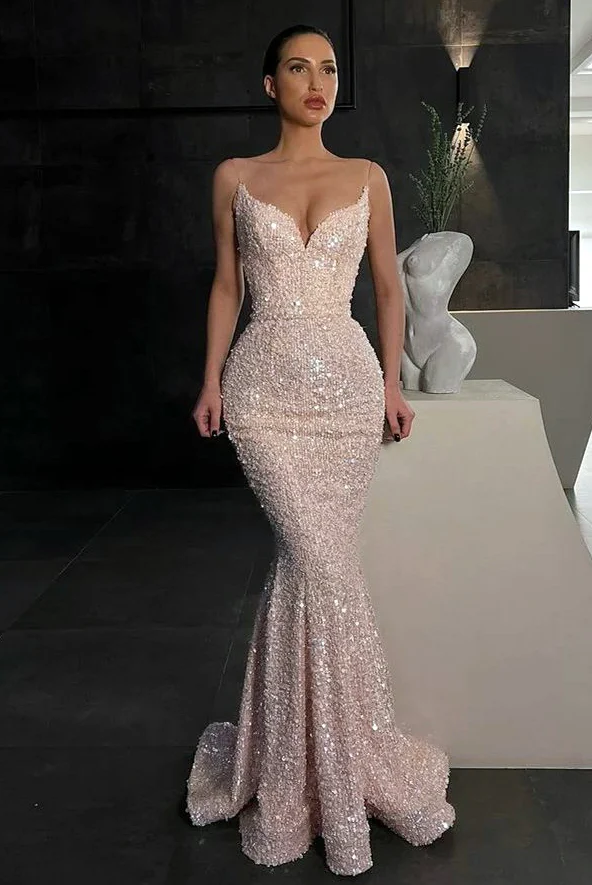
Look at each candidate from a distance before moving closer. In the full-length examples, the large orange reflective area and the pale all-over shimmer attract attention before the straps do. If you want the straps to be a noticeable feature, this low visibility may not be your preference. Judge the actual colour contrast on the dress you try. A strap that nearly disappears in an edited product photograph may look different in the room. View it under more than one available light without treating a single camera setting as the final answer.
Trace the connection to the bodice
On the orange example, the fine lines arrive beside curved, strongly outlined upper edges and motifs that converge near the waist. The attachment area therefore sits next to an already prominent drawing. With a similar candidate, decide whether you like that continuous direction or would prefer a quieter transition. Trace shoulder, strap, top edge and centre on your own comparison photograph. This is a practical way to describe a visible preference to a consultant, without claiming that the photograph reveals the stitching method or the internal construction.
On the pale example, each narrow strap continues above a curved neckline while dense reflections occupy much of the dress. A plain fine line can provide a pause beside that surface. You might instead prefer a stronger border, in which case put an actual alternative alongside it. The question is not which line supposedly corrects a body shape. It is how clearly you want to see the change from exposed shoulder to decorated bodice. Keep the viewing distance similar so a close detail on one dress does not unfairly outweigh the whole view of another.

Separate colour from surface decoration
Change one question at a time where possible. Start with two similar bodice shapes carrying different strap colours, or hold colour samples near the shoulder. Then compare a quieter surface with a more ornamented one. If every detail changes at once, it becomes difficult to tell whether you prefer the fine line or simply the large colour area below it. A darker strap is not automatically more prominent in every setting. Skin, background, lighting and nearby motifs all affect what you notice. Consider the whole upper area together.
The orange dress’s glossy appearance does not establish its fibre content. The pale dress’s many bright points do not establish a particular fibre or embellishment method either. Ask for information about the actual garment if those details matter to your choice. Our guide to shine and draping on an evening dress helps with the visual comparison. Keep observed reflections separate from composition and construction questions that require the label or the real garment. You can describe an appealing effect accurately without attaching an unsupported material claim to it.
Use the broad single shoulder as an alternative
The dark green comparison draws a broad diagonal across the bodice and covers one shoulder. Its frame becomes a larger area of colour in its own right. The fine straps on the other dresses sit between more open shoulder areas. If you repeatedly want a more visible connection during fittings, a broader shoulder treatment is a useful alternative. Starting your search with spaghetti straps does not oblige you to choose the narrowest option. Compare the complete upper outline with the same hairstyle and from the same distance before deciding.
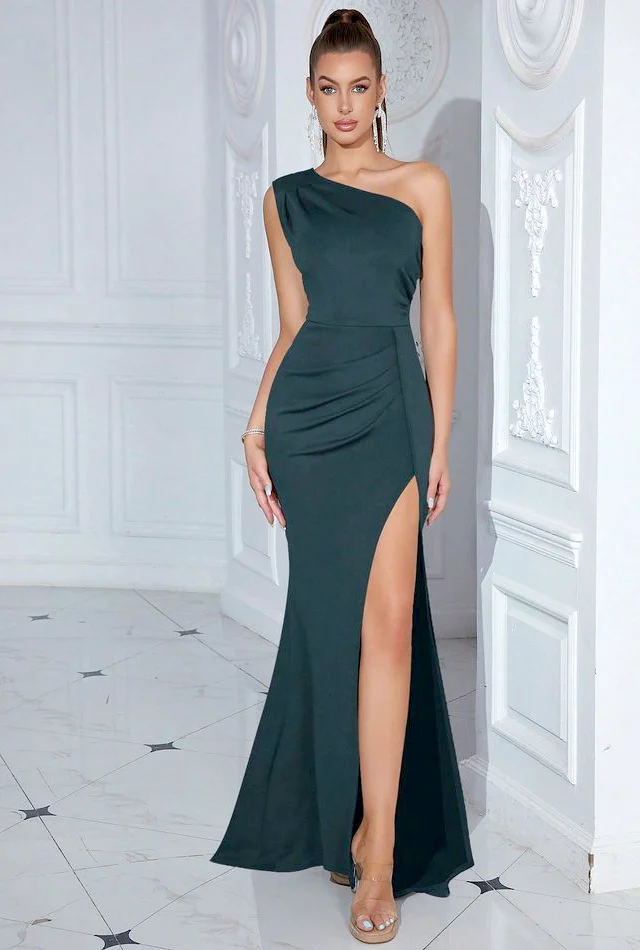
This comparison does not answer questions about internal support. A broad visible section cannot reveal the complete construction any more than a fine line can. If that practical question remains open, use the separate guide to straps, bodice support and fitting. For the visual selection here, record whether you favour fine paired lines, nearly disappearing connections or a broad asymmetric frame. This turns a collection of attractive images into a preference you can check against an actual dress rather than an assumed benefit.
Try the bag and jewellery beside the fine line
Hold your planned bag where you will really carry it. A shoulder strap can add another line beside a spaghetti strap or cover it altogether. If you particularly like the open shoulder area, also try a small hand-carried bag. This is a visual choice, rather than a requirement to buy a specific style. With long earrings, check where the ends fall relative to the strap connection. Decide whether you like that proximity before adding a necklace or further decoration. Removing one piece can sometimes reveal the small line you wanted to see.
Put a wrap or jacket on and take it off slowly. Watch which parts of the straps remain visible afterward and whether decoration near the connections touches the outer layer on the actual dress. Ask for a demonstration where the transition needs particular handling. For care, read the garment’s own label. The GINETEX explanation of care symbols distinguishes washing, drying and ironing among other processes. Neither a narrow strap nor a shiny photograph identifies an appropriate treatment. Checking the actual instructions gives you usable information before making your purchase decision.
Take a specific comparison into the fitting
Choose two contrasting favourites, perhaps one with quiet fine lines and one with more ornament around the connections. Ask to see the back because a front photograph does not establish how the straps continue behind the shoulders. Afterward, note the differences that could change your decision: line visibility, attachment position, relationship to the neckline edge and interaction with the bag or earrings. Point to the location of an unwanted detail instead of calling the entire dress too much. This gives a consultant or alterations specialist a concrete description of the appearance you want.
Compare how visible the fine straps remain and where they meet the bodice. Try colour, pattern, bag and earrings together on the actual dress.
Frequently asked questions
Do spaghetti straps need to look almost invisible?
No. You may prefer a quiet connection or a more visible frame. Compare the actual colour contrast at normal conversation distance.
How can I assess the connection to decoration?
Follow shoulder, attachment and upper edge toward the centre. Decide whether the fine line should quietly continue the motifs or have a stronger frame.
Which bag leaves the shoulder line clear?
A hand-carried bag adds no shoulder strap. Try it beside your existing bag and choose according to the line arrangement you want.
Does a narrow strap reveal the dress construction?
No. Its visible width does not reveal the complete internal structure. Ask to see the back and the construction of the actual model.