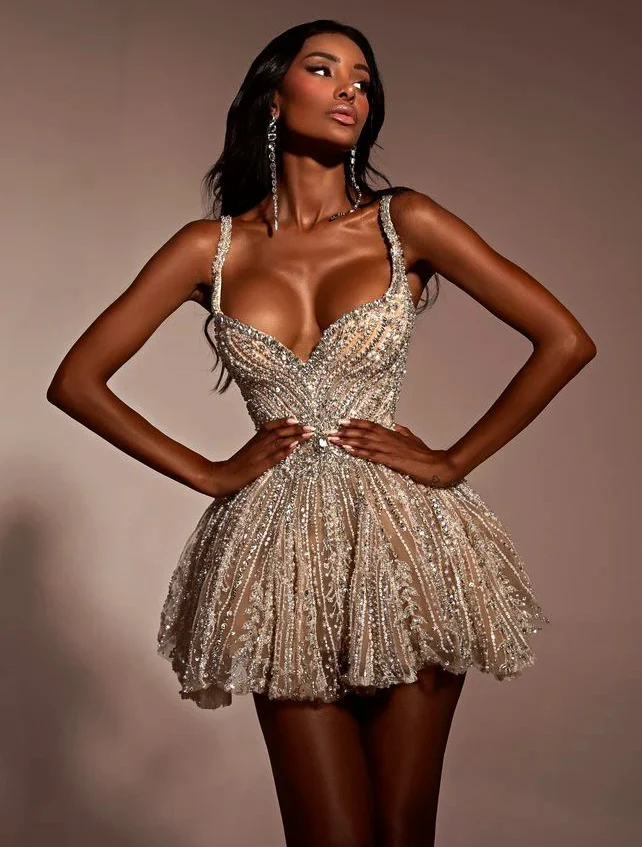
An evening dress with straps offers many different constructions. Narrow shoulder lines, decorated straps and broad shoulder sections can look related in a photograph while feeling quite different when worn. Start with the neckline you enjoy, then check how the actual bodice stays in place. Straps alone do not establish support, adjustability or comfort. The selected references show a short dress with decorated shoulder lines and a close-fitting pink dress with fine straps. Use them to prepare questions rather than to infer their unseen materials or internal structure.
Evening dress with straps: separate appearance from support
First describe what you can see: strap width, where it joins the bodice, the depth of the front opening and the extent of the back coverage. These are useful visual comparisons. Then ask the seller how the offered garment is built. Is there a lining, an internal support section or a closure that you should understand before trying it? A decorative strap may be an important design feature without carrying the role you expected.
Try the dress with the underwear you actually intend to wear. Compare standing, sitting and reaching forward before deciding that its upper edge is secure enough for you. If you want a different support arrangement, discuss it on the actual model. There is no universal solution that follows from having straps, and a reference image cannot tell you which undergarment will work with a particular neckline.
Check where each strap sits on your shoulder
Let the straps find their normal position with your arms relaxed. Look at the attachment points at the front and ask to see the back in a mirror. Notice whether you keep moving the straps inward or outward to create the appearance you prefer. That repeated adjustment is useful information for the fitter. Explain whether your concern is their visual position, pressure against the skin or the way they move during an ordinary gesture.
Raise your hand as if greeting someone, reach for a glass and lower your arms. Check whether the straps and neckline return to the place you chose. A strap that looks fine in a posed photograph may need a different position or length for your use. Ask whether that alteration is possible and what else it would change. Do not assume that every narrow strap is adjustable or that every broad strap will stay put.
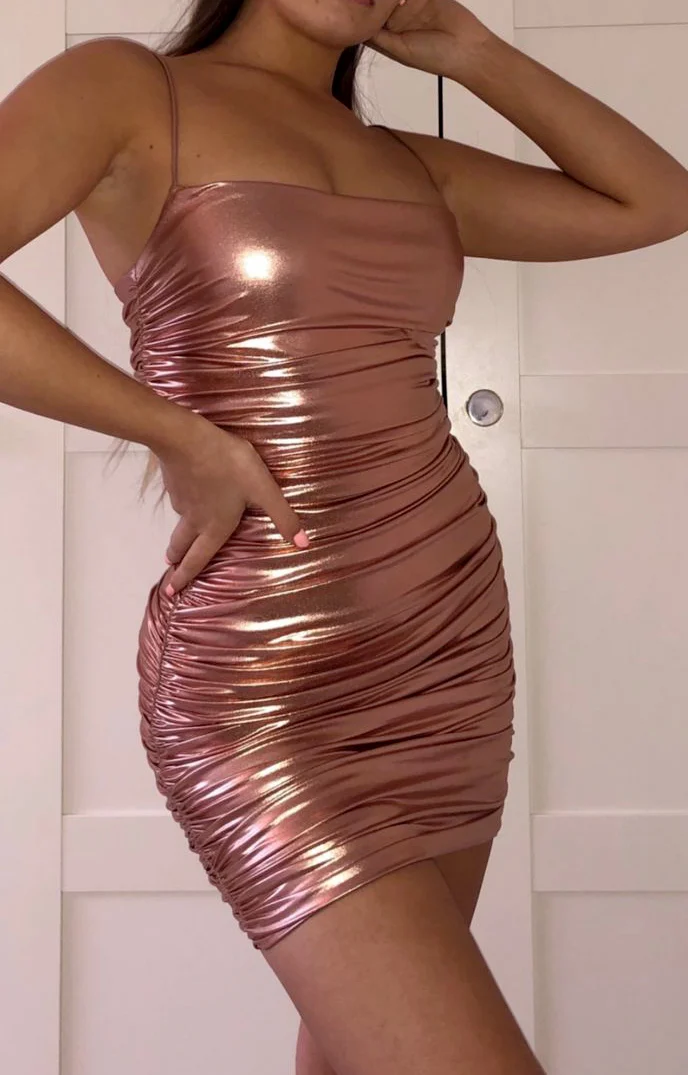
Evening dress with straps: assess changes to strap length
Shortening a strap can change where the whole upper dress sits. Have the fitter demonstrate a proposed change while you stand and sit. Watch the front edge, underarm opening and waist position together. If the neckline rises but the underarm becomes uncomfortable, the result may not suit you. Ask for an explanation of the actual construction rather than treating strap shortening as an automatic solution to any upper-body issue.
For decorated straps, ask how the decorative section will be handled. Will the pattern remain balanced, and where will the new join sit? Get the answer before approving the work. If the dress has a fine strap, ask how the finished adjustment will look close up. Your decision should include both the practical effect and the appearance you want, with enough time for a final fitting after the change.
Compare a detailed bodice with a plain upper section
In the short metallic-coloured reference, decorated shoulder lines continue into a visibly detailed bodice. The eye meets several small elements before reaching the fuller lower section. In the pink reference, a broader uninterrupted shiny surface and fine straps create a different emphasis. Compare those visual arrangements first. Neither surface proves a fibre, a making method or a particular level of quality.
Try accessories one at a time. With a decorated neckline, compare earrings before adding a necklace. With a plainer neckline, try the same necklace and see whether you enjoy the additional line. You may prefer either result. The purpose is to see the relationship, rather than to obey a rule that an ornate dress forbids jewellery or that a plain dress needs it. Check close contact between a bracelet or necklace and the actual garment as well.
Add the outer layer during the fitting
Try the jacket, wrap or coat you expect to use on arrival. Look at it open and closed, then remove it without pulling on the straps. A bag carried on the shoulder may occupy the same space as the dress strap. Put it on and decide whether the combination feels manageable. If you prefer a hand-held bag, try that practical choice before buying an alternative accessory.
Think about the part of the evening spent seated. A wrap may behave differently when your arms reach a table, and a jacket can cover the detail you chose the dress for. Compare those ordinary situations in the fitting room. You do not need an outer layer that displays every feature all the time; you need a combination you enjoy using through the evening’s actual changes.
Consider skirt length separately from straps
The strap decision does not settle the skirt decision. A short fuller skirt and a close-fitting short skirt ask different questions when you sit and walk. Try a normal chair, check your preferred coverage and walk at your own pace. If you are considering a long alternative, use your intended shoes and test the hem. Avoid assuming that any shoulder construction makes a dress appropriate for a named dress code; check the invitation itself.
The corset-look evening dress guide provides another way to think about bodice construction, while the evening dress with ruffles guide compares shoulder details and skirt movement. Use these related examples to clarify the question you want to ask at a fitting. They do not establish hidden support features in the two photographs here.
Keep a clear alteration and care record
Before ordering, list any agreed strap change, upper-edge adjustment and hem work separately. Include the underwear and shoes used at the fitting so that the final check repeats the same conditions. If you change an accessory or support layer later, try the dress again before the event. It is easier to compare the actual combination than to predict its effect from memory.
Read the garment’s care label, especially when decorated and plain areas meet. GINETEX explains the care symbols. Do not choose a washing or heat treatment because the surface resembles a familiar fabric. Ask the seller about unclear instructions and how the dress should be supported in storage. Keep those details with your alteration notes so that the shoulder construction you selected remains part of a garment you understand how to wear and maintain.
Compare an evening dress with straps through shoulder placement and bodice support, then assess strap-length changes with neckline, underarm opening and waist.
Frequently asked questions
Do straps guarantee sufficient support?
No. Check the actual bodice with planned underwear while standing, sitting and reaching forward.
Are fine straps always adjustable?
Width does not establish adjustability. Ask about the actual model and possible alterations.
What can shortening a strap change?
It may change the neckline, underarm opening and waist position. Ask to see the proposal standing and seated.
Which bag should I try with the dress?
Try the bag you plan to use. A shoulder strap may occupy the same area as the dress strap; compare a hand-held option if useful.