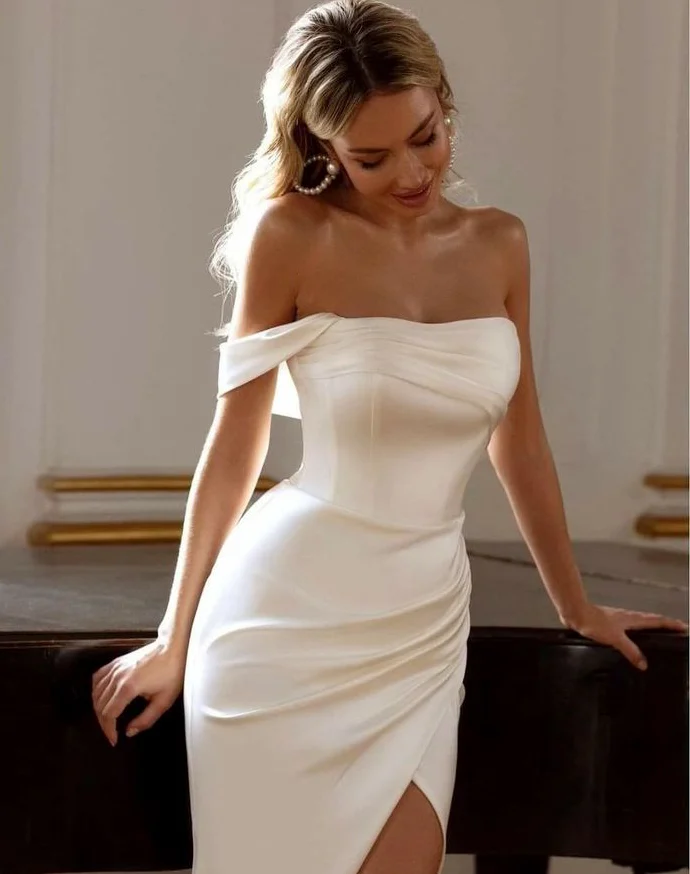
A wedding dress with shoulder draping draws attention to the direction and width of folded areas beside the neck and upper arms. Our main reference shows broad apparently overlapping bands beneath bare shoulder tops and a shaped central dip. The second independent front adds a quieter upper area with only one low band clearly visible. Neither a shared version nor detachability follows from that comparison. Start with the specific upper line you prefer before assuming identical fabric, internal support or skirt shape. Another photograph cannot supply a missing attachment.
1. Name the width and route of the upper folds
The main front distributes broader pale areas across the upper chest and upper arms. Their edges appear to overlap towards the central dip. A denser floral waist sits below that upper frame. Describe whether you prefer the wider side area, the crossing effect before the chest or the smaller central indentation. Those are different features. A photograph can show direction clearly without explaining seams and connections underneath. Keep the visible fold preference separate from your technical question rather than assuming every attractive border is made or adjusted in the same way.
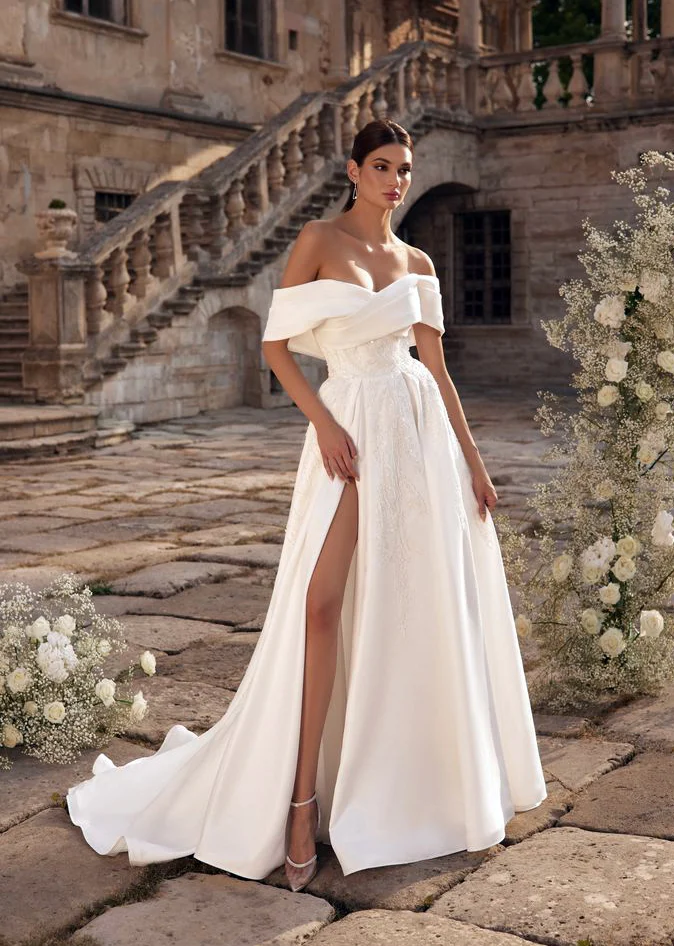
A curved folded chest edge follows in the quieter comparison. One low band is clearly visible at one side, while the opposite connection cannot be traced completely from this angle. Do not treat that cropped information as proof of a particular one-shoulder model. Request your favourite’s matching side views and complete back. If you like the apparently asymmetric relationship in the picture, describe it as a preference for a visible route and establish the actual construction separately. Wait for the same garment’s appropriate view before supplying a model label for an unseen connection.
2. Choose the central neckline and shoulder area separately
The main front’s central dip lies between broader side folds. The quieter comparison has a more level curved upper boundary beside its visible band. You can choose more or less side folding without adopting that exact central edge. The sweetheart wedding dress guide helps describe a shaped upper middle separately. Use the visible borders as a starting point for discussion rather than a promised outcome on your own chest or identical coverage during movement. Inspect upper edge and side band individually at your fitting.
A different named product description illustrates that separation: Adore by Justin Alexander describes a cowl neckline and off-the-shoulder straps for Cezanne 11428 while naming the silhouette separately. That concerns Cezanne and identifies none of our photographs. It establishes neither their fabric nor a detachable connection or particular support. Use the text to record upper folding, shoulder position and lower shape as individual questions. Your candidate’s explanation must concern its actual offered version rather than importing another product’s construction.
3. Assess the existing construction before changing it
Ask which upper components belong firmly to the offered garment. A visible folded border establishes neither adjustment nor a second wearing arrangement or removal function. Have the connection shown from front, side and rear. If a change is explicitly offered, request a demonstration on the same piece and a view of the upper line left afterwards. The comparison’s single visible strip supplies no missing attachment for the main reference. Similar pale colour cannot turn independent images into interchangeable construction views. Record which explanation concerns which real model.
If you want the width or height changed, identify the precise location before agreeing to intervention. The bespoke wedding dress guide supports separating an existing model from a proposed modification. Have its effect on neighbouring borders assessed on the real piece. Try planned underwear with the garment and compare both sides. A neatly directed fold in a photograph explains neither every inner layer nor a guaranteed fit. Preserve unresolved points as questions rather than mixing the desired upper line with an existing function or an agreed alteration.
4. Observe the upper line during ordinary movement
Begin the fitting with relaxed arms and a normal front. Raise your arms as you ordinarily intend to, turn and sit. Inspect side boundaries and the central edge afterwards. The main reference places one hand near the exposed upper thigh and the other lower beside the skirt; a pull on the cloth is not clearly demonstrated. Both hands rest on table edges in the comparison. Those positions cannot replace your own trial without leaning on furniture or holding objects. See normal hand positions on the same actual garment as well.
Record the specific difference if an edge appears unlike your preference. Is it visible height on the upper arm, the chest centre or an obscured side connection? A precise location gives an assessment more information than asking generally for the draping to sit differently. An offered function does not determine your wearing experience either. If work is agreed, repeat the complete trial afterwards. The first photograph or standing view does not already explain the modified version’s result. Establish which regions need checking again with the person assessing that actual work.
5. Select skirt shape and length independently of the shoulder frame
A wider quiet skirt opens below the main broad draping, with a high front leg opening. One pale pointed ankle-strap shoe appears, while longer surface rests on the floor to the left. The comparison follows a closer-fitting lower line with side-hip folds and a partly visible leg opening. Its complete hem and footwear are absent. These different lower shapes belong to their own views. A broad shoulder fold does not automatically require a wide skirt or that exact opening. Keep your upper preference without accepting every lower detail pictured beside it.
Complete front, side and rear views of your favourite with intended shoes. Let the cloth fall normally and walk before reassessing the lower edge. Someone else’s floor spread cannot measure your length. If shortening is wanted, clarify affected borders and decoration on the real garment. Keep any desired alternative skirt shape separate from the confirmed upper version too. This shows which combination is offered and which still needs assessment, instead of turning two independent pictures into an existing new model. Connect each request to the real piece and your own full fitting.
6. Add accessories and care to the actual dress
Try planned hair beside the same upper edge first. Add one jewellery piece and then veil or bouquet. The main front has hair taken back and longer pale earrings; the comparison shows loose hair and a larger round pale ear accent. The bridal accessories guide supports comparing one addition at a time. Neither a broad shoulder fold nor an open neck area dictates universal jewellery size. See which accessory obscures your preferred line or remains beside it on your own actual outfit rather than treating the photograph as a supplied set.
For a wedding dress with shoulder draping, confirmed construction, actual supplied contents and your complete trial matter. The photographs establish neither a shared collection year nor a current collection. Treat the finished piece through its own instructions; GINETEX explains care symbols. Smooth pale folds determine neither washing nor ironing temperature. Have uncertain instructions explained before treatment or modification. Choose the visible shoulder line through complete information about your actual candidate rather than assumptions about unknown functions or another product’s care.
A broad folded shoulder front sits beside a quieter reference with only one clearly visible low band. Assess upper shape, unknown connections and lower silhouette separately.
Frequently asked questions
Do visible folds establish a wedding dress with shoulder draping as detachable?
Visible folds do not establish a wedding dress with shoulder draping as detachable. Have any genuinely offered change demonstrated on that same piece, including the upper edge remaining afterwards.
Does one visible band prove a one-shoulder wedding dress construction?
One visible band does not prove the complete construction of a one-shoulder wedding dress. The opposite attachment may be absent from that angle; matching sides and rear of the same model need to explain it.
Does broad shoulder draping guarantee support in a wedding dress?
Broad shoulder draping guarantees no particular support in a wedding dress. Ask about actual construction and try the specific model with planned underwear during ordinary movements.
Must a wedding dress with shoulder draping have a wide skirt?
A wedding dress with shoulder draping does not automatically require a wide skirt. Choose the lower shape separately and assess the actual offered combination instead of combining different references into one model.