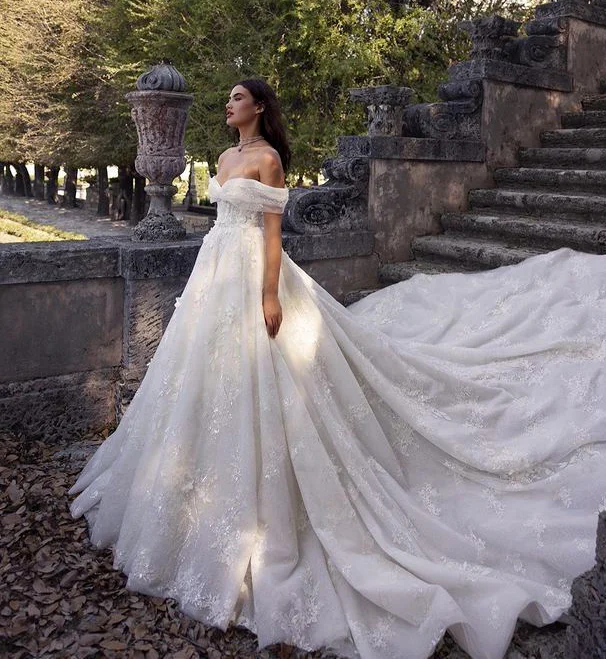
Choose a wedding dress with a train through its additional rear area: how far should it extend, how broadly should it lie and which edge do you want visible? These six photographs supply different comparison tasks. Broadly arranged skirts sit beside a narrower rear outline, a front-only view and a shorter-front alternative. They establish no fixed lengths in centimetres. Begin with the visible outline and try the actual version with your shoes before adopting an entire arrangement from a photograph.
Separate rear length from side width
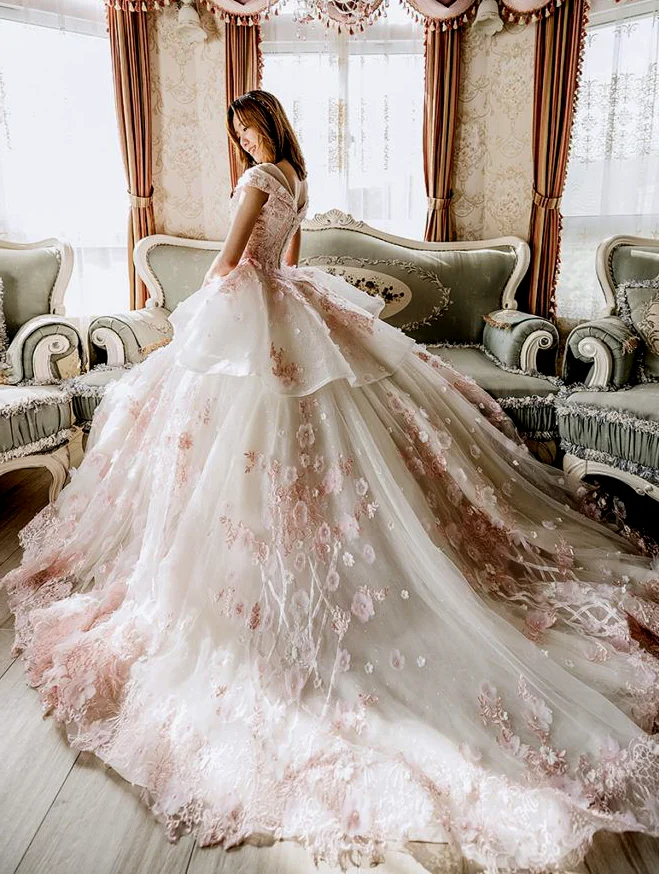
The black-and-white photograph spreads a very broad skirt over steps. Floral strips run across longer panels towards a curved lower edge. The colour side view also arranges considerable rear fabric across another staircase while revealing a front shoe area. Both may appeal. Distinguish whether you mainly want distance behind the body or substantial lateral spread. A broadly arranged surface need not establish a longer actual rear section than a differently positioned dress.
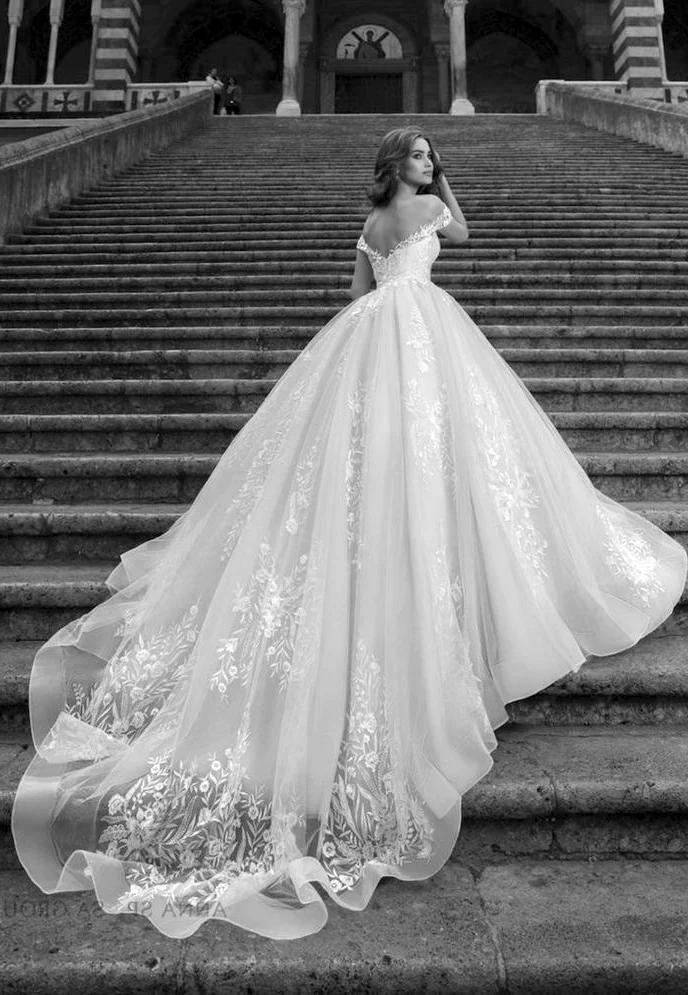
Request front, side and rear views of the actual candidate before its fabric is spread particularly widely. Ask to see your preferred rear arrangement afterwards. Record the difference between ordinary placement and a deliberately arranged surface. For a remote offer, obtain an explanation of where the rear measurement begins. Do not estimate it from the number of visible steps or the photographed person’s height. Comparable views provide more useful information than one impressive angle.
Choose a patterned border and quieter area separately
The narrower rear reference on grass finishes in a larger translucent-looking border with dense floral drawing. Its middle rear area remains comparatively quieter. In the pink-looking example, flowers and trailing forms spread across a much broader lower surface. These are different arrangements. Choose whether the outside edge should be particularly distinct or whether you want more pattern across the entire rear length. Then request complete close views of that preferred area on the actual offer.
A motif can continue towards the edge without explaining how it is made. The photographs establish neither fibres, stitch method nor a particular number of inner layers. If length needs changing, show the desired new finish directly on the garment. Ask which motifs would be affected and how the side connection would continue. A general promise to shorten the dress does not describe its finished patterned border. The buying a wedding dress guide helps include those unresolved points in your enquiry.
Assess the front hem beside the rear area
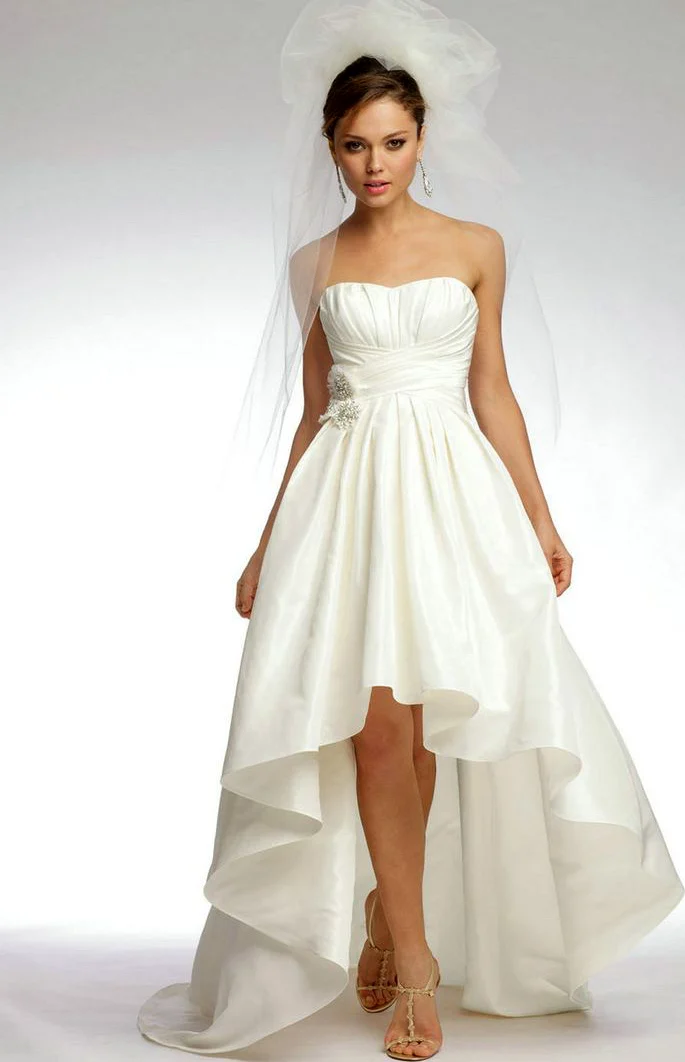
The shorter-front reference exposes legs and shoes, then continues at the sides towards a longer rear finish. It deliberately contrasts with the longer fronts elsewhere. You can like that front-to-back difference without choosing the same upper design. Establish how much shoe and leg you want visible first, then choose the additional rear length. A long rear section does not automatically determine front length, while a short front cannot fully answer your rear-view question.
The front-only photograph with short shoulder sections instead shows a long broader skirt and trailing motifs. It does not explain its complete rear outline. Use it as a front preference and request the back of that same actual dress. Avoid adding the grass-side rear of another model. Bring the intended shoes to the fitting. Inspect the front edge while standing normally and after walking, before the skirt is rearranged for another photograph. This keeps the length choice testable on your actual candidate.
Test walking, turning and sitting with a real arrangement
Set a short sequence for the fitting: walk forward, turn, stop beside a chair and sit. Hold the objects you intend to carry. Ask how the rear area should be guided through those movements and when you would want help. A photograph on grass or steps does not establish general suitability for that surface. It shows only fabric arranged there. Rehearse the proposed sequence on the actual garment rather than inferring easy handling from its still pose.
The Maggie Sottero bustle guide describes different arrangements and recommends having the particular solution demonstrated during alterations and practised with a helper. Use that to ask about the actual option for your dress. None of our photographs establishes existing bustle points or a detachable train. See the agreed state on your own garment, then repeat the movements. A planned change needs a confirmed version before it becomes part of your schedule.
Add veil and bouquet after the rear shape
A veil can cover the outside border or create another line beside it. The wedding veil guide develops this edge comparison. Assess the dress alone first, then with your intended veil. Decide which lower boundary you want readable first. There is no need for a universal rule that one edge must always extend farther. The relevant comparison is the actual pieces together and your preferred balance of pattern and quiet surface.
Hold the bouquet in its ordinary position next. The narrower rear photograph places it low at one side beside the hip, obscuring part of that outline. Compare both hands at your fitting and put it down briefly if the contour otherwise remains hidden. The bridal accessories guide helps with other additions. Keep the rear surface itself visible for the train decision, however. Bag, flowers and headpiece can arrive individually afterwards without quietly replacing the original question about length.
Record the agreed state for the next appointment
Write down three visible preferences: rear extent, lateral width and border. Add required handling and one missing view. One example could be a narrower upper shape with a distinct floral outside edge and a demonstrated arrangement for sitting. Another might be a broad quieter area without equally dense border drawing. These descriptions help compare actual offers through a shared question rather than treating every new bodice as an entirely new overall decision.
Request another view of the adjusted finish with the actual shoes and accessories. Establish preparation and storage from product information too; GINETEX care symbols help interpret the label. A long pale area does not automatically permit a particular steaming or cleaning method. Finally record which person demonstrated which sequence and what arrangement actually exists on the garment. Your choice then connects the intended appearance with a specifically tested use rather than inventing an unknown function from the references.
Choose rear length and side width separately. Compare the border with the front, shoes and veil, then request a demonstration of the actual handling.
Frequently asked questions
How long is a train carrying a particular label?
These wedding-dress train references establish no fixed measurement. Ask for the actual offered length and the starting point used to measure it.
Do the pictures establish a detachable or bustled train?
No. The actual wedding dress needs its own connection and any offered bustle arrangement demonstrated, followed by a rehearsal of the intended sequence.
What needs discussion before changing the length?
Show the intended train finish and establish the effect on its patterned border, side outline and agreed handling.
Must the front be as long as the rear area?
No. A wedding dress with a shorter front is another distribution. Choose the visible front hem and additional rear length separately on the same garment.


