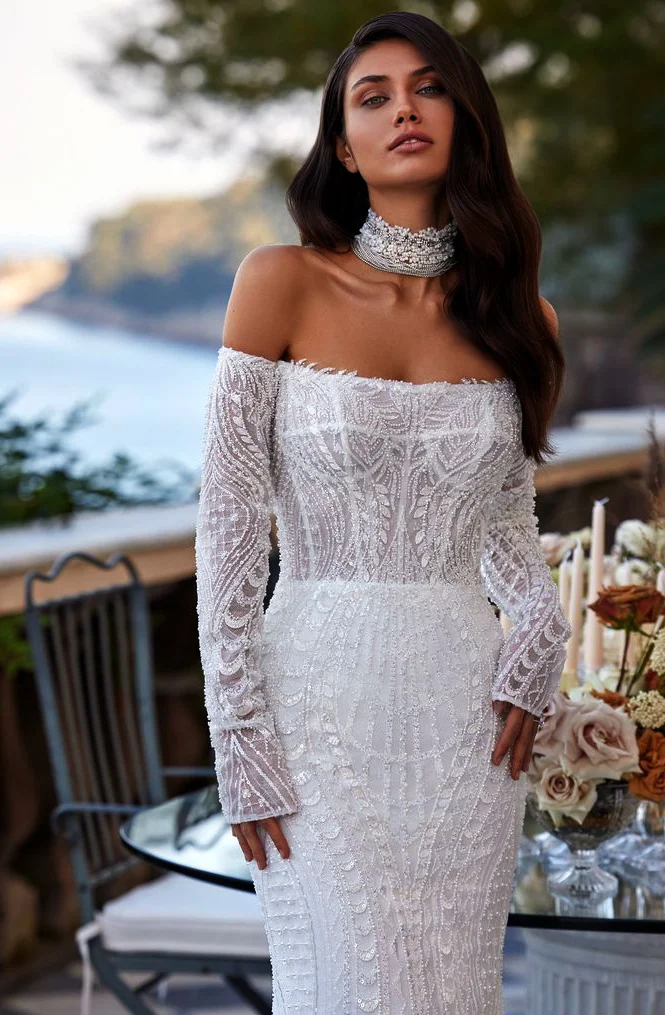
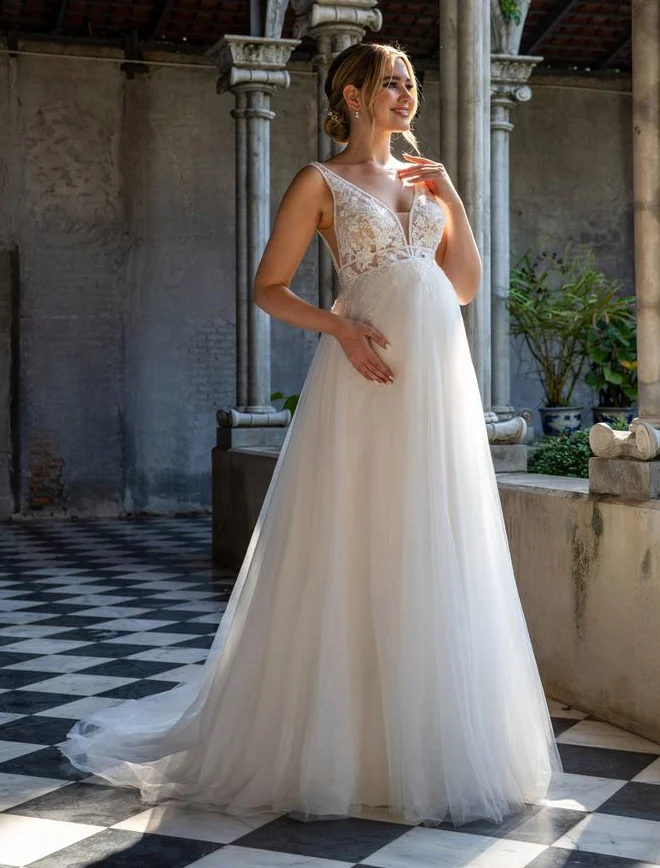
A wedding dress for curvy brides should start with your wishes rather than a list of body areas to hide. Would you like a close skirt, greater side width, long sleeves or an open shoulder line? This selection compares two forms: a close-following dress with an off-shoulder edge and long patterned sleeves, and a sleeveless V-shaped front over a wider skirt. The photographs show design options. They establish neither available sizes nor special suitability for every body. A useful choice needs actual opportunities to try garments and a clear discussion about the specific dress.
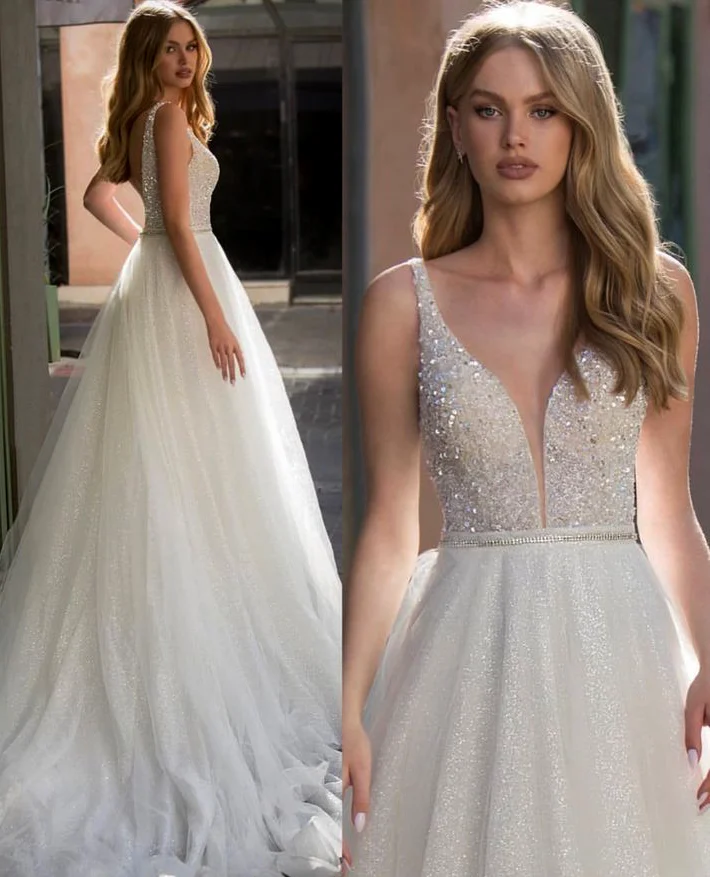
The additional gallery image places a deep V-front beside a side-back view. It invites separate checks of front and rear preferences. This photographed person is not used for size assessment either; actual samples and supplier information remain necessary.
Choosing a wedding dress for curvy brides starts with personal preferences
Before the appointment, write three positive statements about what you want to wear. For example, you may want a defined shoulder line, enjoy a wide skirt or prefer a visible pattern framing your arms. These describe design rather than requiring a garment to correct your body. If your ideas are not settled, note two different possibilities. A close shape and a wider one can both enter the fitting equally. The purpose is to discover what you like, rather than confirm somebody else’s compulsory solution. One reference photograph need not define all your choices.
Decide also which areas you want to leave visible in the finished outfit. More or less coverage is your decision rather than a ranking of styles. An open shoulder can accompany long sleeves; a sleeveless V-front offers another combination. Check actual inner construction where a patterned area looks sheer. Request an explanation or another view if the offered version is unclear. This separates the visible design from the properties of the real piece before ordering becomes specific. Knowing its layers also helps you discuss what a proposed alteration would actually affect.
Ask about sample sizes for a wedding dress for curvy brides
Ask the salon which relevant samples and sizes are genuinely available. A general range is not the same information as the presence of a particular dress at your appointment. Name the models you want to compare and request a clear response. If only other versions are available, establish which decision they can help show and which remains open. A neckline may be considered while an unsuitable sample cannot reliably demonstrate the final skirt fall. Name that limitation rather than treating an incomplete impression as a finished fit assessment. It can prevent premature approval or rejection.
Ask about the appointment structure, duration and the people helping you. Discuss any arrangements that matter to you beforehand. Record the measurements requested by the actual supplier. A size from another shop or your usual everyday label does not replace that comparison. If unclear, ask which figures matter for the specific model. A transparent response helps you compare offers without reading every size label as a judgement about your body. Measurement-based discussion should explain how the chosen design will be checked in practice, rather than remove your right to a style preference.
Compare fitted bridal shapes and wider skirts as equal options
In the first photograph, the lower shape follows the body more closely. The other example opens into greater width below the middle. Compare both with similar companions first. Stand normally before arranging your hands as in the reference. Ask whether you want that closeness or width in that particular area. A wider skirt need not represent concealment; it can express movement or an outline you enjoy. A close shape needs no special justification either. Your preference is the deciding factor, allowing you to consider both candidates without assuming one is correct in advance.
Walk, turn and sit in each real candidate. Notice which part you want to rearrange after standing. If an area bothers you, point to it and describe your intended result. Ask about another version or a specific possible alteration. Separate style from fit: you can like a cut that is not yet appropriately represented by the available sample. Conversely, a fitting sample does not automatically make an unwanted design your choice. This distinction protects your actual priorities. Repeat the same movements to make differences between candidates easier to explain and retain notes alongside any photographs.
Separate neckline and sleeve choices from skirt width for a wedding dress for curvy brides
The off-shoulder example combines a broad open neck area with long patterned sleeves. An additional neck accessory appears in the image. Choose the upper line first and add jewellery individually afterwards. The off-shoulder dress guide adds questions about framing and movement. It is a supplement rather than a prescription for a body type. Check the actual bodice when reaching forwards and with your planned outer layer. A still photographic pose does not explain this use. Removing or changing jewellery can provide a separate comparison of the visible space.
The other view shows a V-shaped front without long sleeves. If you prefer that direction, compare its depth and frame on the real model. The V-neck wedding dress comparison separates those details more closely. You can want the upper idea with another skirt; ask whether that version is actually offered. An imagined mix of photographs is not yet an available product. Reassess the confirmed candidate with your shoes and the underlayers you intend to use at the appointment. A changed detail may require another check of the whole arrangement.
Record alterations and your decision clearly
Discuss every desired alteration at the relevant area of the actual dress. Ask about scope, cost and another check. The Phillipa Lepley Bespoke process describes individual measurements and multiple fittings. It is a supplier-specific example, not a promise for every shop or the photographed dresses. Clarify your own order specifically. A neckline change can raise different questions from a hem shortening, so request a clear description of the intended result. A general statement that alterations are possible is less useful than knowing what will be checked.
Afterwards, record the shape you deliberately chose, the sample actually available and the points still requiring confirmation. Keep verified product information separate from photographs used only as design ideas. If no version meets your wishes, you can seek other candidates. Neither a size label nor a supposed body-shape rule obliges you to accept a dress. A sound decision is understandable: you know the intended look, have tried its real use and understand the next steps towards the confirmed version. The process assesses your chosen clothing and arrangements, rather than assigning value to your body.
Let your preferred lines lead. Ask about actual sample availability before the appointment and compare closeness, width, sleeves and neckline on real garments.
Frequently asked questions
Does a wedding dress for curvy brides require one particular silhouette?
No. A body description does not prescribe a cut. Choose the closeness, width and visible skin area you want, then try real candidates.
Can I determine my required size from a photograph?
No. The pictures show design, not a size assessment. You need the actual supplier’s information and your relevant measurements.
What should I ask before a fitting for a wedding dress for curvy brides?
Check which models and sample sizes are available, how the fitting works and what alterations are offered for the chosen candidate.


