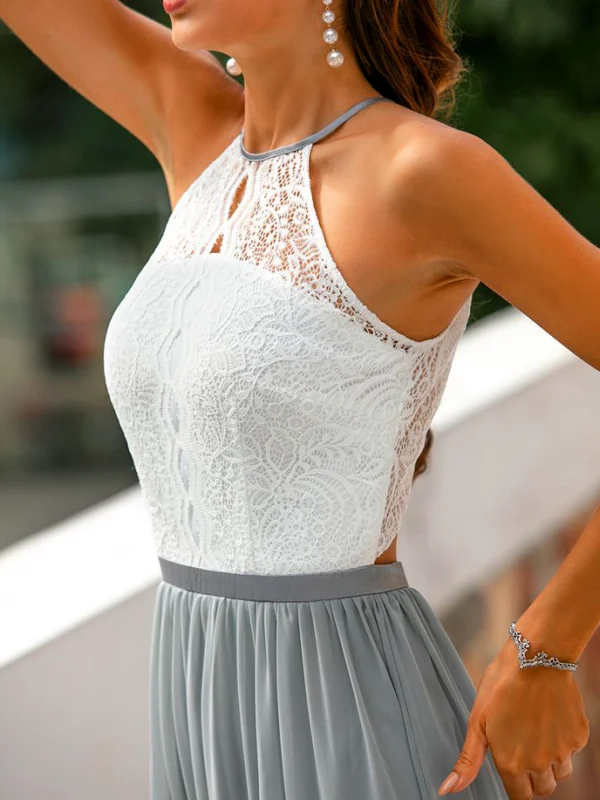
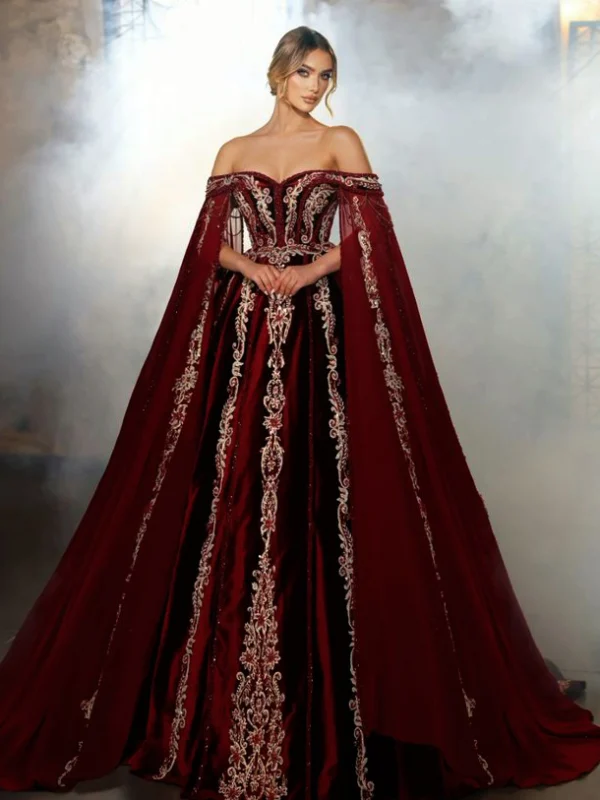
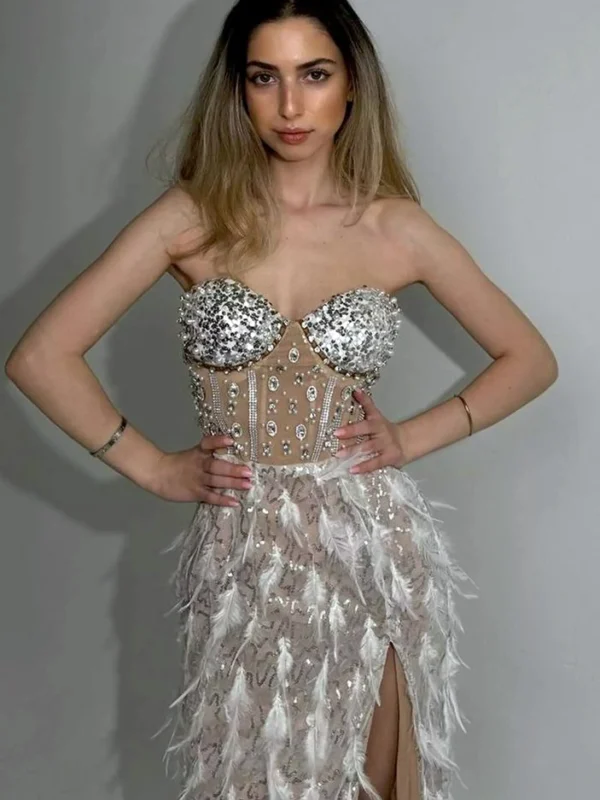
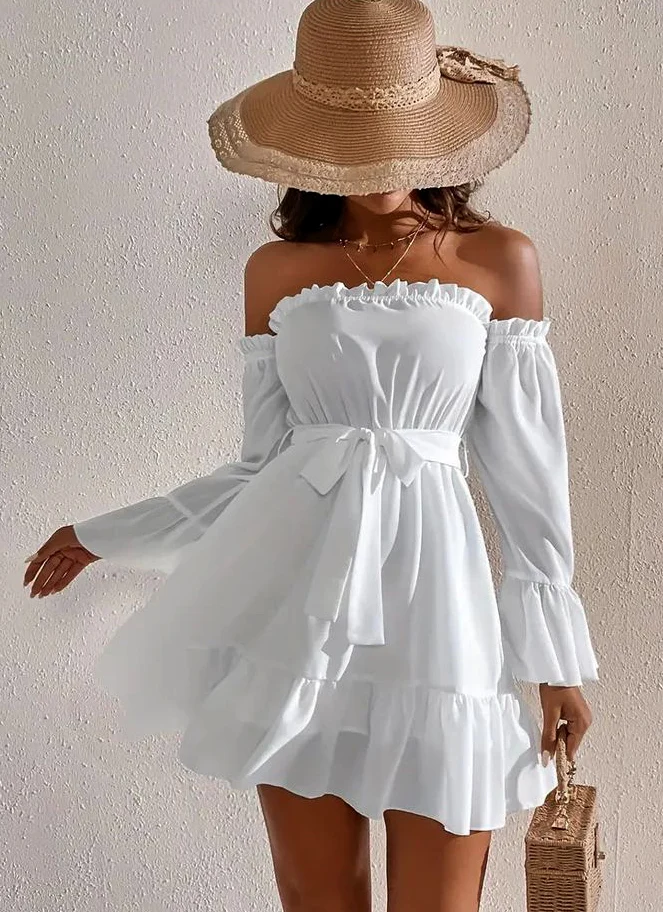
An off-shoulder dress is often noticed first for its neckline. What happens beside that line matters just as much: are there sleeves around the upper arms, completely free arms, or an asymmetrical shoulder construction? These differences change the questions you need to ask at a fitting and the way you style the outfit. Our sequence includes short pale dresses, a burgundy evening option, a long pale look and a green one-shoulder dress as a deliberate comparison. The last reference is not a symmetrical off-shoulder design. It helps establish whether your priority is exposed shoulders or a particular upper line.
Describe the off-shoulder dress construction first
Keep three descriptions separate in your notes. Strapless means there are no shoulder straps. Off-shoulder describes a line below the shoulders, often with sleeves at the sides. One-shoulder is asymmetrical, with one covered shoulder. Product descriptions may use these terms inconsistently, so ask about the actual construction. A short pale dress with long sleeves raises different movement questions from a sleeveless bandeau design. Searching only a broad label can hide the version that better matches your intended effect. Describe the detail you like in your own words and bring the reference to the appointment as a conversation aid.
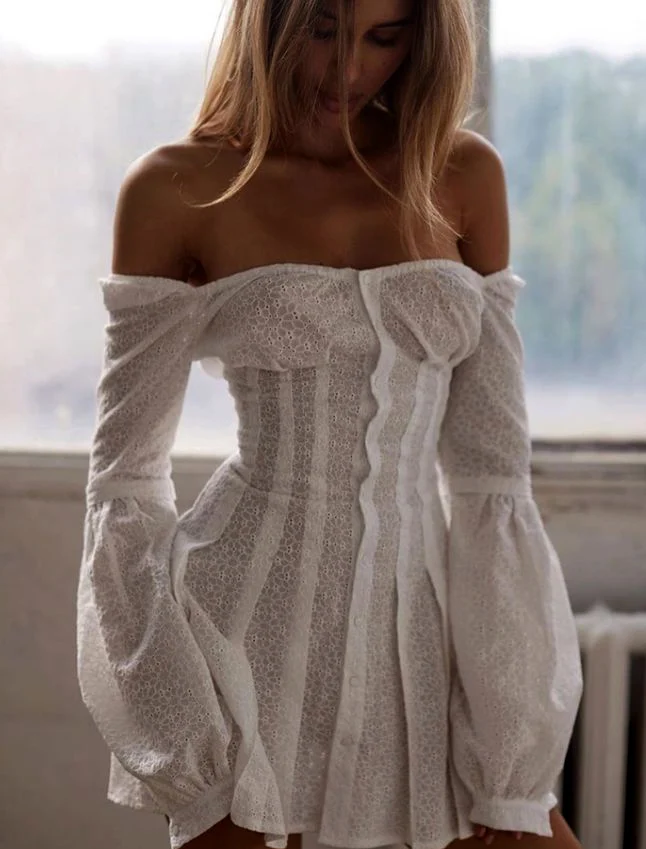
Check the neckline in an ordinary posture
Start by standing comfortably rather than deliberately drawing your shoulders back. Look at where the upper edge sits. Walk a few steps, sit down and stand again. Notice whether you immediately want to reposition the neckline. That is an observation about the garment, rather than a judgement about your body. If something bothers you, ask about another size or an explained alteration. Do not simply pull the top tighter without understanding how the dress is intended to stay in place. A photograph of a still pose cannot answer that question. Use your normal posture to make the test relevant.
Test side sleeves on an off-shoulder dress
Both short pale references have sleeves beginning below the shoulders. In the actual garment, lift your hands into a greeting, reach forward and bend your elbows. Watch whether the neckline travels with the movement and whether the sleeves return where you want them. Try long or widening sleeves at a table as well: where does the edge fall when you reach for a glass? These differ from the questions raised by a bare arm. Judge them against what you will actually do, rather than assuming the width visible in a picture is sufficient. Repeat a particular movement if it helps identify the limitation.
Choose underwear with the dress
Take the underwear you intend to wear to the fitting. Compare visible edges, the coverage you want and the feeling when seated. The shape of a photographed bodice does not establish the support you will need. Two dresses with visible vertical lines may have different internal construction. If this appearance interests you, the corset-look evening dress guide offers an additional comparison. Make the decision on the garment being offered instead of ordering support accessories from a reference picture alone. If changing underwear changes the neckline or waist appearance, repeat the final check with the option you will use.
Compare short and long shapes in stages
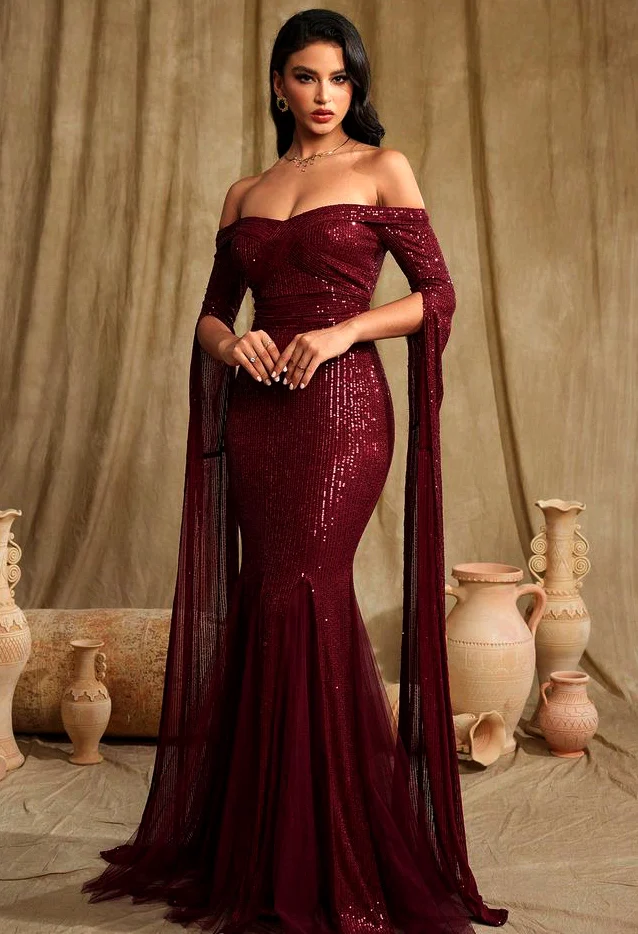
The short pale dress with a waist bow and divided lower skirt differs from the burgundy long dress with a close upper shape and a widening lower section. Avoid changing neckline, length and all the styling simultaneously if you only want to test one feature. First compare two similar lengths with different shoulder lines; then change the length. This makes it easier to understand which difference is influencing you. For larger moving details, the evening dress with ruffles guide complements the sleeve and skirt options here. A reference can be useful for one detail without supplying your entire outfit.
Plan jewellery and hair around the line
Look at the dress without a necklace and with your hair loosely held back first. That leaves the top edge visible. Add either earrings or a necklace, then compare other pieces afterwards. The broad, continuous shoulder line of the burgundy dress may lead you towards a different arrangement from the green asymmetric neckline. You do not have to fill every exposed area. Check from the side and while seated to see where hair and jewellery rest. A quiet comparison with a few deliberate changes is easier to assess than a fully accessorised look all at once. Removing a piece is a valid styling choice too.
Treat a jacket as part of the shoulder decision
An outer layer can change the visible line and lie differently over side sleeves than over bare upper arms. Bring the jacket or wrap you intend to use. Put it on and take it off, noting whether you need assistance or keep resetting the neckline. Wear it fastened briefly if that is part of your journey home. With the long pale dress and its narrow side shoulder details, check whether the jacket flattens or shifts those pieces. Only plan around detachable parts if they are confirmed on the actual product. Their existence cannot be inferred from a similar photographic design.
Clarify the surface and care on the real garment
Bright points, textured patterns and vertical decorative lines are visible in the references; fibres and manufacturing methods are not established. Ask for the product label and care instructions, particularly when several surfaces appear together. GINETEX explains textile-care symbols. Use the label of your actual dress rather than treating a similar picture as a cleaning instruction. Changes to sleeves or the upper edge also need to be explained on the real piece. Ask to see the proposed intervention and expected appearance before agreeing. Visual resemblance does not establish identical care or alteration options.
Decide after a complete movement round
Finally combine dress, underwear, shoes, jewellery and outer layer. Walk, sit, reach forward and put on the jacket. Record the line you like and any movement that still bothers you. A different sleeve construction may be more useful than adding more accessories to address the same difficulty. The green one-shoulder reference therefore provides a real alternative within the sequence: it changes the shoulder idea while retaining an expressive long-dress option. Decide on the construction you want to wear, using each image as a clear and limited comparison. A useful final choice lets you explain both its appearance and how it works for you.
For an off-shoulder dress, compare neckline and sleeve construction separately. Test arm movement with your underwear, jewellery and outer layer.
Frequently asked questions
Is one-shoulder the same as off-shoulder?
No. One-shoulder is asymmetric with one covered shoulder. An off-shoulder line runs below the shoulders, often with side sleeves.
How should I test side sleeves?
Try greeting, reaching forward and bending your elbows. Watch the neckline and whether the sleeves return to their intended position.
Do I need a necklace?
No. Look without one first, then add jewellery according to your preferred focus.
Do visible vertical lines prove an internal corset?
No. Ask about the actual construction and test the support at a fitting.