Vintage lace wedding dresses are not defined by floral pattern alone. Where a neckline meets the skin, how a sheer layer frames the shoulders, sleeve length and skirt movement all shape the final character. These six concepts range from high neck to deep V, cap to full-length sleeves, and narrow fitted silhouettes to flowing A-lines. Their ivory palettes and floral surfaces support comparison, but each prioritizes coverage, openness, waist definition, movement or motif density. A fitting should go beyond a still front view: check neckline security while bending, arm lift, seated comfort and a natural stride at the hem. The images are style references for practical comparison, not evidence of specific materials or available products.
A High Neckline and Segmented Upper Layer
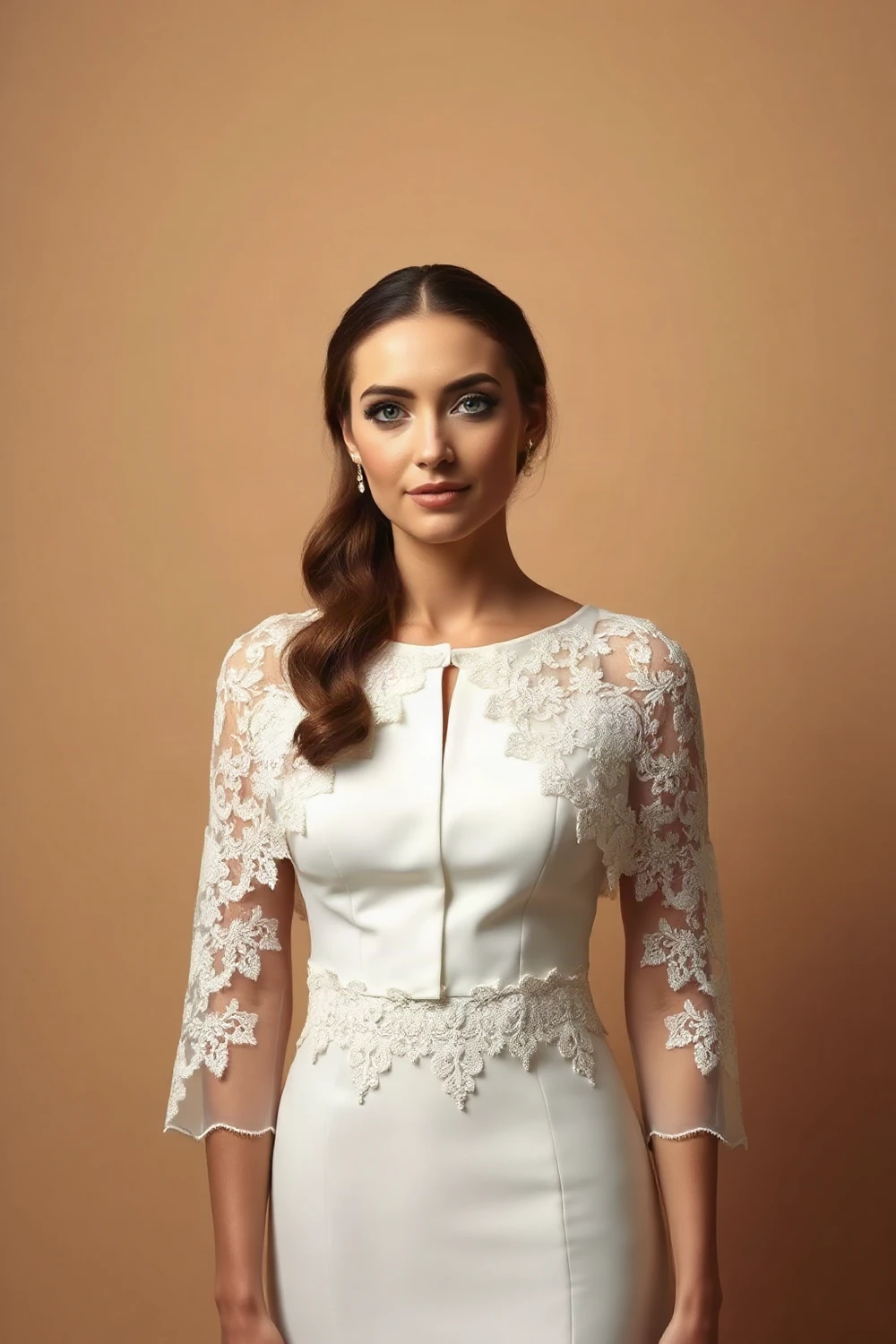
In the first look, a high round neckline and short vertical opening create a focal point below the face without an open décolletage. A short, jacket-like front layer and patterned waist border divide the bodice, giving the design structure as well as floral ornament. Sheer-looking three-quarter sleeves expose the wrists and appear lighter than full sleeves, leaving room for a small bracelet or understated earrings. During a fitting, check whether the straight front edges separate in motion, the sleeve permits a fully bent elbow and the border meets the natural waist. Paired with an unadorned narrow skirt, this reads as more layered than a single patterned bodice. The back is not shown, so neither the closure nor the upper layer's continuation can be confirmed.
A Deep V-Neck and Sculpted Flared Shape
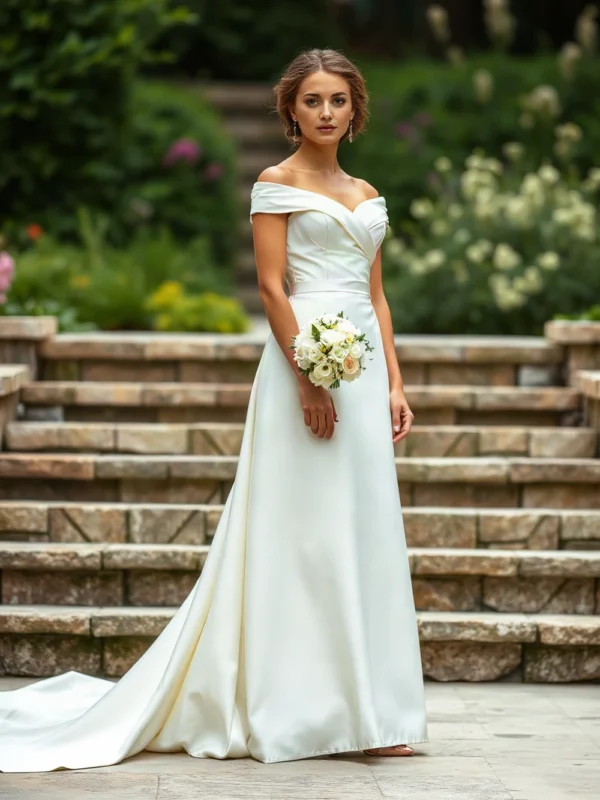
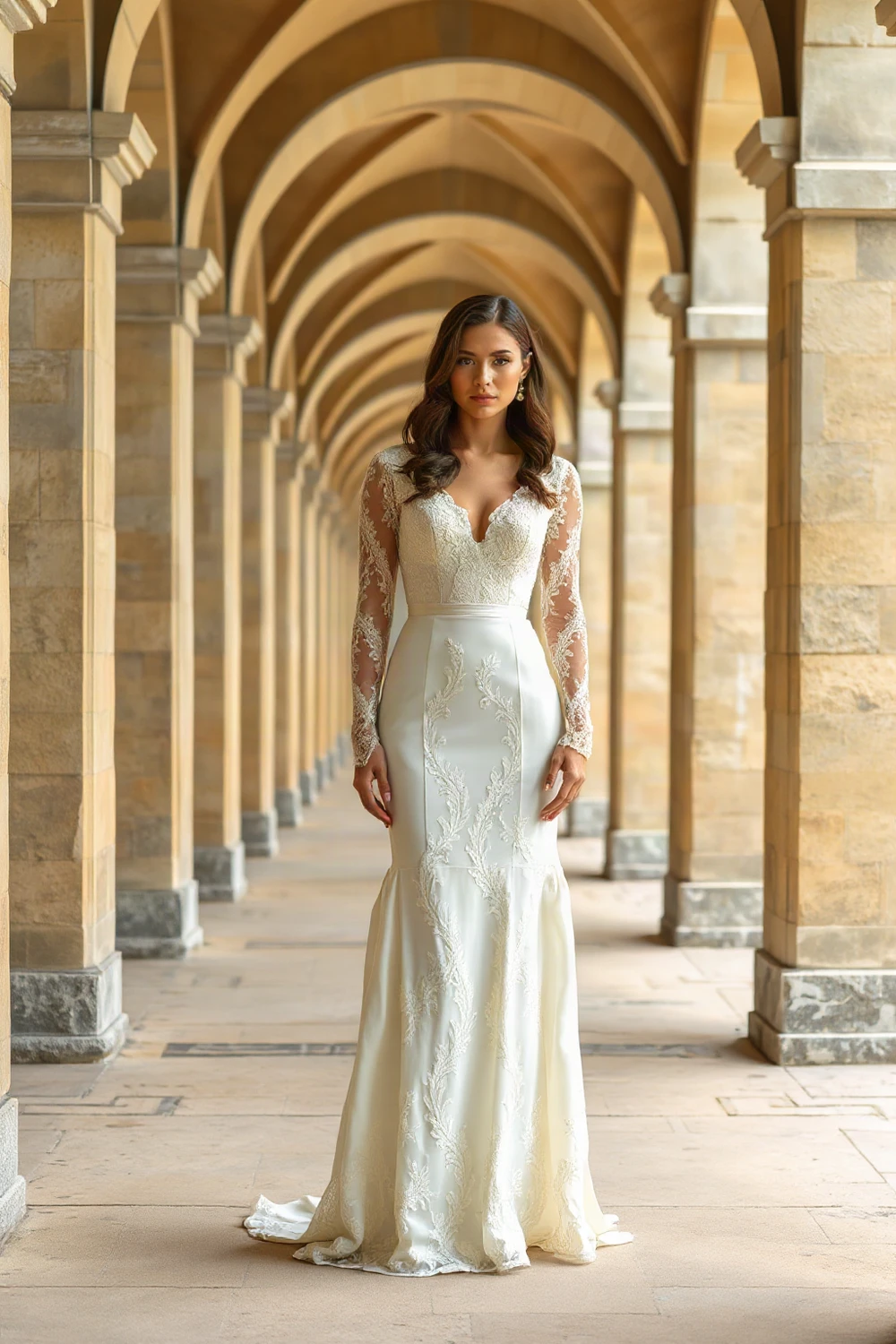
The second concept balances a deep V-neck with sheer full-length sleeves, combining openness with arm coverage. The skirt traces the hips and upper legs before flaring near the knees, while vertical appliqué creates a sculpted, elongated outline. Repeating stone arches amplify that effect in the picture, but mobility matters more than the setting: test a normal stride, sitting and movement on stairs. The neckline's inner support should also stay secure while bending or dancing. Because motifs continue to the wrists, earrings or a hair accessory may balance the look more cleanly than a bracelet. It is more open and dramatic than the high-necked first option; unlike the A-lines, it follows the body closely and emphasizes the flare point.
Light Cap Sleeves over a Sweetheart Bodice
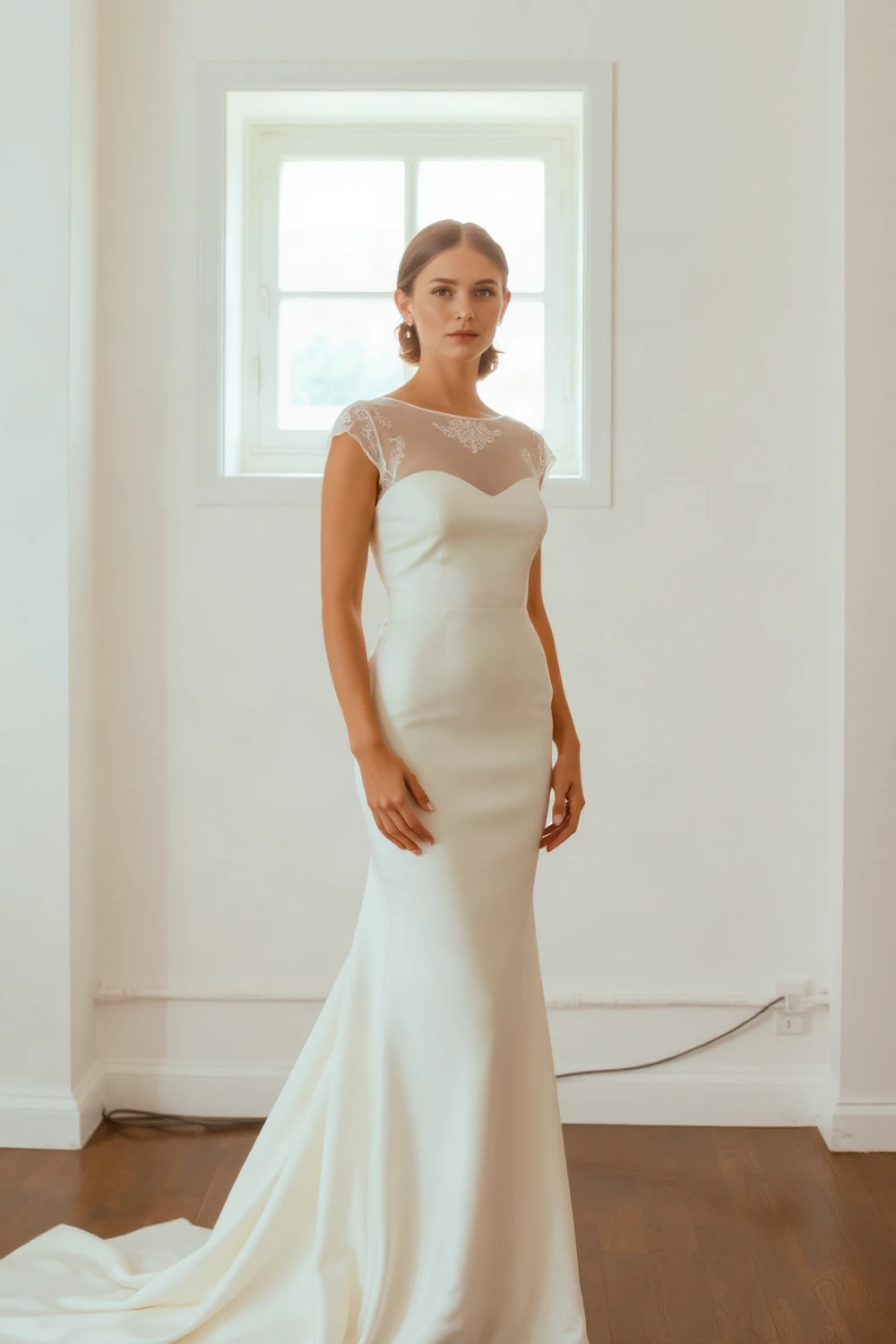
In the third design, an opaque sweetheart edge remains visible beneath a delicate panel rising to the collarbones. Its bateau-like upper line and small cap sleeves retain the shape of a strapless bodice while adding light shoulder coverage. Sparse motifs around the neckline and shoulders let the broad plain surface and fitted skirt dominate, producing a quieter vintage expression. This offers a middle ground for someone who wants neither long sleeves nor fully bare shoulders. At a fitting, ensure the cap sleeves do not press into the underarms, the panel stays smooth as the arms move and both sides of the sweetheart edge remain level. A more noticeable veil can suit the restrained surface, but its border should not overlap the sheer neckline and crowd the shoulder line.
Continuity through a Bateau Neck and Three-Quarter Sleeves
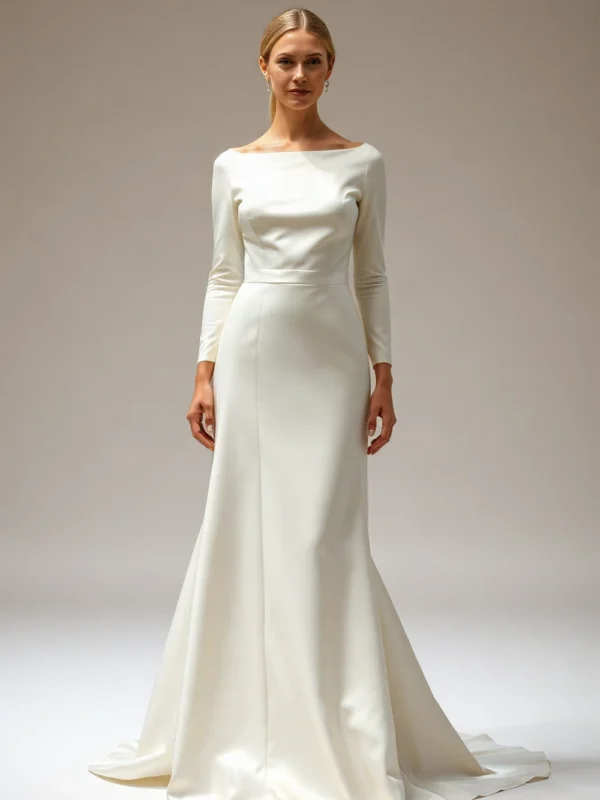
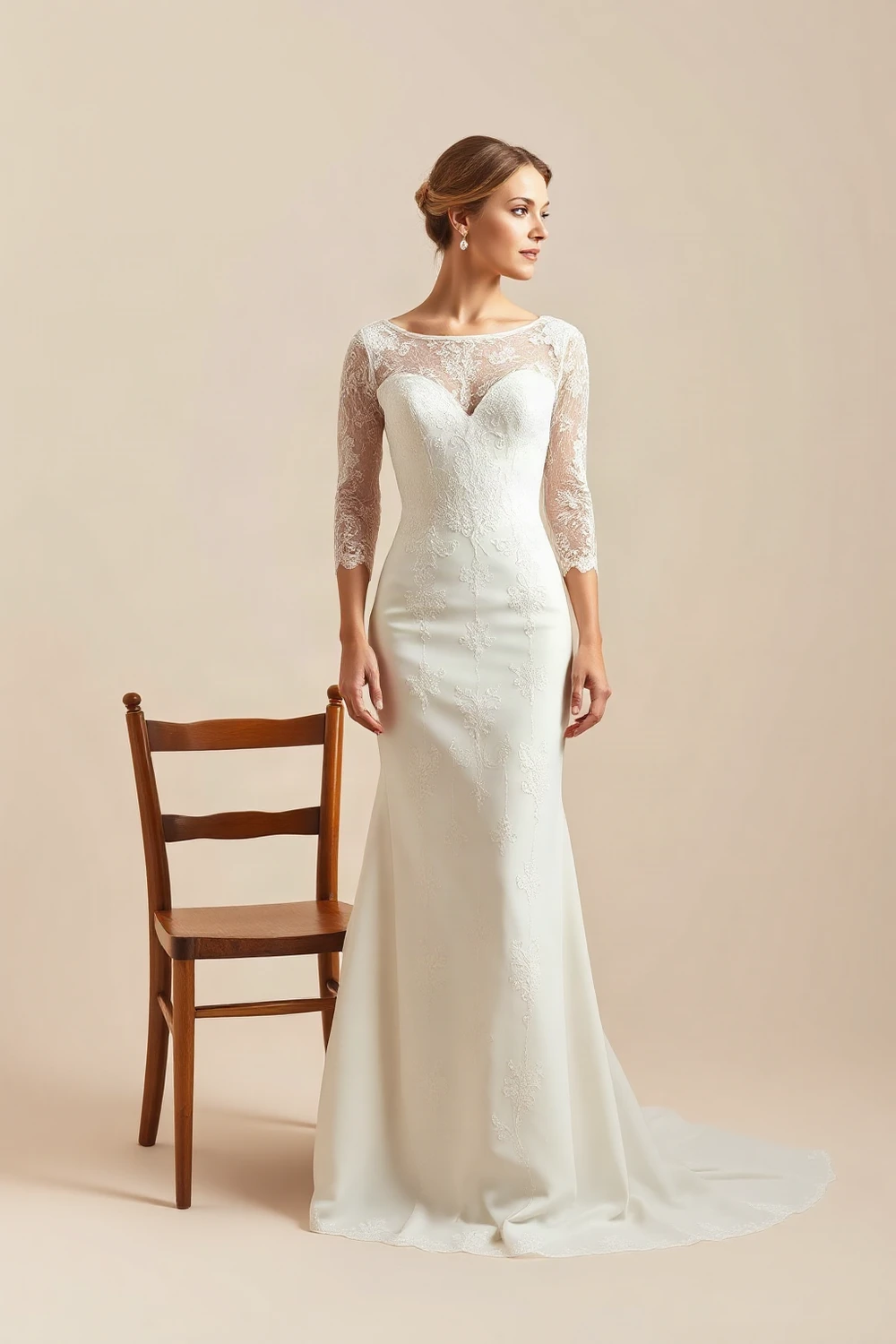
The fourth look also has a sheer bateau neckline, but three-quarter sleeves and motifs extending onto the body distinguish it from the preceding minimal design. The horizontal neckline emphasizes the collarbones, while the opaque sweetheart section adds a softer central curve. Spaced motifs continue down the skirt, linking the decorated upper area to the lower dress rather than ending at the waist. Because a bateau neckline sits near the shoulder points, check whether it pulls upward when the arms rise. Three-quarter sleeves expose the wrists, although dense pattern near the elbow may affect flexibility. The broad neckline and elaborate sleeves already form a strong frame, so short earrings, swept-up hair and a simple veil keep the balance. The full back and train are not visible and require separate consideration for movement and veil length.
Floral Cap Sleeves and a Flowing A-Line
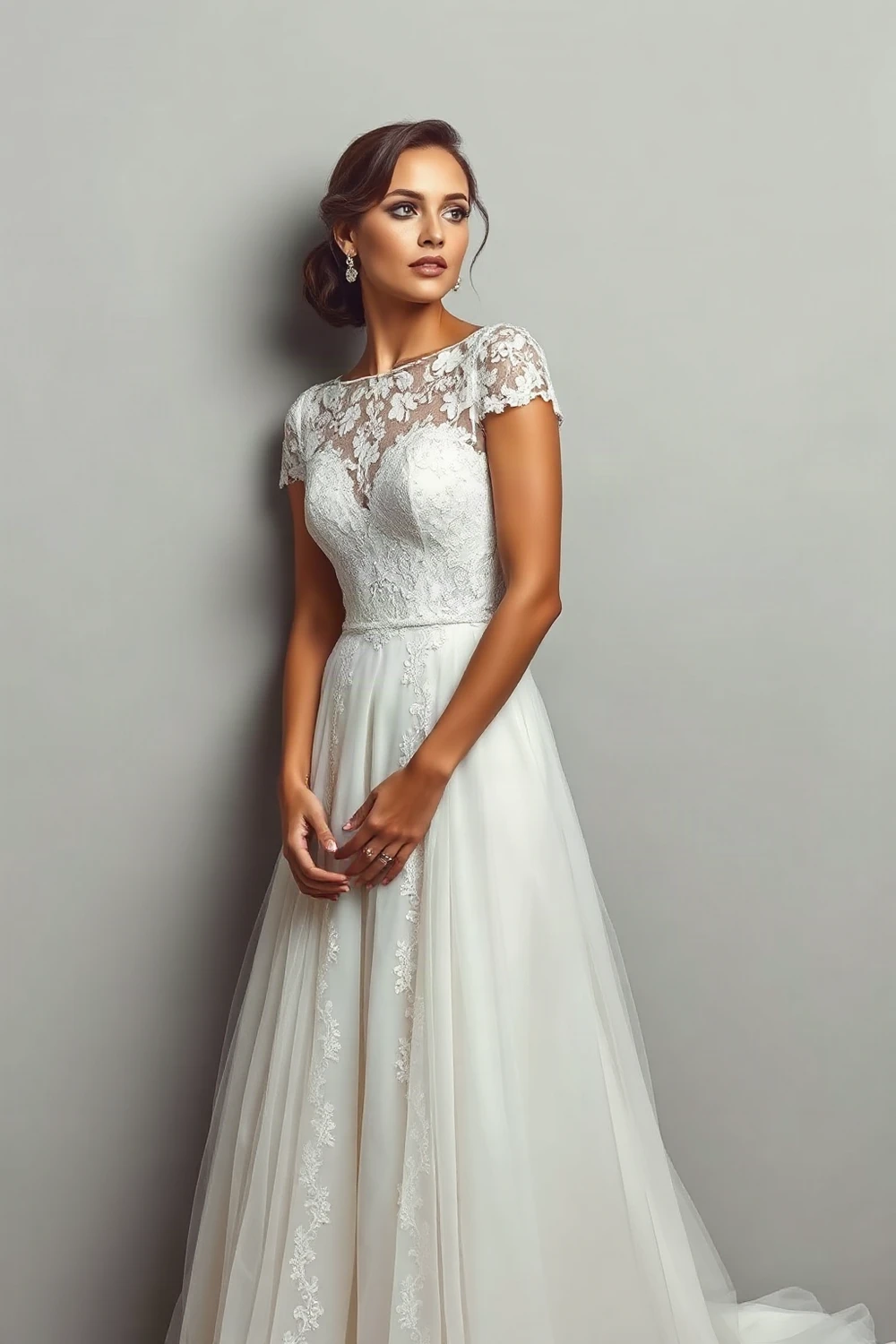
The fifth image combines a floral sheer upper section with a skirt widening from a clearly marked waist. Short cap sleeves soften the shoulder line, and the broad, nearly round neckline creates a horizontal frame rather than a deep opening. Narrow vertical trims connect the richly patterned bodice to the larger plain skirt. An A-line may offer more room for walking and sitting than a fitted mermaid skirt, although comfort still depends on the cut and inner layers. Waist placement matters: too high can shorten the torso, while too low can make the skirt look heavier. Loose hair would cover some cap-sleeve and floral detail, so compare an updo or side-swept style if visibility matters. A lightly finished veil avoids competing with the two vertical trims framing the skirt front.
Full Sleeves and a Generous A-Line Balance
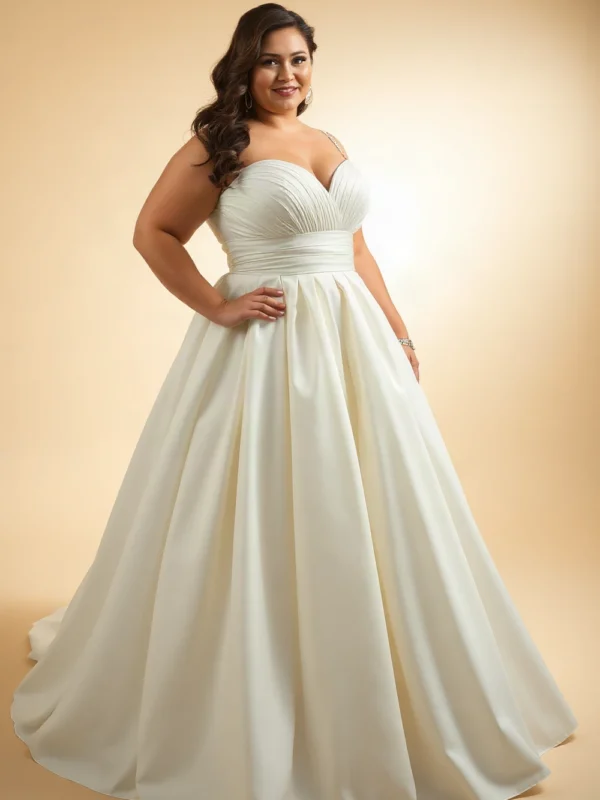
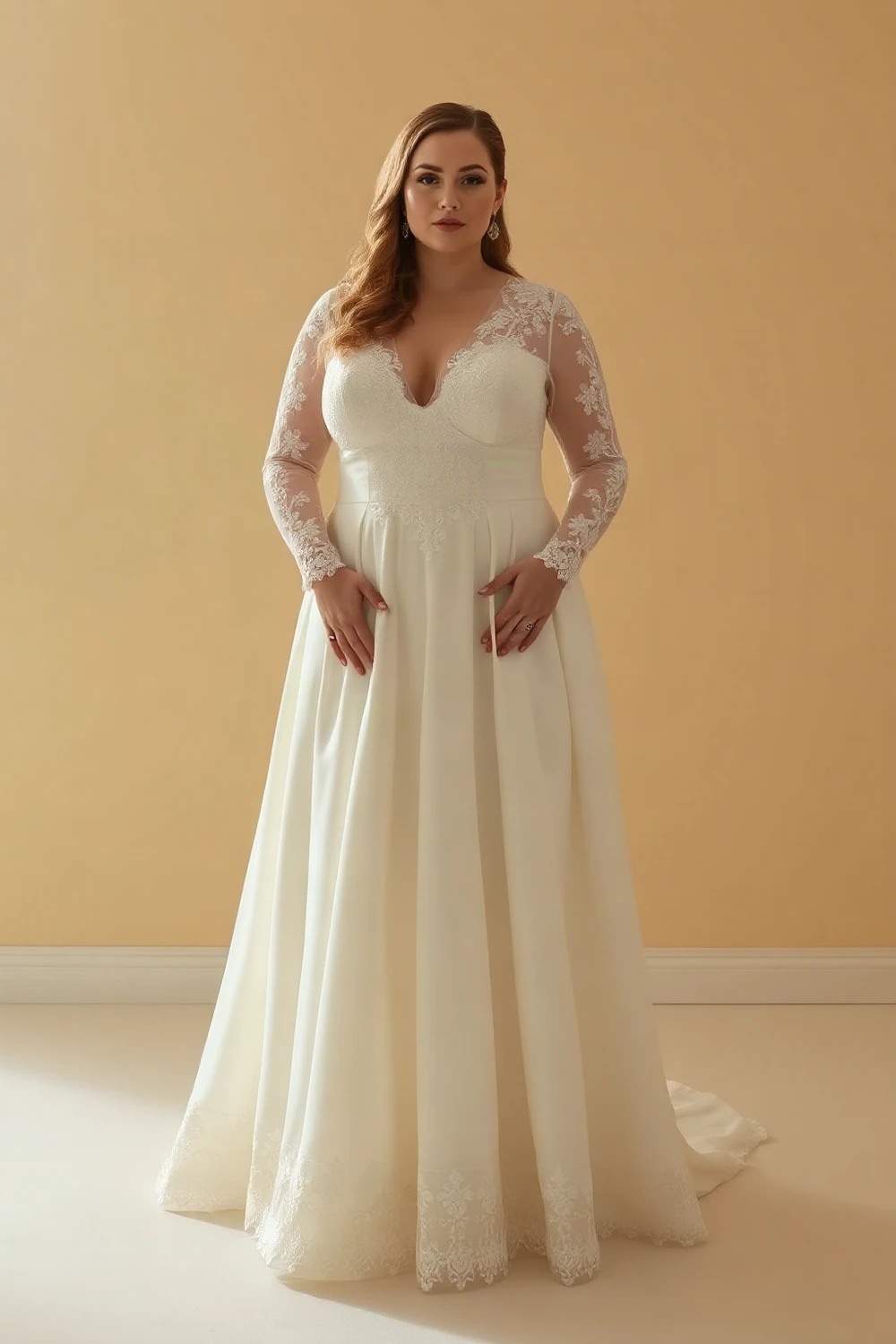
In the sixth look, a deep V-neck is framed by full-length sheer sleeves and a broad waist panel. Soft pleats below the waist add controlled volume, while the A-line opens evenly toward the floor. A narrow patterned hem extends the decoration beyond the upper body and finishes the lower edge. Compared with the fitted flared second dress, this silhouette follows the lower body less closely and suggests more space through the skirt. Still, test the pleat position, waist firmness and layer weight while sitting. The deep neckline requires support and stability, and the sleeves need adequate shoulder-to-wrist reach. Short earrings and a clean hairstyle let the detailed upper frame stand alone. Because the full train is not visible, confirm its length against the venue and planned movement.
Together, these concepts show how similar ivory tones and floral details change character with neckline, sleeve and skirt. A high neck and three-quarter sleeves form a structured, covered frame; a deep V with full sleeves adds openness and strong vertical direction. Sparse motifs with cap sleeves feel quieter, while a bateau panel and patterned three-quarter sleeves create a more continuous, ornate effect. For mobility below the waist, the A-lines provide a useful contrast to fitted shapes. Choose through realistic fitting rather than a still image: assess neckline security, arm reach, seated comfort, stride, hem position and how hair, jewelry and veil work together.
See how sheer necklines, lace-look sleeves and contrasting skirt shapes alter a vintage bridal look. Six visual concepts compare coverage, motif placement, silhouette and accessory balance.
Frequently asked questions
How should I choose between a sheer neckline and a deep V-neck?
Consider both the desired openness and how secure the neckline feels in motion. A sheer upper panel can preserve a sweetheart shape while lightly covering the shoulders. A deep V creates a stronger vertical line. Test either option while walking, sitting and bending.
Are three-quarter sleeves more practical than full sheer sleeves?
Three-quarter sleeves leave the wrists exposed and create a lighter frame. Full sleeves carry the motifs continuously from shoulder to wrist. For either length, test raised arms, bent elbows and wrist movement rather than choosing by appearance alone.
How do fitted flared and A-line skirts compare?
A fitted flared skirt follows the hips and upper legs before widening near the knees. An A-line opens from the waist and gives the lower silhouette more space. Test normal strides, stairs, sitting and dancing in both shapes.
Which accessories balance a densely patterned bodice?
Short earrings, a clean hairstyle and a lightly bordered veil can keep dense neckline and sleeve motifs from competing. A quieter bodice leaves more visual space for a noticeable veil or hair accessory.
What should I inspect in a sheer panel during a fitting?
View its contrast against the skin under different lighting, check the visibility of seam edges and watch for wrinkling when the shoulders move. Front, side and back photographs also help assess closure placement and motif continuity.