In silk-look wedding dress styles, the absence of pattern makes cut and proportion the principal storytellers. A smooth, light-reflective surface can show sleeve length, waist seams, skirt flare and the scale of a back bow more clearly than a busy surface. Two apparently simple dresses can therefore create very different requirements for movement, support, venue and accessories.
The six concepts move from a covered, long-sleeved A-line through off-the-shoulder and strapless volume to halter ties, a deep-V slip and a bow-backed fit-and-flare. Because photographs cannot verify fiber content, this comparison concerns visible silk-like sheen and flow, not a claim of genuine silk. The goal is to help you bring specific questions about mobility, volume, train handling, support and veil placement to a real fitting.
Vertical Balance in a Long-Sleeved A-Line
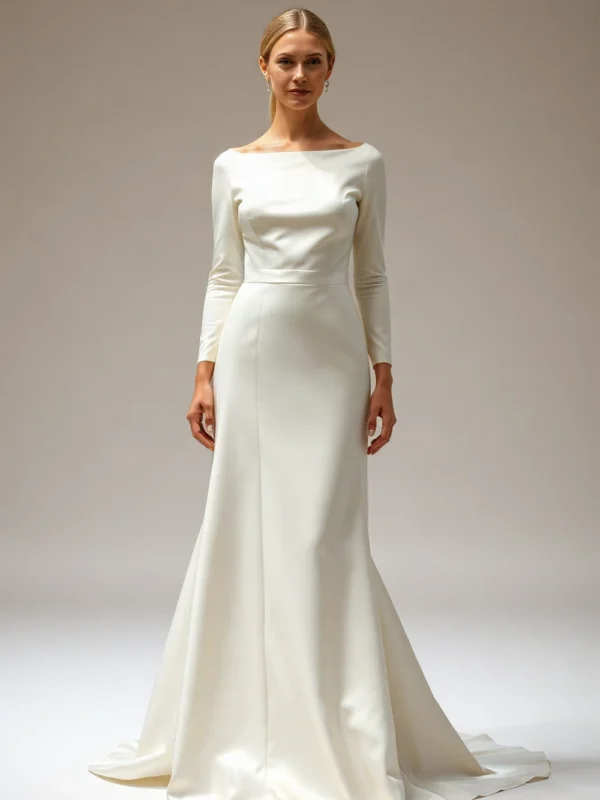
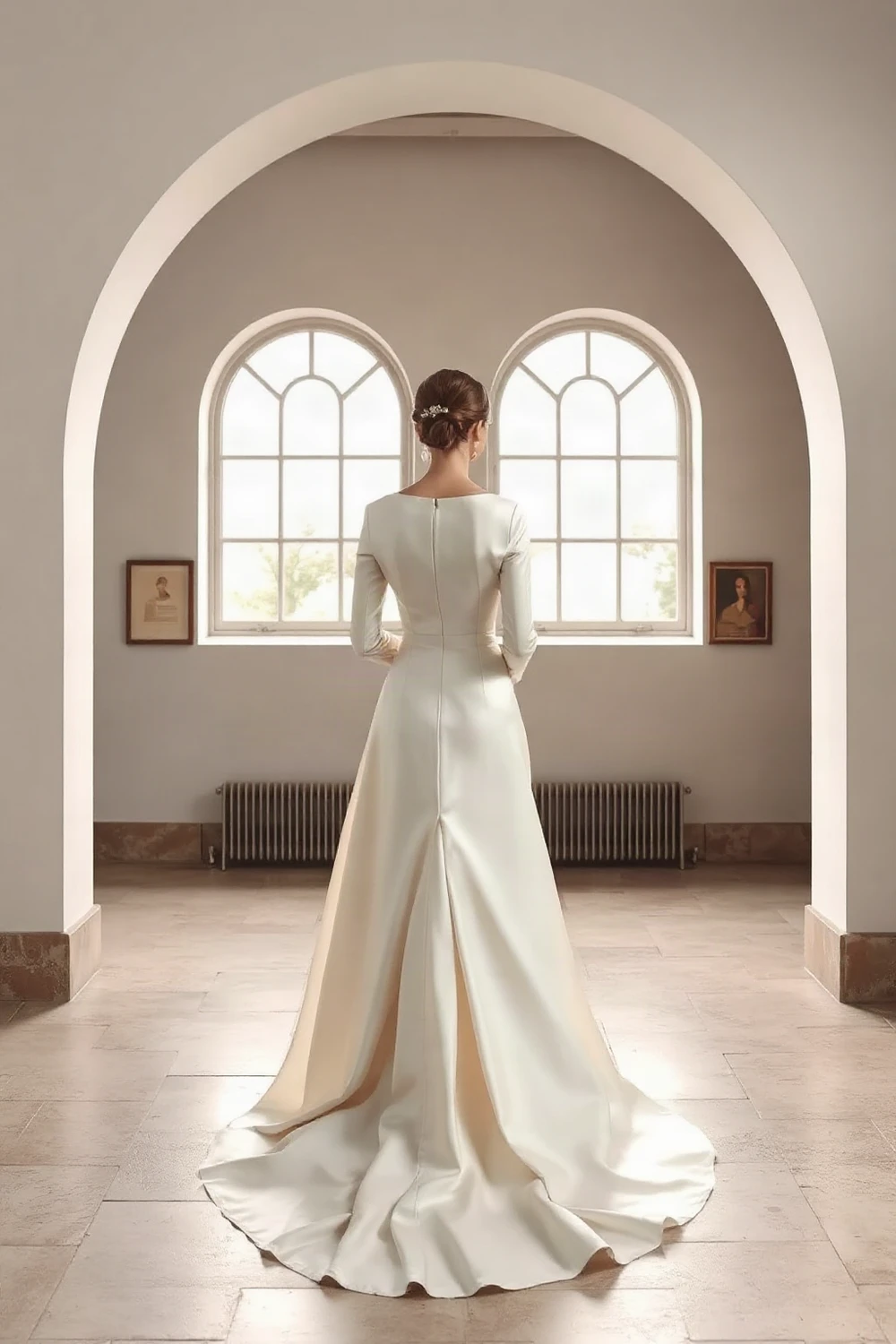
The first look balances a covered, long-sleeved bodice with a controlled A-line skirt. A central back seam follows the vertical axis of the large architectural arch, while the train spreads weight across the floor. The effect is restrained yet ceremonial. A small hair accessory completes it without covering the shallow back neckline.
Assess long sleeves by movement, not season alone. Test shoulder, elbow and wrist comfort while reaching, embracing and sitting. Smooth surfaces can expose strain lines, so the fit must stay clean without restricting the arms. If the broad train appeals, include turning space, aisle texture and the method for securing the skirt later in the fitting plan. A design balanced at rest may behave very differently through a full day.
Neckline Movement in an Off-the-Shoulder A-Line
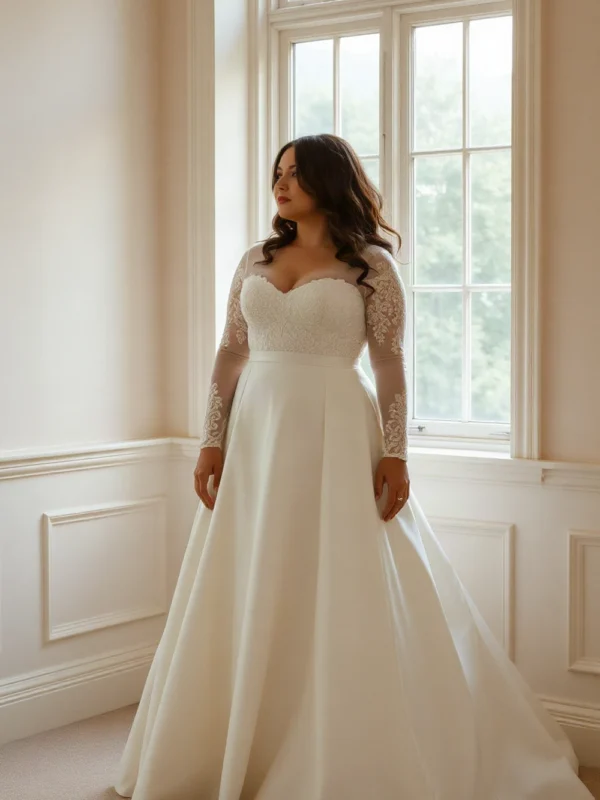
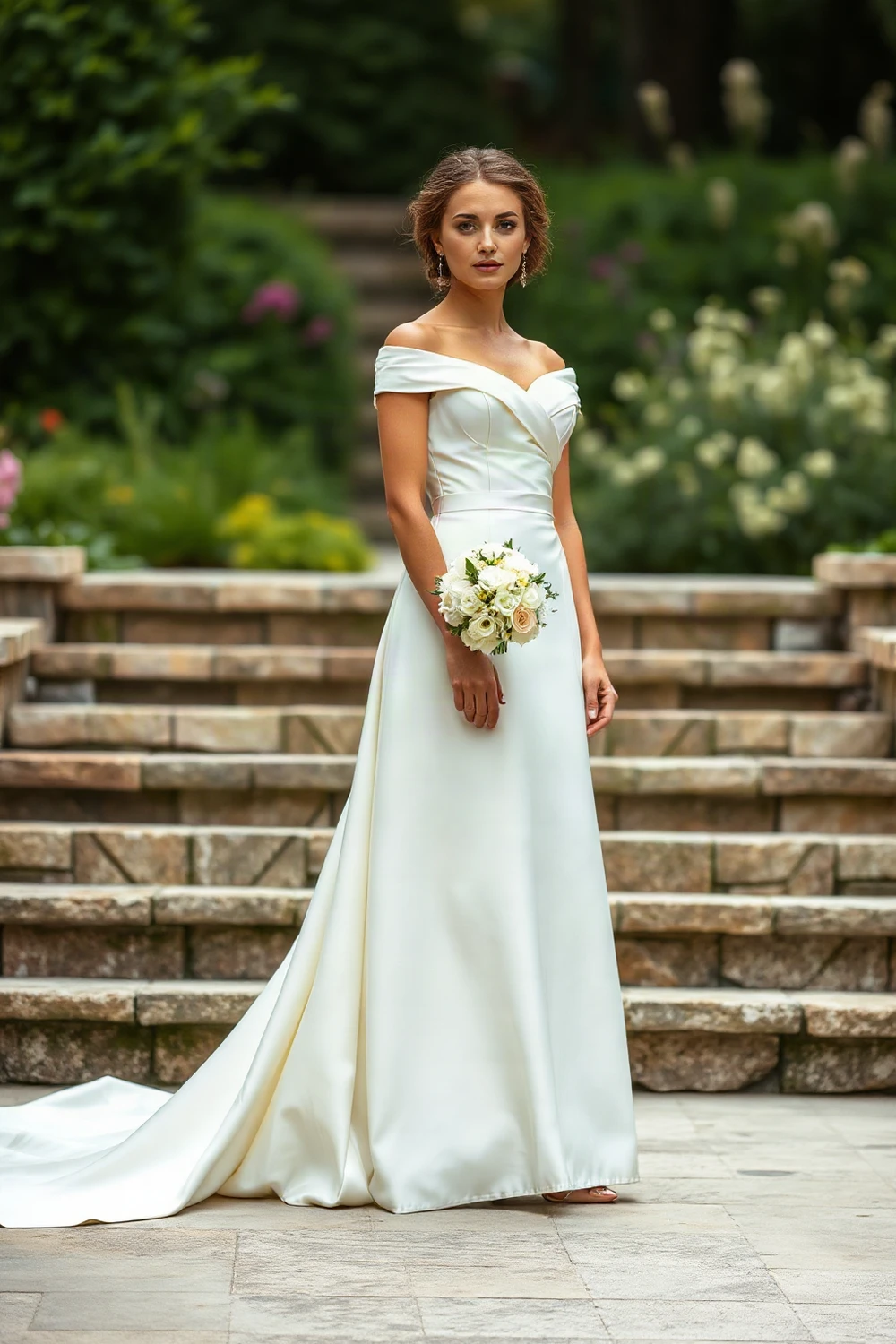
In the second image, a folded off-the-shoulder neckline meets a softly sweetheart-shaped front and defined waist band. The A-line skirt has less volume than the ball gown, so it reads lightly against the garden steps. A compact bouquet leaves the plain surface visible and keeps the shoulder line as the leading detail.
This neckline opens the neck and collarbones but may limit how high the arms can rise. Test dancing, embracing and lifting the bouquet with both hands. If freer reach matters, ask whether the band can be adjusted without changing the intended line. A short train may suit outdoors, although paving, grass and steps still need attention. Test the finished hem with the intended shoes and check both front and side views.
Volume in a Strapless Ball Gown
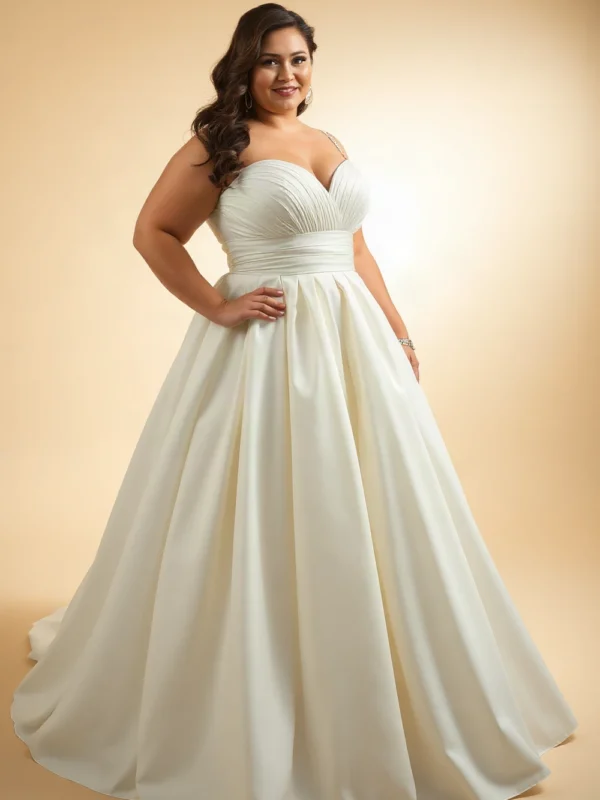
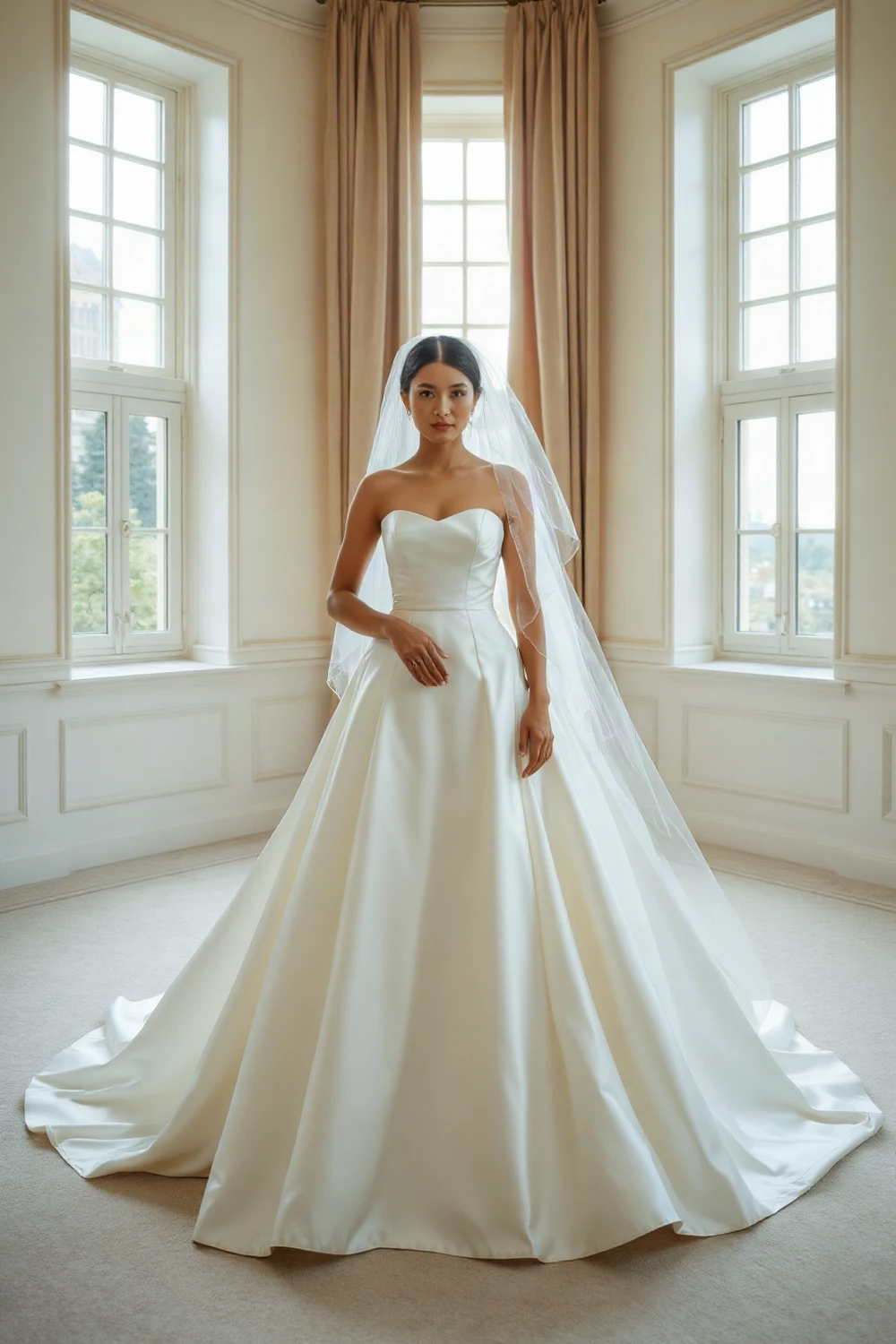
The third design pairs a sweetheart strapless bodice with a wide, sculptural skirt. Large folds create light and shadow across the unpatterned surface, giving ceremonial impact without visible ornament. The sheer veil frames the shoulders and full skirt with a softer layer. Among the six concepts, this is the clearest contrast between a fitted upper body and an expansive lower silhouette.
Skirt volume affects more than appearance: seating, doorway width, transport and dancing all matter. For a strapless bodice, look beyond a tight neckline. Its structure should stay anchored through the waist, remain comfortable and resist slipping when the arms rise. Photograph the veil from front, side and back during a fitting. Decide whether it gently links bodice and skirt or obscures the sweetheart line and adds unwanted volume.
The Movement of Long Halter Ties
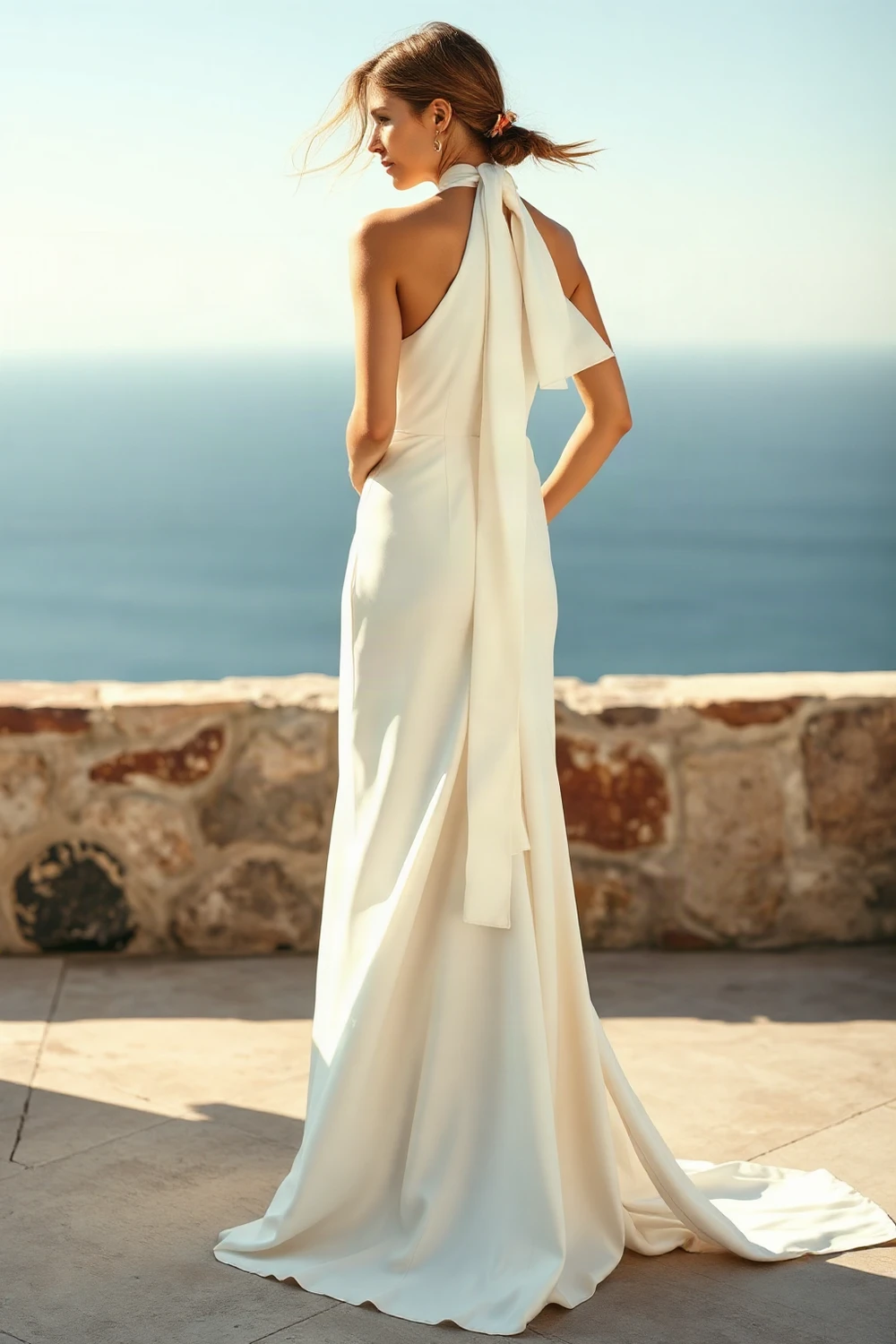
The fourth look is defined by a halter neckline and two broad ties descending from the nape. A narrow body and lightly flared skirt keep the ends visible, while a small train suits the spare seaside composition. The principal line runs down the back rather than across the front, letting construction perform the role usually given to jewelry or embellishment.
Assess neck pressure, side coverage and tie length together. Long ends may move attractively in a breeze, but they can touch a dining chair or catch an arm while dancing. A long veil would cover much of the key feature; a short veil or veil-free updo can preserve it. During a fitting, test the knot, inspect the sides for visible inner layers and wear the gown long enough to judge comfort.
Restraint in a Deep-V Slip Silhouette
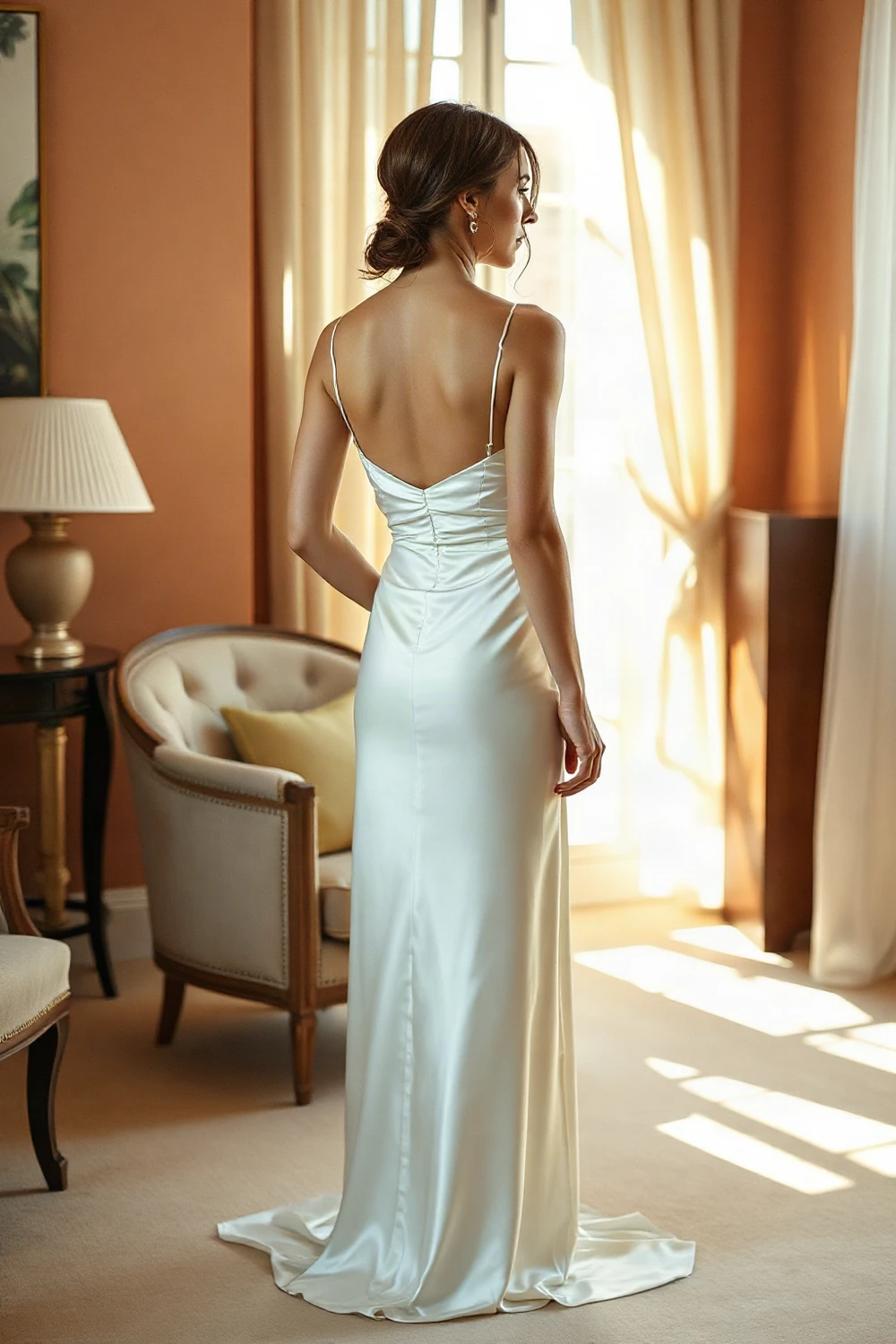
The fifth dress combines fine straps and a deep V back with a close, straight skirt. Light gathering shapes the rear bodice, after which the surface falls in an almost uninterrupted line. A small pool at the hem creates a quieter finish than a broad train. Warm window light makes minor changes in sheen and shadow part of the deliberately minimal composition.
A slip silhouette is not automatically easy to fit because it has fewer details. Strap length, edge gaping, stride space and visible internal support need precise attention. Do not choose an undergarment before assessing the actual dress and its inner structure. Bring shoes near the intended height, then walk, sit and turn. If you want a veil, try a light option that frames rather than conceals the V back, and inspect the overlap in natural and indoor light.
A Back Bow on a Fit-and-Flare Shape
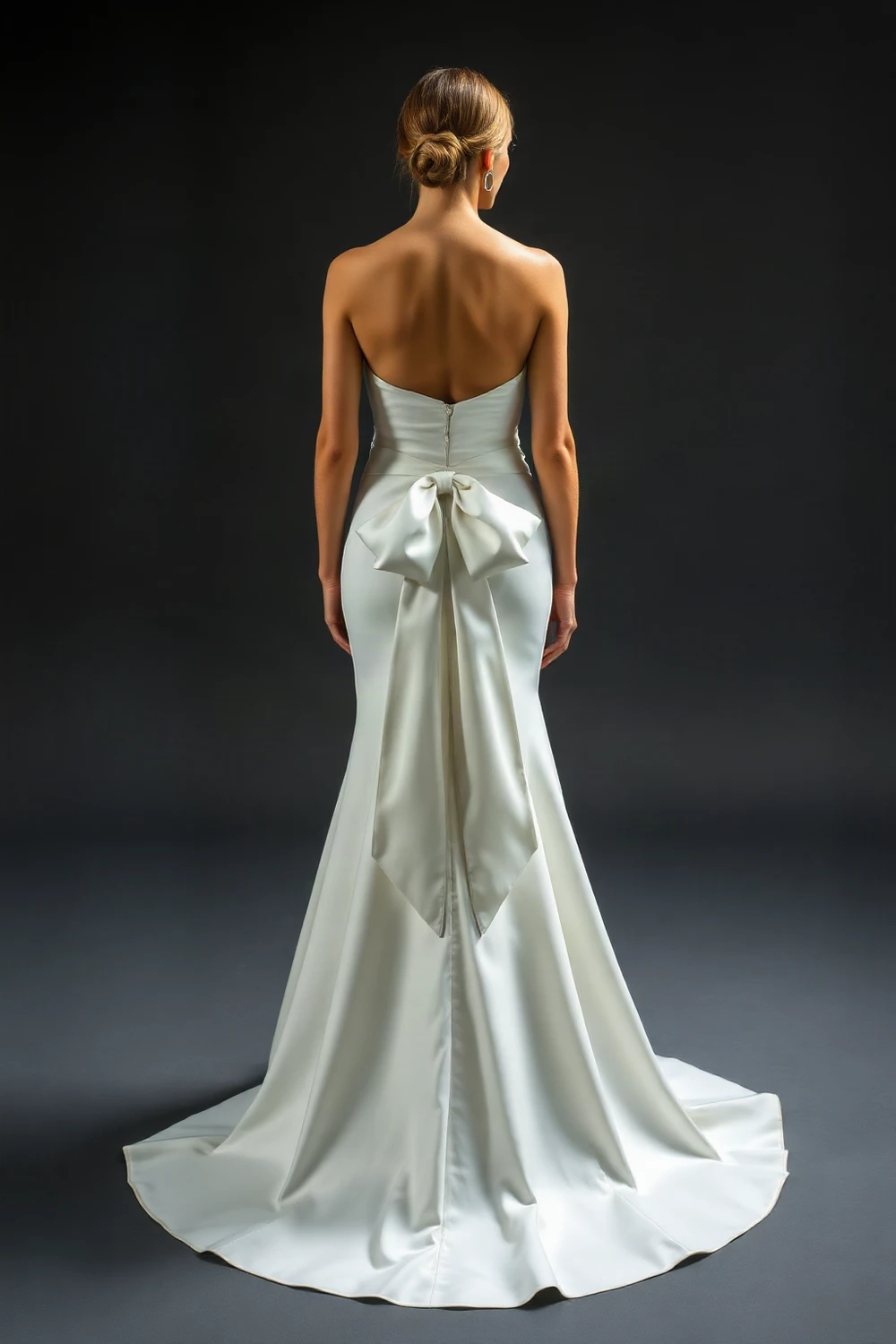
The final look uses a strapless, close-fitting upper silhouette that flares below the knees. An oversized bow with long tails adds one concentrated statement to the otherwise plain dress. The dark background clarifies both the ivory outline and the bow’s projection, showing why a back accessory’s scale must be judged as part of the whole silhouette.
The practical comparison is visibility versus convenience. A large bow may compress while sitting, disappear beneath a long veil or create too many layers once the train is secured. Record a rear-view walking video at the fitting to see its movement, and ask about removability only in relation to the actual construction. If the bow remains the focal point, simplify the veil, earrings and hair ornament. Space around one strong detail communicates the design more clearly than competing accents.
Choosing among silk-look wedding dress styles is not about finding the shiniest surface or largest skirt. Long sleeves provide coverage and an architectural line; an off-the-shoulder neckline gives a more open frame; a ball gown creates pronounced volume; and a slip cut produces a nearly uninterrupted fall. Halter ties and an oversized bow move the accessory role to the back.
Build a shortlist by viewing every option from the front, side and back, then test sitting, embracing, climbing steps and dancing in comparable shoes. Adjust veil, hair and bouquet to the area the dress emphasizes. Finally, verify fiber content, alteration possibilities and train-securing options from the label and through a qualified fitting of the actual garment. This turns a visual reference into a choice suited to your venue, proportions and movement needs.
Compare how smooth, light-reflective surfaces work with long sleeves, off-the-shoulder lines, ball gowns, halter ties, slip shapes and statement bows, with practical guidance on movement, support and accessories.
Frequently asked questions
Can a photograph confirm that a wedding dress is genuine silk?
No. Sheen, drape and smoothness may create a silk-like appearance, but a photograph cannot establish fiber content. For an actual dress, check the composition label, written material information and, when available, a swatch. Ask whether the lining and separate layers use different fibers as well.
Is an A-line or fit-and-flare shape better for movement?
An A-line commonly leaves more room around the legs, while a fit-and-flare may sit closer through the hips and upper legs. Comfort still depends on the particular cut, lining and hem width. Compare them in a real fitting by taking long steps, sitting, turning and dancing in shoes of a similar height.
How should support be planned for a low-back or strapless dress?
Do not choose support from the neckline label alone. The bodice’s internal construction, depth of the back, strap adjustment and personal comfort all matter. Wait until the actual gown can be assessed in a fitting, then check the solution from the front, side and during movement before committing to it.
What veil works with a bow or long halter ties?
If the back detail should remain visible, begin with a short, plain veil or a veil-free hairstyle. A long veil can also work, but inspect the combined volume where it overlaps the bow or ties. Walk and sit with every layer in place before making the final choice.
How can train length be matched to the venue?
Consider aisle width, floor texture, steps, outdoor surfaces and the plan for dancing. A broad or long train generally needs more clearance and an effective securing method, while a small train may simplify transitions. Rehearse turns and stairs, and test the proposed bustle or fastening on the actual dress.