Vintage lace wedding dress styles do not need equally dense patterning from neckline to hem to create nostalgic character. Motif scale, scalloped-edge placement and plain space determine whether a result feels restrained or dramatic. These six concepts apply that language to a sweeping train, ankle-length skirt, scattered botanicals, moving sleeves and transparent cuffs. Compare both close-up detail and the outline seen across a room.
The sequence moves from rear view to hem and footwear, then an A-line skirt, bell sleeves and cuff construction. Rather than rank them, choose according to venue, movement, accessories and photographic angle. Because the images cannot verify material composition, the guidance addresses visible form, surface, color and styling.
Large Florals and a Vertical Opening on a Long Train
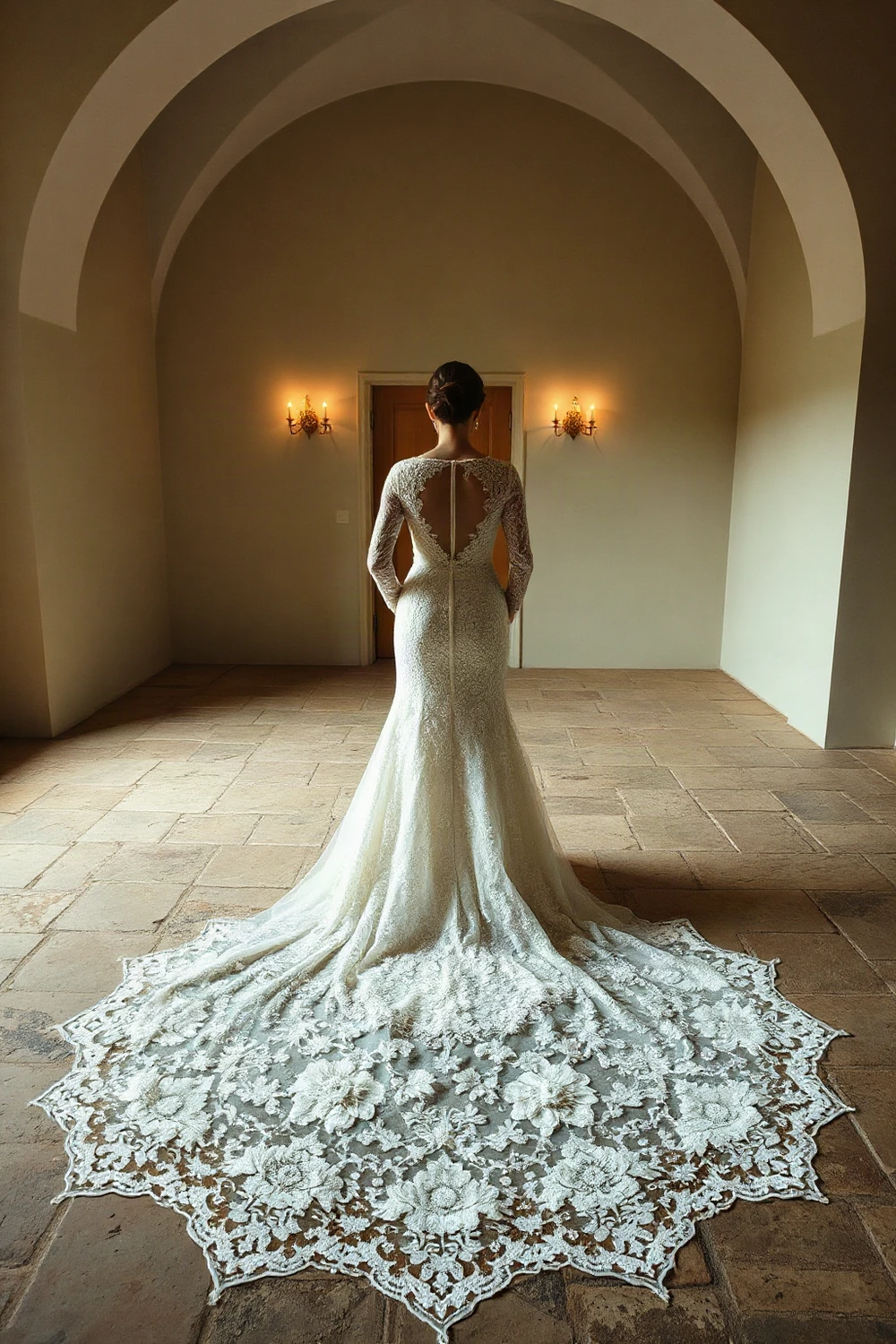
The first look follows the body through long sleeves and a fitted skirt, then opens below the knees into a train spread across the stone floor. Small, dense lace-like patterning covers the upper area, while the train ends with oversized flowers, leafy openings and pointed scallops. That change of scale gives the rear view depth and length. A long center-back opening adds breathing space and leads the eye toward the waist and train.
The composition suits entrances and portraits from behind, and the arched room reinforces its symmetry. A broad train, however, needs adequate aisle width, suitable flooring and a plan for arranging or gathering it. In a smaller setting, large motifs could remain around a shorter train’s edge. With a veil, a quiet border may be more coherent than another dense scalloped edge obscuring the train’s outline.
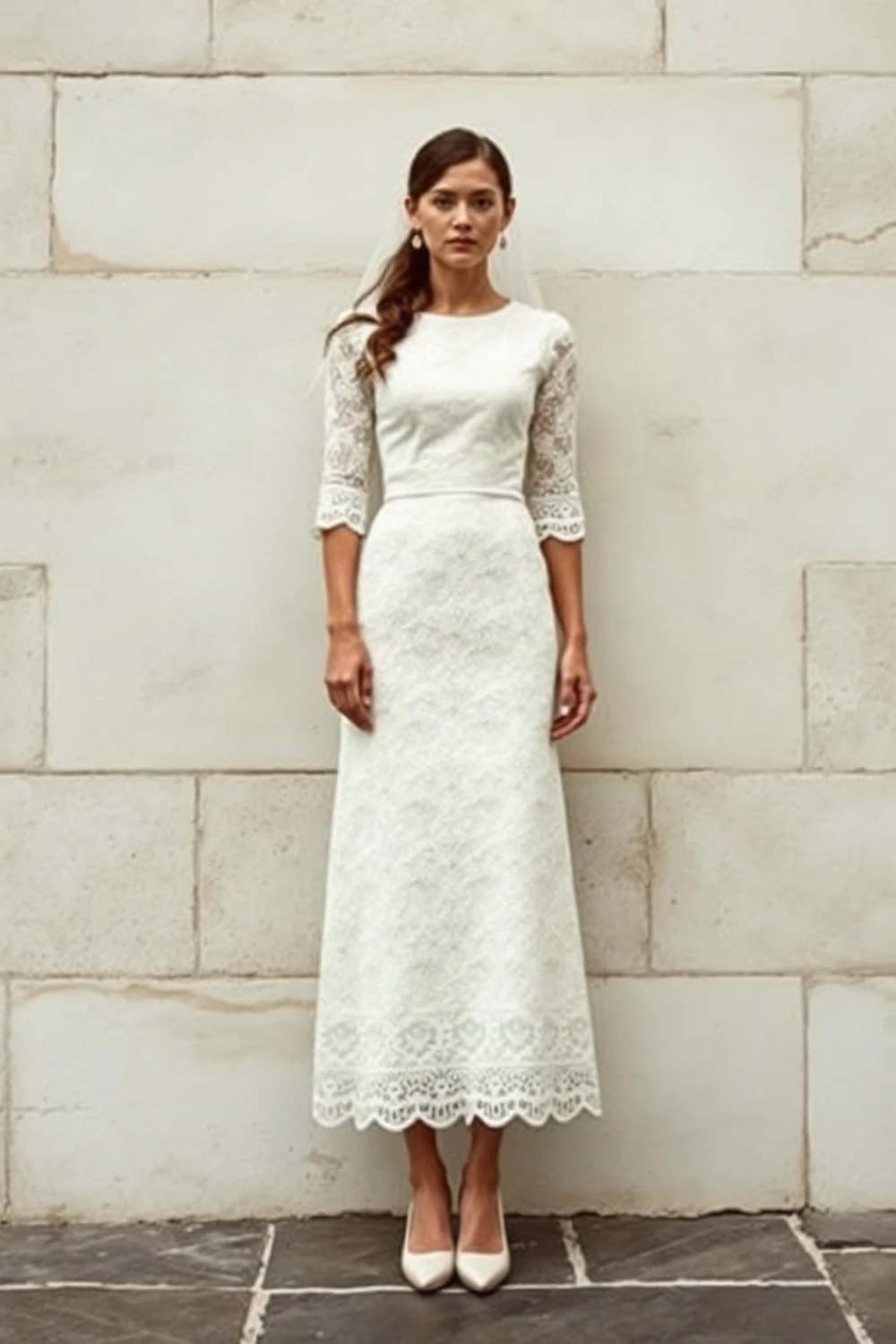
A Repeating Scalloped Border on an Ankle-Length Silhouette
The second concept creates vintage character through controlled proportion rather than volume. Its round neckline, defined waist and straight skirt are balanced by open floral sleeves ending below the elbows; their small pattern returns in a broader hem band. The scalloped edge stops above the ankles, making visible space, skin and shoes part of the composition.
This train-free length supports easy movement, but its endpoint should be fitted to the wearer: a cut across the widest calf can create an unintended horizontal division. Pale pointed shoes, as pictured, continue the vertical flow; contrasting or strapped shoes add vintage personality while drawing attention downward. The sleeves allow a small bracelet. When the hem is intricate, restrained accessories preserve the calm, linear quality that separates this dress from the expansive concepts.
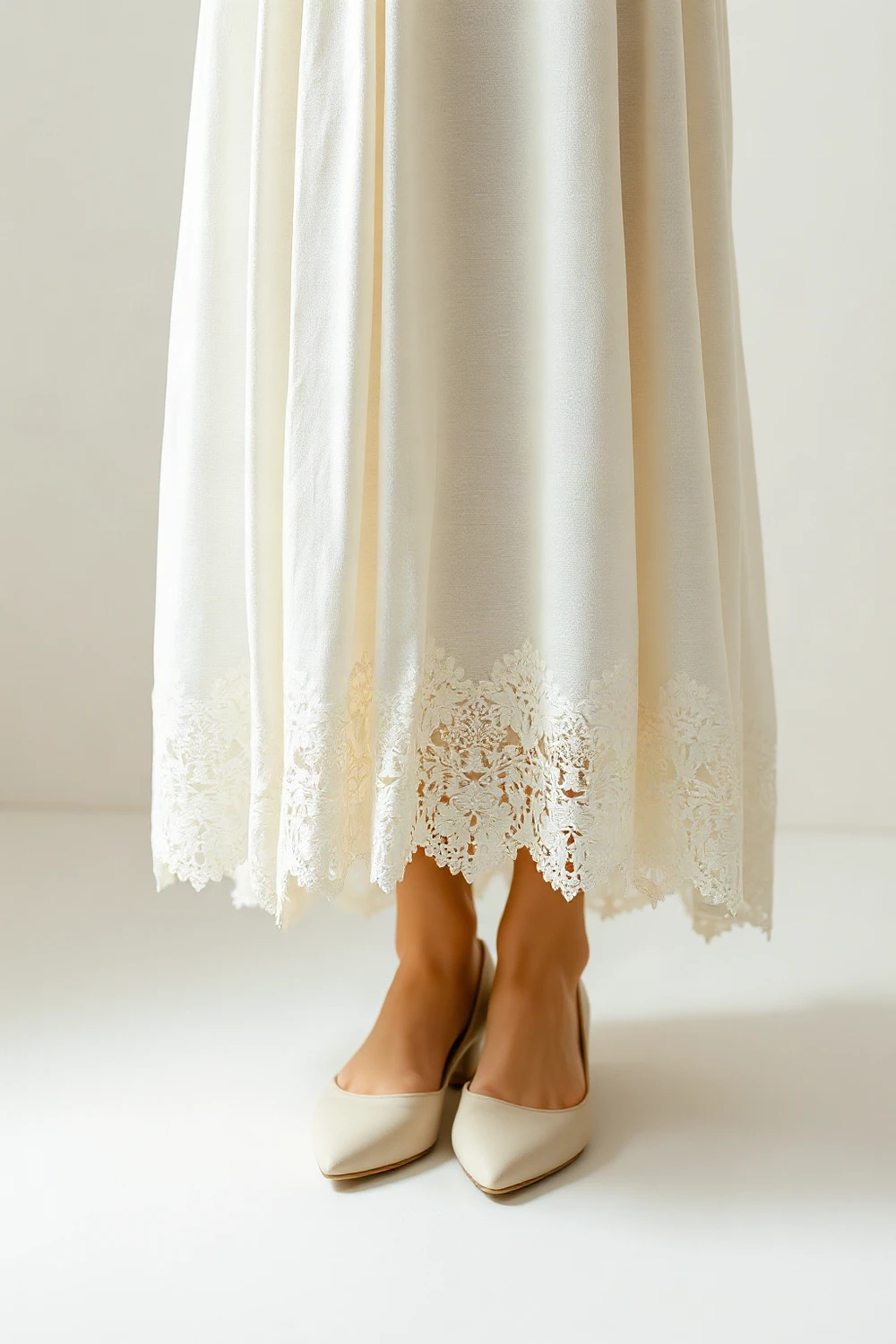
Creating a Transition Between the Hem and Shoes
The third image isolates a decision that can disappear at a distance. A fluid, mostly plain surface becomes a leafy floral border near the bottom. Following the motifs’ natural outlines, the edge rises and falls instead of making a rigid horizontal cut. Light pointed shoes complete the gentle tonal transition without breaking the line.
With an ankle-length or raised hem, footwear is part of the design: toe shape, upper opening and color contrast affect how the border reads. A slim pale shoe leaves the lace-like edge dominant; a dark, bright or embellished pair becomes a second focus. Test the deepest motif points while walking so they do not catch on the shoe. A wide border adds lower-skirt weight, whereas a narrow botanical strip keeps the surface minimal with one concentrated vintage accent.
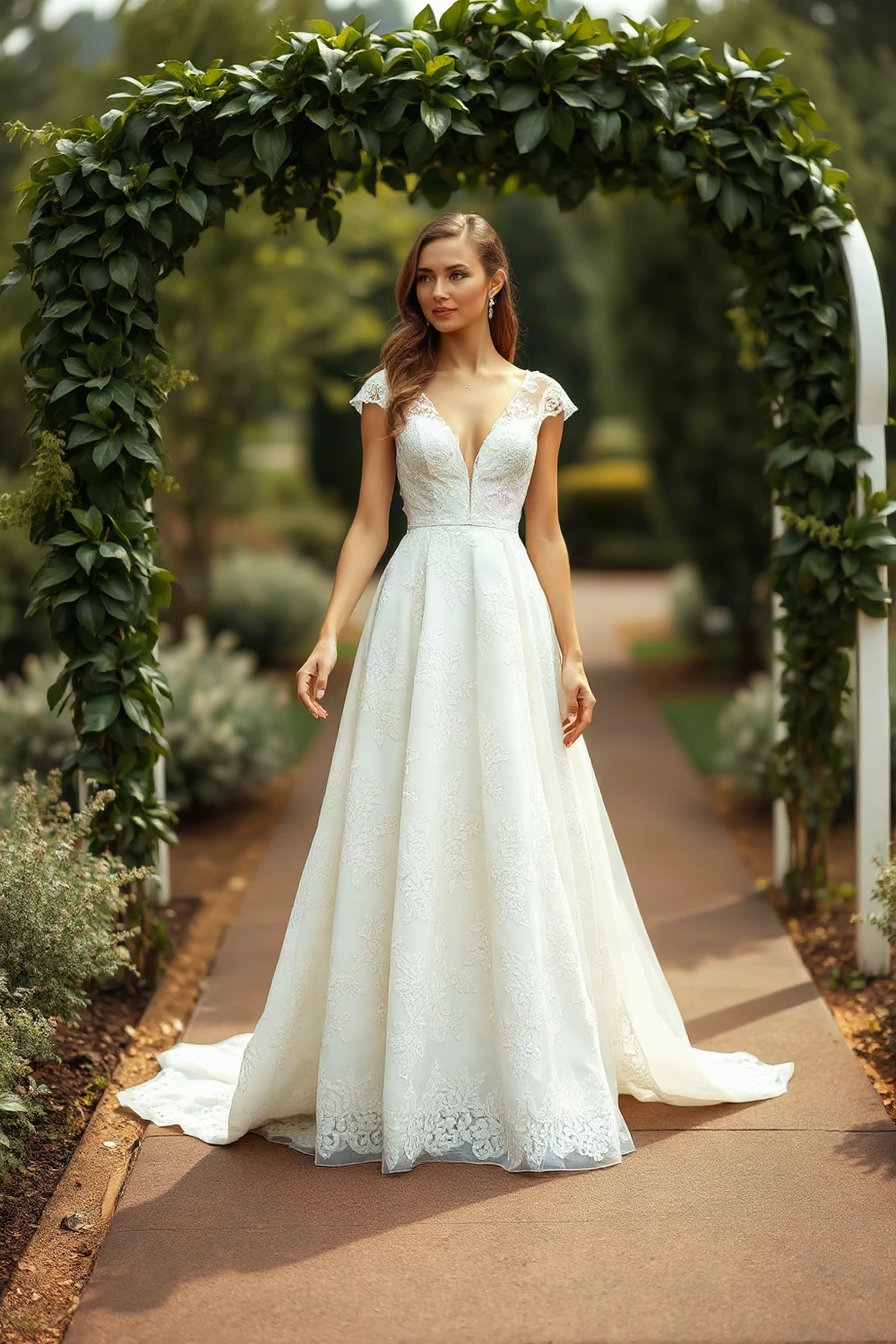
Spacing Botanical Motifs Across an A-Line Skirt
The fourth look shows that a broad A-line skirt need not carry uninterrupted decoration. A deep V-neck and short sleeves define the bodice, while small botanical clusters descend at intervals and become denser at the lower border, grounding the wide shape. Slight side extensions create a more restrained rear line than the first concept’s sweeping train.
The leafy garden arch repeats the botanical idea, but open areas keep the ivory dress distinct. For an outdoor setting, inspect the pattern from farther away, because very small, low-contrast details may vanish in wide photographs. Short sleeves soften the shoulders while the plunging neckline makes a strong vertical, favoring small earrings or simple hair over another necklace. Test skirt width against aisle and seating, and view motif spacing in motion because folds can hide isolated clusters.
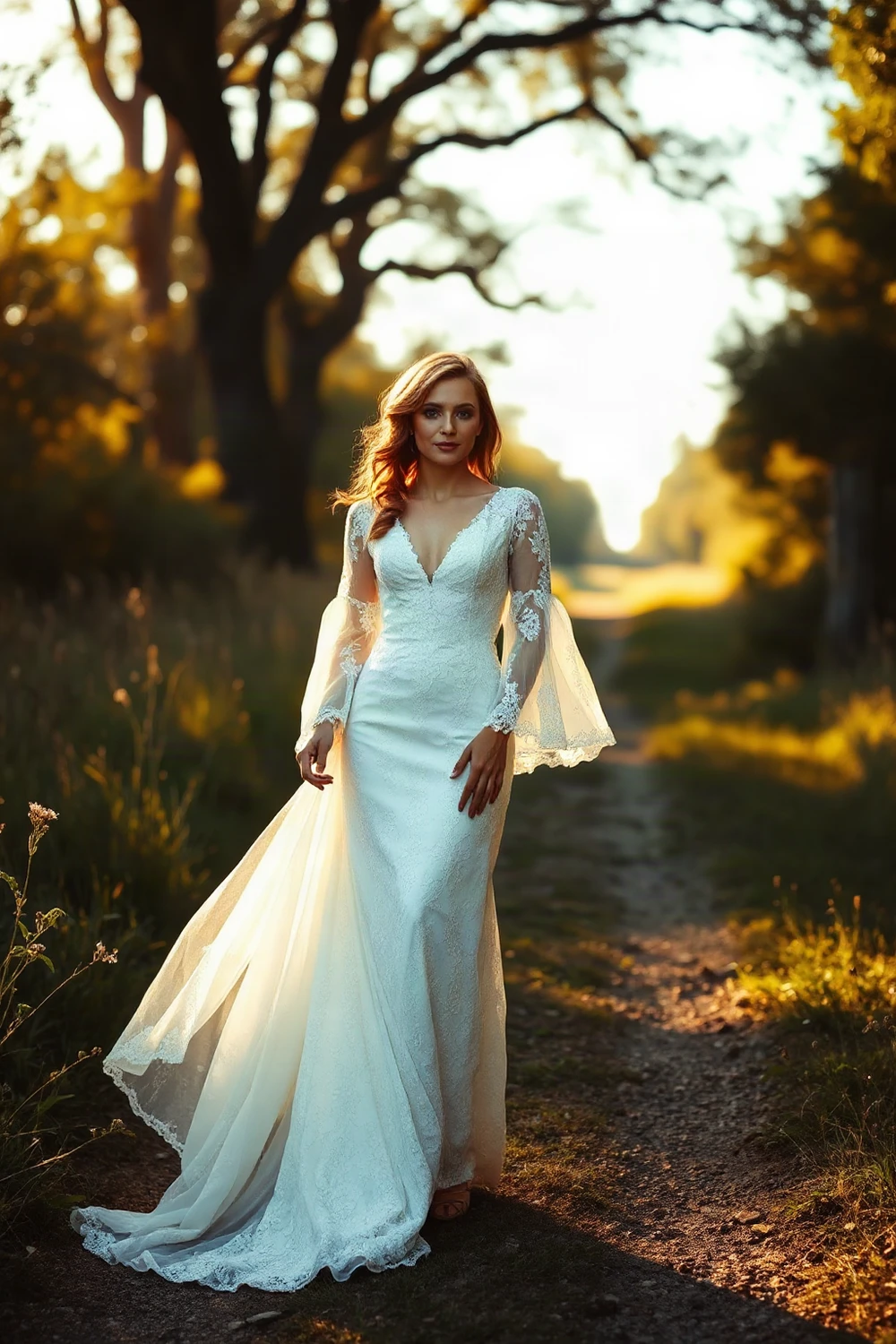
Transparency and Movement in Bell Sleeves
The fifth design builds vintage character through sleeve shape rather than a voluminous train. A narrow body and long skirt create a continuous vertical. Transparent sleeves fit the upper arms, then open below the elbows into bells; floral appliqué-like areas are denser above and more dispersed across the flare. Light passing through the ends turns the arms into a moving frame, echoed near the ground by a light layer flowing to one side.
Bell sleeves are functional as well as visual. Wide ends may touch a bouquet, table arrangement or narrow doorway, so fittings should include sitting, walking and carrying an object. Their detail is more visible from the front and side than the first dress’s train. A compact bouquet avoids hiding the arm outline; long ribbons may compete with its motion. Restrained earrings or hair accessories leave the V-neck and patterned sleeves distinct.
Botanical Long Sleeves and Tapered Scalloped Cuffs
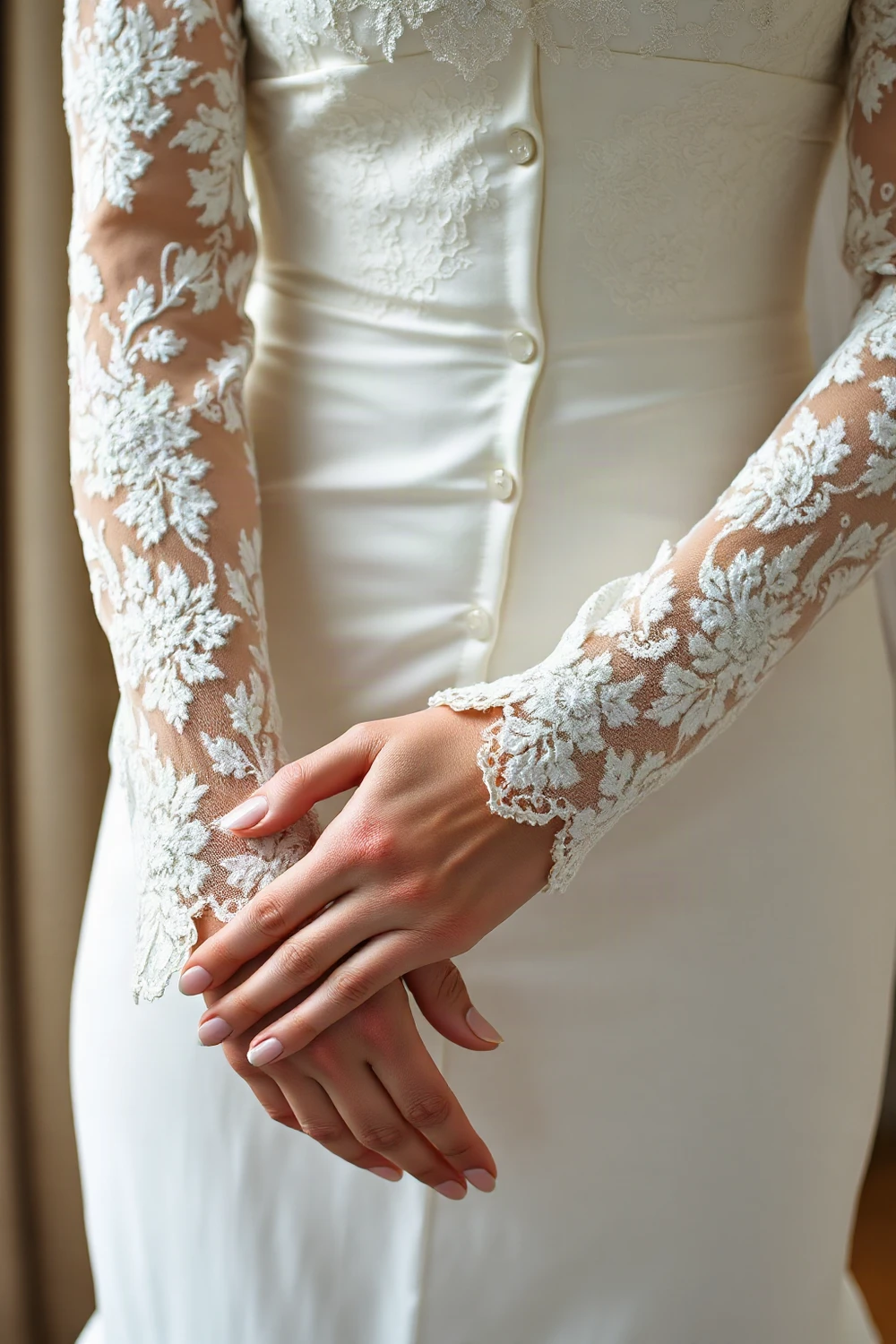
The final close-up concentrates lace-like vintage detail instead of covering the whole dress. Sheer long sleeves flank a smooth, softly reflective bodice, with dense leaf motifs standing out against the skin. Scalloped cuffs taper toward the hands and lengthen the wrists visually; between them, round buttons establish a quieter vertical rhythm. The contrast makes the chosen focus clear.
Assess cuff length while hands bend and move, not only in a still pose. An overlong pointed end may fold while holding a bouquet, exchanging rings or eating. Because the wrists already carry substantial pattern, a bracelet is optional; a small ring or earrings keeps the outline unobstructed. This treatment suits a plain skirt or bodice while giving close photographs a distinct focal detail. If transparency matters, check the inner layer’s appearance against the skin under several lighting conditions.
When comparing vintage lace wedding dress styles, first decide where the main detail should appear. A broad floral train creates a memorable rear view; an ankle-length scalloped hem centers footwear; and a spacious A-line skirt lets botanical motifs form a balanced field. Bell sleeves add movement without skirt volume, while tapered cuffs reward close-ups and emphasize the hands.
Then test the preference against use: aisle width, seating, arm movement, shoe-to-hem distance and transparent areas in changing light. Rather than giving motifs, scallops, buttons, veil and jewelry equal weight, select one principal focus and let the rest support it. Across all six concepts, vintage character depends less on the quantity of decoration than on its placement, scale and surrounding uncluttered space.
Compare vintage lace wedding dress styles that place floral motifs along trains, hems and sheer sleeves, with practical guidance on silhouette, movement, shoes and accessory balance.
Frequently asked questions
Where is a broad floral train easiest to use?
It is easier to arrange on a wide, relatively smooth aisle with enough space behind the wearer. Narrow passages, rough ground or closely placed chairs may make a shorter train the more practical option.
What shoes work with an ankle-length scalloped hem?
Pale pointed shoes continue the vertical line, while contrasting, strapped or decorative shoes become a deliberate focal point. The final hem length should be fitted while wearing the intended heel height.
How can floral motifs be balanced on a full A-line skirt?
Concentrating them near the bodice and hem while leaving space across the middle can preserve lightness. Check the pattern both close up and from a distance, including while the skirt is moving.
What bouquet suits sheer bell sleeves?
A compact bouquet can keep the flared sleeve ends visible and easier to manage. If ribbons are included, test their length so they do not tangle with the sleeves while walking.
Do pointed lace cuffs need a bracelet?
No. Botanical motifs and tapered edges already emphasize the wrists. A small ring or earrings can provide an accent without interrupting the cuff outline.