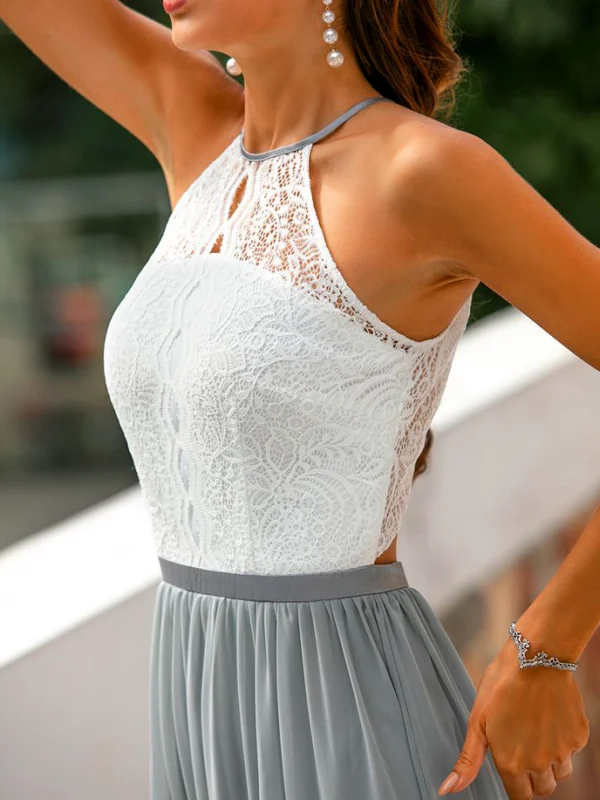
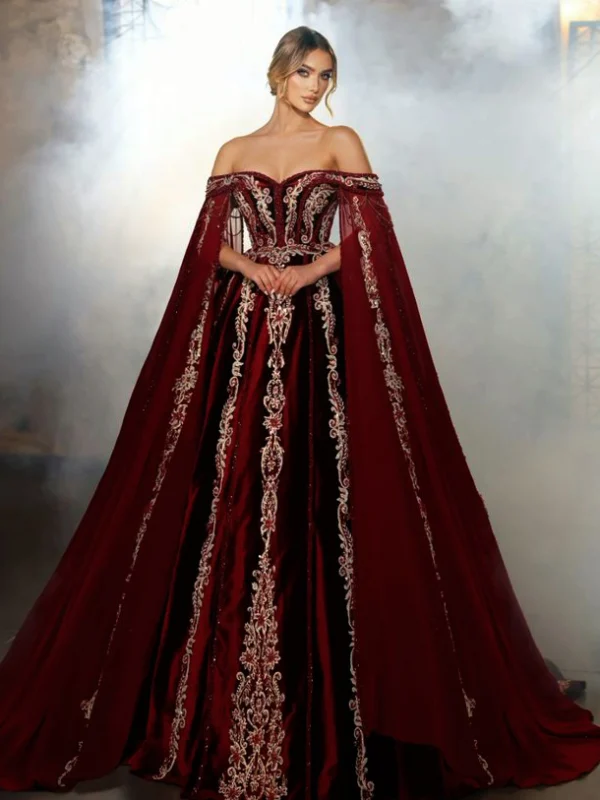
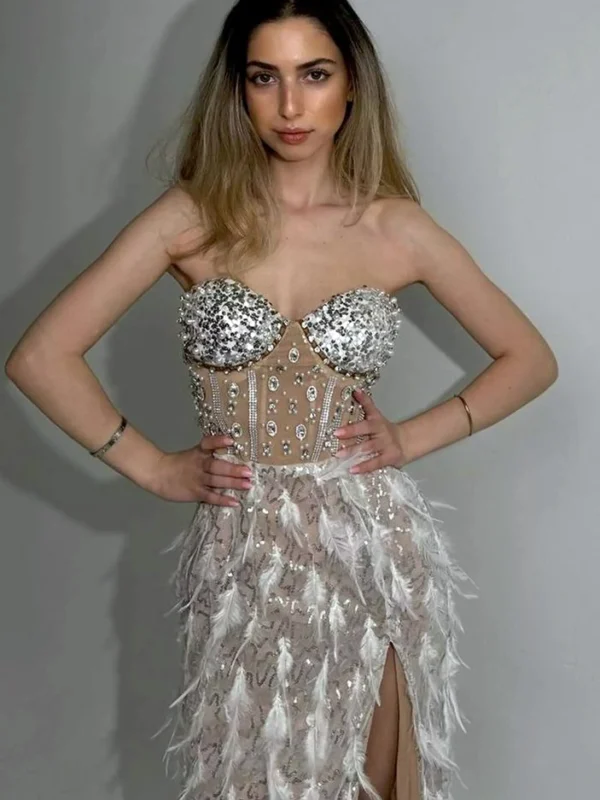
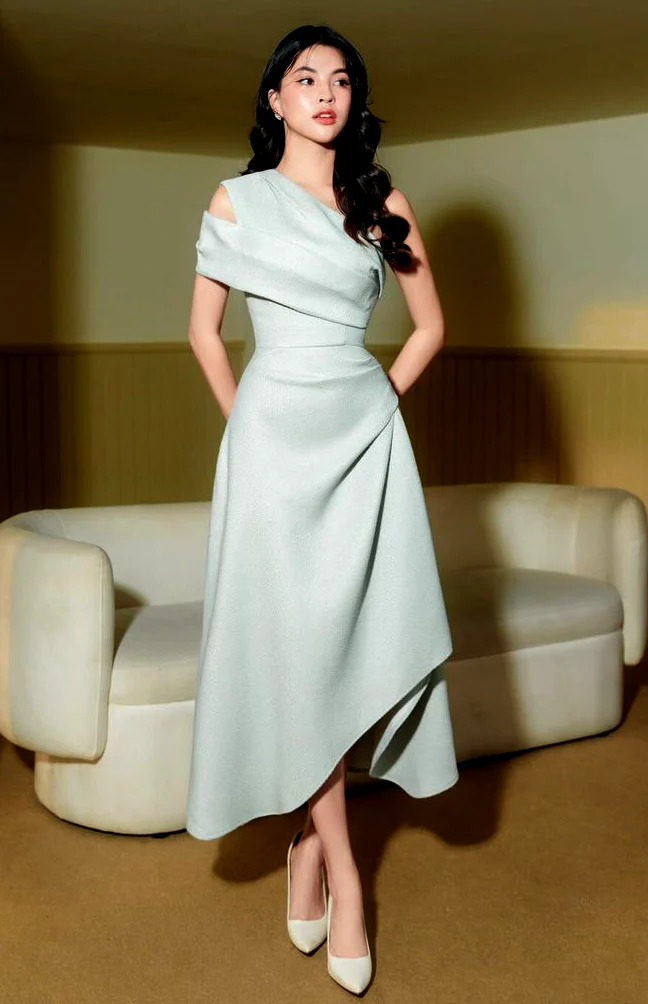
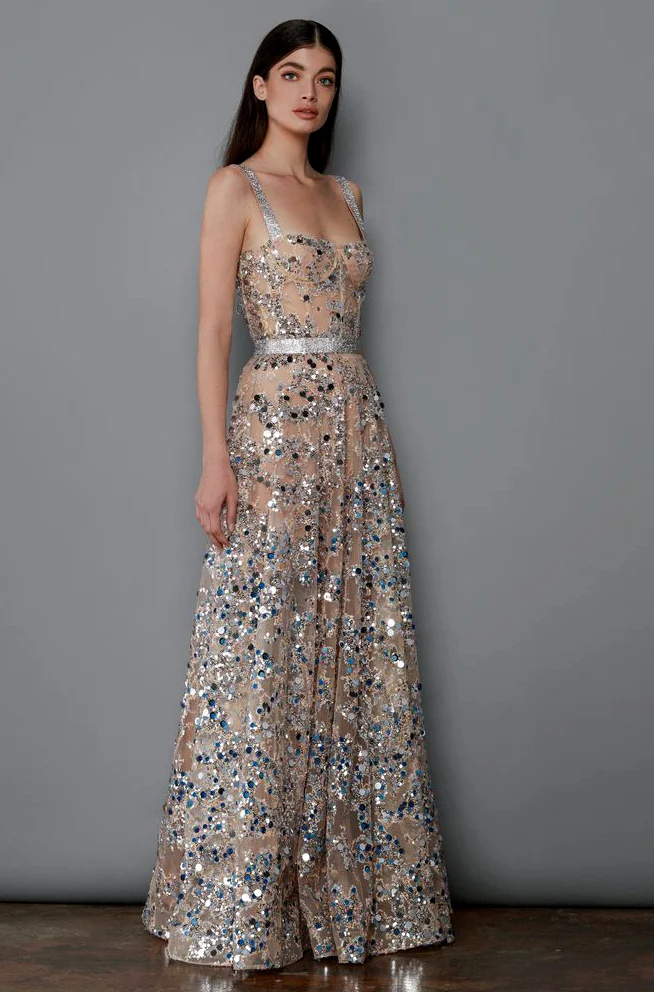
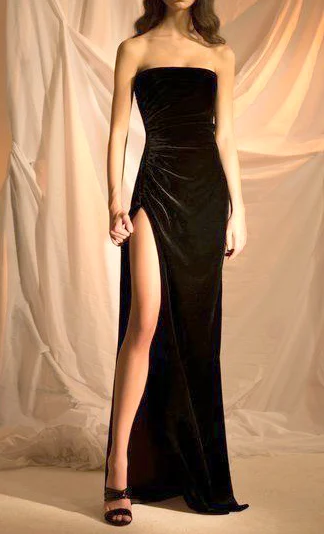
A vintage evening dress may interest you for two different reasons: you want an older original with a traceable history, or you want a personal retro effect through shape and accessories. Decide which goal matters first. The four references show a pale asymmetric midi form, a reflective long patterned dress, a narrow black strapless option and a burgundy arrangement with translucent-looking sleeves. They offer design comparisons rather than authenticated dates. Use their differences to identify your actual preference before age, condition and possible alterations merge into one vague idea of vintage that leaves the purchase questions unresolved.
Seek the vintage evening dress as an original or style idea
If you want an older original, ask for traceable information about the actual piece. What is known, and what remains an assessment? A general description alone cannot explain a dress’s history. If design is the main attraction, describe it directly: a defined middle, asymmetric shoulder or narrow dark skirt area. You can then compare newer models without assigning an invented age. Both are possible personal choices, but they lead to different questions about an offer. Separate them before searching so that the decision is guided by what you actually want to own and wear.
Choose a leading detail instead of claiming an entire era
Take two references as a contrast. The pale midi form works through diagonal areas and a quiet skirt, while the burgundy option combines sleeve pattern, side gathering and a smaller round bag. Which feature would you actually like to wear? No precise era attribution is needed to answer. Write one sentence about the effect you want and leave the other pieces aside initially. A vintage evening dress then becomes a more understandable selection. If an original is unavailable in the right size or condition, you still know which shape idea to pursue through another solution.
Assess condition and preferred size separately
Ask to see front, back and important detail areas of the actual piece. Look at hem, underarm area, fastening and existing decoration among other features. Ask about previous repairs and whether visible changes are described. Check measurements afterwards and try the garment where possible. Beautiful condition cannot answer a size question, while suitable width does not make unexplained damage unimportant. Record both findings separately. This distinguishes a small difference you deliberately accept from a problem whose solution you merely hope for, and makes your decision about the real garment rather than its most flattering photograph.
Discuss alterations concretely before buying
If an adjustment is needed, clarify it on the actual dress and explain the intended finish. Shortening can change the proportion of a long patterned area, while a shoulder change affects the upper line. Ask which interventions are possible and what result can be agreed. Do not assume every older piece should be altered freely or every newer shape is simple to adjust. An original vintage evening dress may appeal precisely because of existing details. Decide whether you want to preserve them or whether another size or a newer interpretation would fulfil the goal more clearly.
Compare midi and long skirt areas for the occasion
The pale reference reveals shoes and a diagonal skirt finish more clearly than the long versions. This supports a specific comparison: do you want a visible shoe area or a longer continuous surface? Walk and sit in the intended shoes rather than judging only the photographed stance. Assess the leg openings in the black and burgundy directions separately. Their effect need not be adopted with a particular length. You may prefer similar upper design with another skirt when that combination better suits your route and evening. Keeping footwear unchanged helps the hem comparison remain clear.
Treat jewellery and the bag as another design layer
The strongly reflective long dress already contains considerable visible surface detail. Compare it with quieter additions first. The black reference leaves more quiet space for a deliberate smaller accent. If a personal retro effect is the aim, try existing jewellery and a suitable bag individually before shopping for extra elements. A vintage evening dress does not automatically need accessories marketed as historically appropriate. What matters is the combination you actually see and enjoy. You can establish a clear emphasis without turning every photographic idea into an increasingly elaborate set of additions that obscures the original preference.
Assess sleeves and the upper edge during normal wear
The burgundy option frames the arms differently from the black strapless dress. Compare those differences with your planned hairstyle and outer layer. Raise your arms, reach for a bag and sit, then inspect the position of edges and decoration. If an actual older piece appears fragile or its condition is unclear, discuss use with the knowledgeable person assessing it before such a trial. A new retro interpretation also needs size and construction checked on the real model. The effect you want should work with ordinary posture rather than only an arranged photograph.
Clarify the real care requirements before deciding
Using older wedding dresses as its specific example, the V&A explains that old stains may be difficult or impossible to remove and identifies textile conservation advice where appropriate. That is no cleaning promise for another evening dress. Count on necessary treatment only after the particular case has been assessed. Read existing care information and ask about unclear areas. Do not buy solely on the assumption that an unwanted stain will certainly disappear. Decide whether you accept the actual condition or whether another solution offers the style idea with fewer unanswered questions. Age alone cannot supply a care instruction.
Complete the decision with a whole outfit
Build at least one complete combination: dress, underlayers, shoes, bag and jacket where needed. The V&A advice on older wedding dresses offers a narrowly scoped care comparison, while GINETEX symbols help interpret existing labels. Our corset-look evening dress guide compares upper lines, and the ruffled evening dress selection explores other volume. Choose a vintage evening dress through a clearly named goal and answered product questions. Record which history is documented and which effect you personally create through styling, keeping the two contributions understandable within the final choice.
A vintage evening dress may appeal through documented history or a desired style effect. Separate those goals and compare condition, shape and alterations.
Frequently asked questions
Do the reference photographs establish garment age?
No. They show visible design rather than authenticated dating or provenance. Age information must relate to the actual piece.
What should I clarify first about an original?
Ask for traceable information about the piece, condition and previous alterations. Assess these separately from the silhouette you want.
Can a new dress create a retro effect?
You can develop a personal retro idea through shape and accessories. That does not make a new garment an older original.
Should I buy on the assumption that a stain can be removed?
Do not count removal as certain. Clarify the actual condition and any appropriate specialist assessment before making the purchase depend on it.