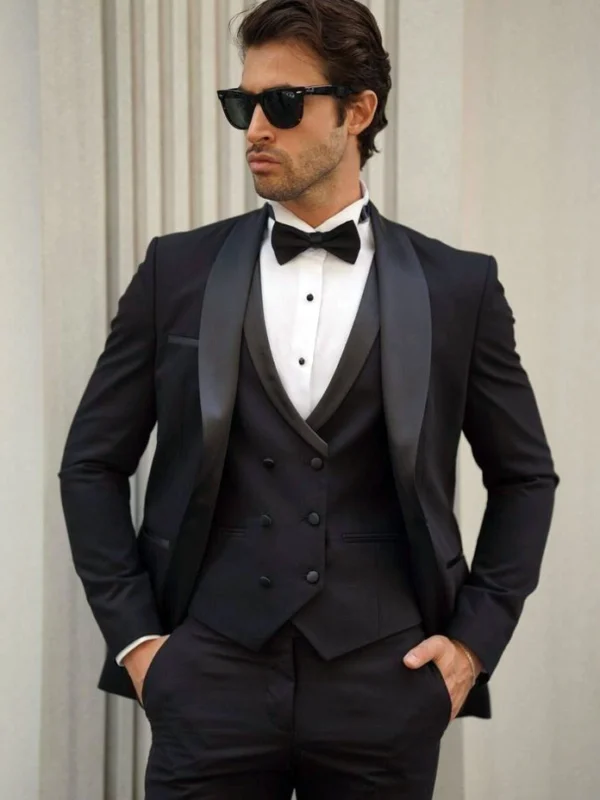
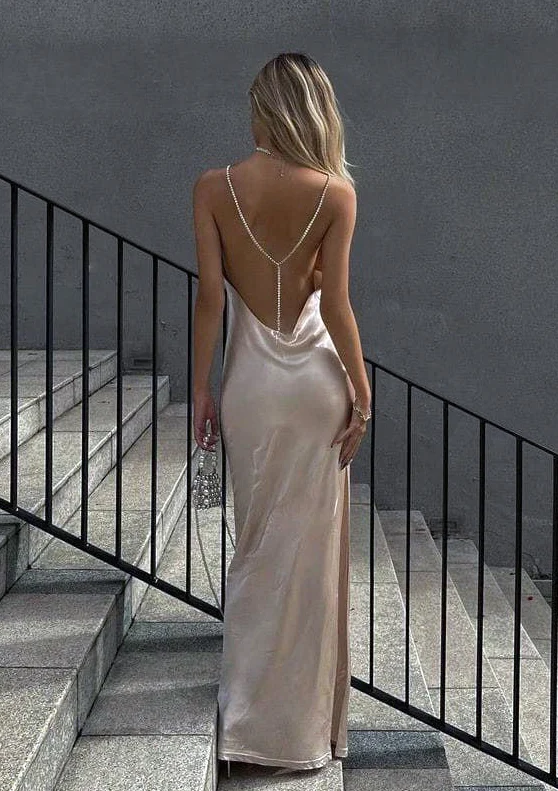
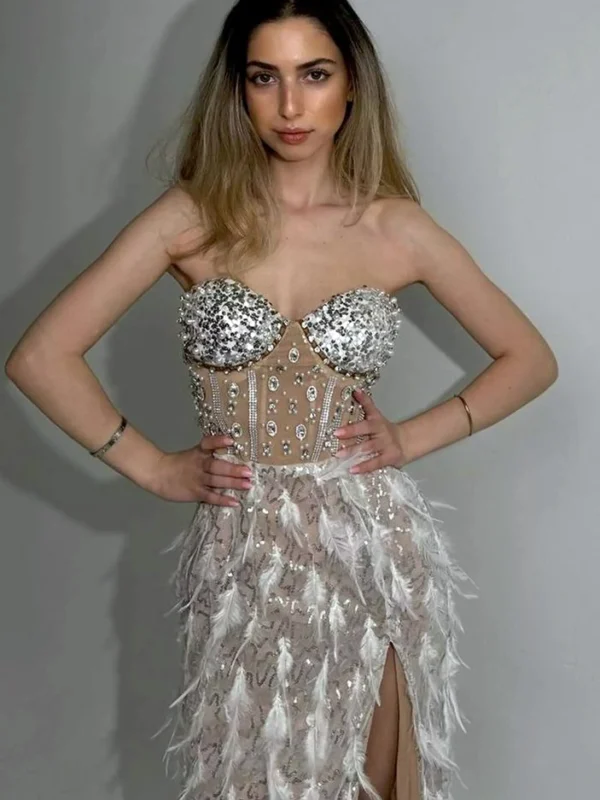
A summer party dress often has to cover several situations in one day: travelling to the venue, meeting people outside, eating at a table and going home later. The key question is therefore more than which dress looks summery. It is how a particular cut works with your actual plans. The four references here range from a pale blue dress with an open shoulder line to a short black dress with long sleeves. They offer different approaches to colour, length and coverage. A photograph cannot establish fibre content or how warm the finished garment will feel. Those questions belong to the actual product and your fitting.
Choose a summer party dress around the venue
Start with the ground and the seating. A garden celebration on grass raises different shoe and hem questions from a party in a paved courtyard. Find out whether guests will use a long table, tall stools or picnic blankets. A dress that appeals to you in the mirror should also give you the coverage you want when sitting down. Include the distance from transport to the venue. If you will walk much of the way, take a real walking trial in the complete outfit. That tells you more than assigning automatic comfort to a particular dress shape.
Compare lengths through ordinary movement
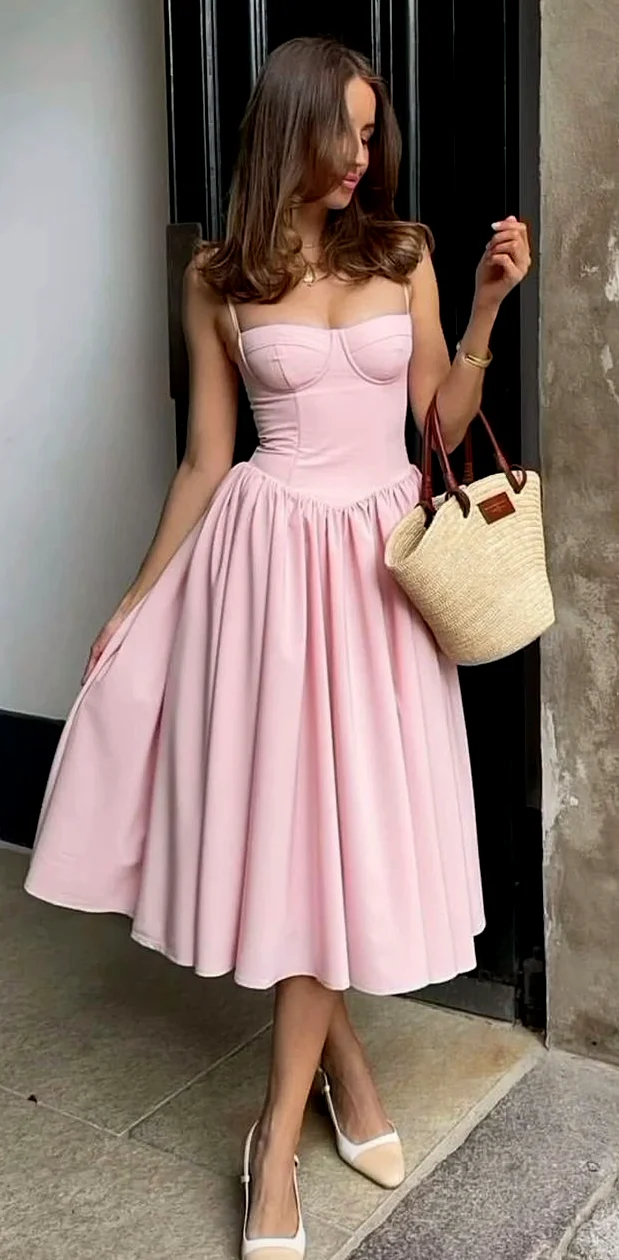
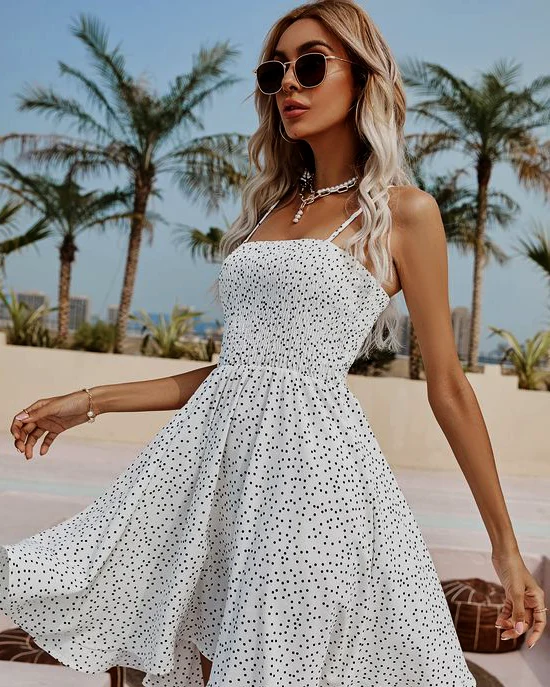
The pink reference has a skirt ending clearly below the knee, while the pale spotted dress and the black model are shorter. None of these lengths is inherently the correct choice. Sit on a chair, walk a few steps and bend as you would to pick up your bag. Decide what coverage you prefer. With a longer skirt, also check its clearance from the ground in the shoes you intend to wear. If changing hem heights interest you, the high-low party dress guide adds asymmetrical options to the comparison. Ask to see any proposed shortening before agreeing to it.
Match the shoulder line and sleeves to your plans
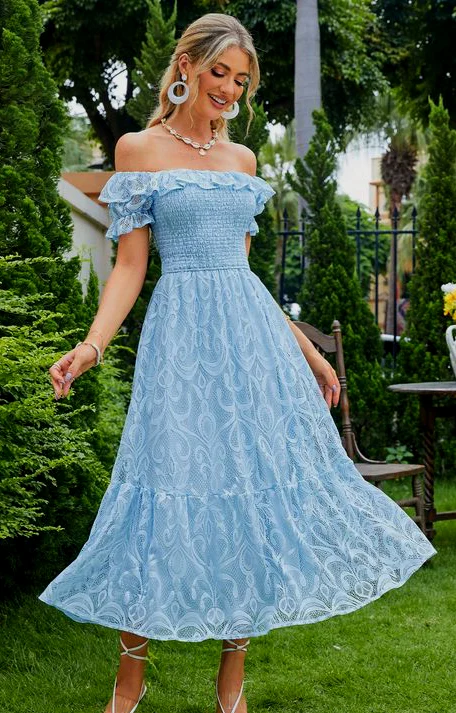
The pale blue dress has details resting beside the shoulders; the black dress covers most of the arms. Their visual effects differ, but the photographs cannot establish the experience of wearing them. With the open neckline, try a normal greeting and reaching for your bag. With long sleeves, bend your elbows and sit as you would at the table. Consider whether you may want another layer later. That piece should work with the dress without forcing you to reset the neckline each time. Bring it to the fitting and try it properly rather than holding it briefly against the outfit.
Do not infer the fabric feel from the colour
A pale dress does not prove a thin construction, and a dark one is not necessarily heavy. Ask about composition, lining and the number of layers, then handle and try the actual garment. Keep it on long enough to notice edges or seams that bother you. If comparing several dresses at home, use similar conditions rather than assessing one immediately after putting it on and another after hours of wear. Your response to the finished garment is more useful here than a universal comfort promise attached to a fabric name. Record questions that need another trial rather than assuming them away.
Connect colour and pattern with the invitation
The references show light blue, pink, small dark spots on a pale ground and black. Consider those surfaces first without conspicuous jewellery. The spotted dress already has a distinct pattern, while the pink dress relies more on its continuous colour and spreading skirt. Add a bag and shoes afterwards. If the invitation mentions a colour restriction or dress code, clarify it with the host. A photograph in a summer setting does not establish suitability for every celebration. A dark dress can still suit your preferences and the event. Let the actual occasion guide the choice instead of treating seasonal colour habits as rules.
Try the shoes over the whole route
The black outfit includes pale high-top trainers; the pink outfit has pale pointed shoes. These are specific styling references, rather than instructions. Select footwear for the ground and invitation, then walk in it with the dress. Watch how the skirt moves and whether you keep wanting to hold the hem on stairs. If you plan to change shoes later, compare both pairs with the garment. A change in heel height may alter ground clearance. Also plan where the unused pair will stay during the party. A proposed change is more useful when its practical details fit the evening.
Give the bag and jewellery a job
Your bag needs to do more than look good beside the dress. Check space for your phone, keys and the things you need for the return journey. Hold it normally and see where it rests against the outfit. A swinging side bag behaves differently beside a short flared skirt than beside a quieter shape. Add jewellery one piece at a time. The blue reference already includes a necklace and earrings; you do not need to reproduce both. Choose a focus that works with your hair and neckline. Try sitting with the bag too, so the decision includes its ordinary use.
Plan an extra layer and care for your summer party dress
Try a jacket or another outer piece before settling on the dress. Compare it open, fastened and while sitting. With a long-sleeved dress, check how the two sets of sleeves lie together. For cleaning, GINETEX explains the five textile-care symbol groups; follow the actual garment label. A summer appearance is not permission to wash a dress. For another shape comparison, see the tiered party dress guide, particularly if you are deciding between a continuous skirt and visible divisions. Keep care information specific to your garment rather than borrowing it from a similar picture.
Rehearse the complete outfit once
Set out the dress, shoes, bag and outer layer together. Run through the main transitions: arriving, sitting, standing, spending time outside and travelling home. Record only the points that still need solving. Perhaps a more useful bag, a hem adjustment or a more comfortable jacket is enough; you may not need to restart the entire choice. A good summer party dress, in this context, is one that brings your desired appearance and real schedule together. The photographs offer different starting points. The decision becomes clearer when you test the finished combination as you actually plan to use it.
Choose a summer party dress around the venue, seating and journey home. Test length, sleeves, shoes and an extra layer together.
Frequently asked questions
Does a summer party dress have to be pale?
No. The references include a black dress. Choose colour for the occasion and your preferences, and test the actual garment for comfort.
Which length works for a garden party?
Compare the ground, seating and coverage you want when sitting. The venue alone does not establish a correct length.
Can I change shoes later?
Plan it after trying both pairs with the dress. Check ground clearance if the heel heights differ.
What should I take to the fitting?
Take your intended shoes, underwear, bag and any extra layer you might use.