With strapless wedding dresses, the exposed shoulder line attracts attention, but it is only one part of the silhouette. Straight or sweetheart necklines, bodice support, draping, the waist transition and skirt volume work together. These six images progress from a plain, close-fitting column through a flowing coastal A-line, defined corset bodice, lace-patterned fitted flare and open-back layered skirt to a substantial ball gown.
Rather than sorting them only as romantic or modern, compare support, proportion and use. A strapless bodice should allow movement without repeated adjustment; skirt construction affects walking space, train management and suitability for the venue. Because the images do not establish material composition, comparisons should stay with visible pattern, reflectivity, layering and shape. The aim is not to find an identical item, but the combination of neckline, bodice, waist and skirt that suits the ceremony plan.
An Uninterrupted Line in a Minimalist Strapless Dress
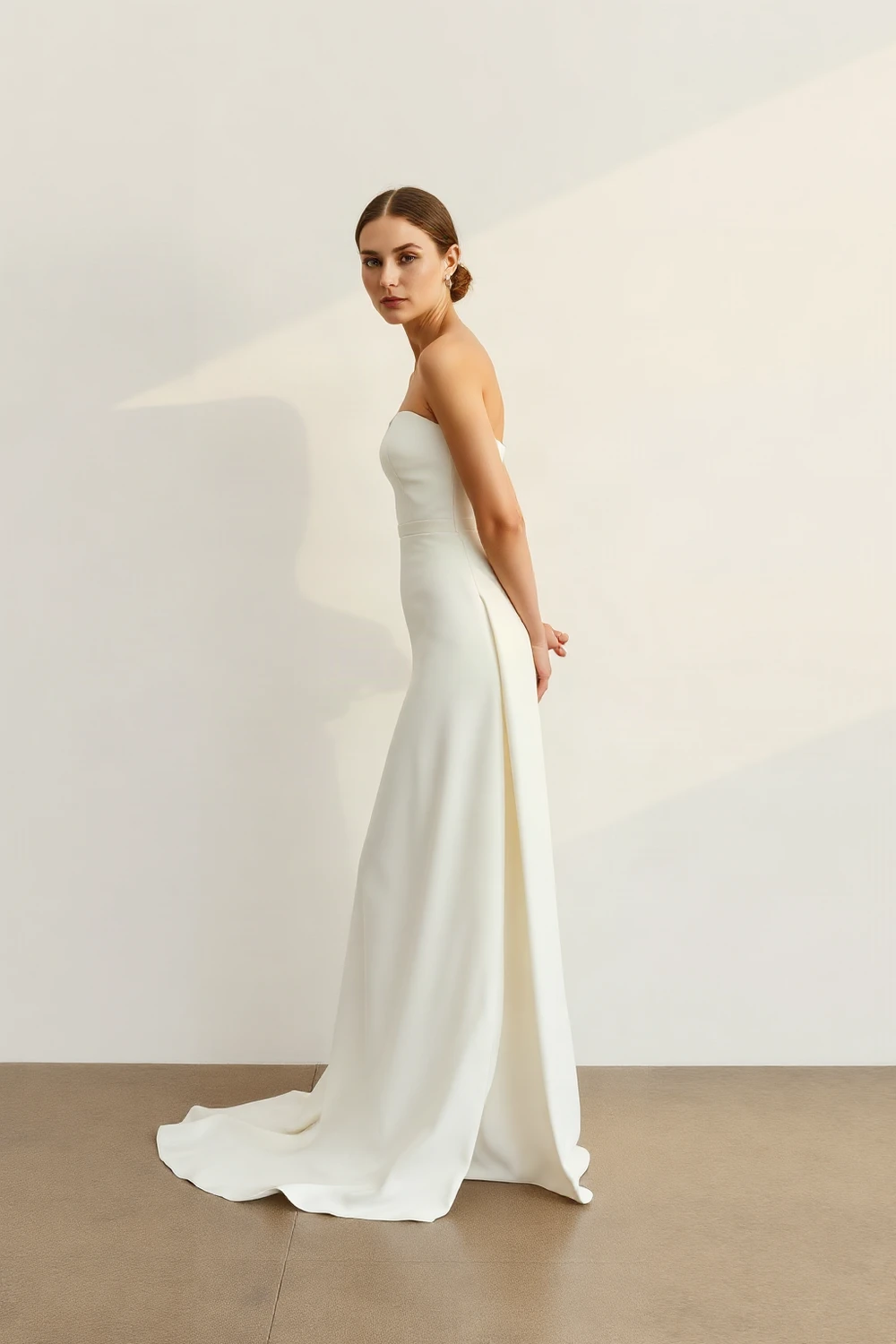
The first image pairs an almost straight upper edge with an unpatterned surface and long, close-fitting skirt, creating one continuous line. Its side angle clarifies the relationship between bodice, waist and hip; a small train completes the outline without major volume. On this restrained surface, tension, seam placement and creasing are highly visible, so fittings should include a side view, sitting and several full steps, not only a still mirror pose.
This concept may suit limited skirt volume and provides a neutral setting for accessories, but minimalism makes fit more important, not less. The neckline should not gape, slip when the arms rise or create horizontal strain at the hip. Although the short train may be manageable indoors, a long veil would make the clean composition more dramatic. Compare both versions before assuming every accessory preserves its character.
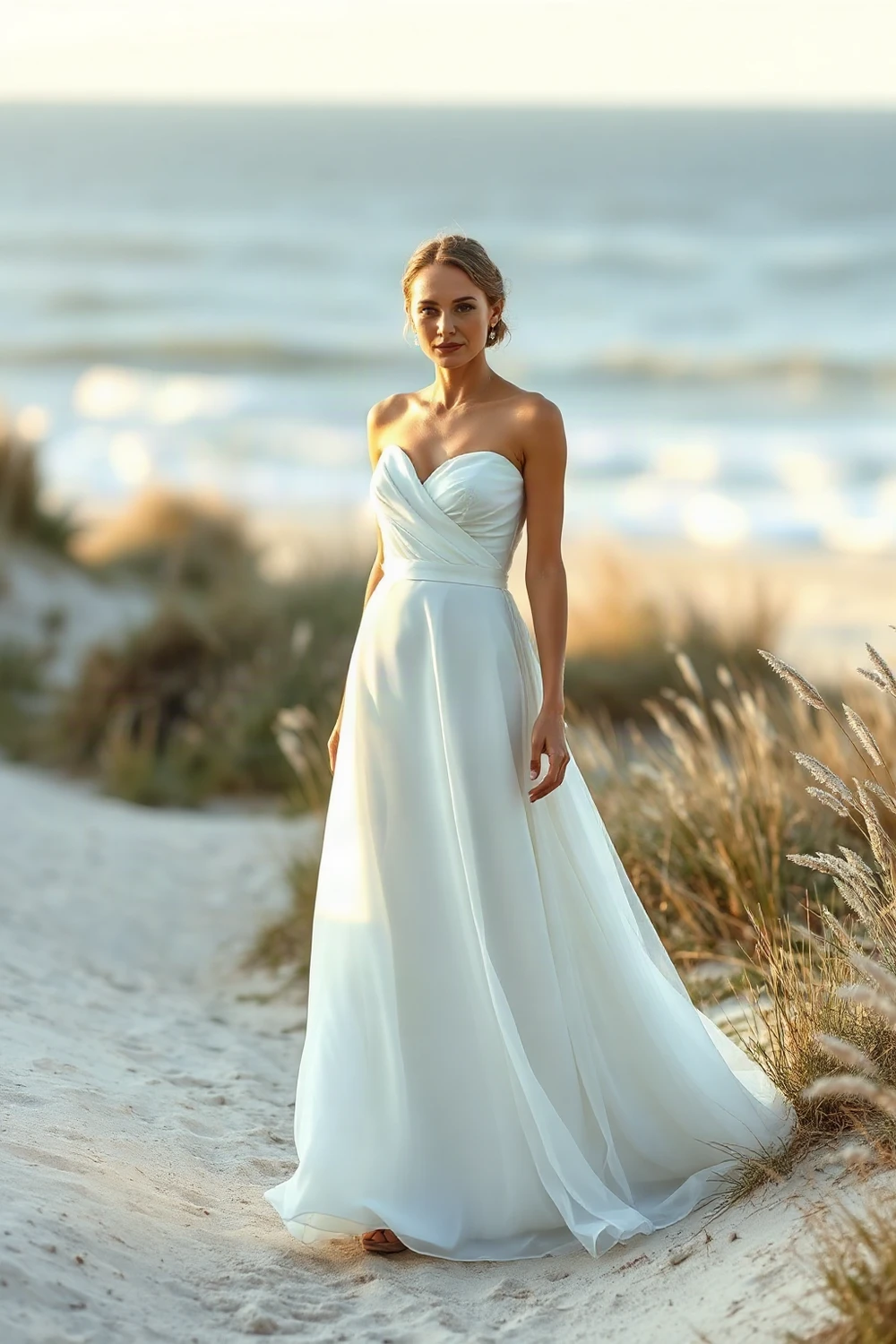
Fluid A-Line Shape with a Draped Sweetheart Bodice
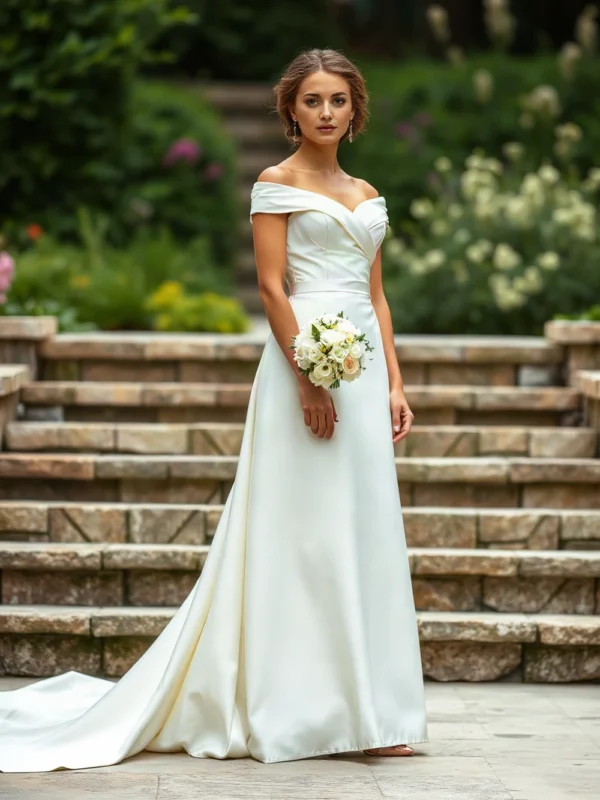
A sweetheart neckline in the second look is defined by soft folds travelling diagonally across the torso. The draping directs attention toward the center and waist, while the A-line skirt widens without clinging to the legs. In the coastal setting, the hem spreads over sand as horizontal bands of sea and grasses frame the vertical figure. Beside the narrow, controlled first silhouette, this one appears softer and more responsive to movement.
For an outdoor ceremony, test practical conditions as well as atmosphere: how outer layers react to wind, whether the hem drags over sand or grass, and whether the shoes keep its length safe. Diagonal folds can diffuse minor creasing, but off-center movement makes imbalance visible. Check the upper edge while moving the shoulders, and confirm that the defined waist remains comfortable when seated.
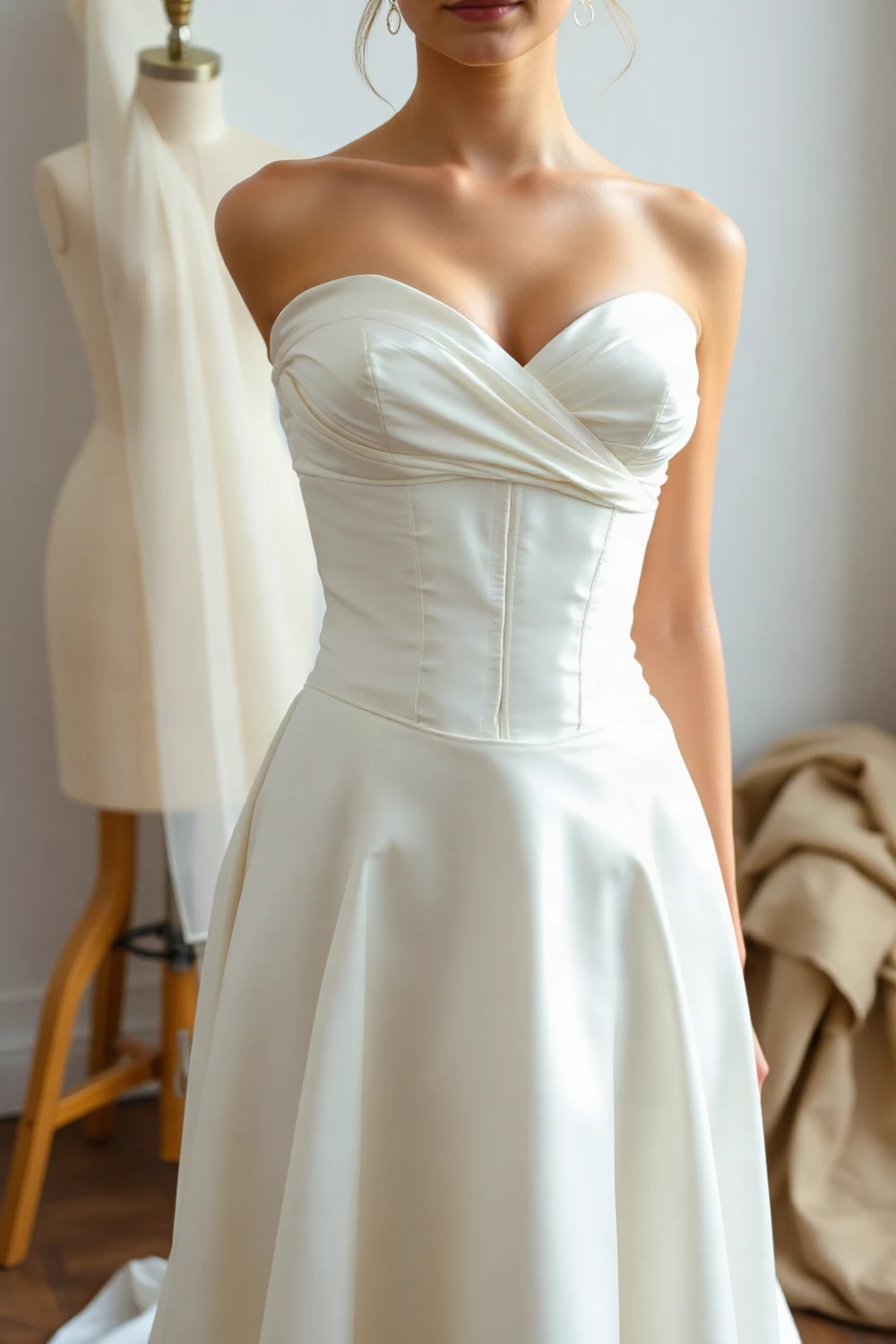
Balancing Corset Seams with Crossed Draping
The third image’s close crop shows visible support lines as design. Crossed folds frame a soft sweetheart neckline, while vertical seams on the extended bodice give the torso a defined direction. A curved lower boundary controls the transition from corset-style section to expanding skirt. It is more structured than the softly wrapped beach bodice, yet more detailed through the torso than the straight-necked ball gown.
Security in a standing pose is not enough. Sit, lean forward, lift the arms and walk for several minutes to observe the upper edge, seams and lower corset boundary. Vertical lines should remain centered and symmetrical, and the crossed fold should not twist aside. The open neckline leaves room for a necklace, but the draping is already a focal feature; simple earrings can complete the look without obscuring or competing with its construction.
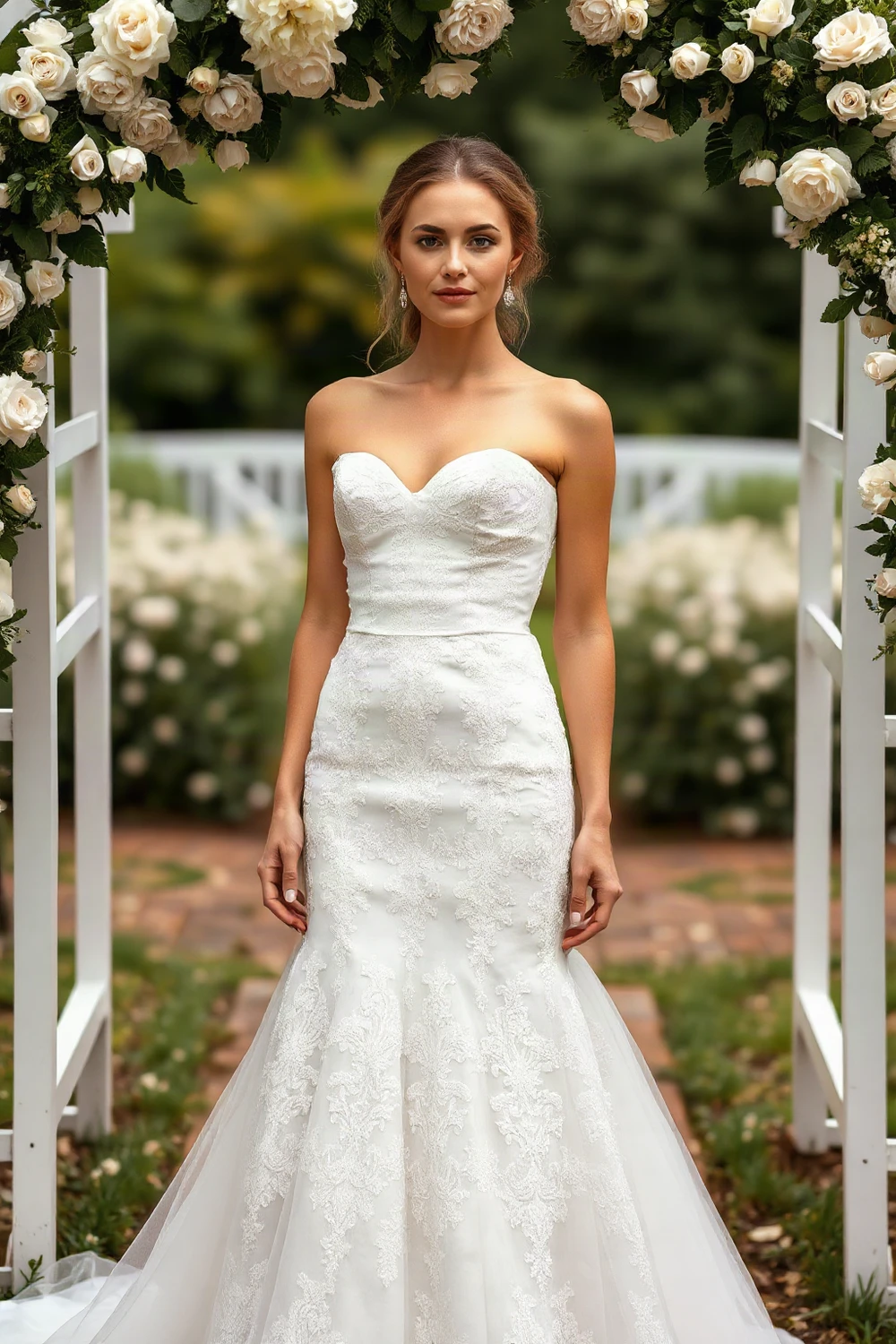
Lace Pattern and a Low Skirt Flare
The fourth dress joins a sweetheart neckline to a close-fitting body covered in visible lace-like motifs. It follows the hip and upper leg before widening lower down. A floral garden arch echoes the pattern, while the centered composition clearly shows the waist ratio and flare point. Unlike minimalist concepts where shape carries the emphasis, this dress divides attention between silhouette and surface.
The flare point is both practical and visual. A higher release can soften the outline and provide more stride room; a lower one lengthens the narrow section and strengthens definition. Test walking, sitting and stepping upward. In a richly floral setting, consider the combined density of veil edge, bouquet and venue flowers; simpler accessories may restore balance. Both sides of the sweetheart curve should remain even, and the upper edge stable during reaching or turning.
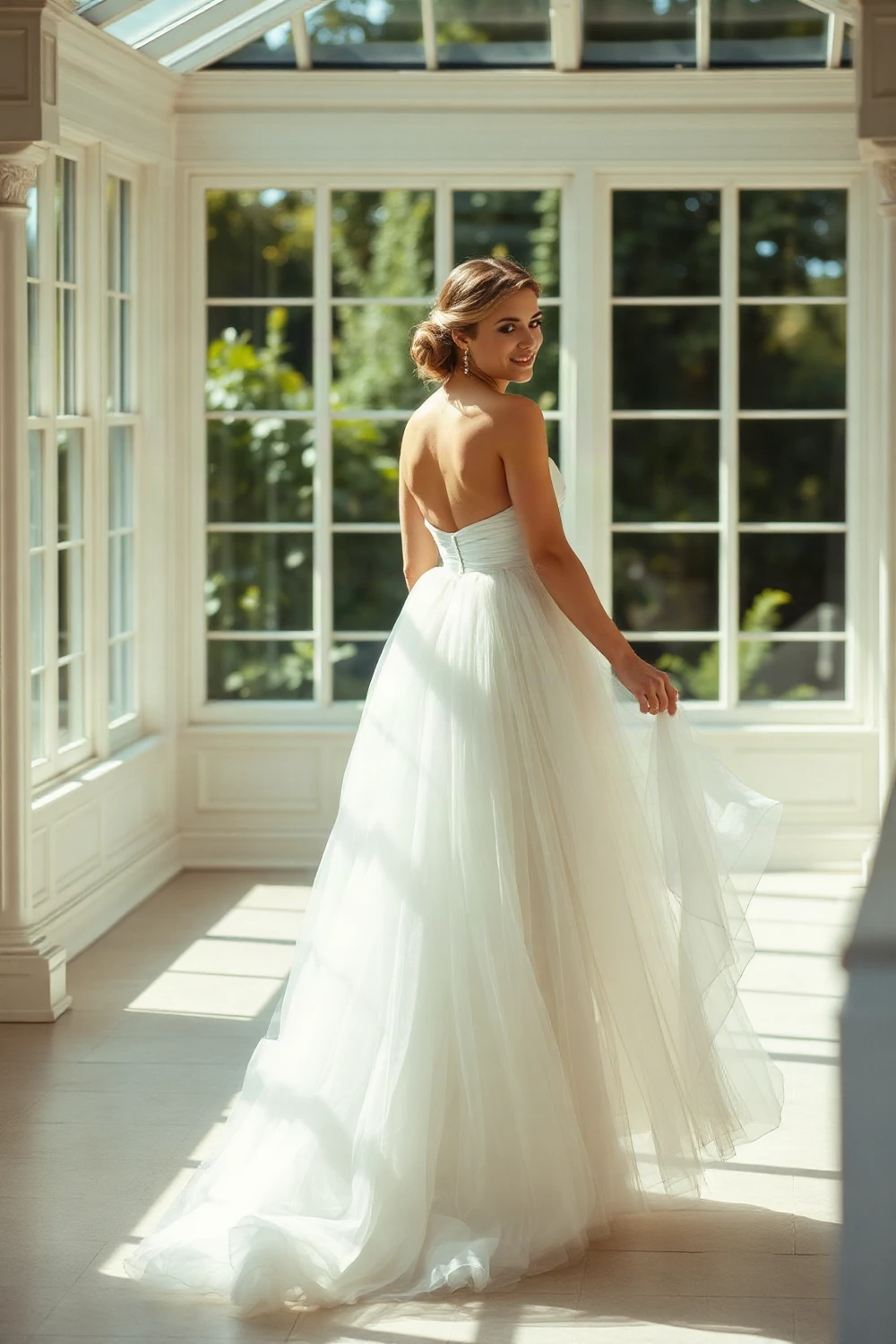
Open Back and Airy-Looking Layers
The fifth photograph centers the back. A low strapless back, horizontal gathering at the waist and broad translucent-looking layers create light-looking volume. Window sunlight visually separates the layers, while the lifted outer section reveals the skirt’s response to motion. The image shows how the back edge and closure can shape the silhouette as strongly as the front neckline.
Front fit alone is insufficient. Turning, bending and reaching forward reveal whether the upper edge gaps. Internal support should work without becoming visible, and the gathered waist should not cut harshly across the body. Although the skirt appears more fluid than the ball gown, its train and multiple layers still need space. If using a long veil, photograph it from behind to check whether it conceals the open back or overlaps excessively with the skirt.
A Straight Neckline Above a Structured Ball Skirt
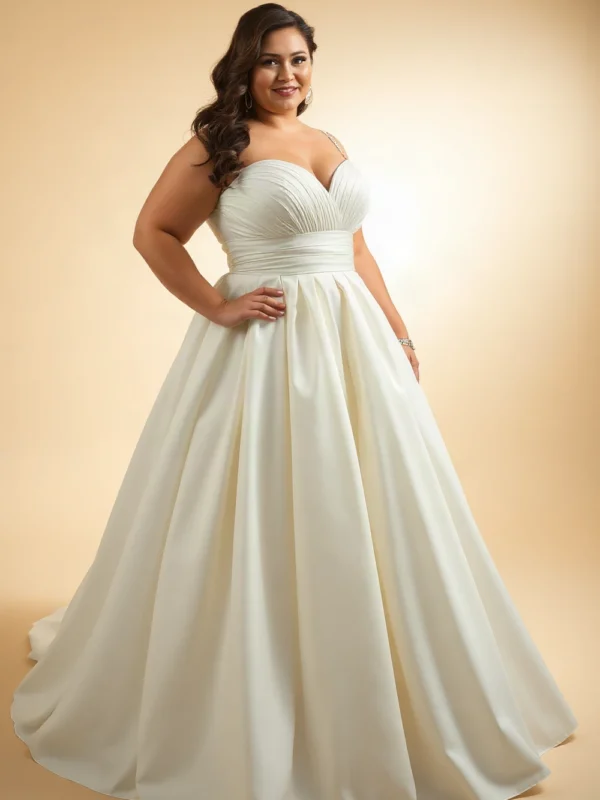
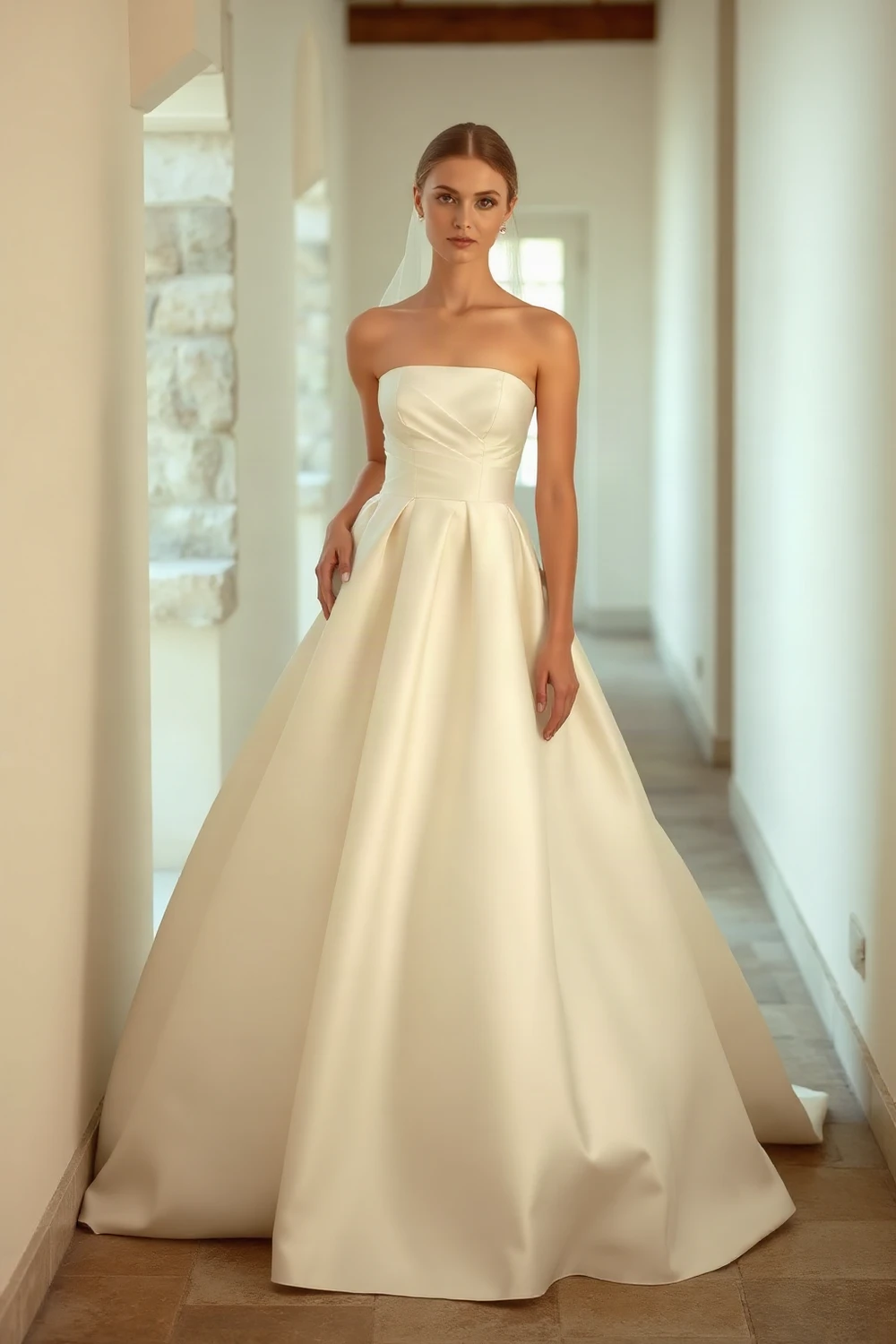
The sixth concept sets a straight strapless neckline above a ball-gown skirt formed by broad waist pleats. A slight diagonal fold directs the plain bodice, while the defined waist separates a compact upper area from substantial lower volume. The narrow corridor emphasizes the width, showing both the shape and the physical space it may require. It is the strongest horizontal counterpoint to the first dress’s narrow vertical line.
The effect is ceremonial, but planning should cover doorways, chair spacing, a vehicle, stairs and the dance floor; practise turning and sitting in the full shape. Depending on individual proportion, the large pleats may define the waist or shorten the torso. A plain surface reduces pattern but makes light and folds more prominent. Balanced earrings or a simple veil at the back can retain the open shoulder line without adding another large competing element.
Choosing among strapless styles involves more than preferring an exposed shoulder line. A plain bodice offers continuity; diagonal draping adds softness; vertical seams give definition; lace-like pattern brings surface depth; an open back introduces lightness; and broad pleats create ceremonial volume. The best balance combines stable upper structure, a proportionate waist transition and a skirt manageable in the venue.
At fittings, sit, walk, turn, lift the arms and review photographs from behind. Retest the dress with the intended shoes, veil and support layer to confirm neckline position and hem length. Use these images as comparative ideas about how details interact, not proof of particular materials or available products. This keeps the decision focused on movement, proportion and the celebration’s practical conditions.
Compare minimalist, draped, corseted, lace-patterned and layered strapless wedding dress styles through neckline support, waist transitions, skirt volume and their relationship with the setting.
Frequently asked questions
How can I tell whether a strapless neckline fits correctly?
The edge should contact the body evenly without gaping and should not slip when the arms rise. It should also avoid being pushed upward or causing restrictive pressure while seated.
Does a straight or sweetheart neckline look more minimal?
A straight neckline usually creates a cleaner, more graphic line. A sweetheart curve defines the bust more visibly and becomes softer and more detailed when combined with draping.
How should I compare an A-line skirt with a fitted flare?
An A-line widens gradually from the waist and generally leaves more room around the legs. A fitted flare defines the hip and thigh more closely, so walking, sitting and climbing steps should be tested.
What veil works with a lace-patterned strapless dress?
A plain-edged veil can reduce competition when the dress already has dense motifs. If the veil is patterned, compare motif scale, placement and how much of the bodice and back it covers.
What should I check at a venue when considering a strapless ball gown?
Review doorway width, chair spacing, vehicle access, stairs and dance-floor room. Test not only the front hem but also the skirt’s side width and the space it occupies behind.