A puff-sleeve evening dress places a visible shape beside the shoulders. The useful question is not simply how large its sleeves appear in a photograph, but where their volume begins, how far it extends and which neckline sits between them. These references range from a pale long dress through pink and green to a short black comparison. They help you make a specific choice: should the sleeves lead alone, work with a wide skirt, or add shape to a quieter bodice?
Choose a puff-sleeve evening dress through its whole outline
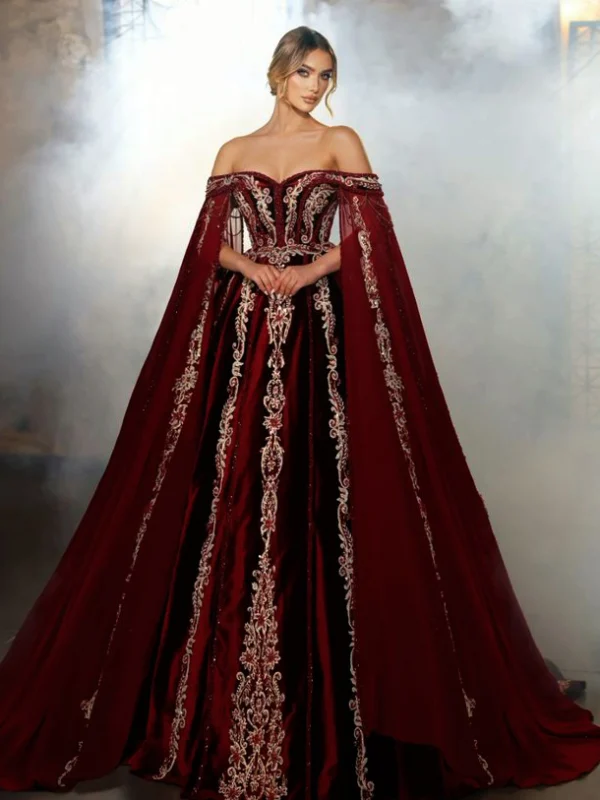
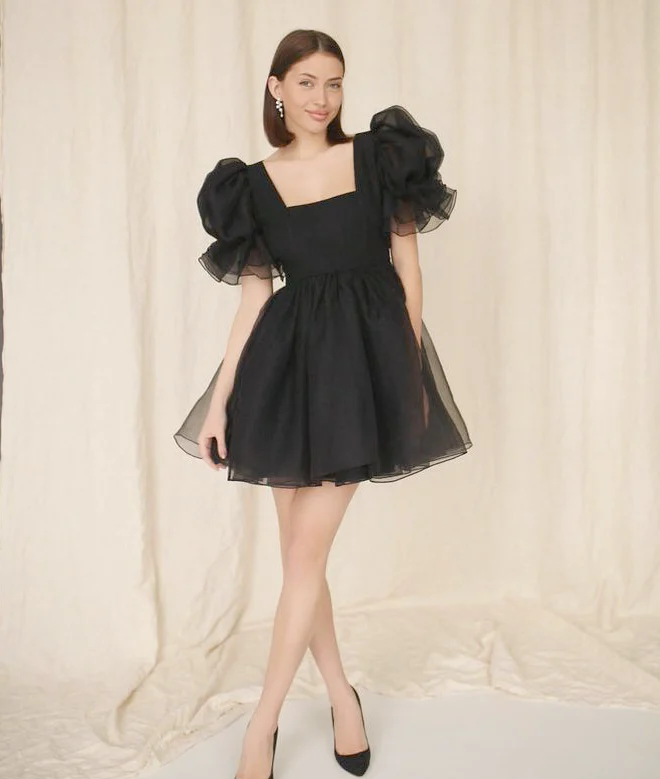
Start with the complete outfit viewed from an ordinary distance. Follow its outside line from shoulder to hem. The green reference places large rounded sleeves beside a deep neckline and a widening lower section. The black dress ends much earlier. These are two different distributions of surface, although both have pronounced sleeve volume. Decide which overall outline you want for your occasion before comparing close details or choosing a particular colour.
Then describe the sleeve separately. Do you like its roundness, its length, or mainly the emphasis at the shoulder? A precise answer helps you find alternatives. Liking the sleeve does not require copying the photograph’s colour and skirt as well. You might write down short rounded sleeves with a narrower lower line. This creates a choice you can test, rather than a growing folder of attractive pictures whose differences become difficult to explain later.
Compare where sleeve volume starts and ends
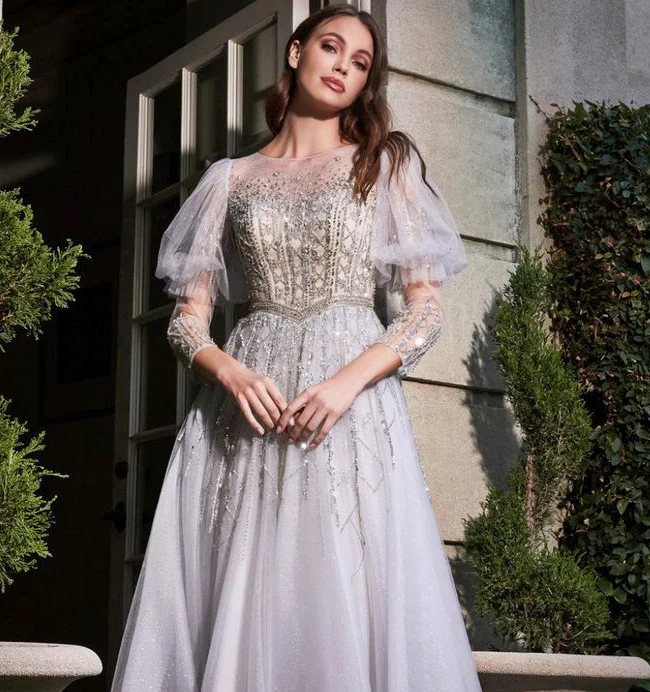
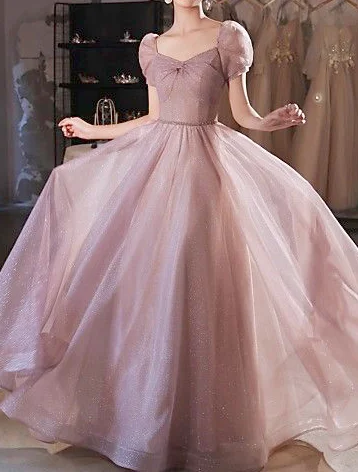
The pale model has a translucent rounded upper section above a more densely patterned forearm area. The pink reference has a short sleeve ending near the upper arm. They raise different questions: do you want a distinct shoulder shape, or a longer covered arm line as well? Look at both arms resting naturally. A hand placed at the waist changes the visible outline because the sleeve moves with the position of the arm.
Try the actual garment while performing small tasks, such as greeting someone and picking up your bag. Watch where the sleeves settle when you lower your arms again. If you keep wanting to rearrange them, identify the exact area that bothers you and discuss it during the fitting. A photograph confirms neither the internal fastening nor a particular range of movement. Liking substantial volume and finding its suitable execution on your garment are separate decisions.
Choose the neckline and shoulder area together
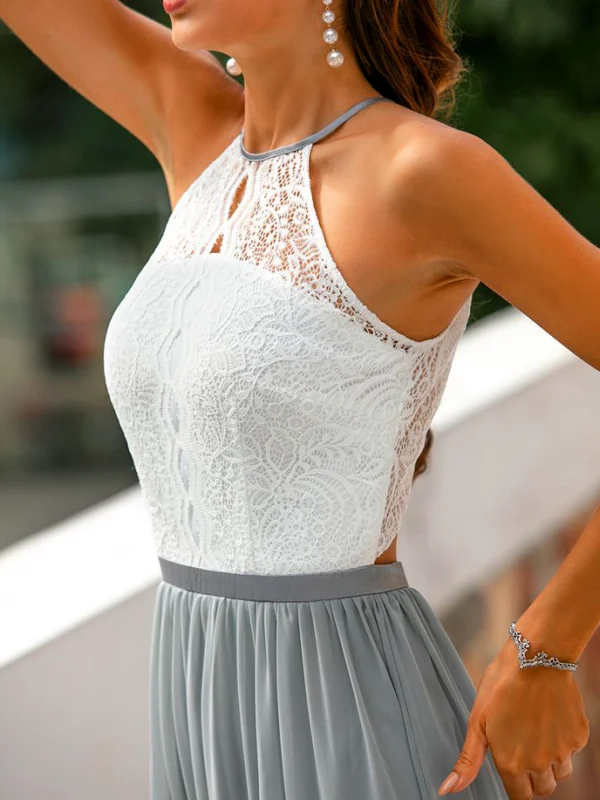
The black dress has an angular neckline that frames the centre differently from the deeper V in green. The pink example has a softer shaped upper edge, while the pale garment includes a higher translucent area above its decorated bodice. Initially move hair and jewellery aside so you can see these boundaries without extra interruptions. Choose according to the open or covered area you personally want, rather than an alleged rule for every wearer.
Plan your actual inner layers at this stage too. Their edges need to work with your preferred coverage. Check the front, side and a slight forward lean. If another layer is needed, try it within the complete bodice rather than holding it loosely alongside. In a puff-sleeve evening dress, a changed shoulder position can also alter the appearance of the upper edge. Assess neckline and sleeves during the same fitting so their relationship remains visible.
Treat waist and skirt as a separate balancing shape
The broad pink skirt spreads considerable surface beneath a defined waist. In the green picture, several gathered lines lead towards the centre while the skirt widens below. The short black reference uses a smaller flared lower section. Compare these with your preferred sleeve size. Enjoying broad shoulders does not automatically mean choosing an equally broad skirt. A quieter lower outline is another specific option you can request and compare from the beginning.
Use two complete garments or sufficiently documented full views rather than holding up bodices alone. Sitting changes the relationship between waist and skirt, and the upper section is often what remains visible at a table. Consider which part of the event matters most to you. A standing reception may put your whole silhouette at the centre of your choice; a long meal might make the neckline and sleeves especially worth considering. Neither preference requires a universal styling rule.
Test jewellery, hair and bag beside the volume
Start with the puff-sleeve evening dress and a single additional accent. Earrings are visible in the black and pink references, while the pale garment already has substantial decoration through the centre. Compare your own earrings with hair moved back, then with your planned hairstyle. Decide whether their outline should remain separate from the sleeve or whether you prefer a quieter continuous area. Either can be deliberate; copying every detail in the picture is unnecessary.
Next choose the bag position. A shoulder strap may sit across or beside the sleeve volume; a handheld bag leaves the shoulder clear but occupies a hand. Try the real bag with what you intend to carry and consider how to free both hands briefly for a greeting. Add another piece of jewellery only afterwards. You can then see whether it supports your chosen outline or simply introduces another competing shape to the outfit.
Check outerwear, seating and hem length together
If you are taking a jacket or coat, try the puff-sleeve evening dress beneath it and inspect the dress again after removing that layer. Notice how the rounded area settles back into the shape you want. Ask about an appropriate solution for this particular garment if its construction is unclear. A loosely placed wrap also changes the upper outline. It is a separate styling choice, rather than an automatically suitable substitute for every other outer layer.
Decide skirt length with your intended shoes. The short black reference is a deliberate comparison with long pink and green forms, not another full-length evening gown. Walk, sit on a chair and stand again without spreading the skirt for a photograph. Check the actual hem position and your desired coverage. For long garments, include the route to the cloakroom and the space between chairs in the fitting, as well as a still front view.
Select between two complete sleeve options
Finally compare two clearly described possibilities: short rounded sleeves with a wide skirt, for example, and larger sleeves with a quieter lower line. Initially keep shoes and jewellery unchanged and alter the main shape alone. Our corset-look evening dress guide offers another bodice comparison; the ruffled evening dress selection provides a different way to consider volume placement. These related details do not all need to appear in one outfit.
Check the care label before transport or treatment as well. The GINETEX symbol guide distinguishes washing, bleaching, drying, ironing and professional textile care. A translucent or heavily decorated sleeve does not supply its own blanket washing instruction. Choose the puff-sleeve evening dress whose shoulder shape works in your complete outfit and whose actual handling you understand. A clearly named advantage for each option makes the final decision more useful than collecting another similar reference picture.
Choose the overall outline of your puff-sleeve evening dress first. Compare sleeve length, neckline and skirt, then test jewellery, bag and outerwear together.
Frequently asked questions
Do large puff sleeves require a wide skirt?
No. Compare your preferred shoulder shape with a quieter lower line too, then choose through the complete silhouette.
Why is the short black dress included?
It demonstrates a different distribution of shoulder volume and skirt length. It is a short comparison, rather than another long evening gown.
What should I check with outerwear?
Put on your actual jacket or coat and remove it again. Inspect how the preferred sleeve shape settles afterwards.
Does a translucent section establish its care method?
No. Read the actual care label; the GINETEX guide explains the different symbol groups.