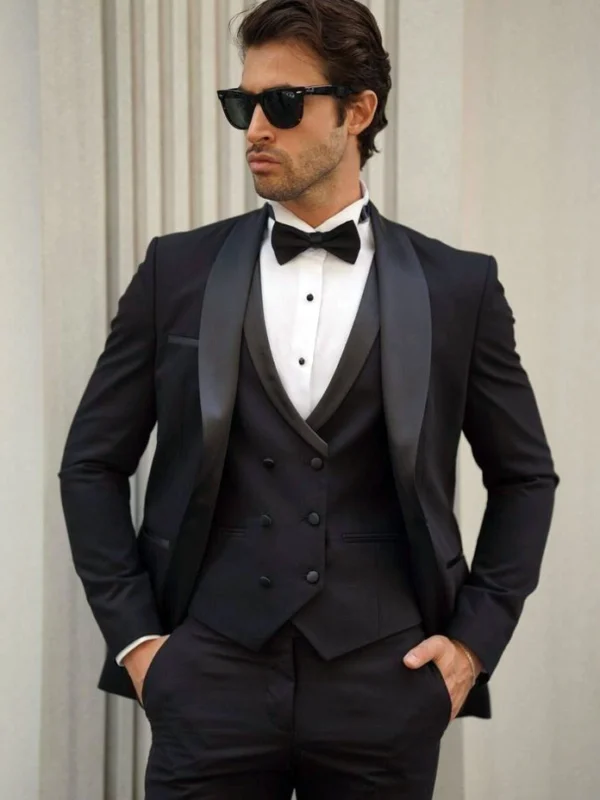
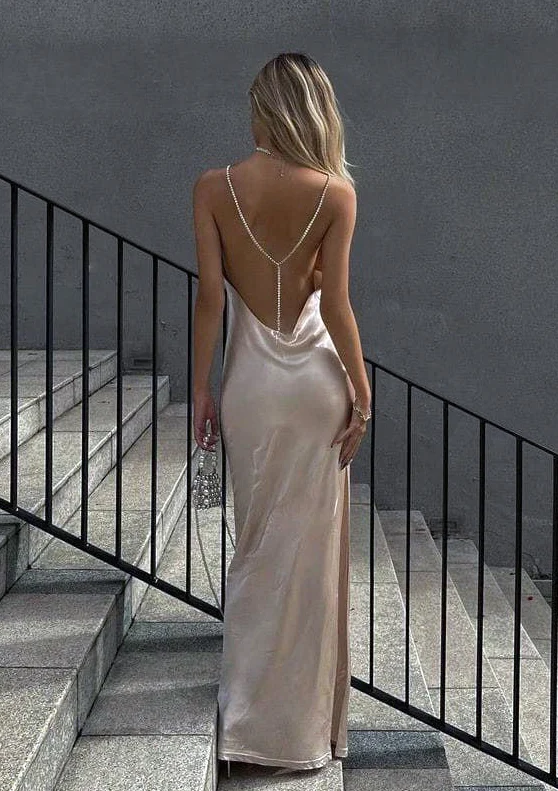
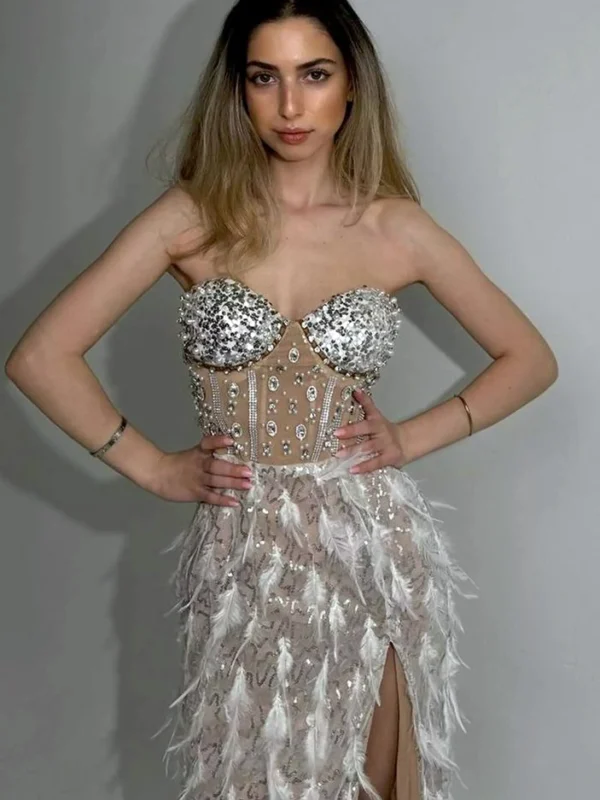
Party outfit ideas become easier to use when you do not immediately search for an entirely new look. Begin with a dress or strong detail you actually want to wear, then add existing shoes, a bag and an outer layer. The four references suggest three directions: a long reflective area, a clear contrast between upper and lower sections, and a dark geometric outline. Two shorter fuller skirts show different versions of the second idea. Use this division as a starting point for real combinations. The photographs supply no fibre information and establish no automatic compliance with a particular invitation.
Build party outfit ideas from the main piece you have
Set out the piece that should lead the outfit. You may own a dark dress already or want to try a longer reflective shape. Write the visible emphasis in one sentence: light through the skirt, contrast at the waist or an unusual shoulder line. Then ask which existing additions you can actually use. A mood board full of different effects is less useful if you cannot put on a complete combination at the end.
Check the invitation, planned activities and your role before settling on the idea. A seated meal and an evening involving several changes of location raise different practical questions. That supplies no fixed rule about dress length; it helps you choose the next test. Compare two shoes on the planned route or fill a bag with the things you need. The styling idea then has a concrete brief before another purchase is considered.
Route one: let a broad reflective area lead
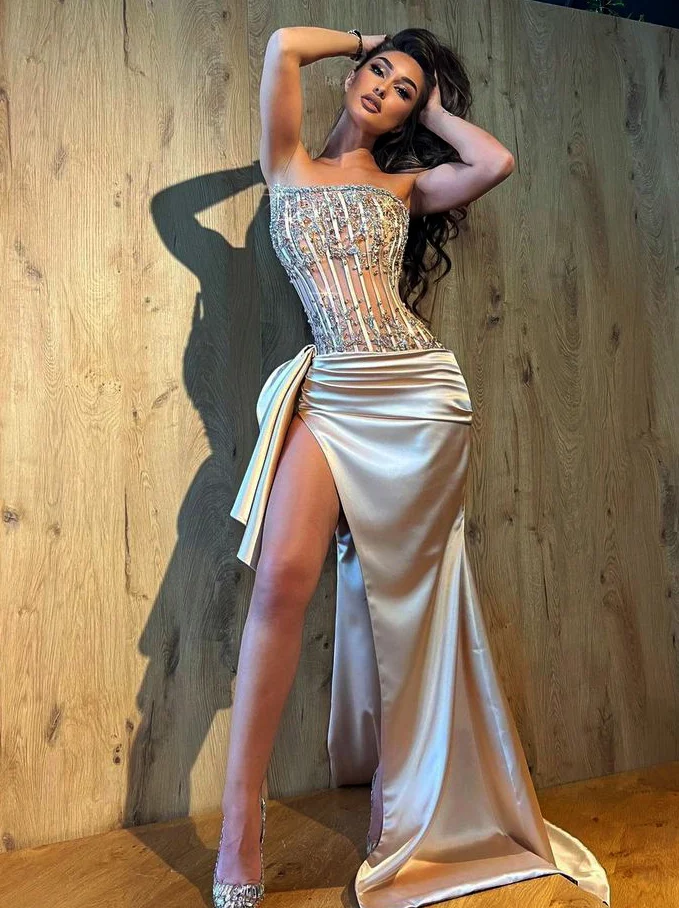
The long silver-coloured reference combines a detailed upper section with a larger smooth skirt area and a pronounced leg opening. Choose which area should be the main emphasis. Begin with a quieter bag and shoes you own, then add a stronger piece of jewellery and look at the complete outfit again. The purpose is not to forbid several accents but to see their relationship deliberately.
Try the opening while walking and sitting without copying the extended leg in the pose. Hold the bag where you will actually carry it. A chain crossing the body can divide the upper construction differently from a bag held at the side. Decide which lines you want visible. The reflective surface establishes neither fibre nor stretch, so ask about the actual product. Check hem length with your shoes instead of adopting the measurement implied by the photograph.
Route two: contrast the upper section and skirt deliberately
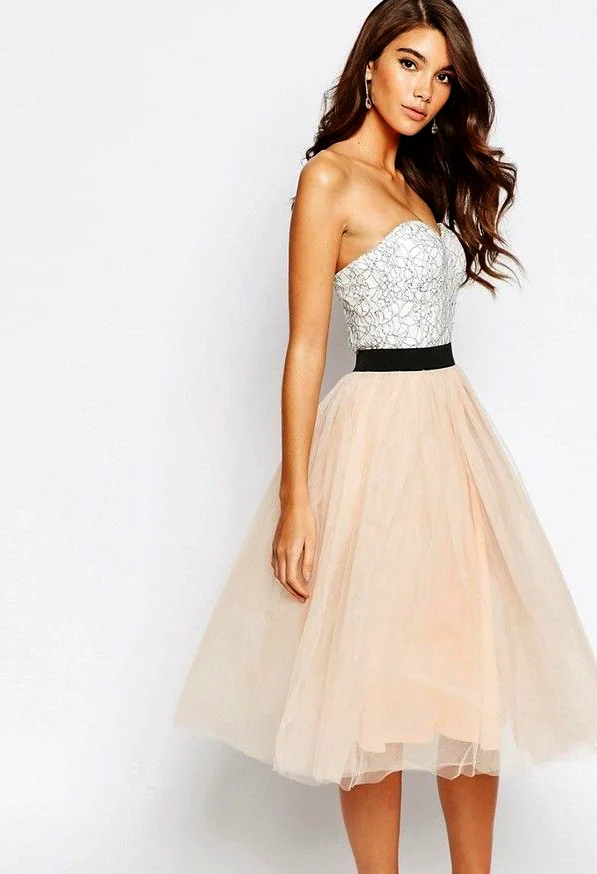
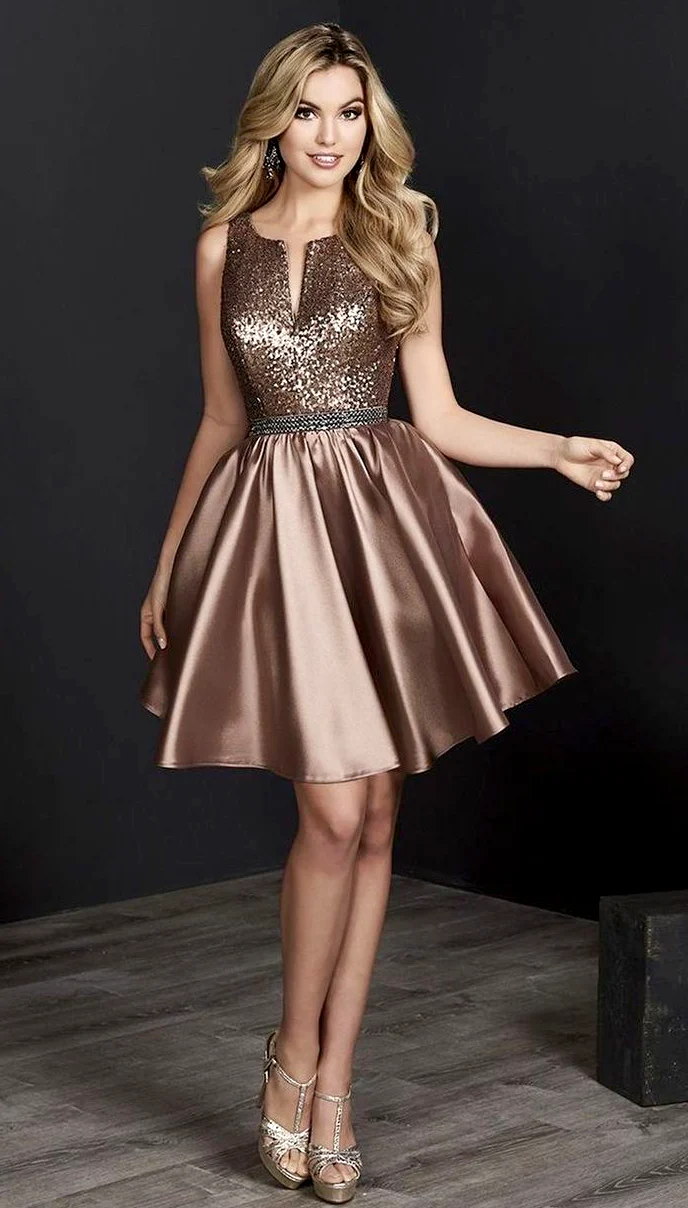
In the two shorter fuller dresses, a clear waist divides different upper and lower effects. The pale example has a more detailed upper area, dark waist band and lighter fuller skirt. The brown-toned version combines a darker-looking bodice with a broad shiny lower surface. Treat these party outfit ideas as colour and shape divisions. The pictures do not establish separate interchangeable pieces simply because the appearance is divided.
Compare waist transition and skirt width without adding another belt first. If you want to use a belt you own, test it afterwards. Does the intended division remain clear, and does it still sit where you like after sitting? Add two existing bags and decide whether another colour contributes or the current contrast is enough. A one-piece solution can create a strongly divided effect without requiring you to buy another top to reproduce the idea.
Route three: emphasise a dark geometric outline
The short black reference places attention through an open area at the upper body and longer sleeve sections at the sides. Its dark skirt surface is relatively continuous. If this direction interests you, inspect neckline and sleeves without a necklace first. Then add one piece of jewellery and decide whether you enjoy the new line. No particular hair length or fixed jewellery type is required for that comparison.
Actually put an outer layer over it. A jacket collar can partly cover the upper geometry, and the sleeves need room too. Test reaching, greeting someone and holding your bag. If the shape only works with a continually raised arm or rearranged neckline, discuss the real fit. Your preference can remain a clear dark outline even if you choose a differently constructed dress to obtain it. What matters is the effect within a complete usable outfit.
Turn party outfit ideas into two combinations of shoes and bags
Build two actual combinations with the preferred dress. Use existing shoes and bags where possible so the decision concerns the outfit rather than attractive isolated products. Wear everything together and photograph it in similar light. Record the purpose of each version: perhaps a short journey and longer sitting, or more standing and movement. Those concrete differences offer more information than calling one version simply elegant and another casual.
With longer party outfit ideas, also check how much shoe is visible and how the hem moves while walking. Our high-low party dress guide offers another length comparison, while the tiered party dress comparison explores divided skirt volume. Both offer shape possibilities, not automatic suitability for every occasion. Your own combination still needs to be assessed alongside the real invitation and the movements you expect.
Rehearse travel, sitting and the outer layer together
Think about what you will wear on the journey and where it goes later. Put the coat or jacket on and take it off with your actual bag. Sit on an ordinary chair in the complete outfit. Check whether fuller sleeves or wider skirts sit beneath the added layer as you want. A garment resting over the shoulders handles differently from a fastened jacket; choose according to your actual sequence.
Pack the bag with your phone, keys and other essentials. Try greeting someone and taking an item out. This is a short comparison between the desired appearance and ordinary use, not a complicated performance. Keep the version you enjoy without continual correction. If an addition is missing, define its job clearly. You can then seek an appropriate carrying or outerwear solution instead of simply another attention-grabbing accessory.
Record the working outfit and its care information
After fitting, note the selected combination with shoes, bag, jewellery and outer layer. Record work still needed, such as a hem check or a specifically discussed neckline adjustment. A photograph becomes more useful when you know which pieces belonged to it and which tasks remained. Working party outfit ideas can then be revisited for the next event instead of being rebuilt from nothing.
Read the actual dress label before treatment. GINETEX explains the care symbols. Shine, colour and a quietly falling photographed surface supply no washing or steaming instruction. Ask about transport and storage if you are unsure about decoration or several layers. The finished outfit needs an understandable emphasis and a combination that works. These three styling routes help prepare that decision with existing additions and an actual fitting, without requiring every attractive detail to be added at once.
Turn party outfit ideas into two complete looks through reflection, colour contrast or dark geometry. Compare them with shoes, bags and outerwear you own.
Frequently asked questions
Does a reflective dress require very little jewellery?
No. Begin with few additions and add stronger ones individually. Choose deliberately which surface or line should lead.
Are contrasting upper and lower areas separate pieces?
The pictures do not establish that. Treat them as visible colour and shape divisions and ask about the actual product construction.
How should I check the black geometric upper outline?
Try neckline and sleeves with the actual outer layer while reaching and greeting someone. Compare jewellery afterwards.
What should I save for another occasion?
A photograph of the complete combination and a note covering shoes, bag, jewellery, outerwear and tasks still needed.