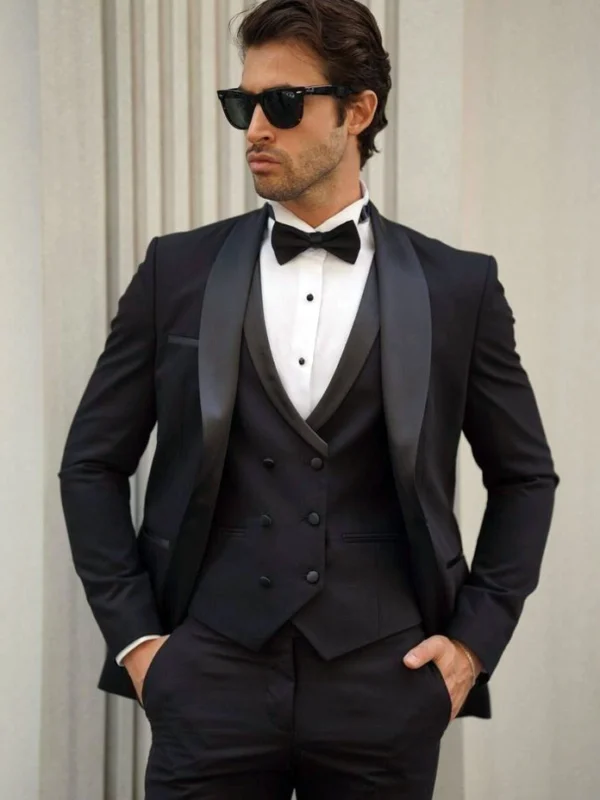
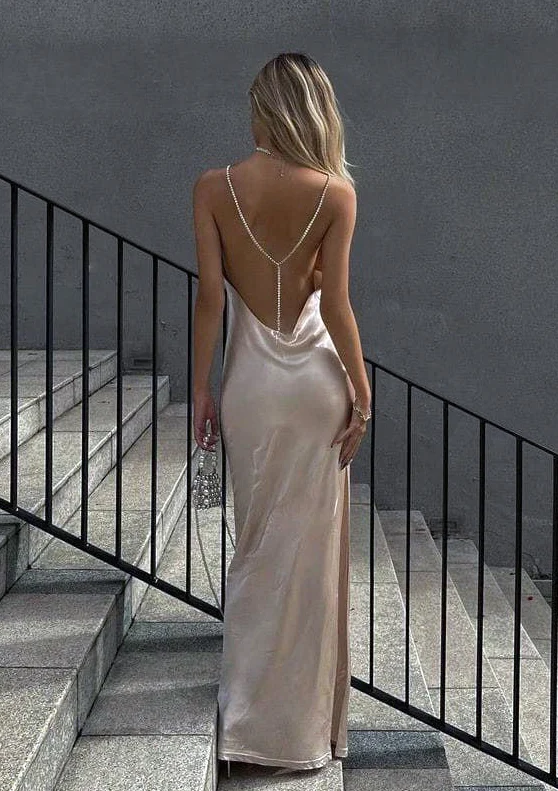
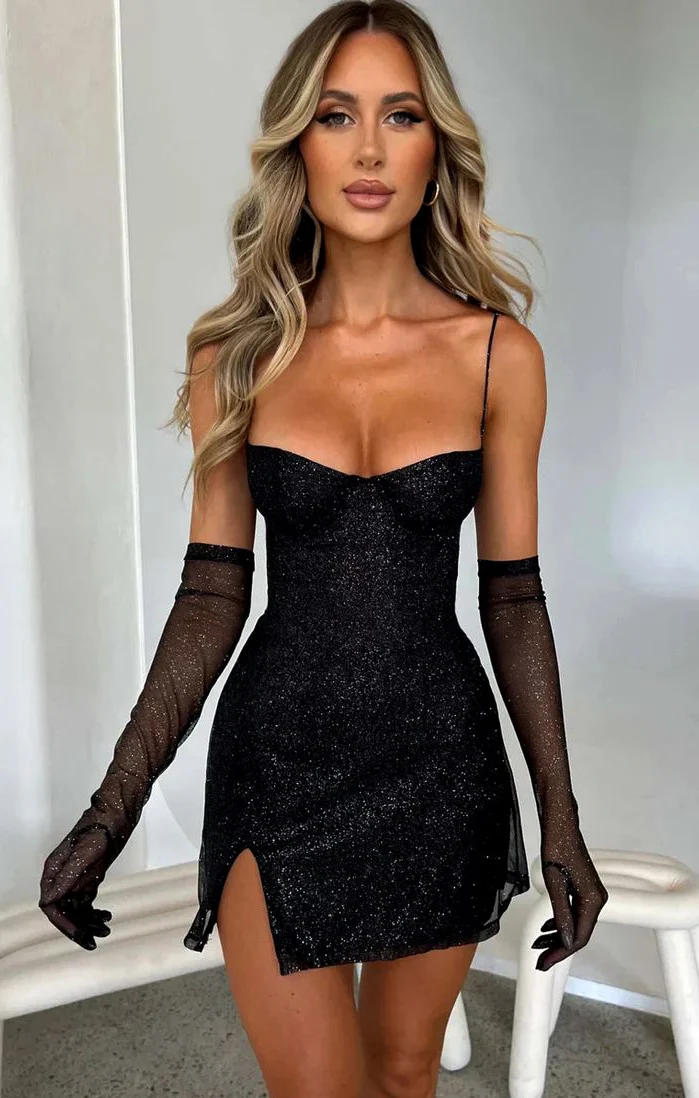
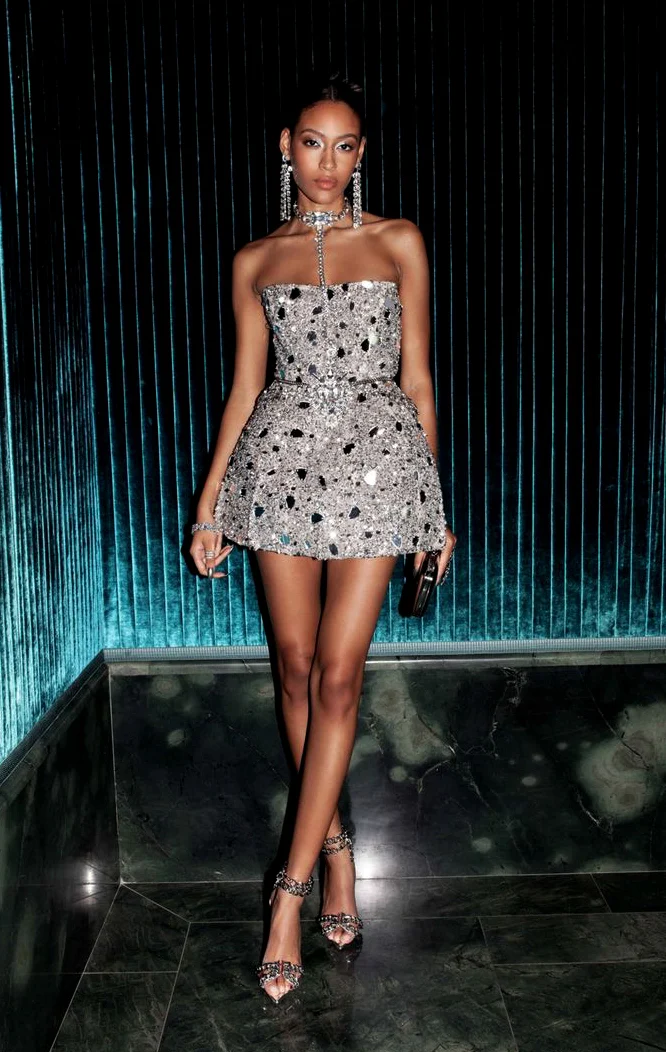
A party outfit for women brings several decisions together. An expressive dress can be the starting point, but it is not yet the complete look. Which shoes work for the journey, where does your bag stay during dinner and what do you want to wear over the outfit on arrival? Those questions turn a photographic idea into a usable combination. Our five references show short black and metallic-coloured dresses, pale draped shapes and a long red look. Each offers a different emphasis. The pictures do not establish materials, prices or compliance with a dress code. Those questions belong to the real product and the actual invitation.
Plan a party outfit for women around a clear focus
Write down what you want to emphasise first: a colour, shoulder line, short skirt shape or a particular accessory. Choose one starting point. This does not mean only one detail may attract attention later; it simply makes the comparison understandable. If you change colour, length, shoes and jewellery simultaneously, it becomes harder to tell what you enjoy. Put two options beside each other and change one feature at a time. You can then describe your own styling decision instead of applying an allegedly universal formula for a party look.
Clarify the occasion before shopping
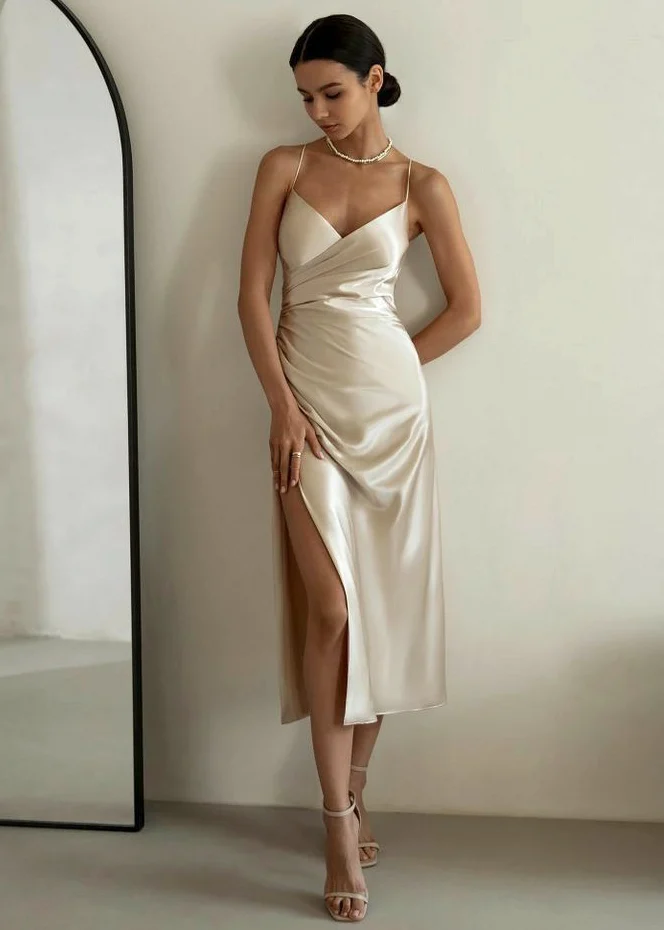
Read the invitation and consider whether the evening mainly involves standing, sitting at a table or moving around. Ask about specific requirements rather than treating a festive picture as automatic permission. You might enjoy the draping in either pale reference while leaving the colour question open for a particular celebration. A shape preference does not have to be tied to the photographed colour. Plan the journey and return trip too. A party outfit for women should cover the evening’s actual transitions rather than only the picture you expect to take. Include your outer layer and what you need to carry early in the process.
Compare short, middle and floor lengths separately
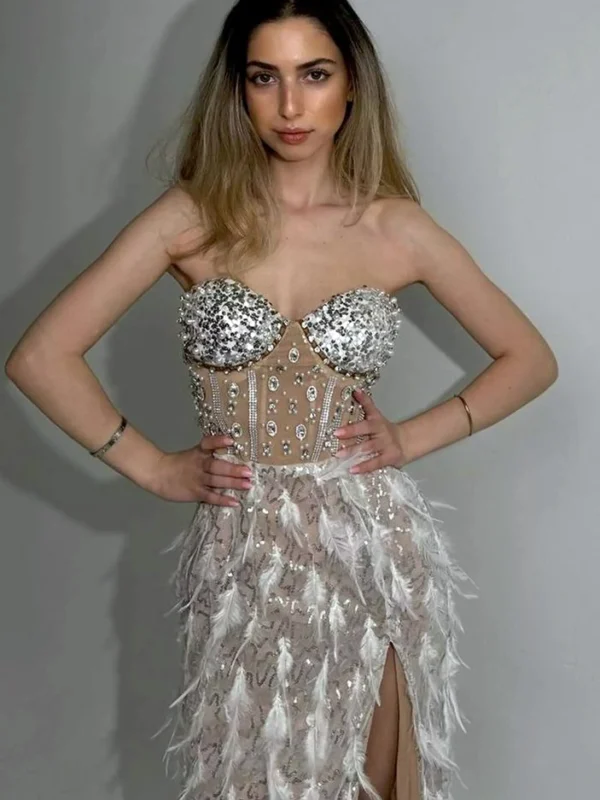
The short metallic-coloured reference exposes more leg and has a broader lower outline. The pale strapped look ends below the knee and has a side opening. The red dress reaches the floor. Walk, sit and stand in real garments with your intended shoes. Decide your preferred coverage for yourself. The high-low party dress guide adds changing hem heights to this comparison. The tiered party dress guide helps when you prefer a divided skirt rather than one continuous area. Each option still needs its own trial with the footwear you intend to use.
Test the bodice and underwear before jewellery
The references differ through fine straps, strapless necklines and side shoulder details. Those visible features do not explain internal support. Take your intended underwear to the fitting and compare front, side and back. Walk a few steps and sit down. For an alteration, ask about the new neckline, underarm opening and waist positions together. Raising an upper edge is not automatically the right solution to every issue. Assess the dress before expecting a necklace or another accessory to conceal an unresolved fit question. Ask the shop about the real construction instead of supplying your own explanation from visible lines.
Choose shoes with the whole silhouette
Start with a pair you own that suits the occasion and ground. Check clearance in long dresses and the overall relationship in short ones. The journey trial belongs in the decision alongside the mirror view. If comparing two pairs, keep the other pieces unchanged. Notice whether you walk differently or keep wanting to hold the skirt. Decide on different footwear afterwards. A party outfit for women does not require a particular heel height; your preferred effect and practical use need to meet in the actual combination. If changing shoes later, check both pairs, especially with a hem that approaches the floor.
Compare the bag by need and carrying position
Set out your phone, keys and evening essentials before deciding on bag size. Hold it beside the dress and sit with it. A shoulder strap may occupy the same area as a fine dress strap, while a hand-held bag keeps one hand busy. Either can work when you plan its use. If the skirt has an opening, see whether the bag rests beside it or emphasises the area differently from what you want. A small bag in a photograph does not promise space for your own belongings. Include where it will stay while eating rather than judging only its standing appearance.
Add jewellery and additional pieces in stages
The short black look is shown with long dark gloves, while the metallic-coloured dress has conspicuous neck jewellery. These details change the effect substantially. Pursue them as ideas only if you actually want to use them. Try handling your bag and phone with the real gloves instead of predicting their operation from a picture. Add jewellery gradually and look at where it rests when seated. You may enjoy a richly decorated combination or a quieter one. A deliberate relationship between pieces is more useful than a rule requiring every exposed area to be filled.
Include the outer layer, alterations and care
Put your jacket or coat on and take it off during the fitting. Check its relationship with straps, shoulder details and jewellery. If the evening involves a venue change, this version belongs to the party outfit for women as much as the indoor view. Discuss necessary alterations and finish the fitting with your intended shoes. Read the actual care label as well. GINETEX explains care symbols. A shiny or festive-looking surface is not a basis for inventing a washing or ironing method. Keep care information with the agreed alteration notes so the completed garment remains understandable beyond its first wearing.
Rehearse a few complete-outfit situations
Set out the selected pieces and run through arriving, greeting, sitting, standing and travelling home. Record only the points still needing a solution. A different bag or an adjusted hem may be enough; the whole selection need not restart. Finally check that the focus you originally chose still appears and feels right to you. A party outfit for women is not a fixed shopping list here, but a deliberate connection between garment, accessories and schedule. The pictures can supply individual ideas. Make the final decision on the complete combination you will actually wear, including the ordinary moments between photographs.
Clarify the occasion and choose a focus, then assess the complete outfit, including bag and outer layer, through ordinary situations.
Frequently asked questions
Does my outfit need to match a reference photograph exactly?
No. Borrow individual ideas for colour, length or accessories and compare them with pieces you already own.
Which order helps when building the outfit?
Clarify occasion and focus, test dress and underwear, then add shoes, bag, jewellery and outer layer.
Does a pictured white dress establish suitability as a guest outfit?
No. Check the actual celebration’s requirements; the draping can be considered independently of colour.
What belongs in the final trial?
Test arrival, greeting, sitting and the return journey with the complete outfit, rather than the dress alone.