Long-sleeve wedding dresses do more than provide coverage. Sleeves change how a neckline frames the face, how the hands enter the composition and where visual weight falls. These six clean-lined concepts explore those relationships without dense decoration. A square neckline creates an architectural opening, while a folded off-shoulder edge shifts volume toward the shoulders. Buttoned and elongated split cuffs interact differently with rings, bracelets and hand movement. A shallow curve, deep square opening or nearly closed back changes plans for hair, a veil and concealed support. Skirts range from a restrained floor spread to a cathedral-scale train. These comparisons help assess each dress from the front, back and in motion, rather than prescribe one ideal combination.
A Square Neckline Creates a Calm Vertical Frame
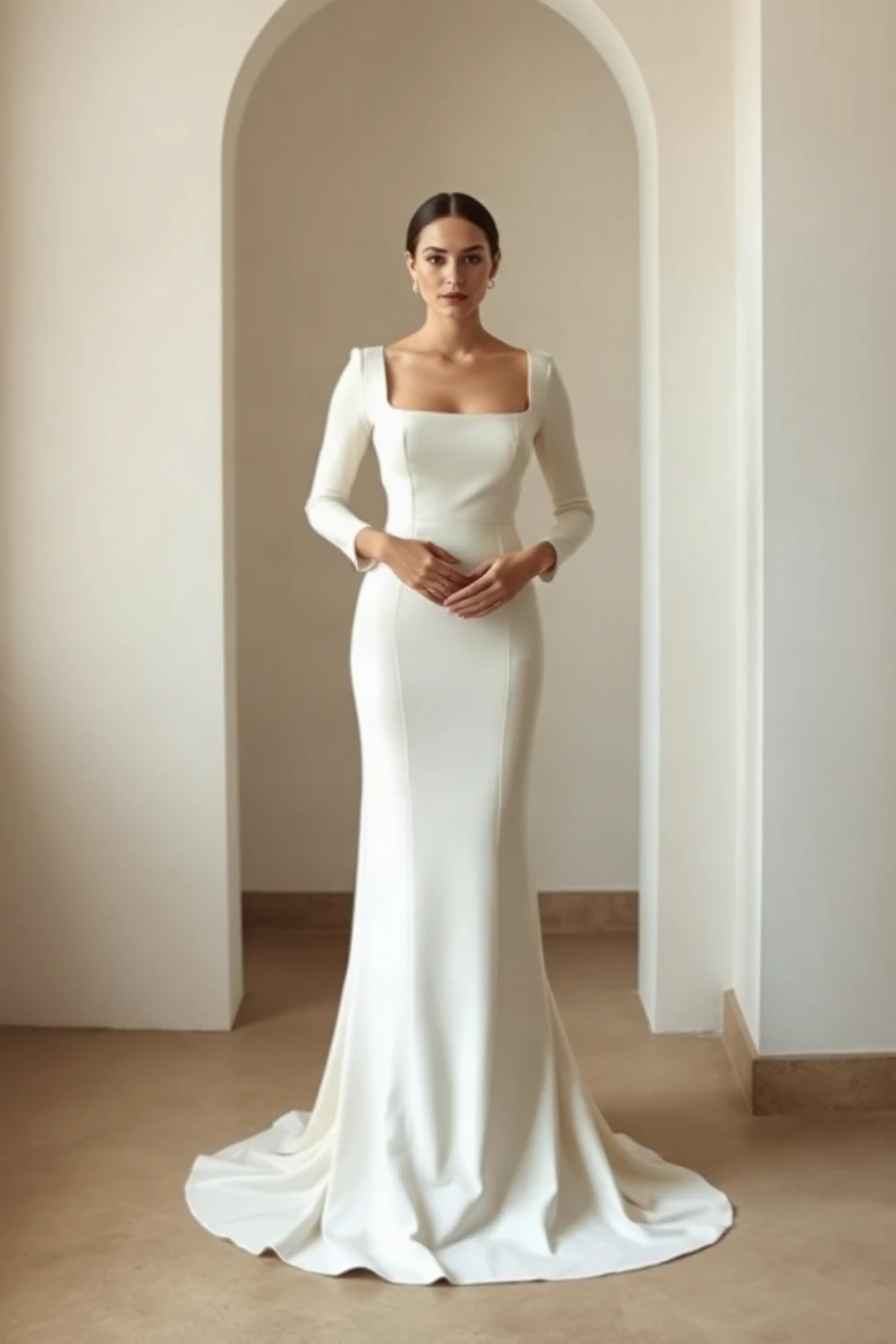
The first concept uses a broad square neckline to form a precise rectangle around the face and collarbone. Close-fitting long sleeves extend its vertical sides, while bodice seams narrow the waist and lengthen the line. The skirt eases slightly below the hips into a modest floor pool, keeping the neckline primary. Behind the figure, a rounded alcove softens the crisp upper corners.
At a fitting, judge more than depth. Both corners should remain level as you breathe and move, and the underarm should not distort the opening. Extend your arms to see whether the bodice climbs. This elongated balance may suit someone who prefers a clean front to a dominant train. Earrings or a short veil can add detail without interrupting the open geometry.
Off-Shoulder Folds Move Volume Upward
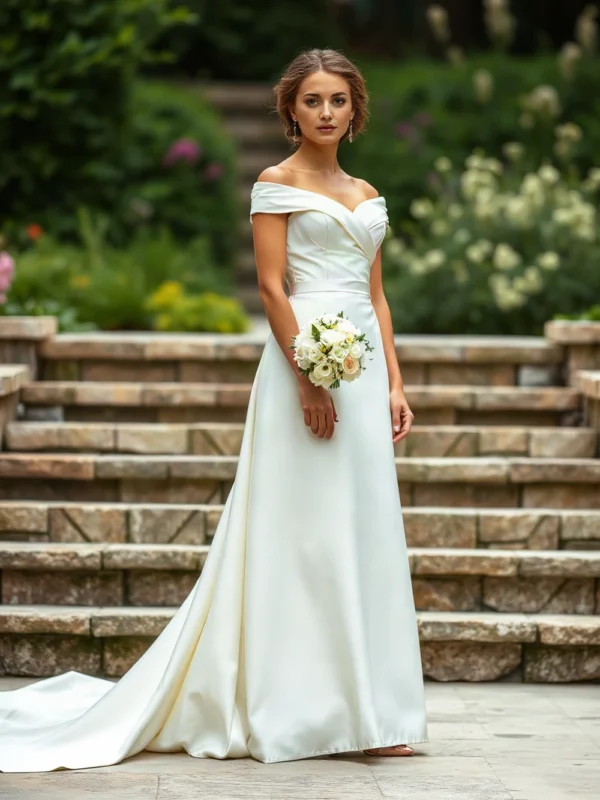
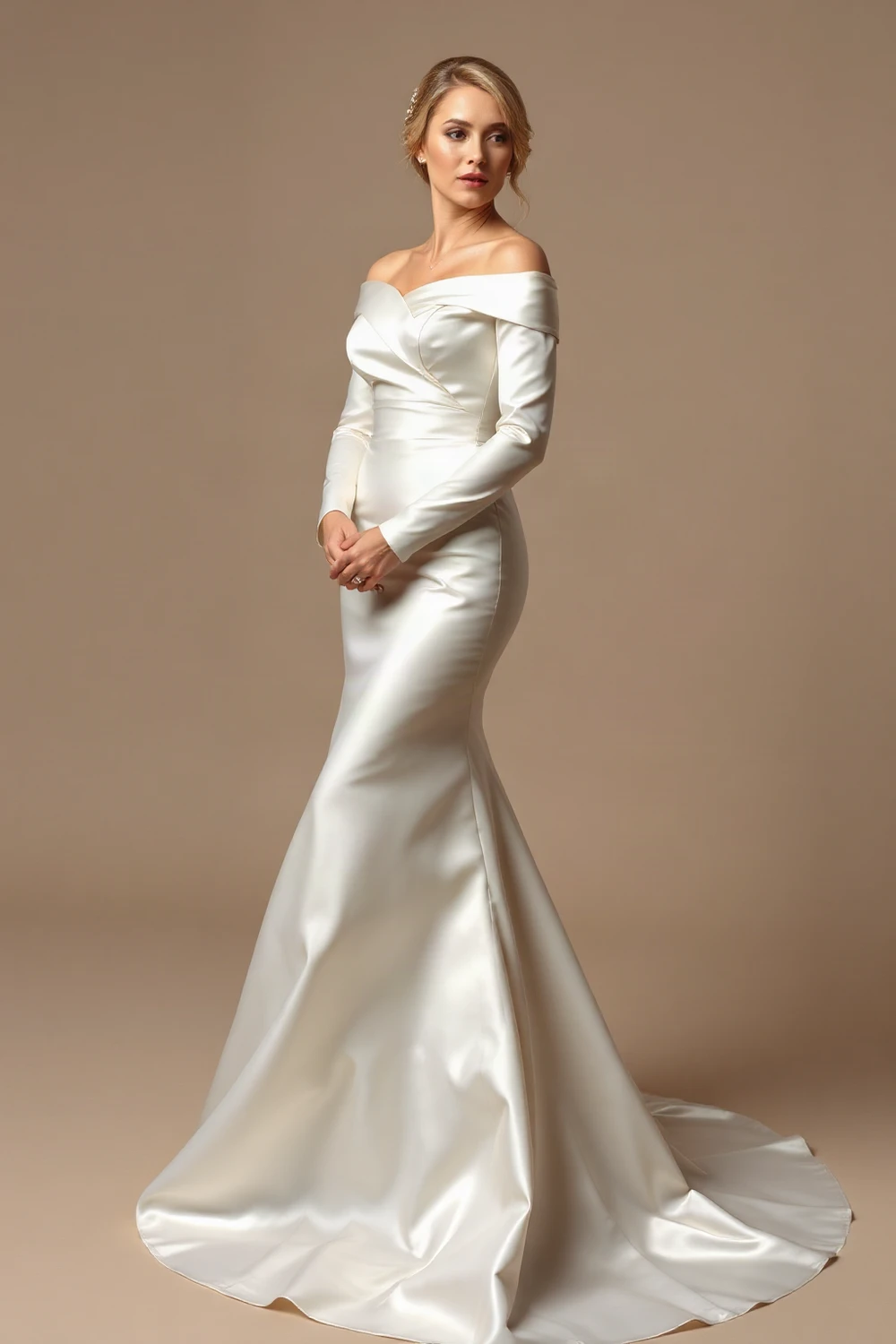
The second look combines a wide, folded off-shoulder neckline with a close, glossy-looking silhouette. Curved bodice layers catch light in different directions, making the upper edge more sculptural than a flat band. The skirt remains narrow to the knees, then opens decisively to balance the shoulder line. Unlike the first dress’s quiet square frame, the eye travels across the shoulders before moving toward the flared hem.
Test how the neckline responds to movement: reach forward, sit and imitate an embrace to see whether the fold twists or rises. A reflective surface can emphasize seams, creases and underlying layers more than a matte appearance, so compare front and side photographs in several kinds of light. The exposed shoulder line retains the continuity of long sleeves while opening the upper body.
Buttoned Cuffs Balance a Restrained Back
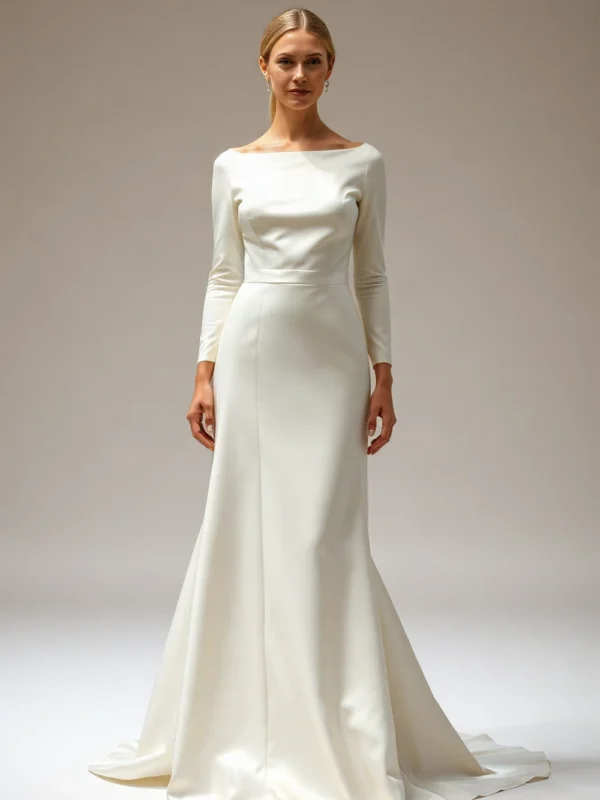
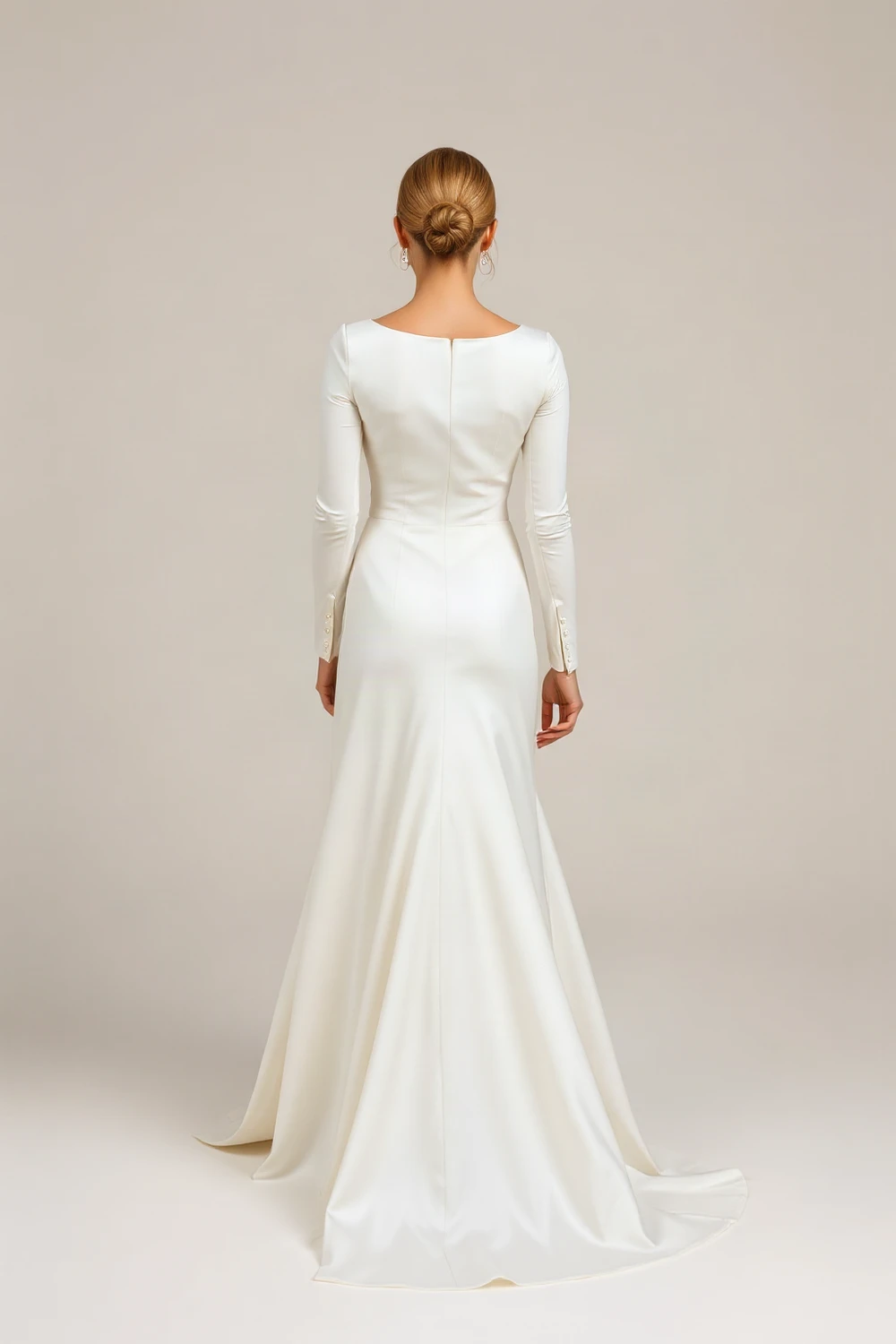
The third image shows how subtle details read from behind. A shallow, gently curved back neckline opens the nape, while the central line forms an orderly axis from bodice to skirt. Slim cuffs reach the wrists and end in small rows of buttons, adding measured rhythm to the unembellished surface. The controlled skirt flare supports that understated scale rather than competing with the cuffs.
Judge a buttoned cuff as both a working opening and decorative finish. The hand should pass through comfortably, the wrist bend after fastening and the loops remain manageable. The shallow back sits between a deep opening and coverage to the neck. An updo leaves its edge visible. With a veil, test comb placement and whether its layers catch on the closure or cuffs during arrangement.
An Extended Split Cuff Frames the Hand
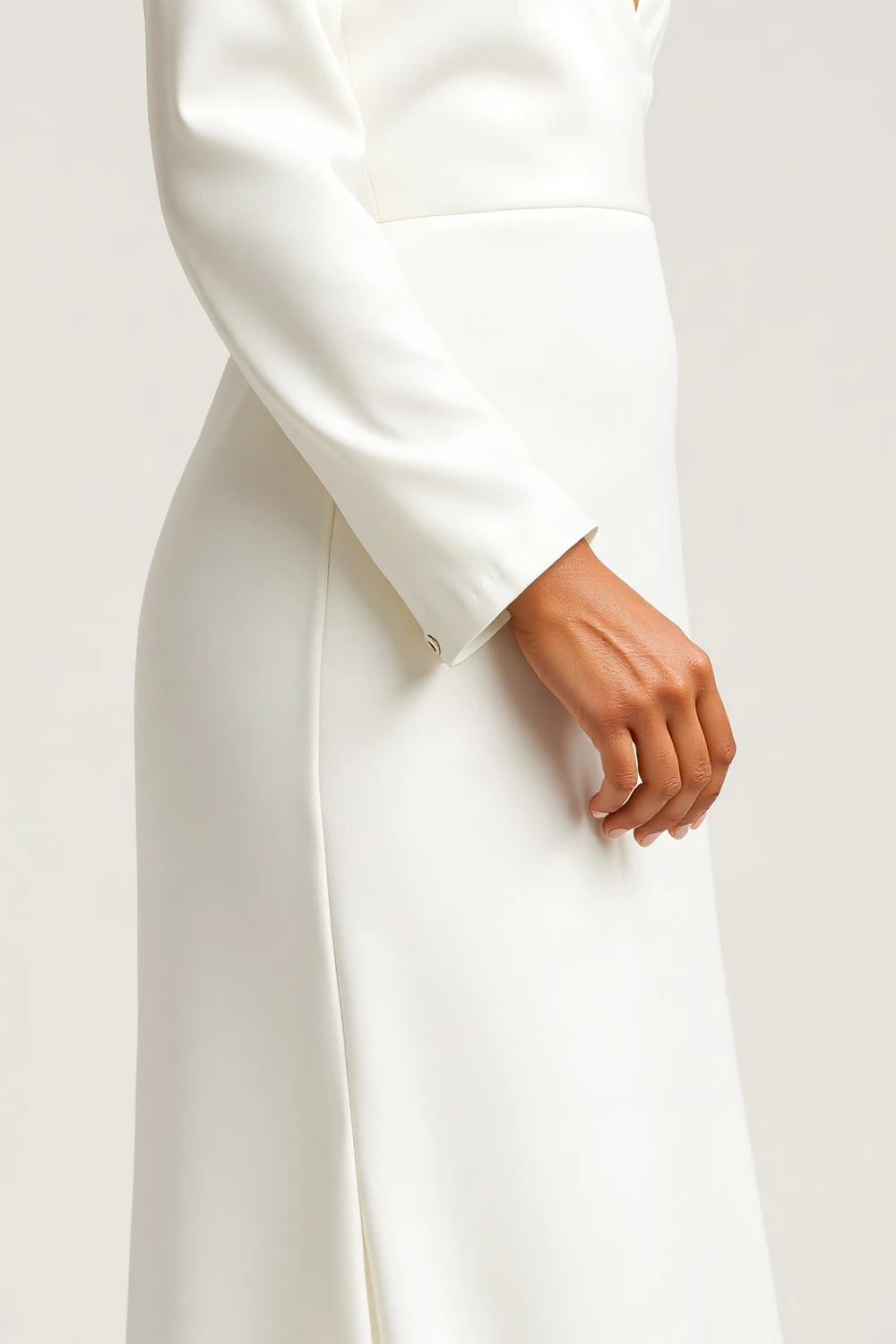
The fourth image enlarges the sleeve ending rather than the full silhouette. Its cuff angles toward the hand and opens at a small split, making a sharp graphic point on a plain white surface. The horizontal waist seam and vertical skirt line emphasize the cuff’s diagonal direction. Unlike the buttoned cuff, it uses fewer repeated components, but its added length gives the wrist a stronger visual role.
Test it beyond the arm hanging straight. Hold a bouquet, shake hands, sit at a table and bend the wrist to see whether the point folds or catches. The long edge may frame a ring, while a wide bracelet could crowd the area. Because the view is cropped, it offers no evidence about the full skirt or neckline. It does show how a small sleeve change can direct attention toward gestures and accessories.
A Deep Square Back Links Waist and Train
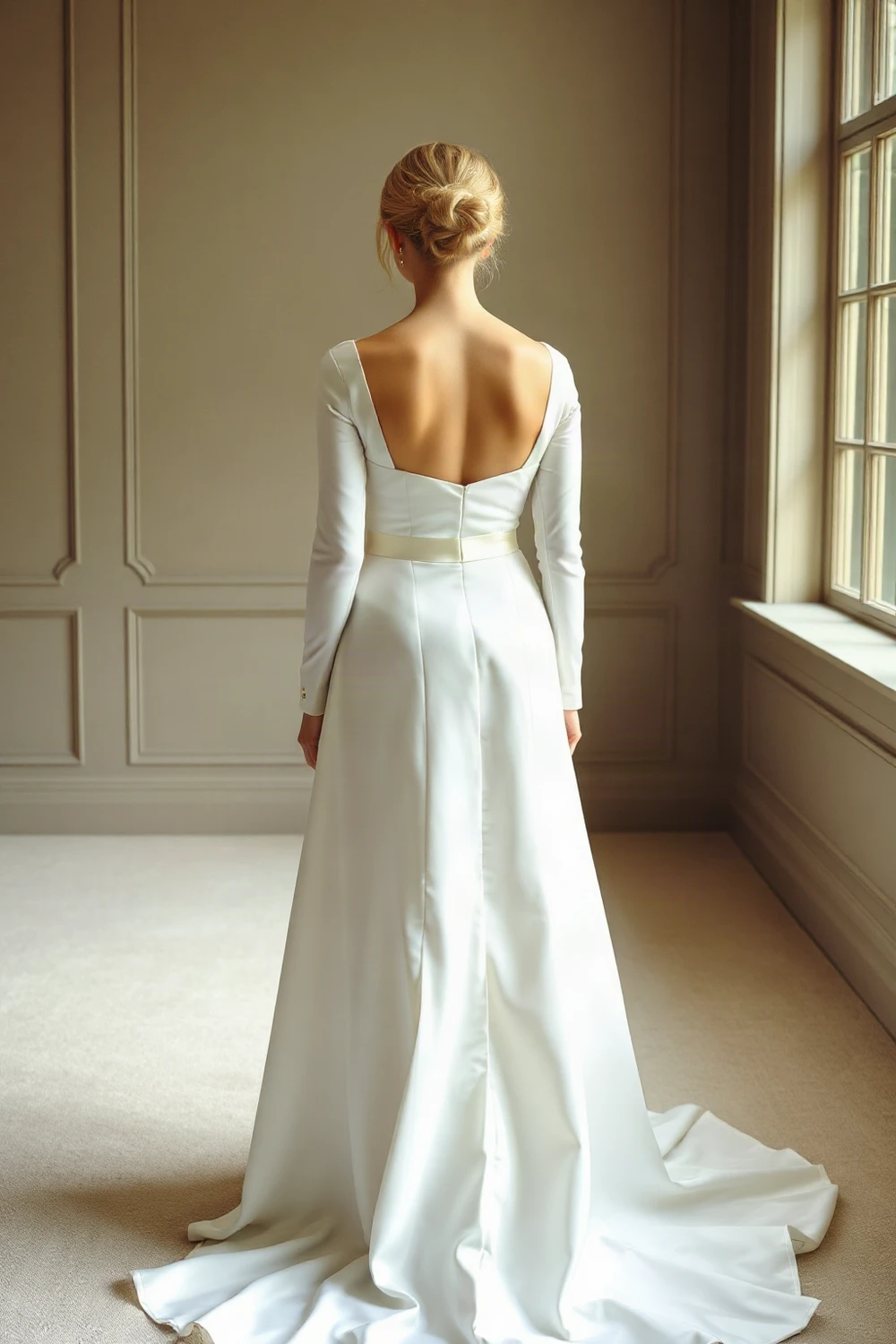
In the fifth concept, a deep square back forms a broad opening between the long sleeves. Its straight upper edge echoes the horizontal waist band, while the skirt expands below in long, soft lines. Side window light reveals the train’s folds across the floor. Compared with the third image’s shallow neckline, this back is a prominent design surface, making hair, veil and support layers integral to its frame.
At a fitting, lean forward, sit and lift your arms to check that the straight edges stay close to the body. Planned support or underlayers must work without showing in the opening. An updo reveals the whole square; a low hairstyle or veil softens its upper boundary. Assess the train against the ceremony aisle, floor texture and later movement. The rear composition should still allow comfortable turns and securing the train when needed.
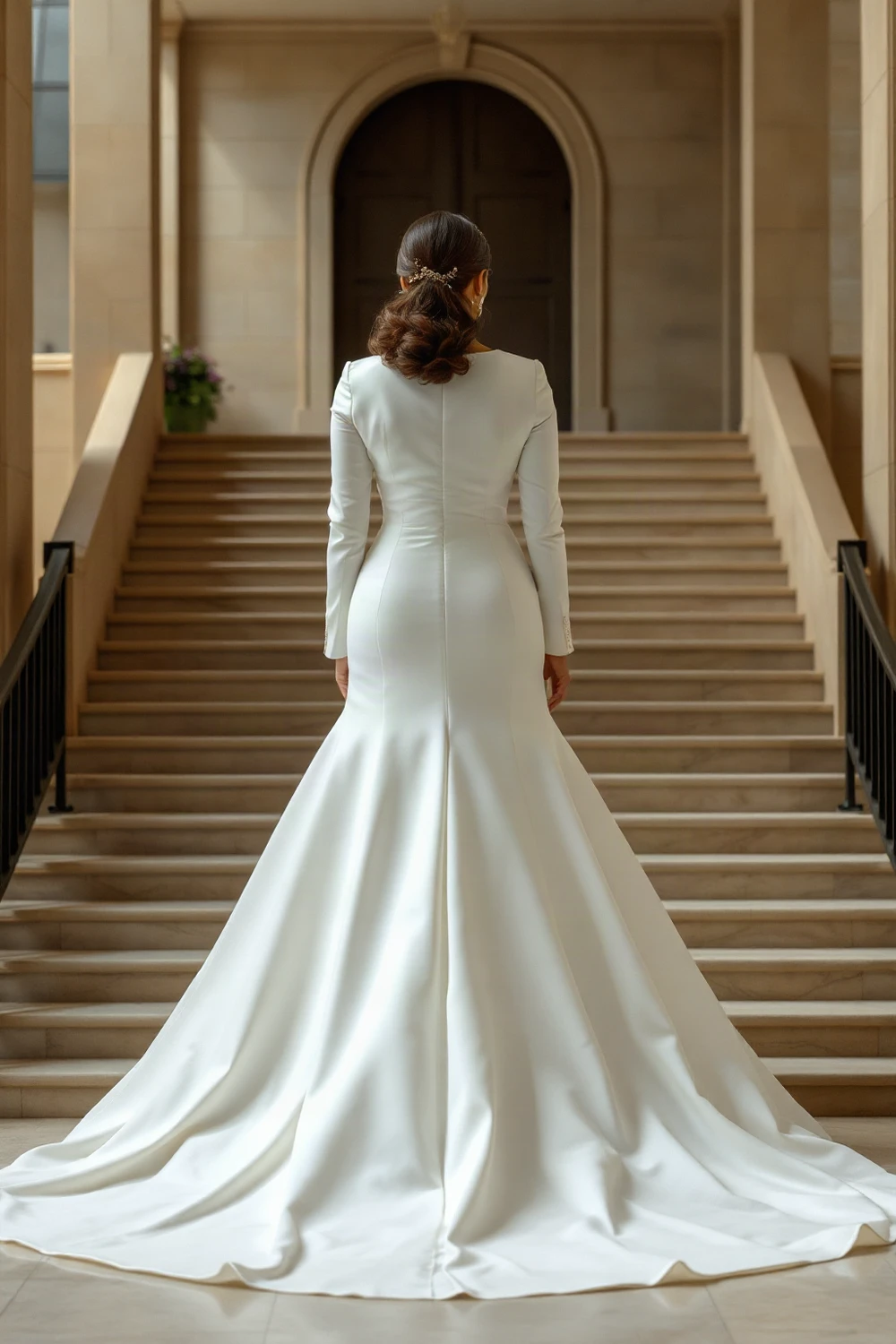
A Closed Back Flows into a Cathedral-Scale Train
The final concept contrasts a narrow, closed upper body with a train spread broadly across a staircase. Long sleeves and a central back seam create an uninterrupted vertical axis. Below the hips, the skirt opens into a rounded base occupying much of the composition. The dark arched door, pale steps and symmetrical rails heighten the monumental effect. Unlike the previous open-back design, this one directs attention to the skirt’s scale and flow.
A large train can make a powerful entrance along a generous aisle, but map its route in advance. Consider narrow passages, steps, outdoor surfaces and available help for turns. During alterations, test where the train gathers, how the attachment distributes weight and its shape after bustling. A closed back provides an uninterrupted field for a veil. If the veil is similarly long, view both layers from behind so their edges and volumes complement rather than obscure each other.
Together, these concepts show that every choice in a long-sleeve wedding dress affects the next. A square or off-shoulder neckline changes the sleeve’s apparent length and the upper-body focus. Buttons or a split cuff influence wrist comfort and jewellery scale. The back must coordinate with hair, veil and hidden support, while train volume must suit the venue, stride and bustle plan. Save appealing details, then ask whether they create one coherent silhouette rather than combining them automatically. At the final fitting, walk, sit, reach, embrace and change direction instead of only standing still. The strongest choice preserves the desired visual character while supporting the ceremony and celebration’s required movements.
Compare six modern long-sleeve wedding dress concepts, from square and off-shoulder necklines to buttoned cuffs, open backs, restrained hems and expansive statement trains.
Frequently asked questions
How should I choose between a square and an off-shoulder neckline?
Choose a square neckline for a crisp, architectural front frame or a folded off-shoulder line for softer volume and stronger shoulder emphasis. Test both while reaching, sitting and moving your arms.
What matters most when fitting a long sleeve cuff?
Your hand should pass through comfortably, your wrist should bend after fastening and the cuff should not ride excessively when you lift your arm. Test buttons, splits and planned jewellery together.
Which hairstyle works with a deep square back?
An updo leaves the full square opening visible. A low bun or veil placed near the nape can soften the upper boundary, so decide according to how strongly you want to feature the back.
What should I check at the venue before choosing a broad train?
Check aisle width, stairs, floor grip, turning space and when the train can be gathered. Rehearse walking with it both fully spread and secured in the intended bustle.
Why photograph a glossy-looking dress during a fitting?
Reflective surfaces can show folds, seams and underlying layers differently as the light changes. Front, side and rear photographs in lighting similar to the venue provide a more useful comparison.