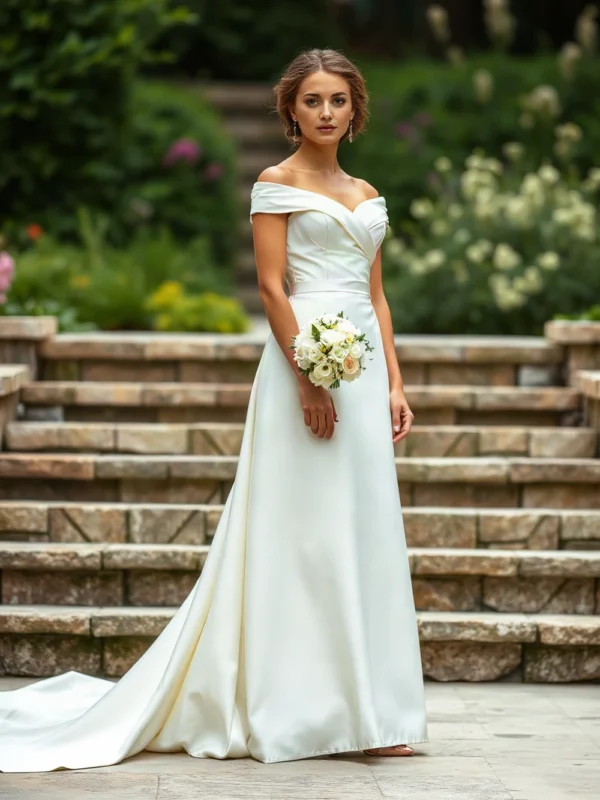
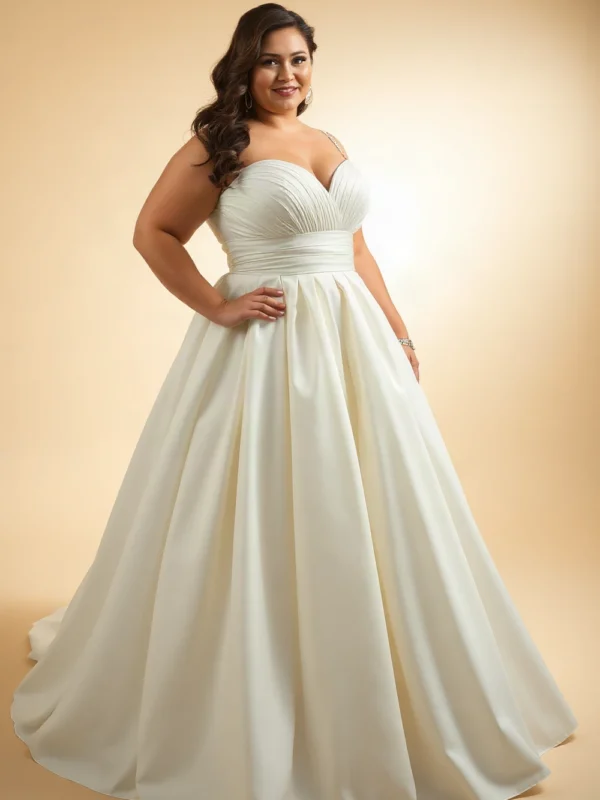
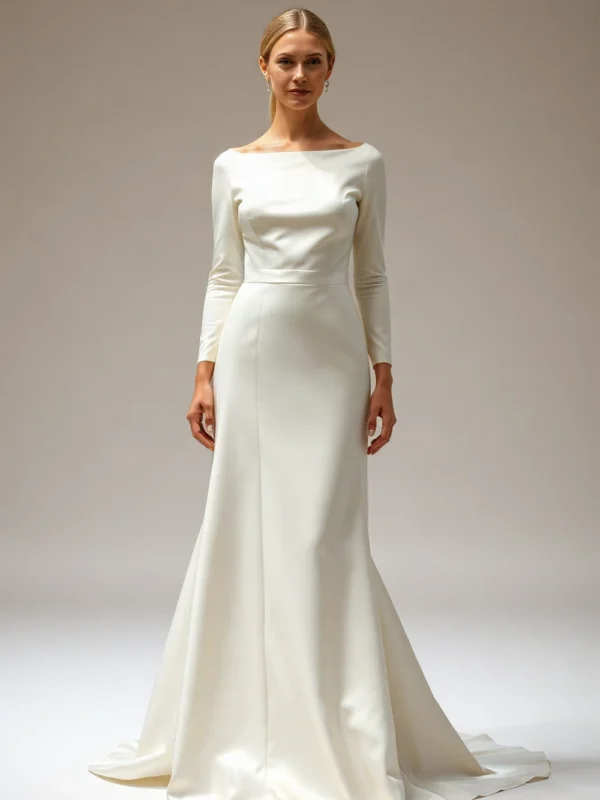
In long-sleeve wedding dress styles, a sleeve does more than cover the arm. It can change how broad the shoulders appear, how open a neckline feels, where the waist seems to sit and how the skirt’s movement is perceived. A narrow patterned sleeve quietly frames a column silhouette, while a gathered or flared shape adds volume and visible motion above the waist. These six concepts show distinct results within a similar white palette: floral-patterned sheer oversleeves on a strapless dress, opaque blouson sleeves, open-shoulder split panels, low-set bishop sleeves, softly gathered sleeves with ruffled cuffs, and puff sleeves with a tea-length hem. Rather than ranking them, this guide considers each sleeve in relation to neckline, skirt, setting and movement. The images offer design inspiration; any choice should be tested through fitting, movement and suitable underlayers.
Patterned Oversleeves Against a Clean Column
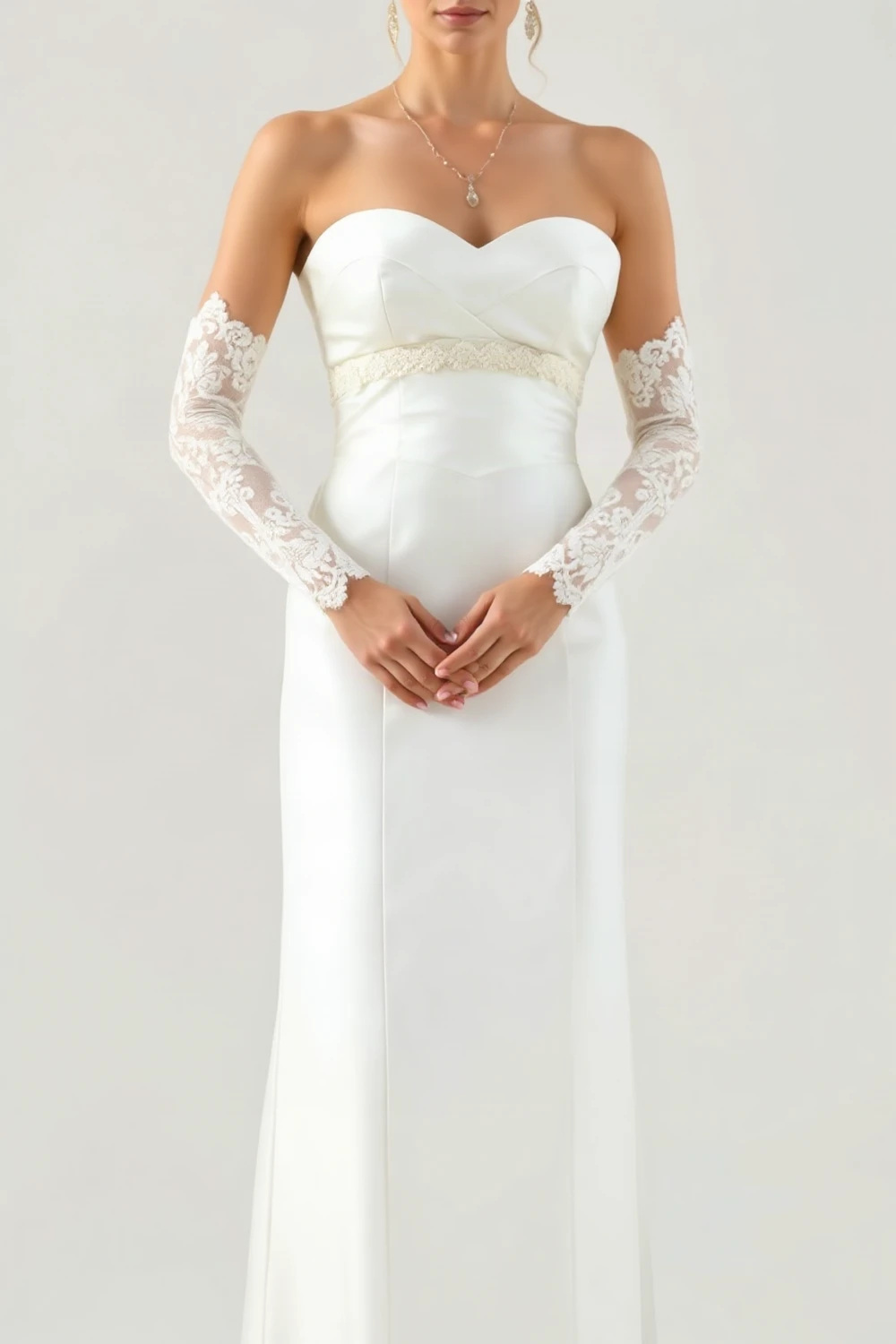
The first concept uses a clean base: a strapless sweetheart neckline and smooth, close column silhouette. Translucent floral-patterned sleeves begin at mid-upper arm, adding detail without covering the shoulders. Their close fit continues the skirt’s narrow direction rather than adding width. Contrast between the undecorated body and intricately patterned arms is the central idea.
This suits someone seeking a lace-like accent confined to the sleeves. Because they appear separate, attachment and comfort matter. During fitting, reach forward, bend the elbows fully and lift the hands to check whether the upper edges stay in place. The detailed wrist finish already draws attention, so a large bracelet may compete. Small earrings, a delicate necklace or one ring preserve the distinction between smooth bodice and patterned frame.
Balancing Blouson Sleeves, a Wrap Neckline and a Slit
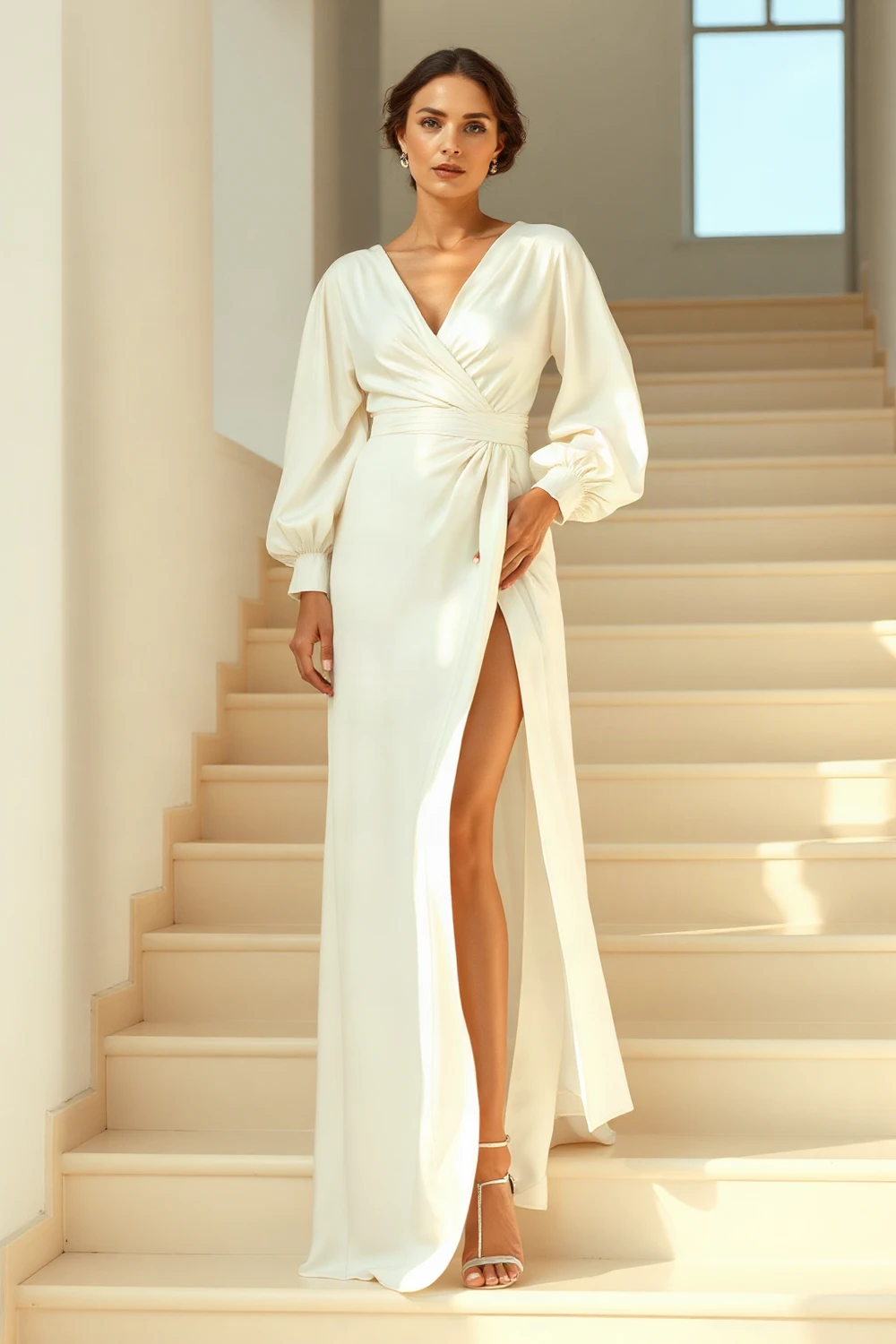
The second idea places long sleeves in a sharper, metropolitan composition. A wrap V-neck, broad waist treatment and high side slit create strong directional lines, while opaque blouson sleeves fall in soft volume from shoulder to wrist. Long fitted cuffs control that fullness and frame the hands, while the smooth floor-length skirt lets the sleeves stand out without extra pattern.
The sleeves and slit create movement at opposite ends: fullness expands the upper body, while the slit opens the lower line. Because the opening may reveal different amounts during a long step or while seated, test preferred coverage rather than judging a still pose. Walking on stairs, sitting and holding a bouquet can also show whether the cuffs are too tight or slide over the hands. Waistband position affects wrap stability and perceived leg length.
Split Sleeves That Preserve an Open Shoulder Line
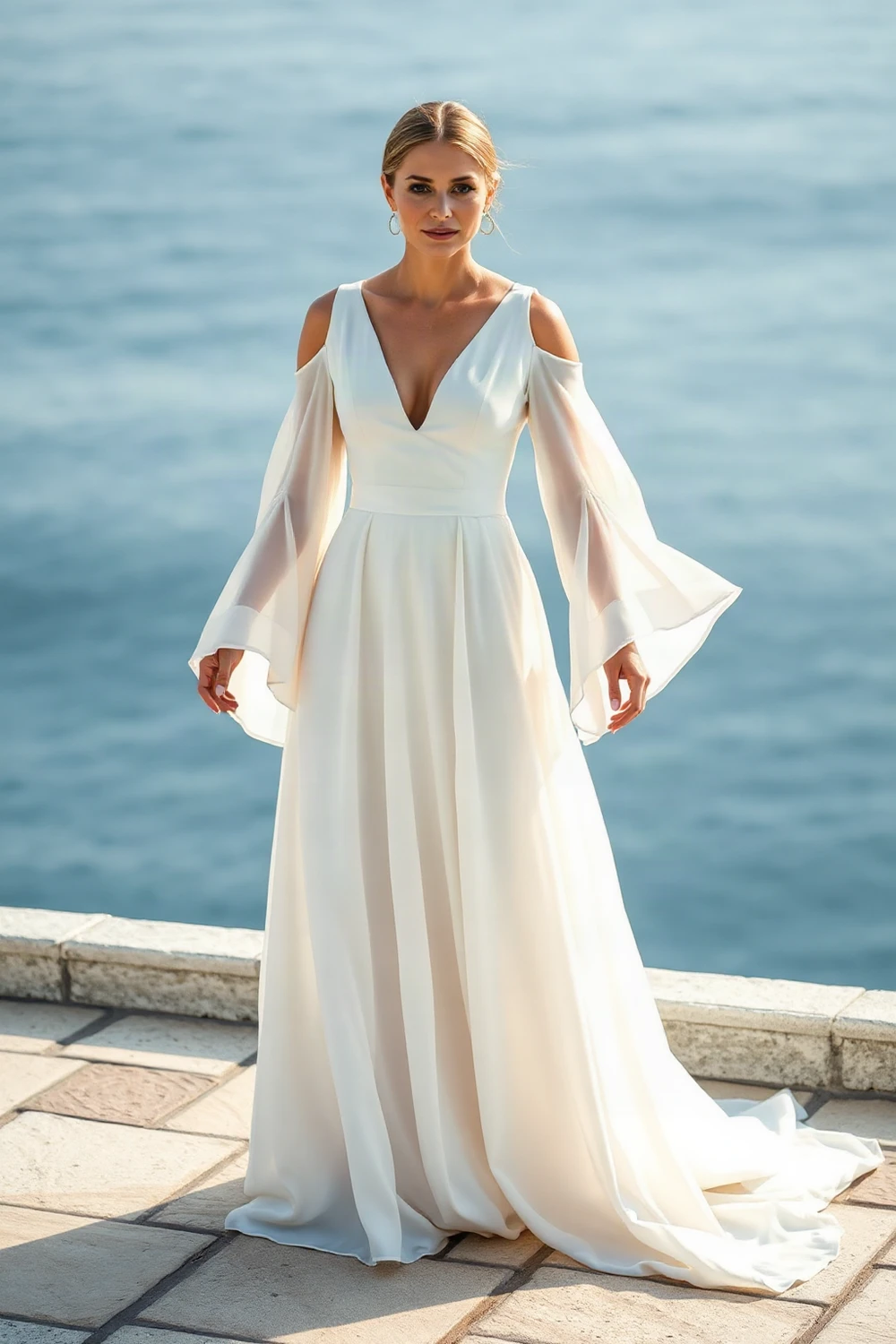
In the third look, broad straps and a deep V-neck meet panels that leave the shoulders open. The translucent sleeves begin on the outer upper arms, then widen and separate below the elbows into fluid, bell-like ends. Their motion echoes the widening folds of the A-line skirt and short train; a defined waist seam pauses between the flowing areas.
This option offers long-sleeve movement without enclosing the shoulder. The open panels are more theatrical than close-fitting sleeves but occupy more space. Consider them in wind, narrow aisles, near chair decorations and at a dining table. A fitting should show what happens while turning, extending the hands and holding a bouquet, not only with arms hanging straight. Because the deep neckline and split ends are prominent, a necklace is optional; small earrings avoid competition.
Bishop Volume Framing a Strapless Sweetheart Neckline
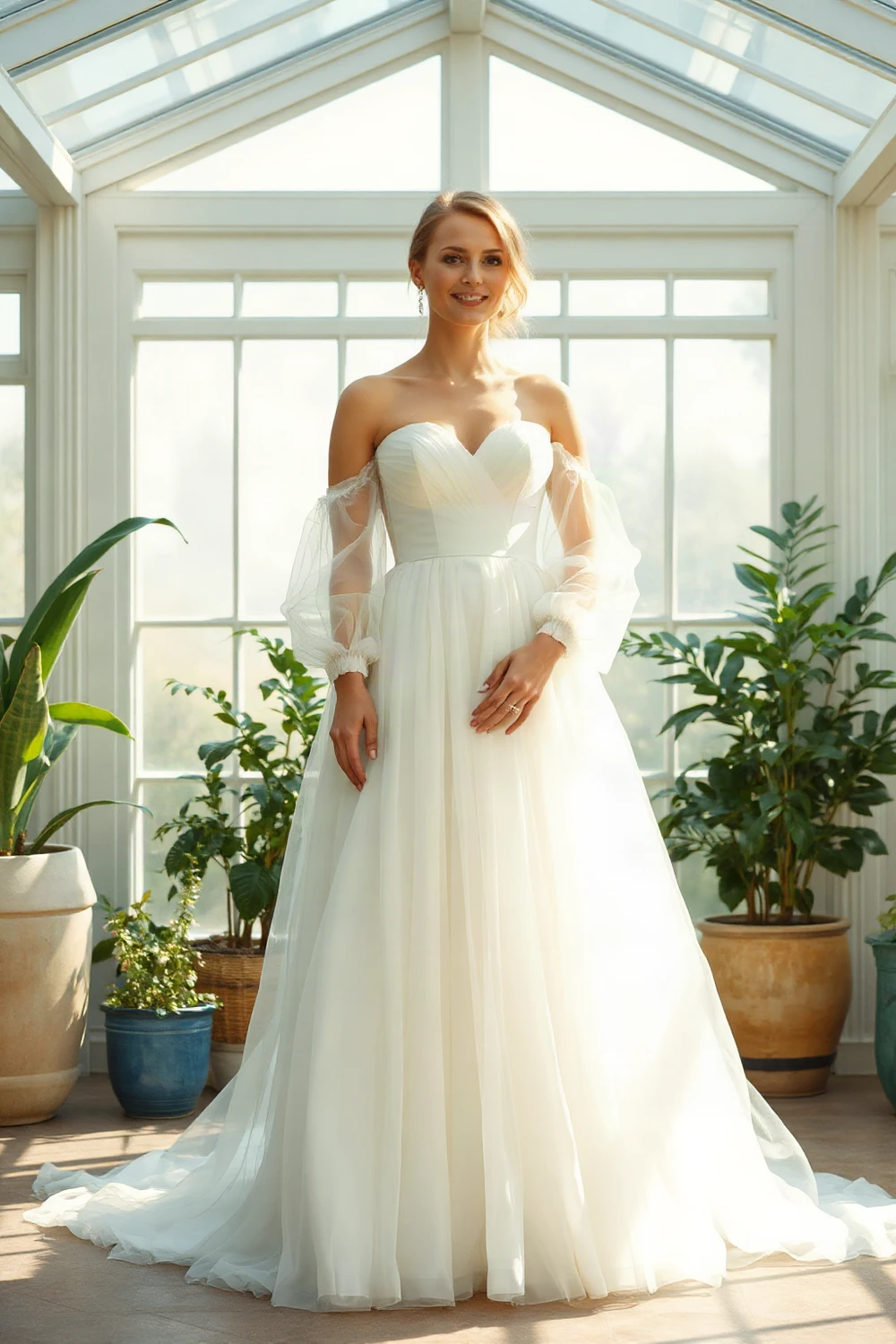
The fourth look pairs a strapless sweetheart neckline with translucent bishop sleeves attached below the shoulders. Each expands around the upper arm and elbow before gathering at the wrist. Their volume echoes the broad base of the long A-line skirt, while the exposed collarbone creates breathing room between generous forms. Overlapping bust folds direct attention toward the sweetheart’s center.
A low shoulder connection may look light and romantic but must be assessed in motion. Raising the arms can show whether it shifts, pulls the bodice or feels restrictive; the cuff should stay comfortable with the elbow bent. Balance changes with skirt width: an ample skirt distributes the volume, while a narrow skirt emphasizes above the waist. The smooth dress surface keeps the shape clear. Small earrings or one hair detail preserve the open neckline.
A Continuous Flow of Wrap Bodice and Gathered Sleeves
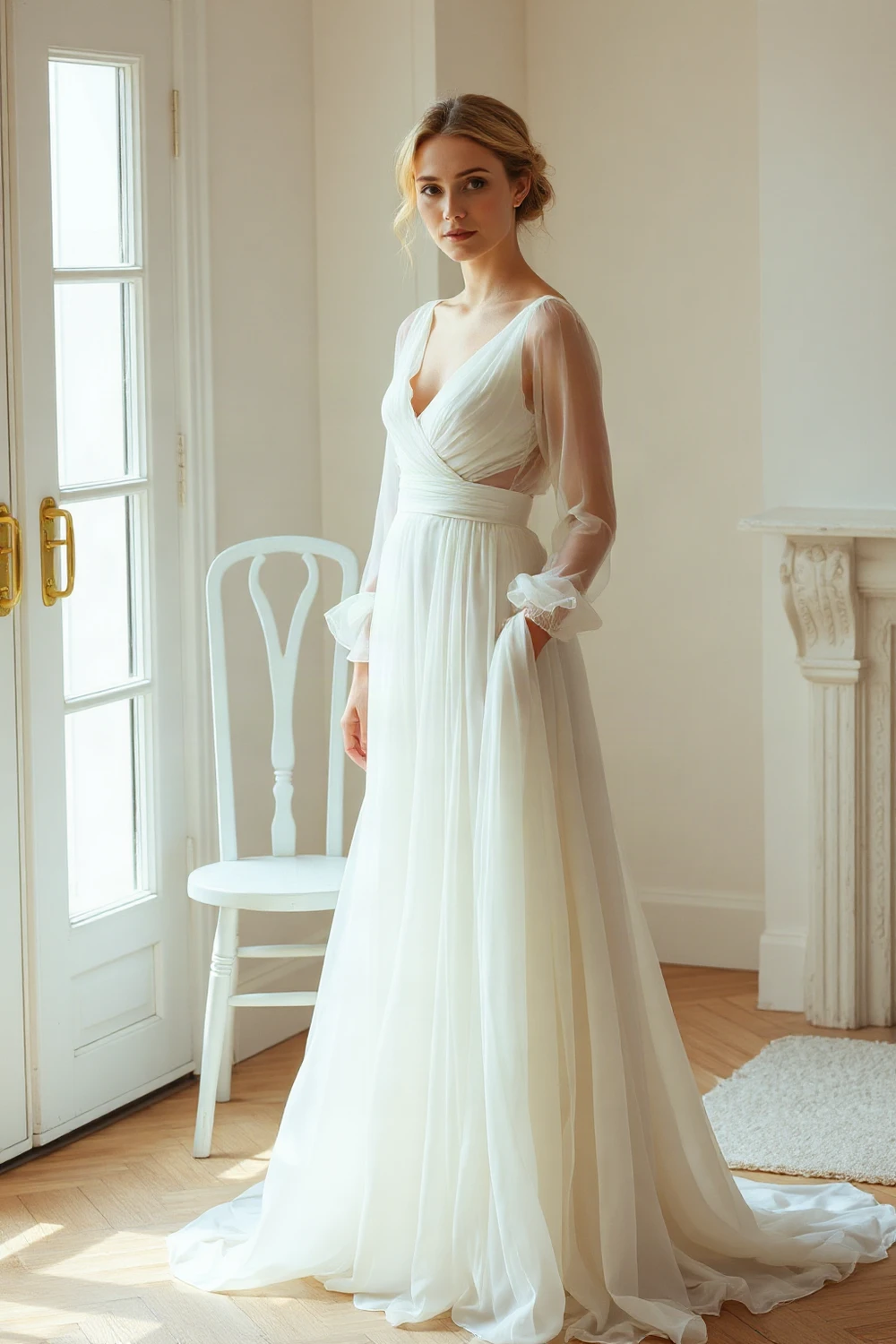
In the fifth concept, translucent sleeves start at the shoulders and continue without a gap to ruffled wrist cuffs. A crossed V-neck, broad high waistband and generously folded A-line skirt follow the same soft direction. Compared with the preceding bishop shape, this fullness is quieter; emphasis rests on continuity from shoulder through bodice and into the long skirt.
This fluid arrangement favors drape and layered lines over sharp structure. Translucent coverage can change under daylight, warm interior light and direct photography, so view the intended underlayer in each. Ruffled cuffs may feel crowded beside a bracelet, long gloves or a branching bouquet. Test the wrap neckline while turning and reaching to see whether it needs stabilization. The shoulder seam needs enough freedom to prevent the bodice lifting as the arms rise. Here, the folds can replace elaborate accessories.
Puff Sleeves with a Tea-Length Hem and Visible Shoes
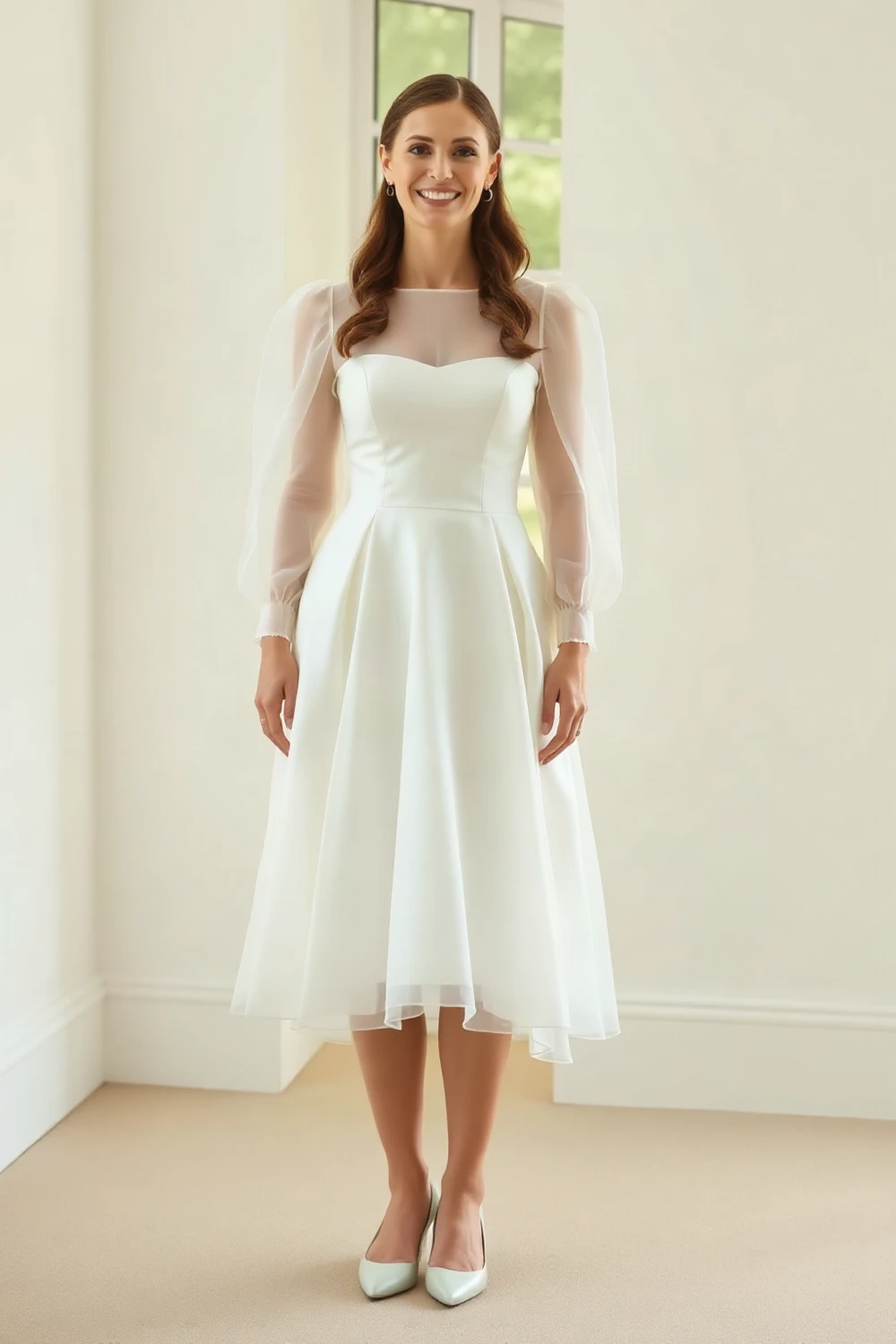
The sixth look pairs long sleeves with a tea-length A-line skirt. A structured sweetheart bodice remains visible beneath a translucent panel extending toward the neck’s base. Long puff sleeves rise gently at the shoulders and narrow toward gathered wrists. As the skirt ends below the calves rather than at the floor, lower legs and shoes become active parts of the silhouette.
Puffed shoulders and a broad skirt create orderly balance. Footwear is practical and visual because its color, toe shape and heel height remain visible throughout the event. The hem may rise further when seated, making a sitting test useful. Above, consider where the translucent yoke ends and how it interacts with a necklace or hairstyle. Short earrings and simple shoes keep the panel and sleeves clear. Test arm lifting to ensure the yoke and cuffs remain comfortable.
When choosing among long-sleeve wedding dress styles, consider what each sleeve does within the whole silhouette, not only its name. Close patterned sleeves preserve a narrow line; blouson, bishop and puff sleeves add volume around the shoulders; split panels make movement highly visible. Neckline depth, waist placement, skirt width and hem length alter all those effects. Before deciding, sit, walk, raise the arms and hold a bouquet under more than one kind of light. If the cuff, shoulder connection and intended underlayer remain comfortable and visually balanced, the sleeve becomes more than a statement detail: it supports the proportions and practical rhythm of the entire look.
Compare six long-sleeve wedding dress ideas featuring floral sheer oversleeves, opaque blouson sleeves, split panels, bishop shapes, gathered cuffs and a tea-length puff-sleeve silhouette.
Frequently asked questions
How should separate-looking long sleeves be assessed with a strapless dress?
Test whether the upper edge stays secure while reaching, bending the elbows and raising the arms. The pattern should also relate clearly to the bodice so the sleeves look intentional without closing the strapless neckline.
What is the main visual difference between blouson and bishop sleeves?
A blouson sleeve often falls in a softer, more continuous volume into a defined cuff. A bishop sleeve can create a more pronounced expansion around the upper arm or elbow before gathering at the wrist.
Can wide split sleeves work for an outdoor ceremony?
They can, but wind, narrow aisles, chairs and table settings should be considered. Walking, turning and holding a bouquet during a fitting will show how much space the panels need.
Do translucent long sleeves provide substantial coverage?
They provide a visible layer but do not read like an opaque sleeve. Check the chosen underlayer, seams and contrast with the skin in daylight, interior lighting and photography.
How should shoes be chosen for a tea-length puff-sleeve dress?
Because the shoes remain visible, consider color, toe shape and heel comfort as part of the silhouette. Simple footwear can balance noticeable puff sleeves without creating a competing lower focal point.