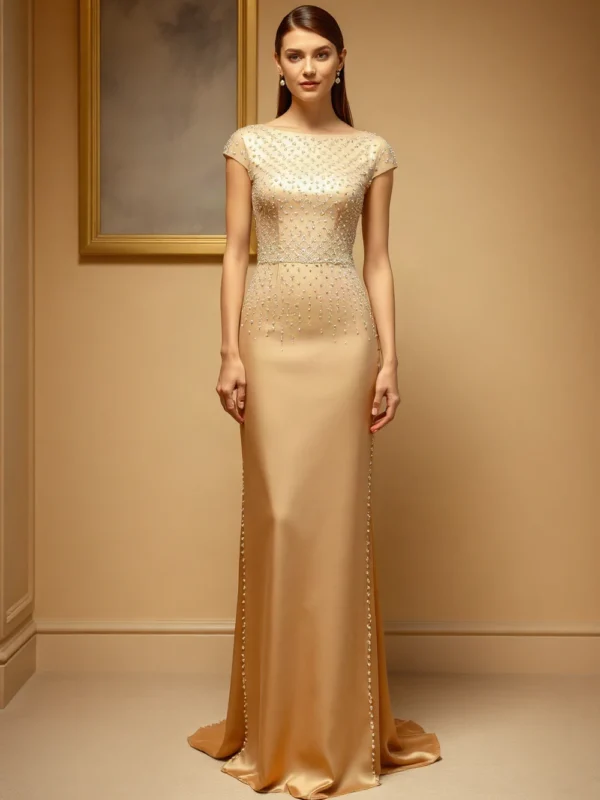
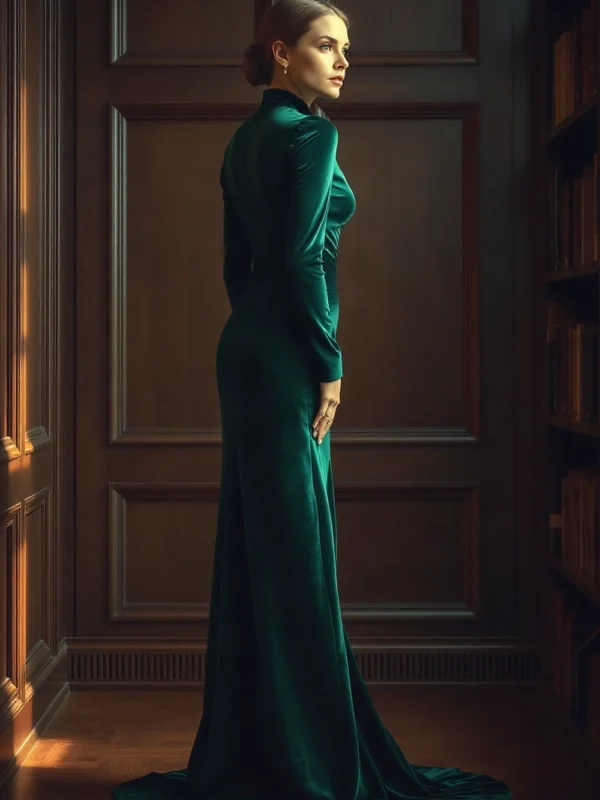
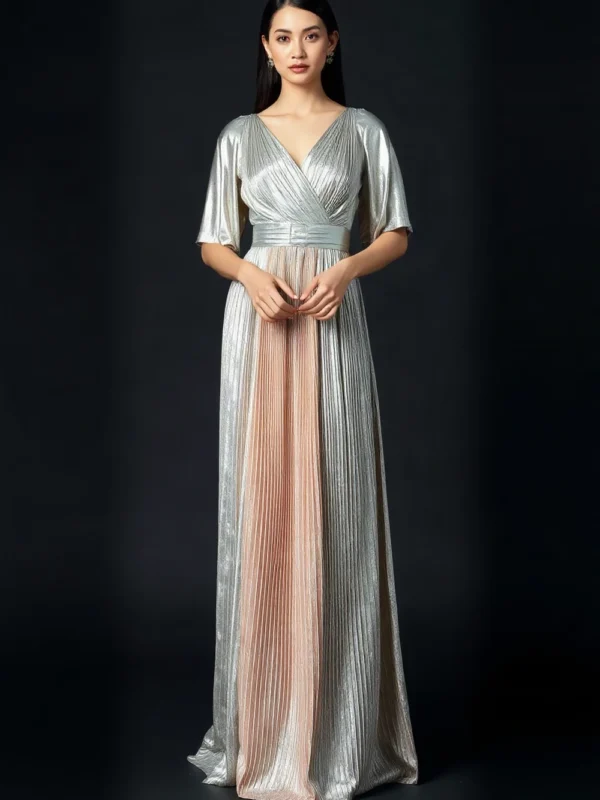
Jewel-tone evening gown styles create an immediate impression through saturated colour, but hue is only the beginning of the decision. Fuchsia, emerald, dark garnet, midnight blue, wine red and cobalt can behave very differently depending on the shape surrounding them. A folded neckline concentrates colour near the face, diagonal draping carries the eye across the torso, and a broad skirt turns colour into a moving field. A reflective surface or long cape can create comparable impact without increasing skirt volume. These six visual concepts show that sculptural detail does not have to mean one particular silhouette. It may come from a gathered waist, a controlled bodice fold, a continuous sparkling surface or fabric-like panels moving behind the arms. A useful comparison therefore includes more than the still front view. Sitting comfort, stride length, arm movement, venue lighting and the space around chairs all help determine whether a bold design works in practice.
Fuchsia Waist Draping and an Expansive Moving Skirt
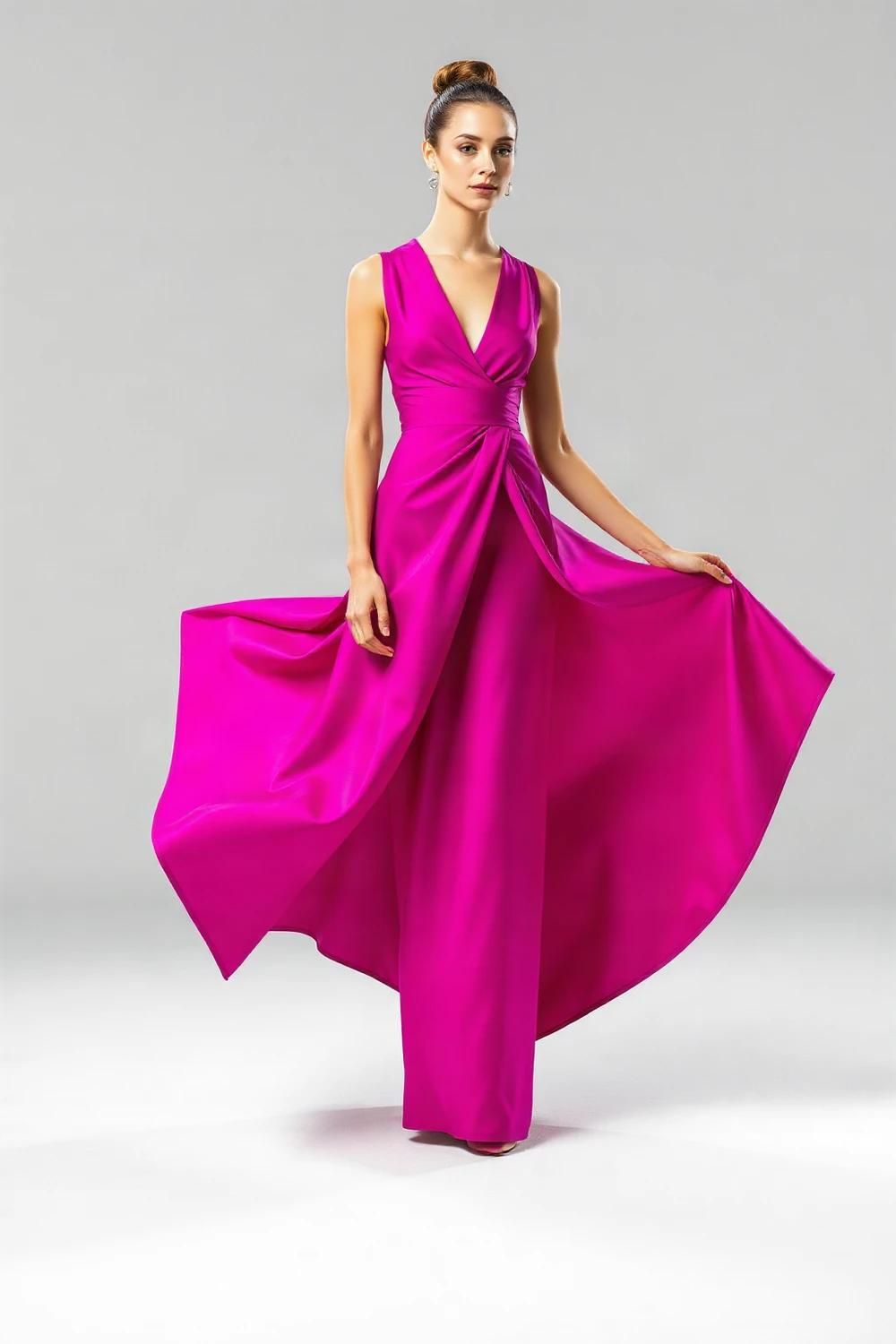
In the fuchsia look, the deep V-neck directs the eye from the shoulders toward crossing bodice sections gathered at one side of the waist. Folds radiate from that point and give the broad skirt an organised beginning. When the skirt is held outward, its colour becomes a dramatic moving plane rather than a narrow vertical line. That scale can be effective in photographs and entrances, but it requires turning room. A fitting should include an ordinary stride, a quicker walk and an approach to a dining chair. The neckline depth needs to be assessed with the intended support, while the gathered waist should remain comfortable when seated. Because both colour and movement are already pronounced, compact earrings or one bracelet can be enough. An updo exposes the clean shoulder line; a low, simple bun can provide the same clarity with a softer effect.
Emerald Sculptural Shoulders Balanced by a Compact Train
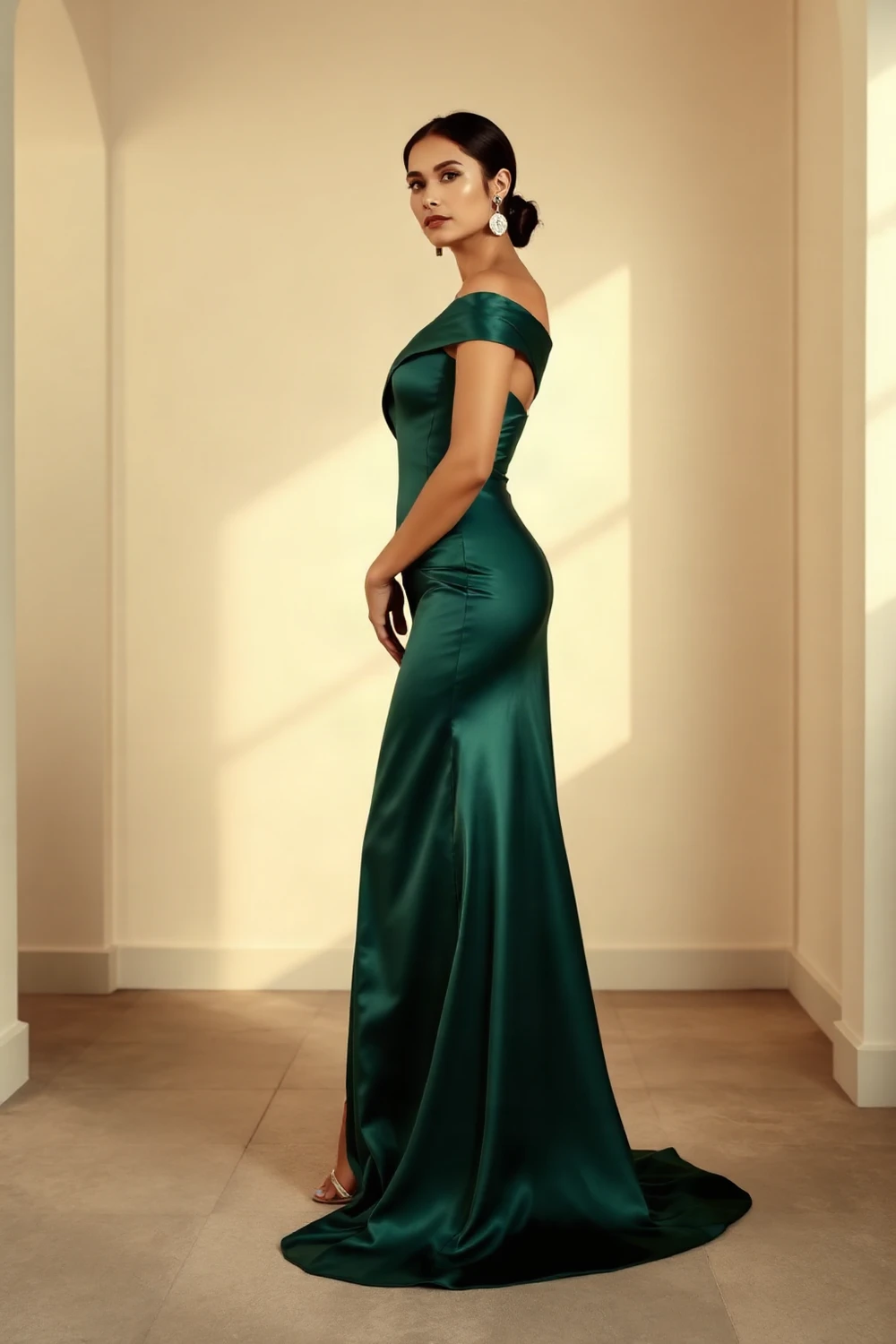
The emerald gown’s defining feature is a broad folded neckline that encircles the shoulders. Volume is concentrated at the top while the body stays close through the hip and releases into a compact train, producing ceremony without a full ball skirt. The position of that shoulder band affects function as well as appearance. Reaching forward, greeting someone and sitting at a table should all feel natural. Even a modest train changes the clear space needed behind the wearer, so it should be fitted with the intended shoe height. Large earrings can work with exposed shoulders, although they may compete with the sculptural fold. Selecting one focal point produces a quieter balance. Sleek hair keeps the complete neckline visible, while a neutral-looking shoe can form a calm continuation wherever the lower opening reveals the foot.
Dark Garnet Straps and Diagonal Folds Across the Body
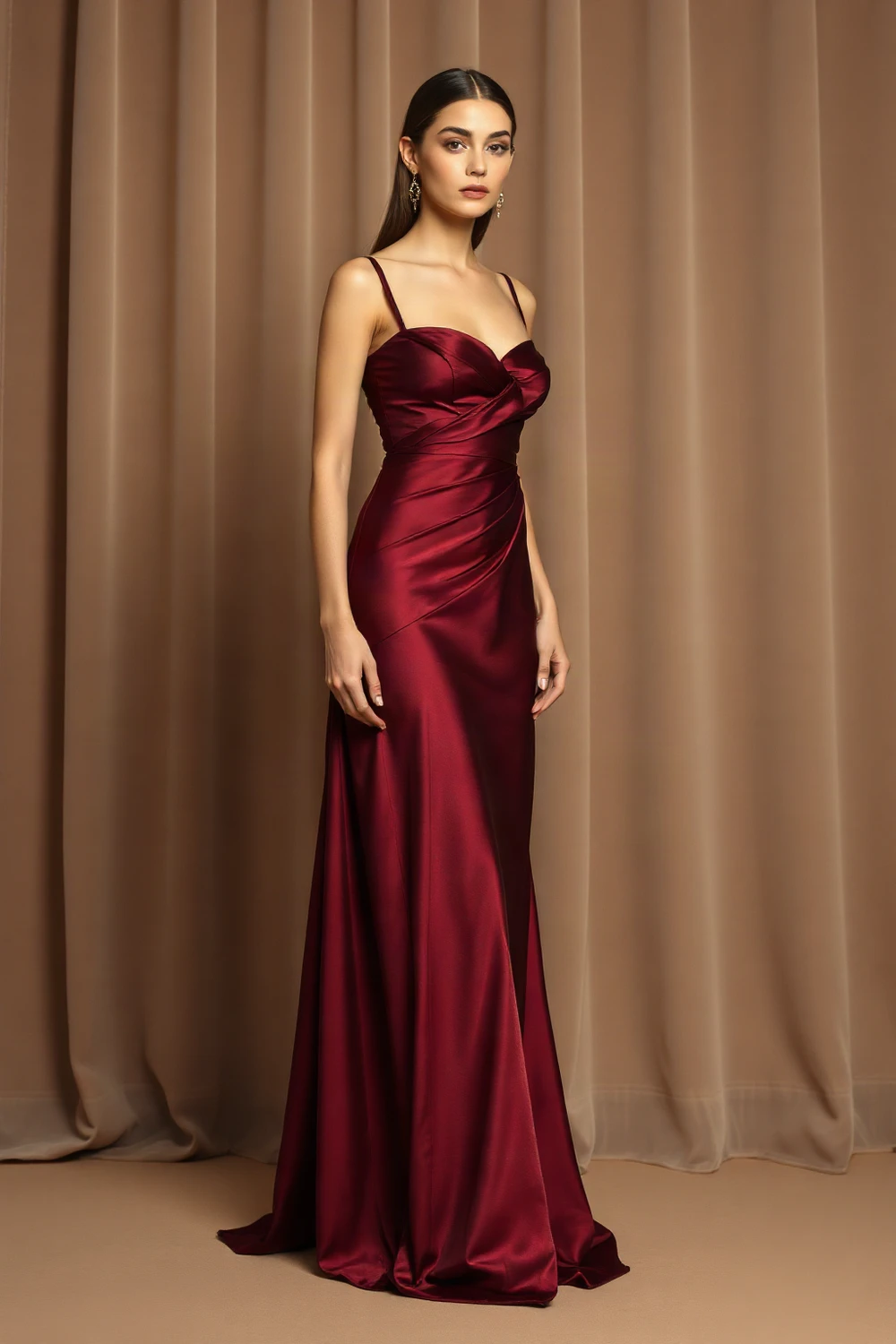
The slim-strapped garnet look creates sculptural interest through fold direction rather than large external volume. Curves meet at the centre of the sweetheart neckline, then diagonal draping travels across the waist and hip so the long, narrow skirt never appears entirely flat. The clarity of this feature depends on accurate placement. Straps should stay on the shoulders, the upper edge should remain stable in motion and the waist folds should not compress uncomfortably when seated. A slight release near the lower skirt may permit more movement than a strict column, though its front length still needs to be checked with shoes. The open neck offers room for jewellery, but earrings alone can preserve the folded bodice as the main focus. Dark garnet may appear deeper under warm or low lighting, making a comparison in more than one lighting condition especially useful.
Midnight Sequins on a Covered Column Silhouette
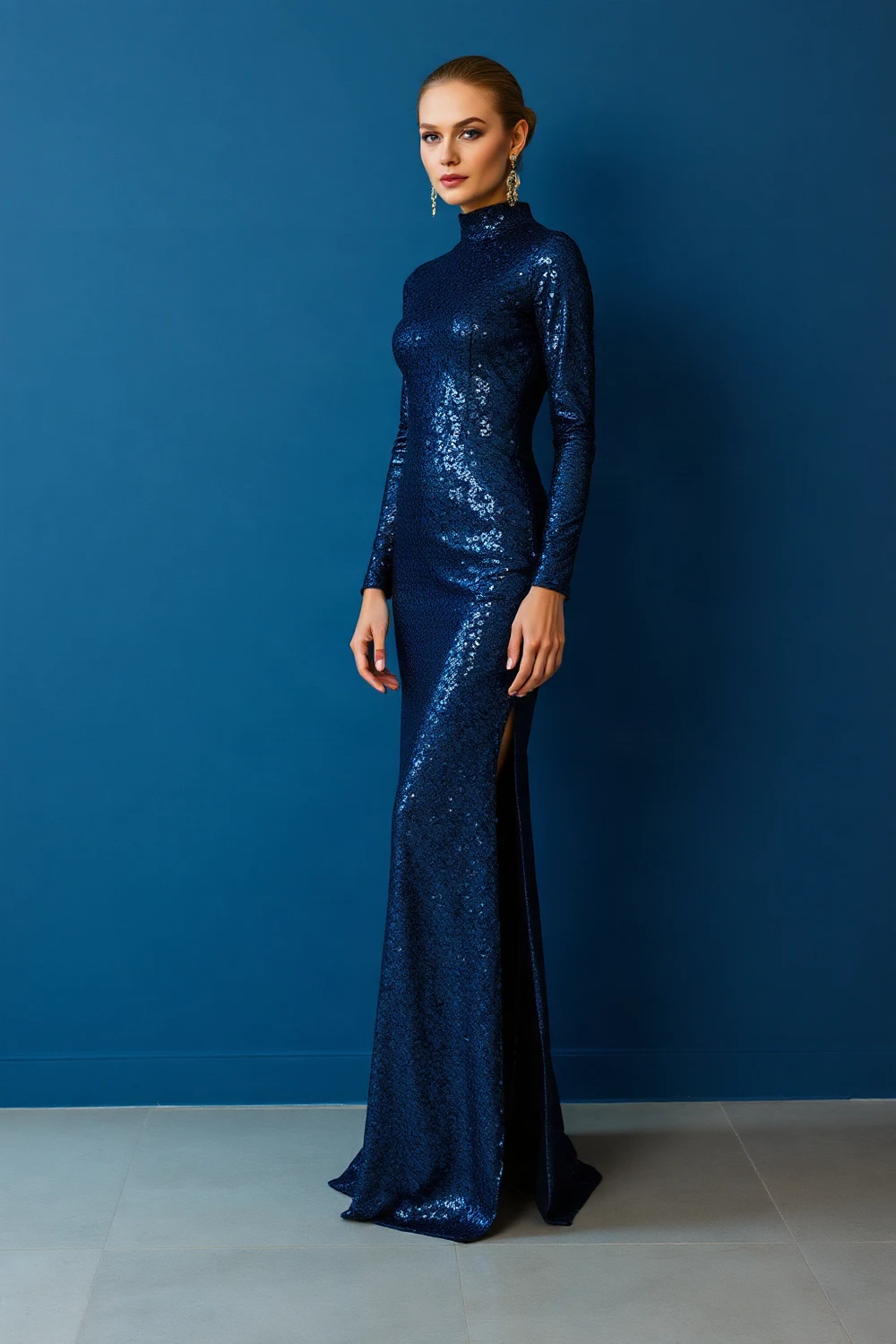
The midnight-blue gown differs from the open-shouldered ideas through its high neck, long sleeves and narrow column shape. Its sparkling surface creates movement without changing the cut: highlights shift across the body as the light or wearer moves. The gown should therefore be viewed in daylight and in lighting closer to the event setting. A high neckline removes the need for a necklace, and narrow drop earrings can supply enough detail near the face. Although the side slit may increase stride room, its position should also be checked while sitting. Bending the elbows and lifting the arms to shoulder level will reveal whether the long sleeves move comfortably. The compact silhouette uses less surrounding room than a ball skirt in a busy venue, but the skirt circumference and shoe height must still permit a natural step rather than relying on the slit alone.
Wine-Red Cape Movement Against a Restrained Column
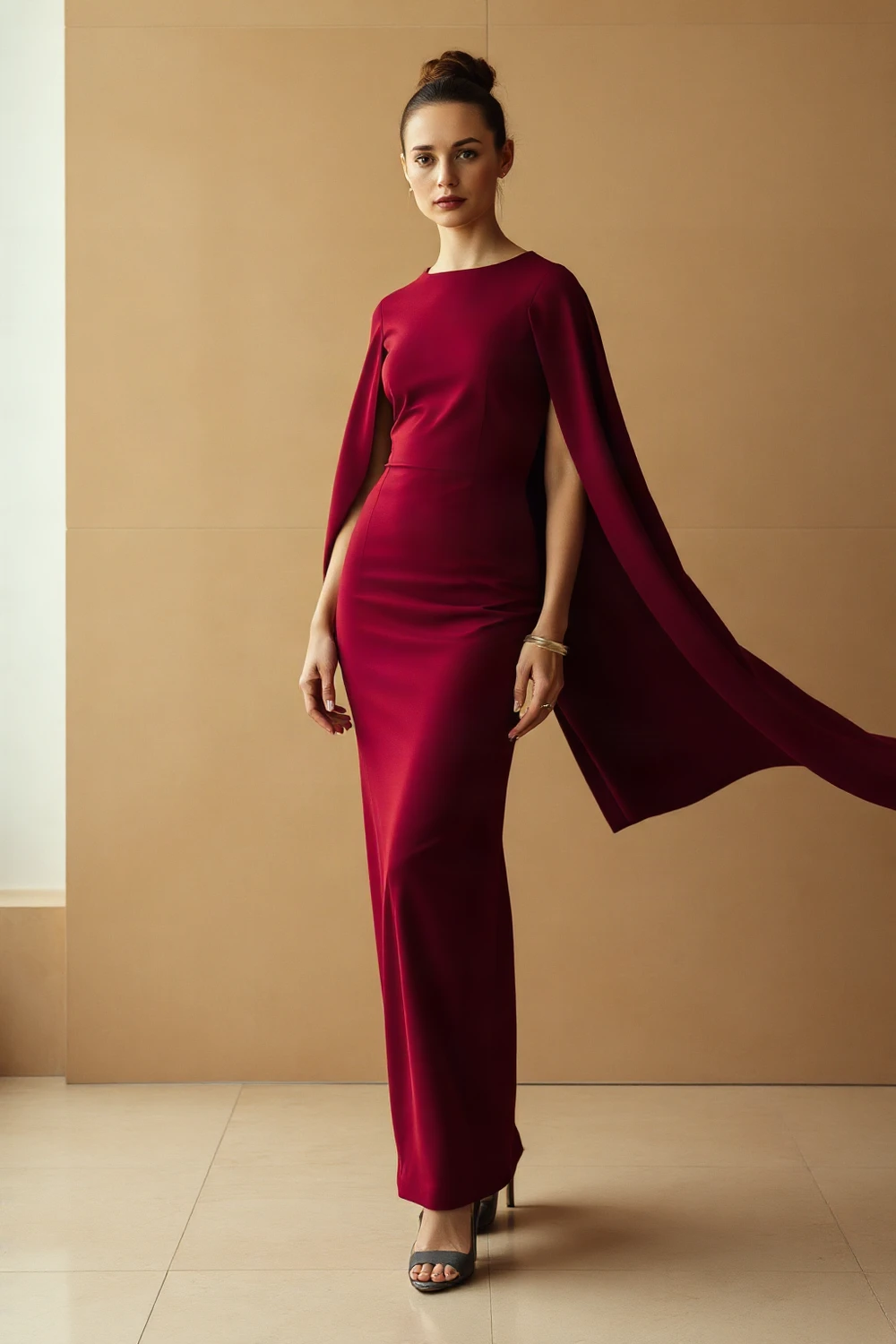
The wine-red design sets a clean bateau neckline and long, narrow body against cape panels extending from the shoulders. From the front, the silhouette is measured and relatively quiet; once movement begins, the panels open behind the arms and create a more dramatic outline. That changing effect can distinguish an entrance from the gown’s appearance at a table. Cape length should be considered in relation to stairs, chair backs and crowded passages rather than photographs alone. The arms need to emerge comfortably between the panels, and the pieces should be manageable when seated. Because a bateau neckline creates a horizontal frame across the upper body, earrings or a fine bracelet may be more harmonious than a long necklace. Hair worn up reveals where the cape begins and makes its structural purpose easier to understand.
Cobalt Strapless Proportions and Ball-Skirt Volume
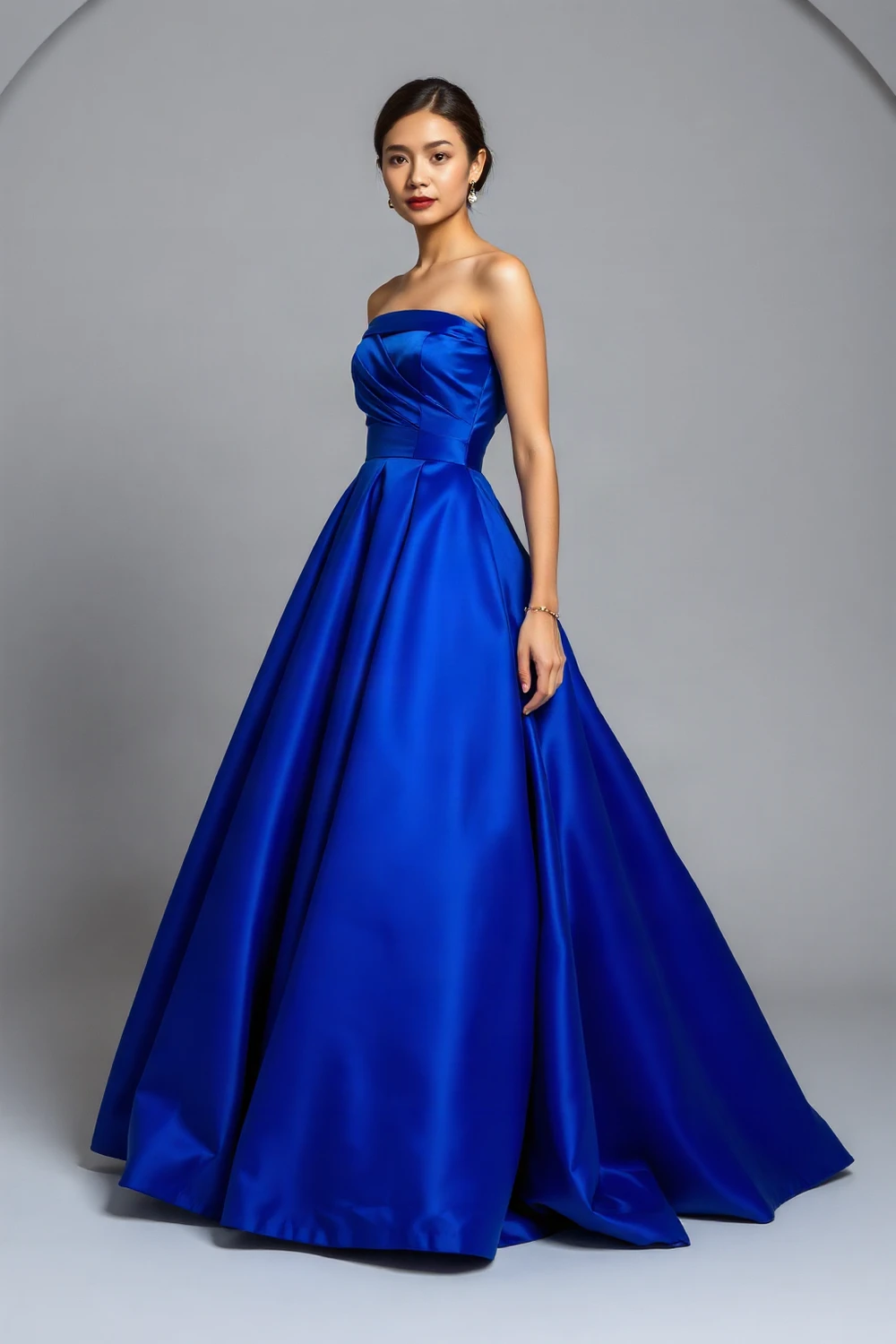
In the cobalt look, a folded strapless bodice ends at a broad waistband before the skirt expands decisively. Its sculptural quality comes primarily from proportion: a contained upper section is balanced by an exceptionally wide lower silhouette. The waistband should meet the natural waist correctly because its position determines both the skirt’s starting point and the apparent body ratio. The strapless edge must stay secure when the arms rise, without restricting breathing or folding when seated. Stairs, a dance floor and chair spacing all demand more clearance around this skirt, and hem length needs to be set with the actual shoe even when the footwear remains hidden. Open shoulders leave room for a necklace, but the bodice folds and saturated cobalt are already powerful. A single pair of earrings or a fine bracelet provides a controlled accompaniment to the volume.
The most suitable choice among these looks cannot be made by colour preference or dramatic detail alone. Fuchsia and cobalt use the surrounding space through their skirts, while the emerald and wine-red concepts place more emphasis at the shoulders and behind the body. Garnet relies on precisely positioned torso draping; midnight blue gains intensity from light moving across its surface. Begin with the event’s seating plan, walking distance and likely lighting, then test neckline security, arm range, waist comfort and hem length. A final fitting should include the chosen shoes, support and planned jewellery. This process turns sculptural detail from a static visual effect into part of a coherent relationship among colour, proportion and movement, allowing the gown concept to suit both the desired impression and the practical demands of the occasion.
Compare fuchsia draping, an emerald folded neckline, a sequined midnight column, a wine-red cape and a cobalt ball skirt through volume, movement, surface and accessory balance.
Frequently asked questions
Is a full skirt or a column evening gown easier to manage?
A full skirt offers ceremonial volume but needs more clearance around stairs, chairs and crowded spaces. A column uses a smaller radius, yet its stride width, slit placement and seated comfort still need careful testing.
What jewellery works with a sculptural neckline?
When the neckline is already the main focal point, small or slender earrings may be sufficient. Even with exposed shoulders, choosing either a bold earring or a necklace rather than both leaves more visual space around the folds.
Why should a jewel-tone gown be viewed in different lighting?
Saturated colours and reflective surfaces can appear lighter or deeper in daylight, warm interior light and low event lighting. Directional light also changes how folds, sequins and the body line are perceived.
What should be checked when fitting a cape gown?
Raise the arms, sit down and walk to see where the panels fall. It is also useful to simulate stairs, chair backs and narrow passages so the risk of the cape catching on nearby objects can be assessed.
How can movement security be tested in strapless or slim-strapped gowns?
Raise the arms, reach forward, sit and turn. The upper edge should stay in position, straps should remain on the shoulders and breathing should feel unrestricted. Any intended support should be included in the final fitting.