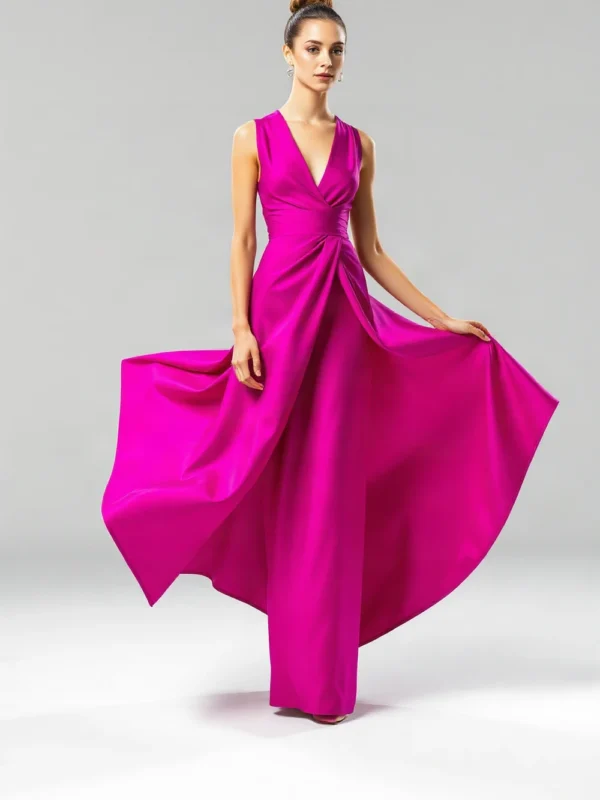
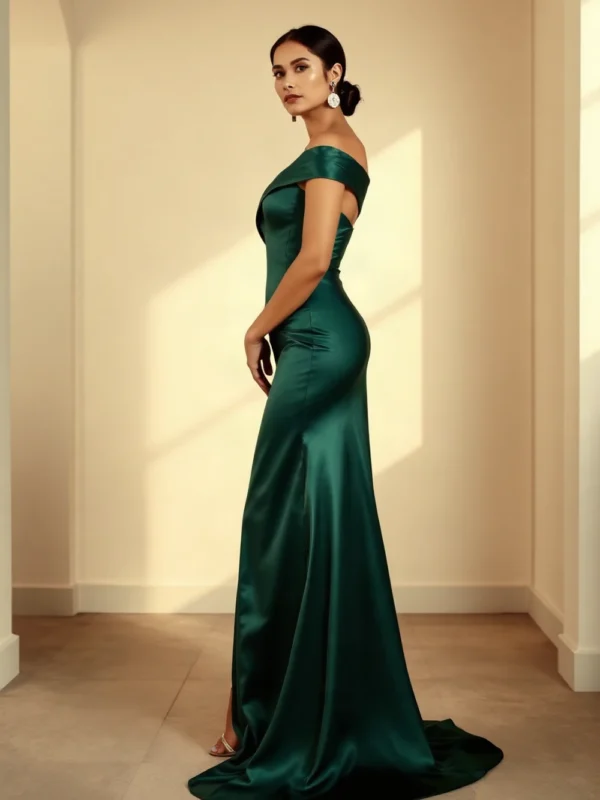
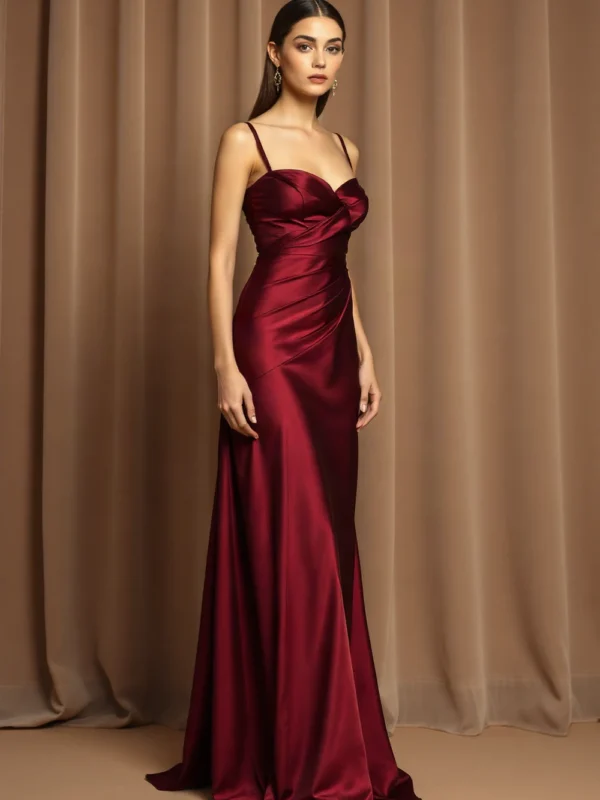
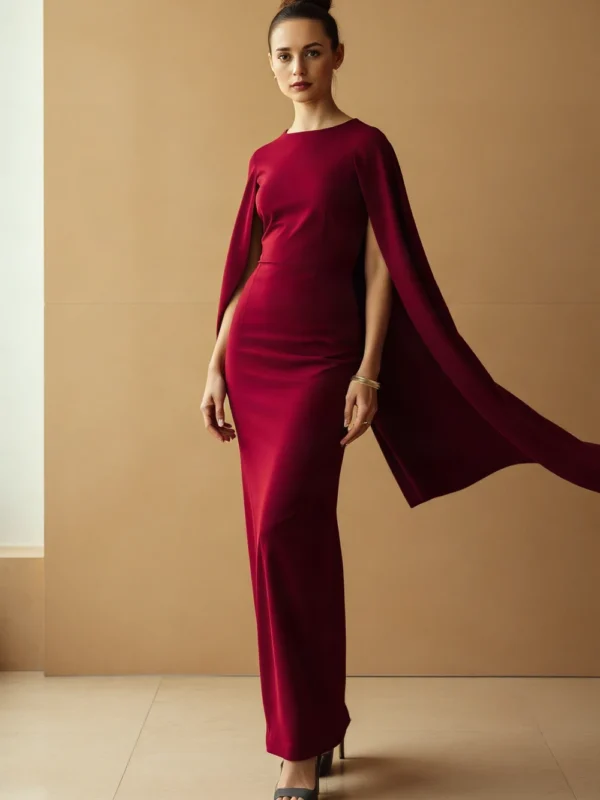
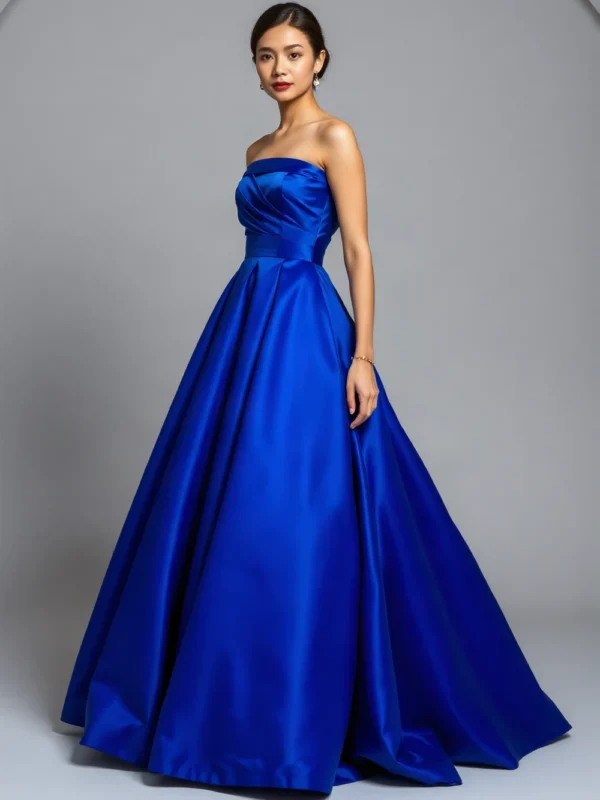
The gallery’s shared language comes from saturated jewel tones combined with clearly defined silhouettes. Colour provides an immediate focal point, but each look directs it through a different structural idea: movement radiates from the waist of the fuchsia gown, a broad folded neckline frames the emerald design, and diagonal folds shape the garnet bodice.
The first three images demonstrate how folds behave differently across smooth, reflective surfaces. The fuchsia skirt expands dramatically in motion, whereas the emerald gown stays close through the hips before extending into a modest train. The dark garnet look replaces expansive volume with controlled draping around the bust, waist and hip. Sitting, walking and reaching should therefore be assessed separately when comparing them.
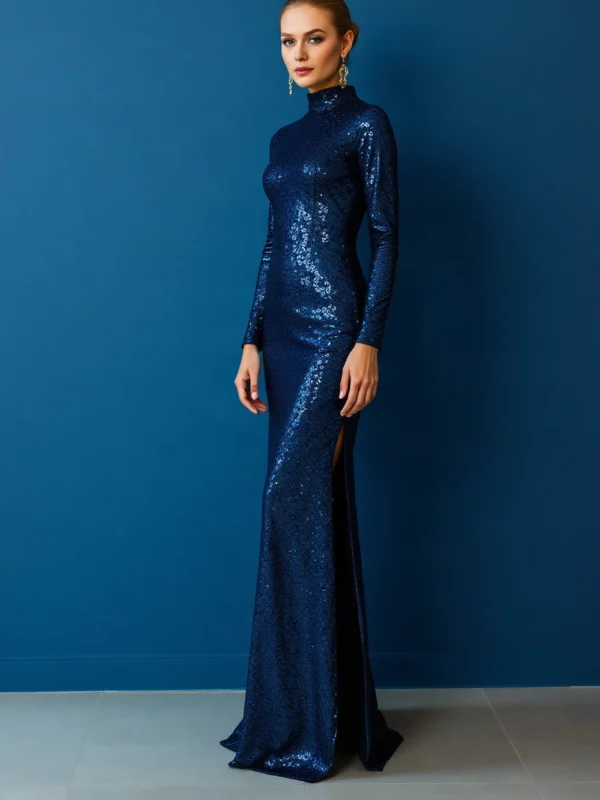
The midnight-blue gown combines a high neck and long sleeves with an all-over sparkling surface, producing a covered yet visually assertive line. The wine-red design takes the opposite route: a restrained column body gains movement from cape panels flowing behind the arms. One depends on changing light across the surface; the other comes alive through motion and surrounding space. Venue lighting and circulation room matter as much as the colour choice.
The cobalt ball-gown silhouette is the group’s fullest option, balancing a strapless folded bodice with an exceptionally broad skirt. Narrower columns may be easier around chairs and crowded walkways, while the ball skirt needs a wider personal radius. Accessories can remain selective across all six ideas: small earrings suit a highly reflective surface, while an open neckline can support either a measured earring or bracelet without competing with the main structural detail.