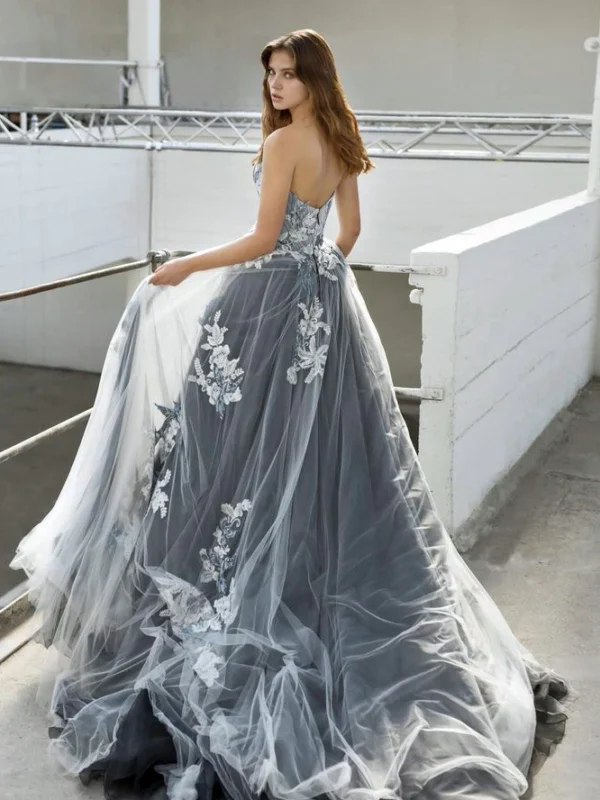
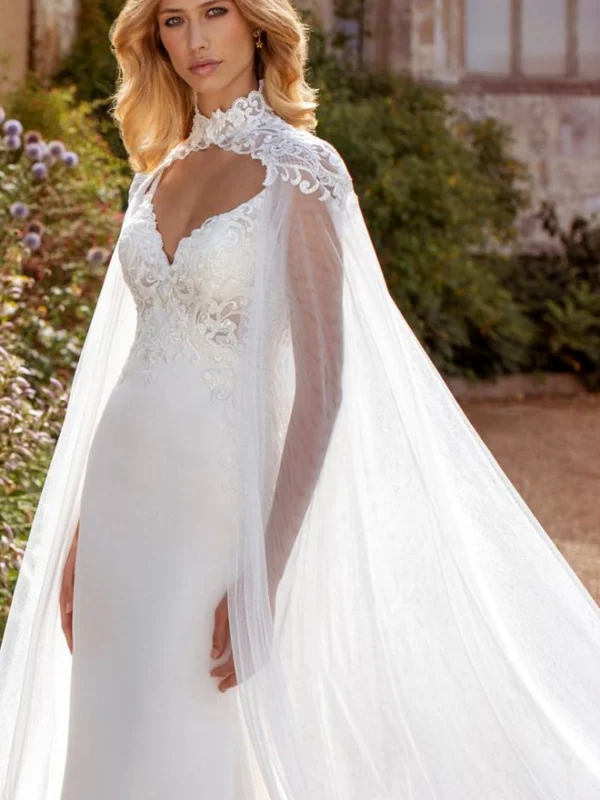
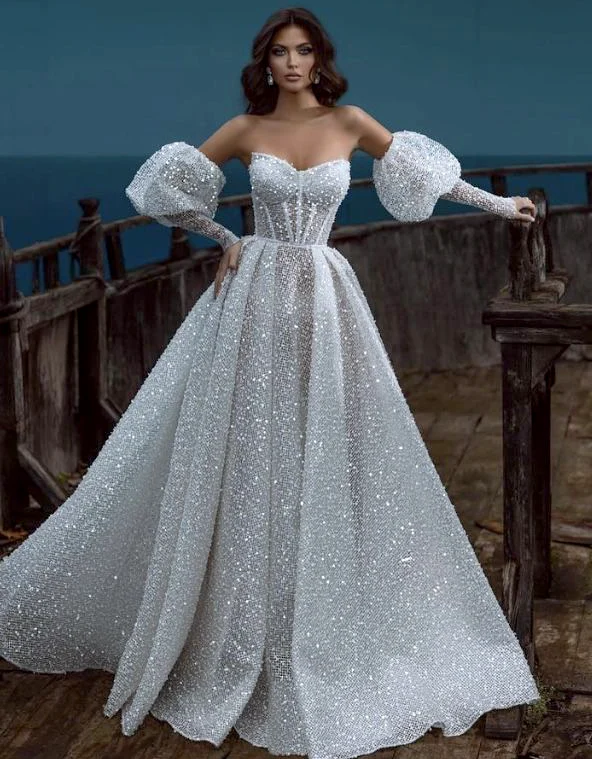
A halter wedding dress can be selected through its visible neck and shoulder arrangement before deciding shine and further accessories. Three references bring fabric or straps towards the neck: a higher closed front, a deep V and narrower bands above a shaped bust. A one-sleeve diagonal counterexample shows a different shoulder distribution. These highly reflective dresses provide shape ideas for your proposed bridal outfit; their appearance does not establish a particular bridal collection or fibre. Begin with the arrangement you actually want to wear.
Halter does not automatically mean a high closed front. Justin Alexander’s halter selection explicitly includes gowns with plunging front necklines. This supports searching separately for neck direction and front depth; those products do not identify our photographed references. Assess the actual dress’s back separately too. The backless wedding dress guide helps coordinate that line with hairstyle and veil.
Halter wedding dress: higher front edge or deep V?
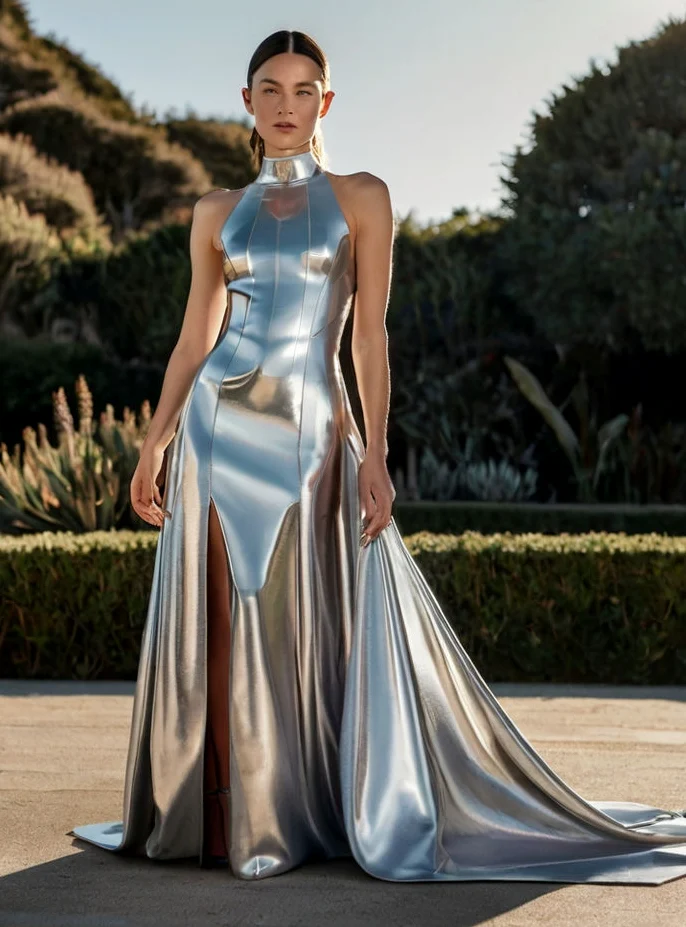
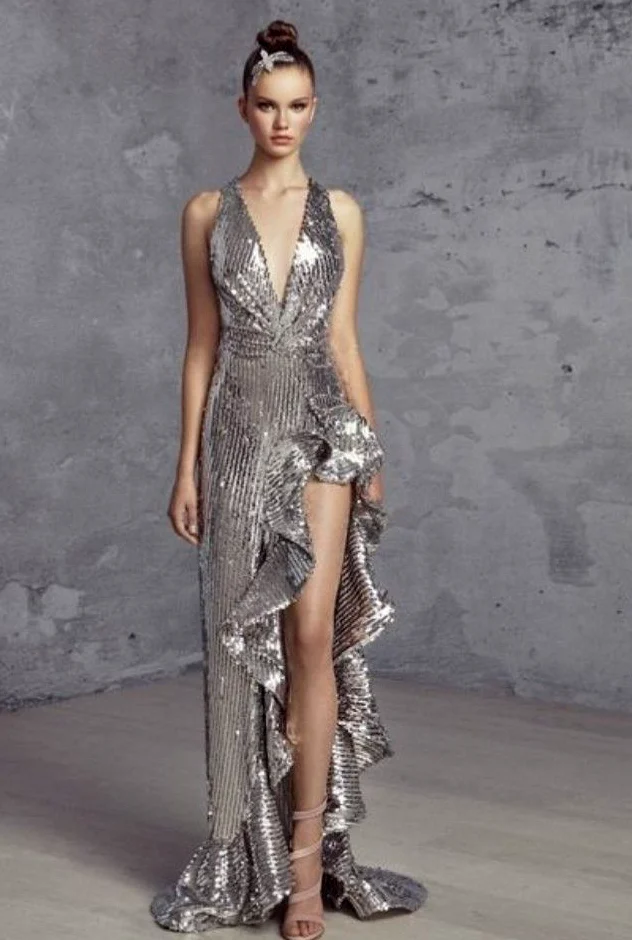
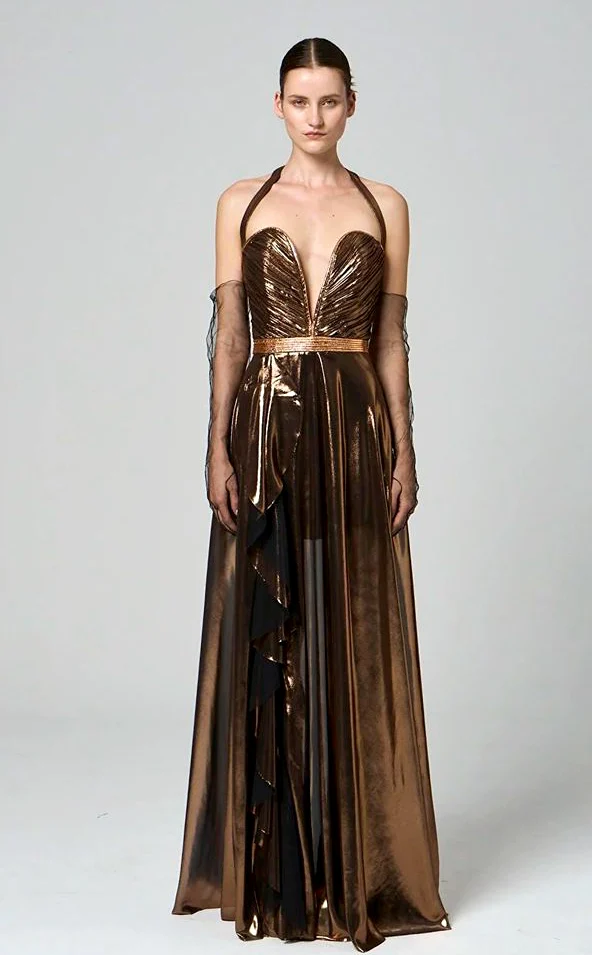
The silver-coloured leading example has a noticeably higher front neck edge and vertical bodice lines. The arms remain bare at the sides. Another silver-coloured model has a deep V descending between side sections that lead towards the neck. The bronze-coloured comparison places narrower bands above two shaped bust sections with a deeper centre. Choose which front opening appeals first. All three can show an upper arrangement directed towards the neck while revealing very different amounts of the front bodice.
At a fitting, point out the actual outer edge you want rather than relying on a neckline name alone. Request the candidate’s own side and rear views so you know the continuation there too. A high front does not automatically determine the back. Have the actual connection and fastening explained. If you want an alteration, identify the particular place and ask what is possible on that model. Another photograph’s neckline supplies a shape reference, rather than an established interchangeable component of the available dress.
Compare bare shoulders with a diagonal alternative
Next compare the neckline with shoulder distribution. The three neck-directed arrangements leave both shoulder sides visibly open. The dark silver-coloured counterexample instead has one long sleeve and fabric leading diagonally towards the neck, with the other arm bare. This asymmetry is a separate decision from a high or low front opening. Liking a bare arm therefore does not automatically mean choosing the deepest V. Describe the amount of shoulder and arm you want visible separately from the central neckline.
Wear your actual candidate with shoulders and arms relaxed. Reach your arms forward, let them rest and then sit down. Observe the upper edge after these movements. Describe specific places you want changed rather than expecting a particular wearing effect from the image. If you want to add an outer layer around the bare shoulders, test the real combination. A visible strap route does not explain the internal construction or establish any general supportive performance of the bodice.
Coordinate earrings and hair beside the neck edge
With a higher edge close to the neck, try earrings without an additional necklace first. The leading photograph shows longer earrings beside hair drawn back. Compare your own longer and shorter pairs with the same hairstyle and dress. Look from the front and slightly to the side at where the lower end finishes beside fabric and shoulder. This chooses a real placement rather than applying a universal rule that a particular neckline must always require a particular jewellery type.
If the open V appeals more, try an intended necklace separately. Decide whether it should sit visibly within the opening or whether you prefer the fabric edge as the main detail. Add a hair ornament after that comparison. The bridal accessories guide helps distribute your choices between hair, ears and neck. Test the pieces while turning your head too. Changing the hairstyle and all jewellery simultaneously makes it harder to identify which difference you enjoy beside the neckline.
Choose shine and colour beside the halter shape
The references show different highly reflective appearances: a smoother-looking silver-coloured area, numerous smaller vertical bright lines and warmer bronze. Choose whether you want the cooler or warmer colour effect first. Then view the actual dress whole and closer at the bodice. A large clear reflection looks different from many small bright points or lines. That visible distinction can guide a choice without presuming a metallic fibre, a particular embellishment type or a brand from the photographed surface.
If the reflective effect particularly appeals, the shimmering wedding dress guide expands the comparison. Keep the selected neck edge as its own decision. The photograph with the nearest colour may not have your preferred neckline. Put the actual earrings and intended bag beside the real garment and decide which area should be most noticeable. You can choose a shiny neckline without equally shiny accessories or deliberately try that repetition. The useful question is which complete arrangement you prefer wearing.
Assess waist and skirt as one complete garment
The higher leading example has a side waist opening, a high front-side slit and a long extending section. The deeper silver V comparison outlines its leg opening with a ruffled edge. The bronze-coloured model shows a narrower bright reflective waist band above a longer skirt. These differences do not follow automatically from choosing a halter neckline. Select the amount of opening at waist and legs separately, then request the corresponding version of your actual candidate instead of assuming every halter has the same lower arrangement.
Walk and sit in the complete dress with the intended shoes. If you will carry flowers or a bag, hold them and check which bodice areas remain visible. Decide on the actual front and rear length afterwards. A trailing side area does not establish a detachable addition. Have each layer and its handling explained. This keeps the neckline part of a genuinely tried garment rather than its only chosen detail while skirt movement and routes remain untested.
Establish fastening, outer layer and care
Before deciding, ask how the real dress closes around the neck and how to put it on. Try the intended sequence and plan help if you want it. Put an actual jacket or other outer layer over it and remove it again, then assess neckline, hair and jewellery. The bronze comparison’s long translucent-looking side arm sections offer another shape idea, rather than a confirmed addition for the silver-coloured models. Your preferred combination needs an actual available construction, not just a collage of separate examples.
Establish composition and care for the product before any treatment. GINETEX explains care symbols; your own label remains decisive. Choose the halter wedding dress through a preferred front neck edge, tried jewellery and deliberate shoulder, waist and skirt choices. With your shoes and a tested outer layer, assess whether the whole outfit suits the use you are planning. The reflective photographs help describe a preference, while the final decision belongs to the real model you can try.
Choose a halter wedding dress by front edge and shoulder distribution first. Try jewellery and hair, select waist and skirt separately and test the fastening and outer layer on the real garment.
Frequently asked questions
What should I compare between a high edge and deep V?
Assess the actual open front area and outer fabric edge. Request side and rear views too, because a high front does not automatically determine the back.
Which earrings should I try beside the higher neck edge?
Compare your longer and shorter pairs with the same dress and hair. Try them without an additional necklace first and assess their position while turning your head.
How should I test a jacket over the halter dress?
Put the actual jacket on and remove it over the dress. Check the neckline, hair and jewellery afterwards and try intended arm movements in the complete combination.