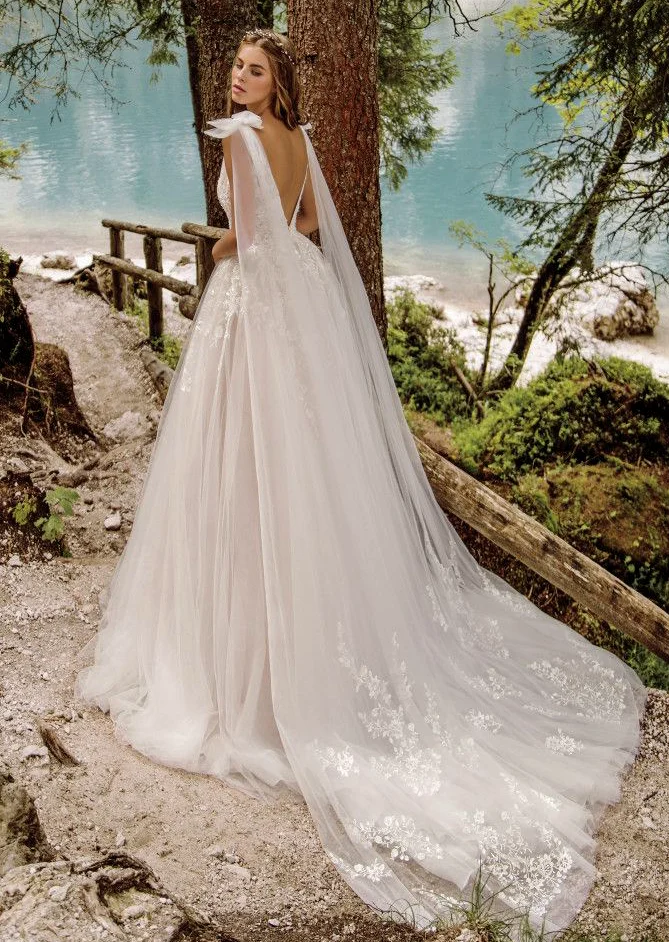
A garden wedding dress becomes easier to choose when the actual location comes first. Which paths will you use, where will you sit and which areas are covered? The references show a closer long shape, broader skirts, different sleeves and a rear train spread over an outdoor route. They offer design alternatives rather than evidence that a photographed garment suits your particular garden plan. Separate the desired appearance from questions about the actual model. A clear route description can make a fitting more useful than the word summery alone, without prescribing one universal dress style.
Choose a garden wedding dress through the actual route
Write a short sequence: arrival, walking to the intended place, sitting, standing and reaching the next area. Ask the responsible person about the paths actually used instead of inferring the ground from a decoration picture. Will there be grass, gravel, steps or firm paving? Are there narrower sections where you would want to manage the skirt differently? You do not need an elaborate chart. Two or three specific transitions already help select length and width deliberately and give a fitting something practical to investigate.
The rear reference with shoulder ties shows a long outer line over an uneven-looking path. The closer upper-skirt shape stands on paving instead. Do not turn that difference into a ranking. Translate it into a trial question: which area continues behind you, and how would you handle it along your own route? Establish any proposed alternative path or seat in advance. An attractive stationary photograph cannot answer those questions on your behalf or confirm how the dress behaves throughout the event you are planning.
Compare hem and train with the intended shoes
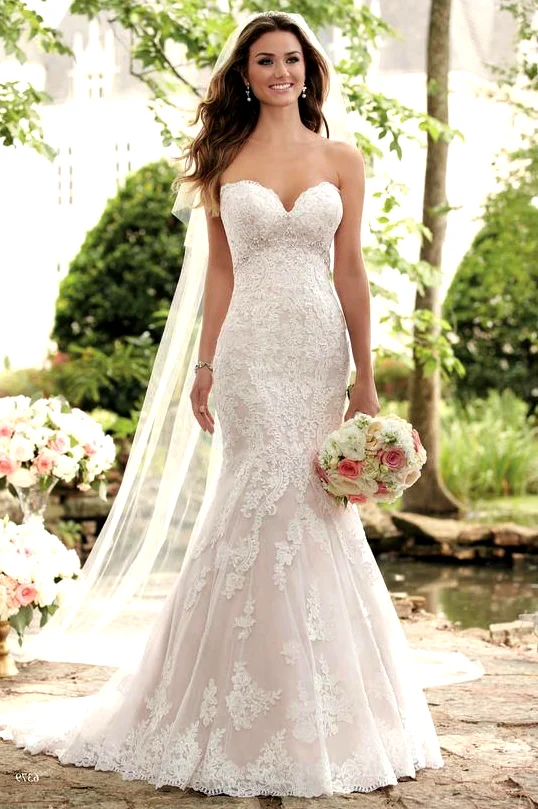
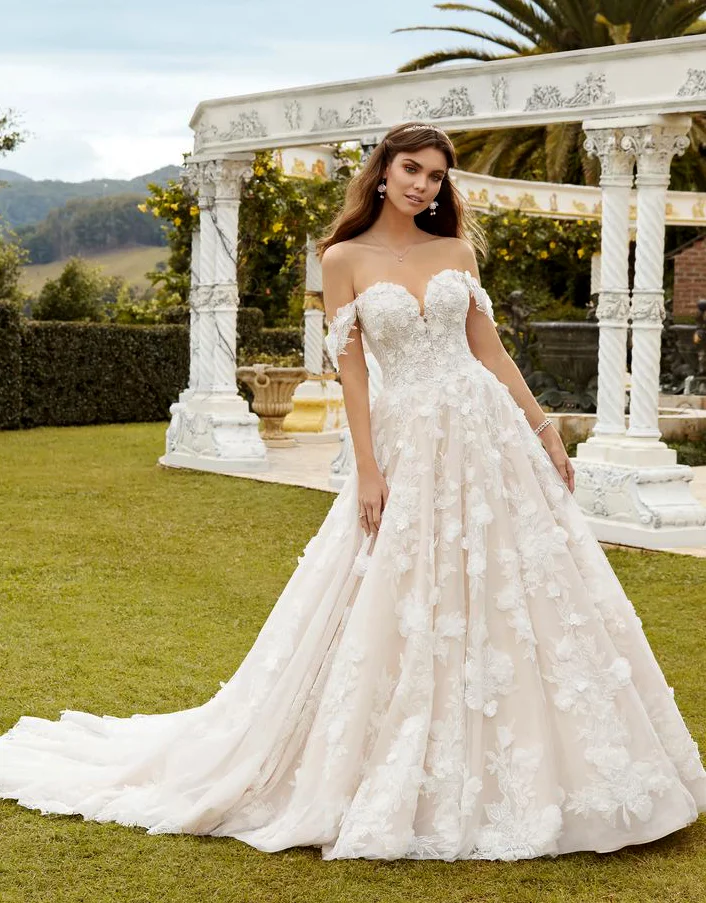
Choose whether you want a long rear line at all first. The broad floral dress on the lawn spreads substantial fabric behind and beside the person. The closer shape with a rounded strapless bodice widens farther down. Both are long but create different outer outlines. Compare where the larger area begins rather than only its distance from the floor. Notice how it follows an ordinary step. Wear the actual intended shoes instead of treating another pair of approximately similar height as a complete substitute.
Let the hem fall normally before anyone arranges it for a picture. Walk, turn and sit. If a shorter or differently managed train appeals, request a demonstration on the particular dress. Detaching or fastening up is not an automatic feature of every extended area. The Wedding dress with an overskirt guide separates inner and outer skirt lines more closely. For the garden plan, the next question is whether the confirmed construction suits your route and preferred appearance. Enjoying one pictured area need not commit you to every associated detail.
Test skirt width at seats and narrower transitions
A broad skirt may be precisely the shape you want for the celebration. Assess its width where you will use it: passing chairs, sitting at a table and standing again. The indoor reference with a quieter lower surface makes the large shape clear. The floral garden image gives another distribution with more drawing across the skirt. You can choose between those surfaces without automatically adopting the same width. Describe decoration and occupied area separately so neither quietly determines the other during the comparison.
Ask to sit with the complete skirt at a fitting. Where do your hands go while holding a bouquet or bag? How would you stand without rearranging the sides repeatedly? These are personal use questions rather than judgements about a body shape. The Full-skirt wedding dress guide develops the relationship between a broader skirt and bodice. Borrow relevant questions while keeping the garden sequence central. A narrower dress is not automatically more practical, and a large form is not automatically excluded. Test what each real candidate actually offers for your intended actions.
Select sleeves and upper coverage independently of the setting
The references include a clear strapless upper area, short side shoulder details, longer sheer-looking sleeves and a higher patterned neckline with short sleeves. The word garden prescribes none of these. Choose how much arm and shoulder area you want visible first. Compare the planned additional layer afterwards. If more coverage appeals for one part of the day, test a specific combination rather than deriving temperature or wearing feel from a pale or thin-looking photograph. Different upper arrangements can suit different personal preferences within the same venue plan.
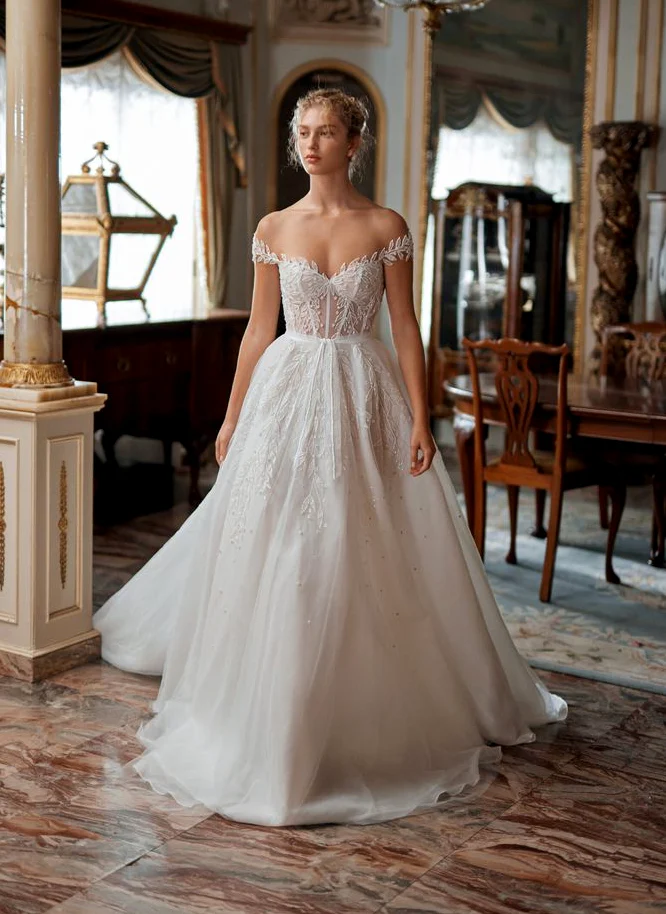
Inspect motifs with the intended underwear in the available fitting light. A close photograph shows flower drawing clearly but cannot explain every underlying layer. Request actual component information if you want more or less transparency. Keep hair and jewellery similar between two candidates while comparing the upper line. You may prefer a higher neckline for a garden celebration or choose clear shoulders. Let the actual dress and your preference decide, rather than a universal summer styling instruction. Where an alteration is offered, establish which boundary would really change.
Connect shoes and accessories to the route
Include the intended shoe pair early. During venue planning, ask whether you can view and appropriately assess the actual ground beforehand. Consider your ordinary step and desired hem. A brief trial on another surface cannot answer every question about the later route. If a second pair appeals, inspect length with both and record which part of the day belongs to each. Changing shoes is an option rather than a requirement. Knowing the particular difference you want it to address makes the plan more useful than following a general shoe recommendation.
Add the bouquet and a possible bag. The front photograph with flowers places the bouquet low beside the hip, leaving the bodice drawing largely clear. Try a position before the waist separately if you actually intend to use it. Holding a broad skirt outward occupies at least one hand instead. Decide what you truly want to carry simultaneously. Keep accessories fairly consistent in the first comparison and change one thing at a time. You can then distinguish another skirt shape from another bag or simply another hand position. A useful combination does not need to reproduce every element of the picture idea.
Compare two complete options for the real day
Finally place two actual combinations side by side. Each should include dress, underwear, shoes and intended additions. Record one strength and one unresolved question: perhaps a preferred broad skirt with the route still unclear, or a good seated transition alongside an upper edge you do not yet want. Resolve the question on the offered model. With permission, photograph matching views instead of spreading only one candidate’s train especially widely. Comparable conditions make the preference easier to explain and keep the next fitting focused.
Discuss how the sequence would change under other conditions too. This requires neither a forecast nor a promise of universally suitable fabric. Read the actual dress’s label; GINETEX explains care symbols. Do not choose treatment from a similar photograph. Your result is a selected look with a specific route, seating and shoe plan. The garden setting remains inspiration, while actual garments and information about the place support the decision. Bring those two complete options to the next trial and finish the remaining detail there.
The Maggie Sottero bustle guide describes different arrangements and recommends a demonstration during alterations followed by practice with the intended helper. That confirms no function on our references. Use it for a specific question about your own dress if you want its rear area handled differently.
The bridal accessories guide adds bouquet and bag placement beside your chosen skirt line. Keep those additions consistent for the first route trial, then change one piece deliberately.
Start with the actual route and seating. Choose the skirt line afterwards and test dress, shoes and intended additions as a complete outfit.
Frequently asked questions
Must a garden wedding dress be short?
A garden wedding dress does not have to be short. Choose the preferred length through your actual route and test a long outline with the intended shoes and transitions.
Does a garden photograph prove outdoor practicality?
A garden photograph of a wedding dress captures a selected moment. Paths, seating, ordinary skirt fall and actual garment components need separate assessment.
Should I automatically choose flat shoes for a garden?
Choose shoes for a garden wedding dress through the actual route and your wearing preference. Try that exact pair with the dress; a general heel category cannot replace the check.


