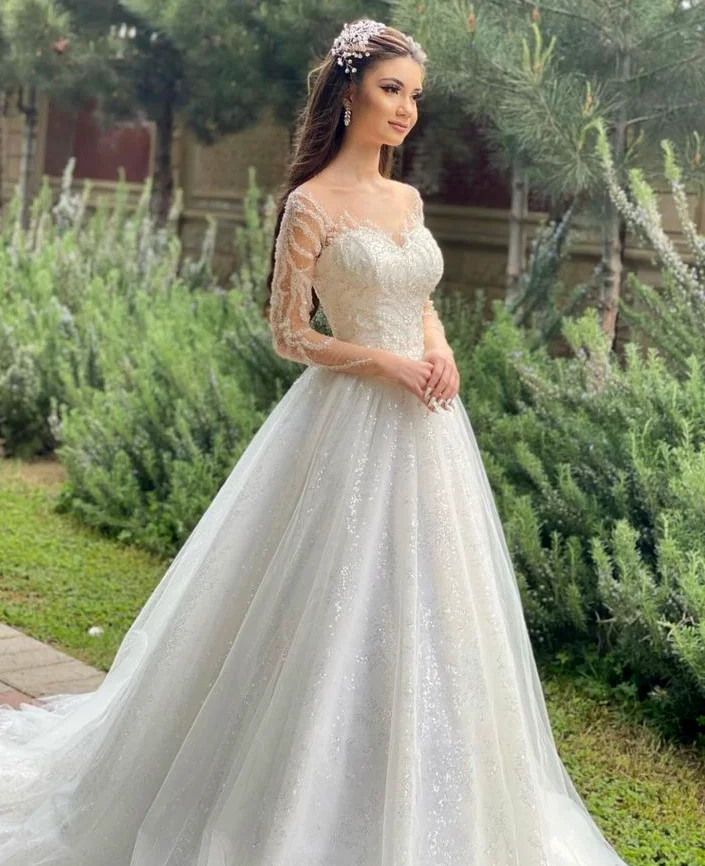
A broad reflective surface defines the lower part of this pale dress. Small light points or fine drawing spread across the large skirt. The upper section and long sleeves carry denser ornamental forms. A sequence of clearly bounded horizontal tier edges is not visible from this angle. The body is slightly turned, leaving part of the front less directly shown.
This example separates a pattern of reflections from visible skirt divisions. Do you want a broad skirt with many small visible details, or actual edges between repeated rows? Both can create a detailed surface, but they depend on different visible features. Tell the adviser which is essential to your preference rather than treating reflection density as if it were the number of tiers.
At a fitting, compare a front view and a slight turn before adding accessories. Notice whether the fine drawing remains prominent from ordinary distance. Then compare that effect with the tier reference’s rhythm. The image cannot securely identify the reflective elements or fabric; their visible distribution is enough for this outside appearance comparison on the actual garment.