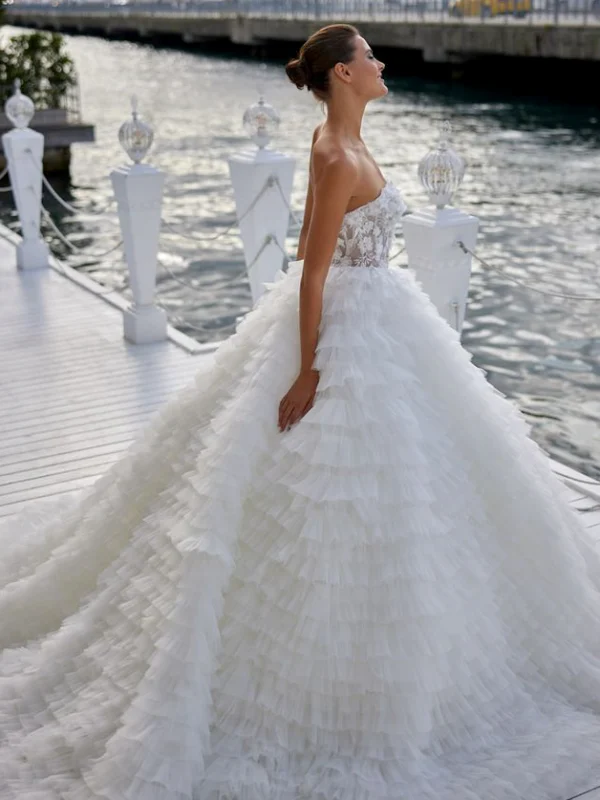
The tiered skirt comes first because its many horizontal edges are readable in the side view. Follow a row towards the back and compare its direction with the next one. The photograph is a reference for outside rhythm, rather than a counted or confirmed number of inner fabric layers. Begin with where the visible edges actually start and finish.
Guide to comparing these images
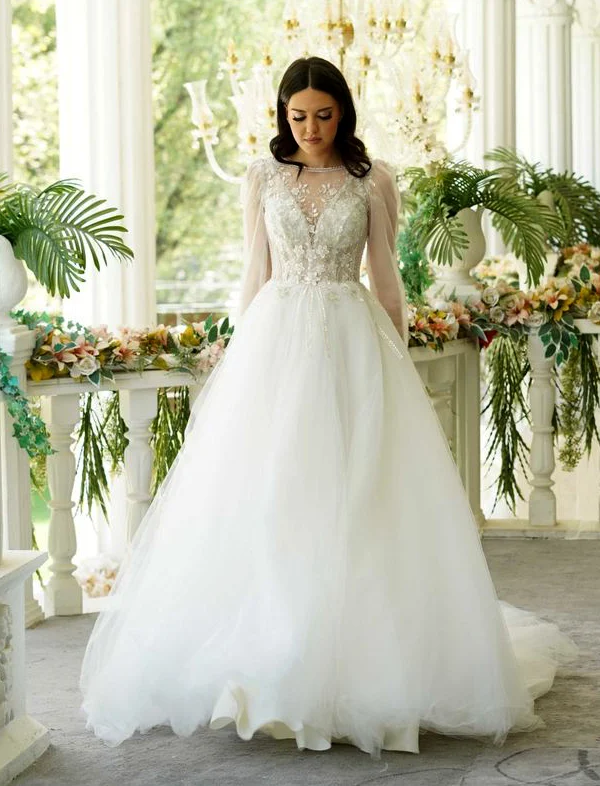
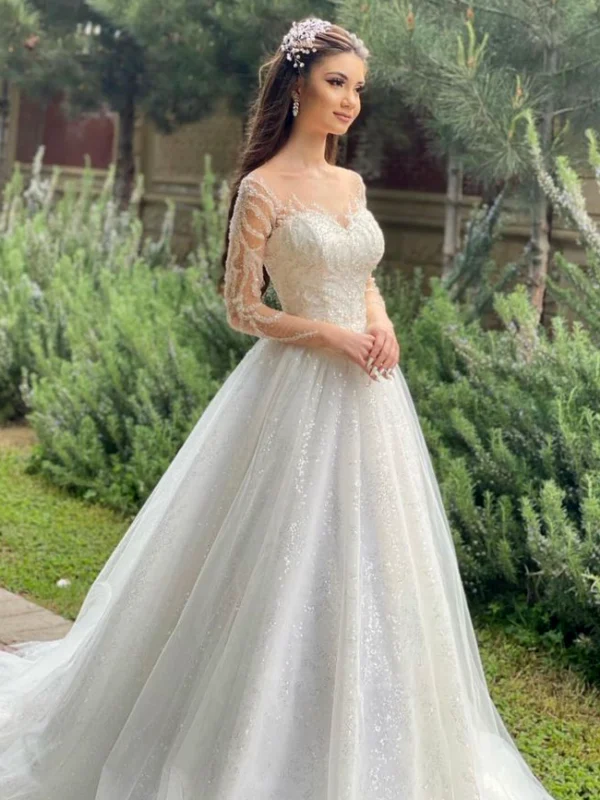
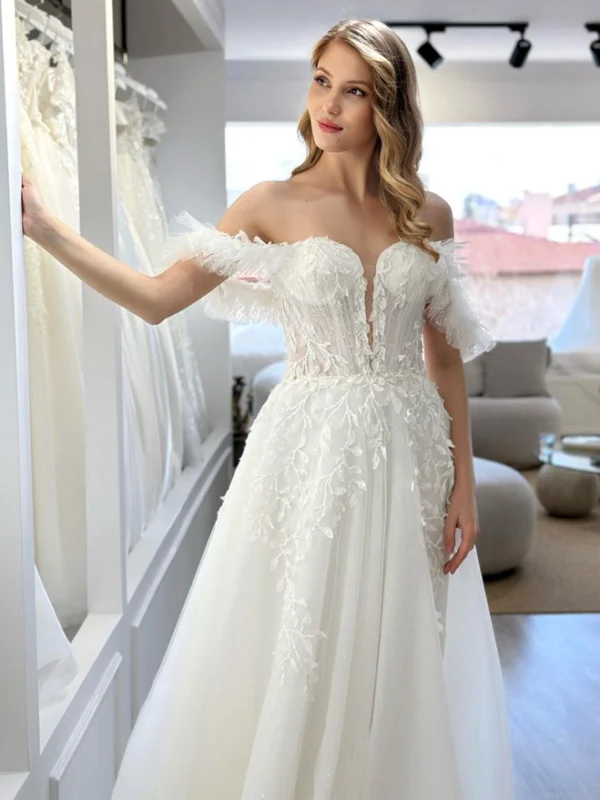
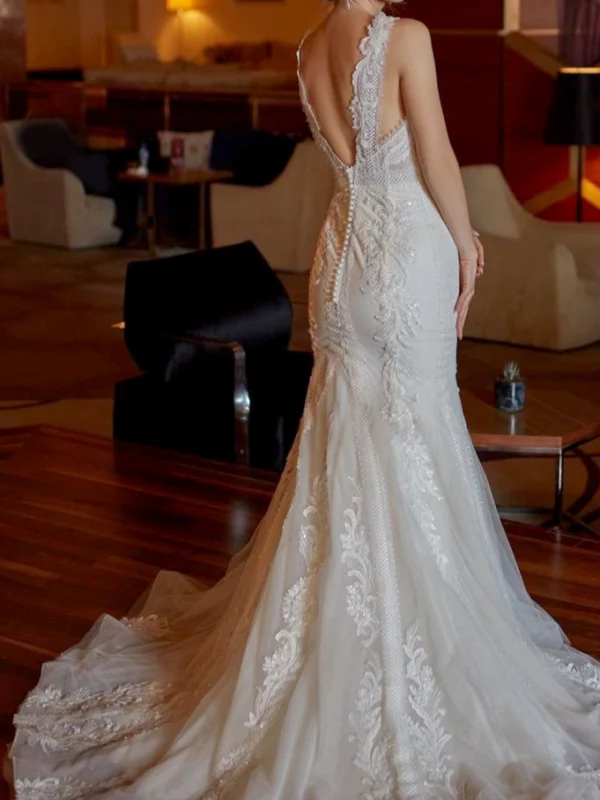
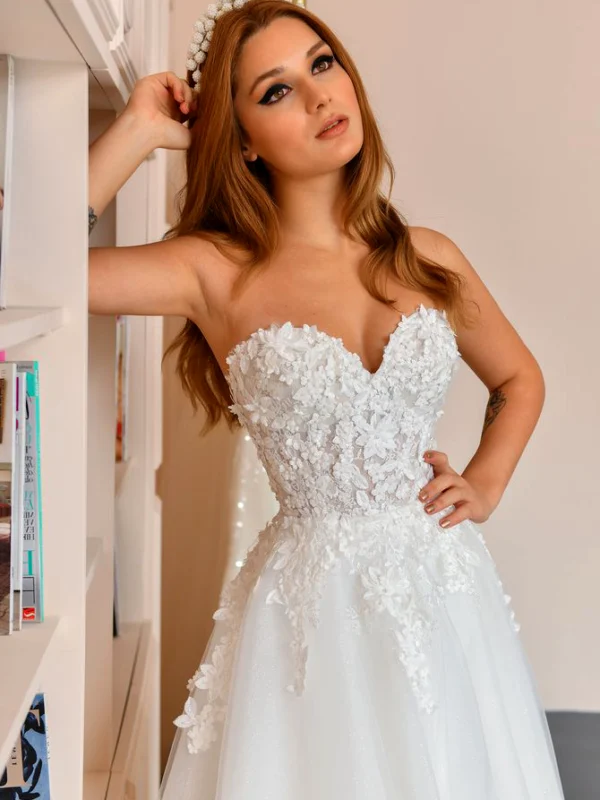
Two broad comparison dresses have more continuous outer surfaces: one quieter, the other finely reflective. The design with side arm decoration and leaves adds larger separate motifs. A narrow back view shows how little horizontal division can appear within another outside shape. The close floral upper section adds a separate question about the transition at the waist.
Choose a principal image for rows and a contrasting image for quietness. Describe whether the width, distance between edges or starting point beneath the bodice attracts you. Those features can be checked on an offered dress. The pictures do not confirm weight, removable sections or fibre content. For this gallery, the visible difference between divided and more continuous outside surfaces provides a useful concrete comparison.
Compare the rows beyond the side view
In the first image, follow the visible edges from the forward area towards the side and rear. The rows do not appear everywhere like straight lines on paper; the three-dimensional skirt shape changes their visible course. Note whether the many short edges or especially the broad side outline appeals to you. Request a front view of the offered dress before settling on a particular distribution.
In the quieter broad comparison, a larger continuous area begins below the decorated bodice. The more reflective alternative shows many small light points, but no comparable sequence of tier edges. This distinction separates richness of detail from actual outside division. The narrow back view also changes the entire silhouette, so it is better used for a second comparison. The close floral bodice only explains the upper transition; it does not establish the appearance of the unseen hem. For your final image selection, one clear row reference and a deliberately chosen quieter alternative may be enough. Add further pictures when they answer a new question.