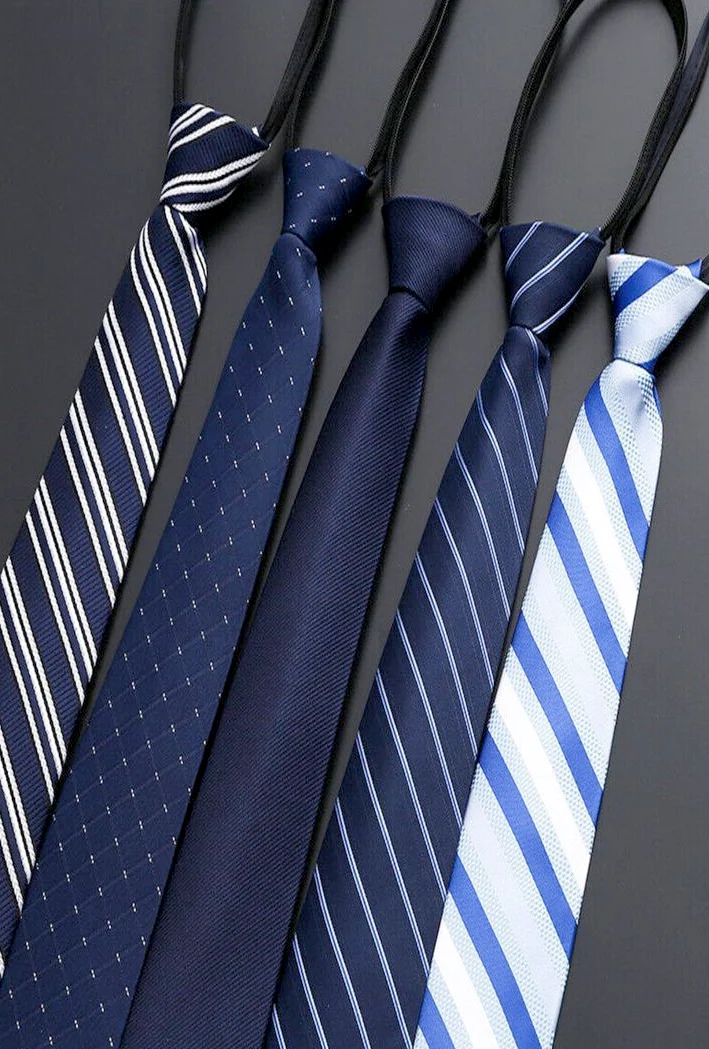
Blue tie patterns are displayed beside one another in this view. One version has broad pale diagonals and another small scattered points. A dark version remains largely quiet, beside narrower blue lines and a much lighter striped alternative. The upper shapes are already tied and arranged with black bands. No worn shirt collar appears, so the photograph does not establish the actual fit at the neck.
Look at the row from farther away first. Which version reads dark, and which becomes visibly lighter? Take that distinction into a shortlist. Compare line direction and width next. Small dotted shapes can perform a different role from a broad visible diagonal even when the base colours are similar.
Try two actual candidates with the same shirt and jacket. Look at the width between lapels and the knot beside the real collar. Decide about another pattern in the square afterwards. The arranged row helps sort surfaces but cannot replace their relationship with your own outfit. Ask about the actual construction too if a particular tying arrangement or length adjustment matters to you rather than assuming it from the displayed upper shapes.