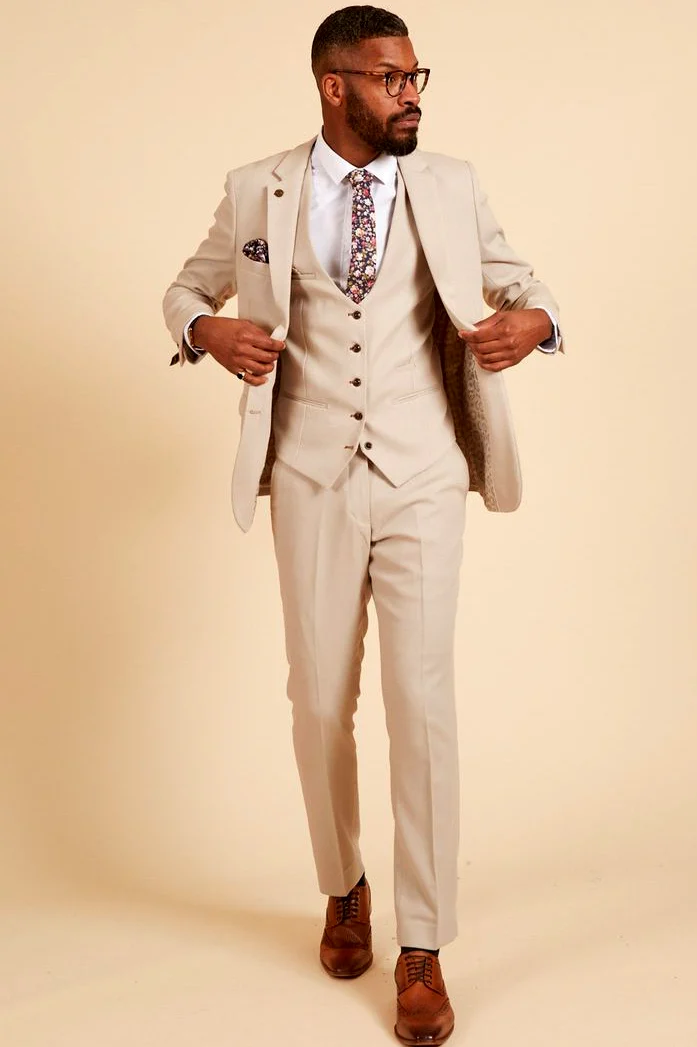
A pale suit surface connects the large pieces of this outfit. The jacket is held open sideways, revealing the waistcoat and its darker buttons. The pale shirt supplies a quiet neighbouring area, while tie and small pocket square carry pattern. Brown shoes introduce a distinctly different colour below. The photograph therefore offers an alternative to the continuously checked references.
If that distribution appeals, try the actual three pieces with a single patterned addition first. Then compare the tie with an added pocket square. Decide whether you want drawing in both positions or prefer one focal point. A pale base does not automatically require numerous further accents, and an attractive close view of one object cannot decide its effect across the whole outfit.
Let the jacket hang normally for the next view and fasten it as intended. Check how much waistcoat remains without pulled-apart edges. Assess the trousers with the planned shoes while standing and sitting. An exact pale shade needs direct comparison of the real pieces. The image cannot establish a fabric composition or identical sales set; its visible distribution is a starting point.