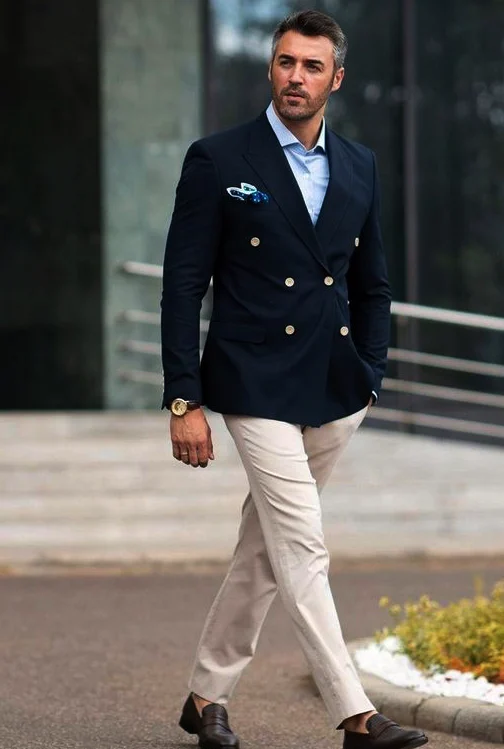
A navy jacket with an overlapping double-breasted front sits above distinctly paler trousers here. The pale blue shirt stays open at the neck. A small multicoloured pocket accent and watch accompany the upper area. Dark loafers and an exposed ankle section appear below. Legs cross during the step and one hand stays in a trouser pocket. The picture shows a darker upper frame with a lighter lower part rather than establishing one matching set.
Compare that distribution with a paler jacket on the same actual trousers. Should a distinct dark point stay above or a closer pale area be sought? Retain the shirt initially so jacket colour remains the specific question. Decide the small square afterwards. Its several shades need not repeat fully in further companions, letting each addition contribute individually to a colour relationship already chosen.
Add a relaxed standing view with both legs and test the intended jacket-free version. The walking pose explains neither your suitable trouser length nor preferred ankle exposure. Choose these boundaries on the real outfit. Visible skin also establishes no particular sock construction or universal summer requirement.