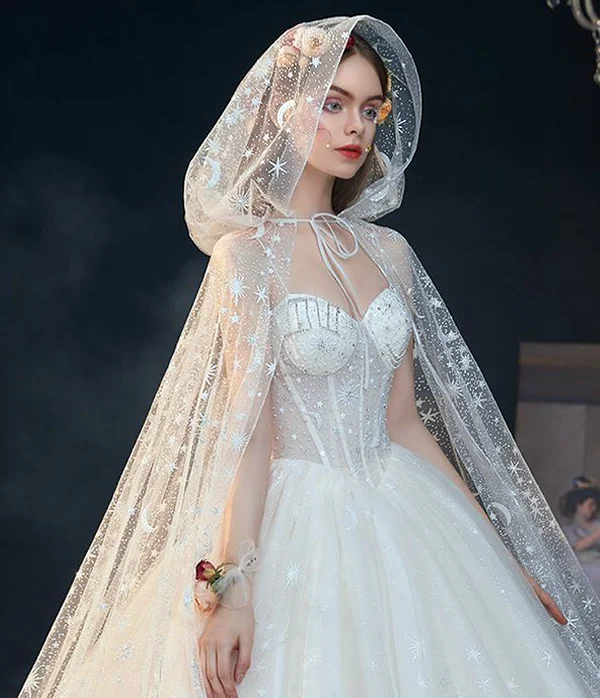
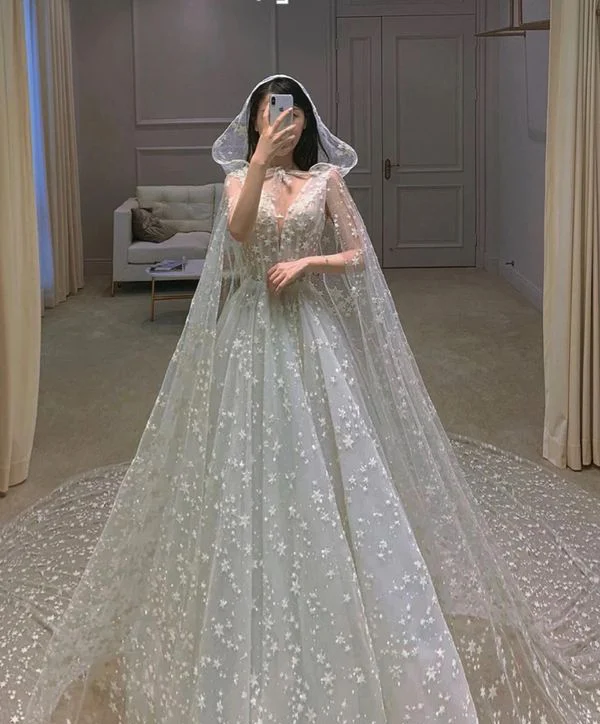
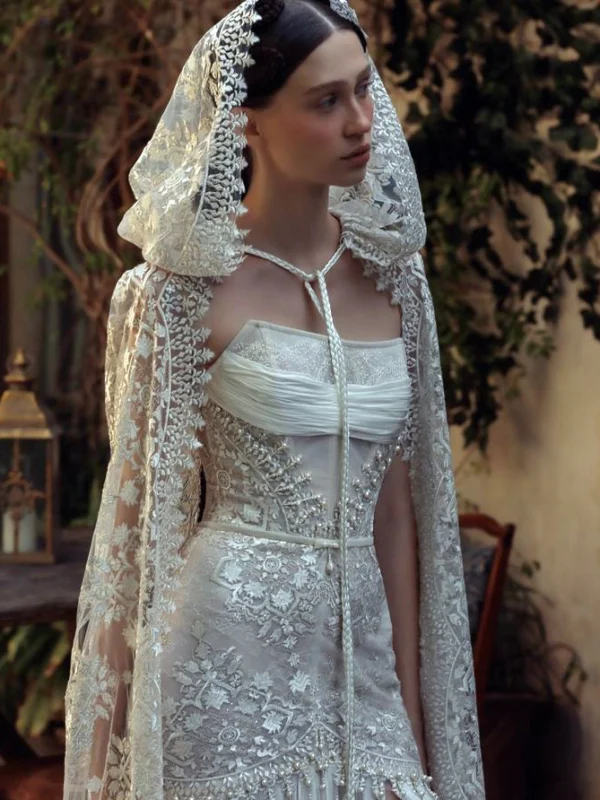
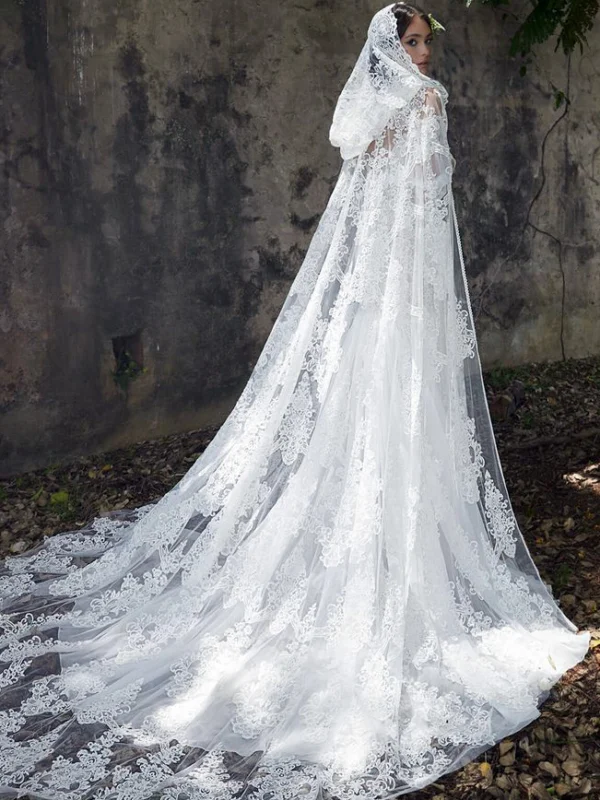
Patterned bridal capes show two star distributions and two floral counterexamples here. Begin with the closer star picture, where larger shapes and crescents register individually. The mirror view spreads smaller stars across the long outer piece to the floor. Compare the floral close-up with its defined hood edge and the broad flower border in the rear picture next. This distinguishes individual motifs, a more even scatter and a prominent outer edge instead of selecting only by the shared pale colour or imagining different versions of one product.
Decide which part of your dress should remain visible through the outer layer. Pattern over a decorated bodice differs from pattern beside a quieter skirt. Try the real combination from conversation distance and full length. The floral rear belongs to a different piece from the star pictures, offering an edge idea rather than a missing view of the same cape. Your selection also needs real handling with hands, flowers and the long layer. Fastenings and possible alterations must be checked on the actual product, keeping the close detail separate from the full length.
Guide to comparing these images
Follow the border independently from the motifs
The closer star view allows crescents and larger shapes to stand apart. The longer star picture spreads smaller marks over a broader falling area. The floral hood close-up places dense drawing at the upper boundary, while the rear floral reference carries a broad frame around the lower edge. Compare where the empty spaces remain between those marked zones.
A strong border can define an outer outline even when the centre stays quieter. A scatter of motifs occupies the field differently, without necessarily forming the same continuous frame. Describe border and centre as separate preferences before looking for an actual piece with the distribution you want.
Keep each product reference complete
Create one reference card for each actual cape, containing its own front, rear and close motif view. Label a floral picture used only for an edge idea as a comparison, rather than filling a missing star-cape angle with it. This makes later discussions of a preferred border answerable on the actual offer instead of on an imagined combination of separate garments.