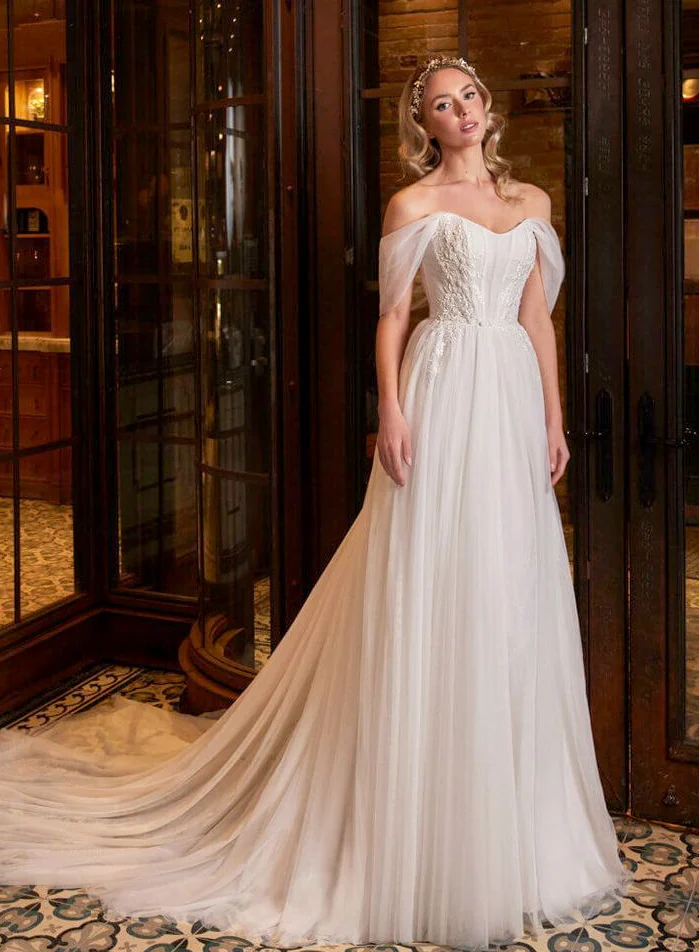
A shallower transition to a quieter skirt becomes easier to assess in this complete front view. The pale bodice carries patterns beside a quieter central surface. Short draped side shoulder areas sit alongside the upper edge. Below, a long full skirt opens with comparatively little prominent decoration. The lower middle of the bodice looks more restrained than the distinctly pointed close reference. You are comparing the readability of the transition rather than merely different quantities of pattern on a similar upper shape.
Look at the middle while briefly setting aside total skirt volume. Would you add a clearer downward point, or do you prefer this quieter connection? Compare that question on two real garments with similar skirt fullness. Otherwise the larger surface below may override the smaller property above that you intended to choose.
Then examine ordinary fall without lifting the sides. This image cannot establish how every offered garment of that general appearance sits on you. Obtain matching front and side views and clarify the actual connection on the item. Its upper neckline remains another choice; the middle of that upper edge cannot automatically describe the lower boundary.