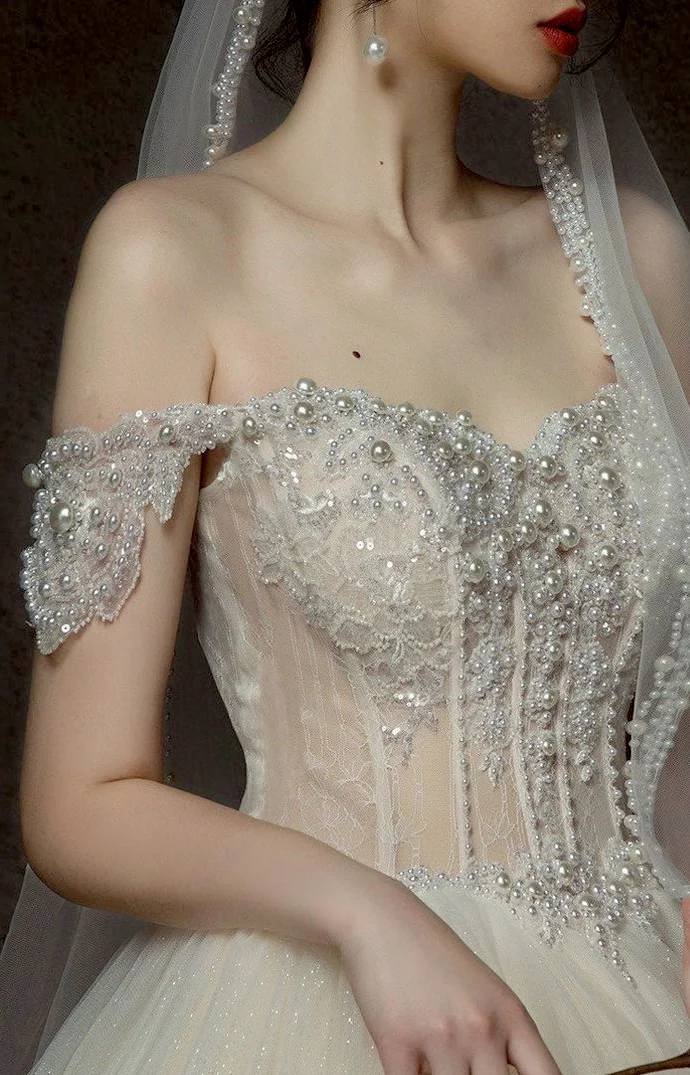
A partly hidden lower middle makes this closer photograph a useful counterexample. Numerous small bright points and larger rounded ornaments spread over the bodice. The upper side edge sits lower beside the arms. A patterned veil area accompanies the front. The arm across the body and close framing, however, prevent an unobstructed view of the entire lower transition. Decoration is easier to assess here than the shape you are trying to establish. Keep that distinction clear when selecting a reference.
Separate those interests in an enquiry. You may like the larger ornaments while leaving the lower boundary undecided. Request a front without an arm or bouquet over it, together with the matching side. Avoid completing the unseen middle from one detail that appears to point downwards; it may belong to the decoration rather than the boundary.
When trying the real dress, ask to see the transition on the whole garment. Then assess how much remains visible with your hands in their ordinary position. A decorated middle need not always be exposed, but you should consciously choose whether its underlying line leads the look or sits behind ornaments and accompanying pieces.