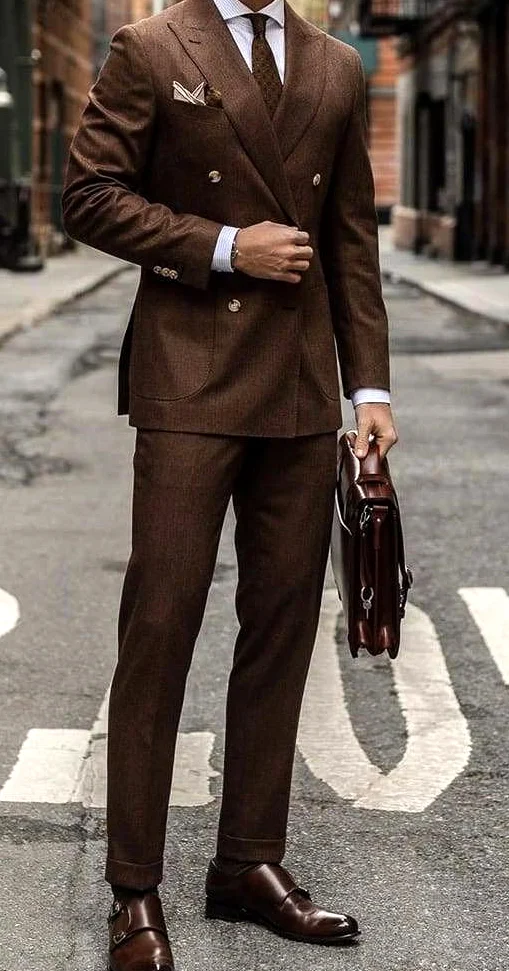
The brown double-breasted suit forms a largely continuous upper area with two visible button columns. A pale small-patterned shirt, dark tie and pointed pale pocket square accompany it. The trousers finish with turn-ups above brown shoes with two side straps or buckles each. One hand holds a brown briefcase while the other stays near the jacket front. The photograph records a particular combination, rather than a confirmed work appointment, wedding or known role for the wearer. The bag does not establish where the outfit must be worn.
For your own celebration, the useful question is whether you want a closed, broad colour block. Compare the double-breasted front with an open single-breasted candidate and decide which frame you prefer. You do not need to adopt the briefcase. Instead, consider whether your actual sequence involves carrying something and which hand should remain free. Test that object seated and standing. The turn-ups and shoes offer another lower-half idea; transfer their proportions only after fitting your own trousers with your footwear and comfortable stance, rather than treating the photograph as a measurement.