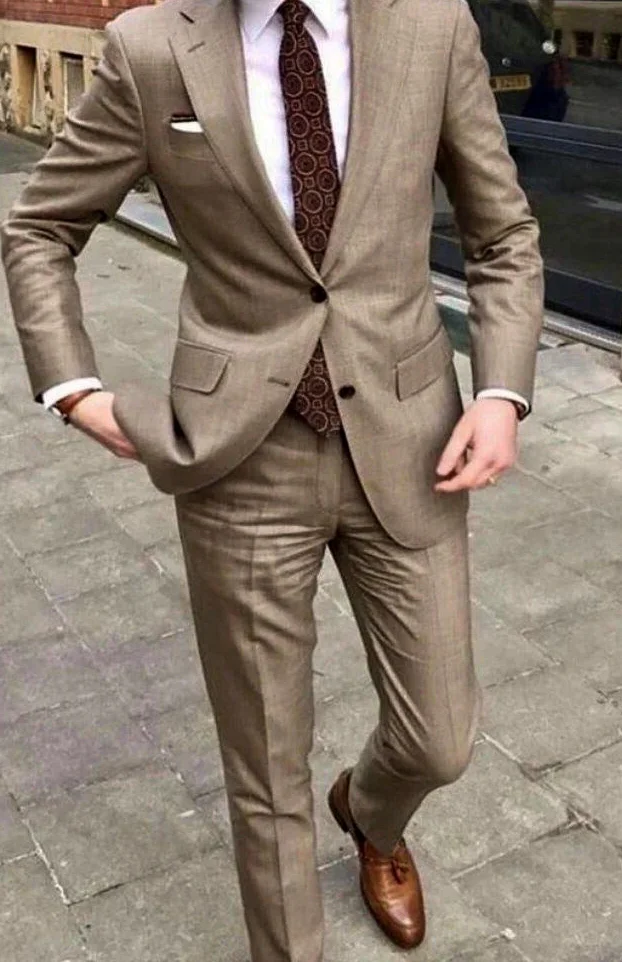
The beige suit creates a broad pale area around a white shirt and brown patterned tie. Round, nested motifs give the tie its own clear rhythm. A small dark pocket detail with a pale edge sits on the jacket. One hand is in a pocket and one leg is set back; brown lace-up shoes continue the warmer lower colour area. The head and parts of the footwear lie near the edges. This is a moving styling pose rather than a straight measurement comparison, so the apparent hem should not become your own alteration measurement.
Use the reference if you want a pale main colour with one darker centre. Try a plain brown tie on your real candidate before searching for a similarly large pattern. That separates colour from motif scale. Compare it beside the other person’s intended outfit if you are coordinating together. The white shirt and pale suit need to be assessed as actual pieces side by side. Before changing a hem, add a relaxed standing view in the precise shoes you plan to wear, rather than copying the photographed stance.