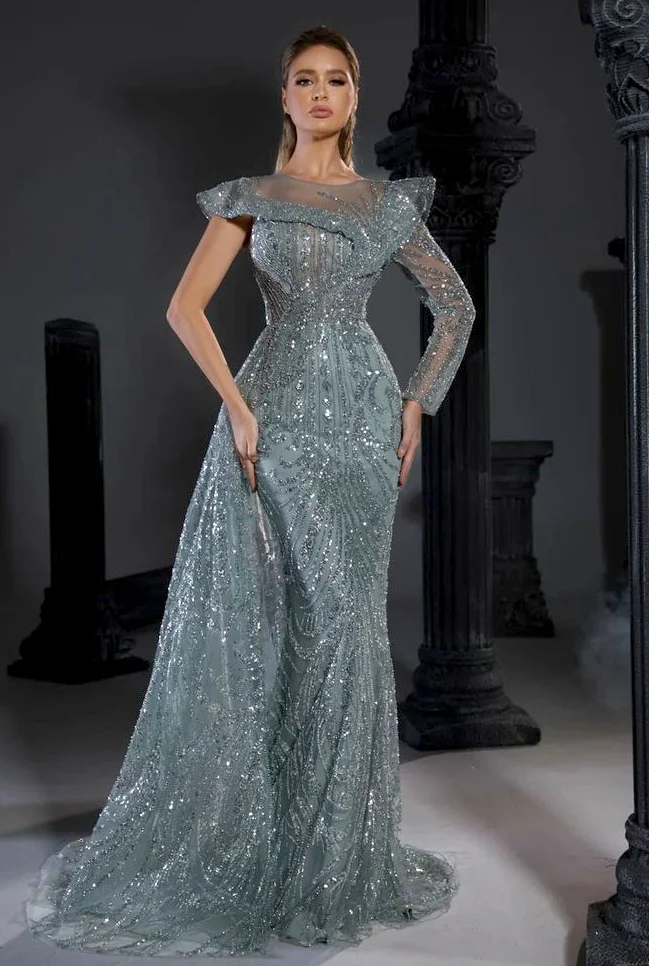
A silvery-blue evening dress distributes small bright reflections over a more fitted long shape here. Its upper edge is broadly folded and diagonally arranged. One shoulder has a shorter edge form, while the other side carries a fine translucent-looking patterned sleeve to the wrist. Further bodice lines appear beneath the higher upper section. Skirt fabric trails behind and to the side. Hands sit around hip and upper-thigh level. This shows a definite unequal arm arrangement without establishing fibre, internal support or suitability for a particular gala occasion.
If you want this asymmetric upper design, try the actual outer jacket over this exact dress. Check putting it on and removing it at both sides instead of assuming two bare arms. Examine the neckline again afterwards before selecting further neck jewellery. Holding an intended object belongs in the trial if you have a planned appearance. Compare the reflection distribution with a quieter black form at the same distance too. Decide whether many small light points or the single folded shoulder edge should create the stronger emphasis in your chosen outfit.