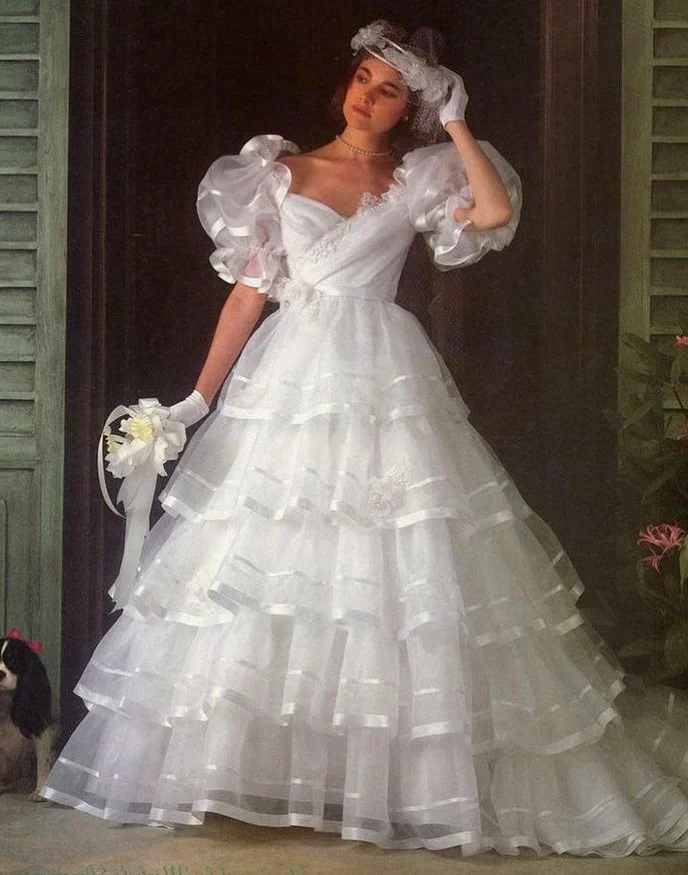
Short ruffled sleeves and skirt tiers create a clear repeated idea here. Several large open curves sit beside the upper body. Brighter horizontal edges divide the broad skirt below. The bodice looks crossed, one hand rests against the tilted headpiece and the other holds flowers. Short gloves introduce additional pale boundaries at the hands. These details need not all join your own combination.
If repetition appeals, assess sleeve and skirt without another head ornament first. Do you want the pale edges readable along the complete length, or mainly the large short sleeves? A quieter skirt would create another distribution. Investigate that relationship through an actual offered candidate. Rest the arms naturally during the trial instead of making the raised hand the only possible view.
Add the intended veil afterwards. From the side, notice whether it overlaps the ruffles and whether you want that additional width. The photograph supplies useful information about shape and repetition, without reliably identifying material, production date or historical style. Finish by comparing the same pieces in an ordinary stance.